Wall Art Guide, Wall Art Tutoriels
Neon Wall Art: LED Light Signs & Bright Decor
Mar
So I’ve been obsessing over neon wall art lately and honestly it started because a client wanted something “edgy but not too much” for their living room and I fell down this whole rabbit hole of LED signs versus actual neon and now my apartment looks like a trendy cocktail bar but whatever.
The Actual Difference Between Real Neon and LED
Okay so first thing—most of what you see on Instagram isn’t real neon. It’s LED flex lights shaped to look like neon and honestly? That’s probably what you want anyway. Real neon is like $300-$1000+ for custom pieces, it’s fragile as hell, gets super hot, and if it breaks you need an actual professional to fix it. I learned this the hard way when I sourced a vintage neon sign for a restaurant project and the installer charged $200 just to mount it safely.
LED neon flex is basically silicone tubing with LED strips inside. It looks almost identical from like three feet away, runs cool to the touch, uses way less electricity, and you’re not gonna burn your house down. Plus most of them come with a remote which is honestly a game changer when you don’t wanna get off the couch to turn it off.
Where to Actually Buy Them
I’ve ordered from probably a dozen different places at this point so here’s the real deal:
Custom Signs
Etsy sellers are surprisingly good for custom work. Look for shops with lots of reviews that include photos. I used one called NeonMfg (I think that’s still their name?) for a client’s business logo and it was like $180 for a 24-inch sign. Took three weeks but the quality was solid.
Amazon if you need it fast and don’t care about customization. Their pre-made phrases like “Good Vibes” and “But First Coffee” are kinda basic but they’re cheap and arrive in two days. I got a “Stay Wild” one for my niece’s room for $45.
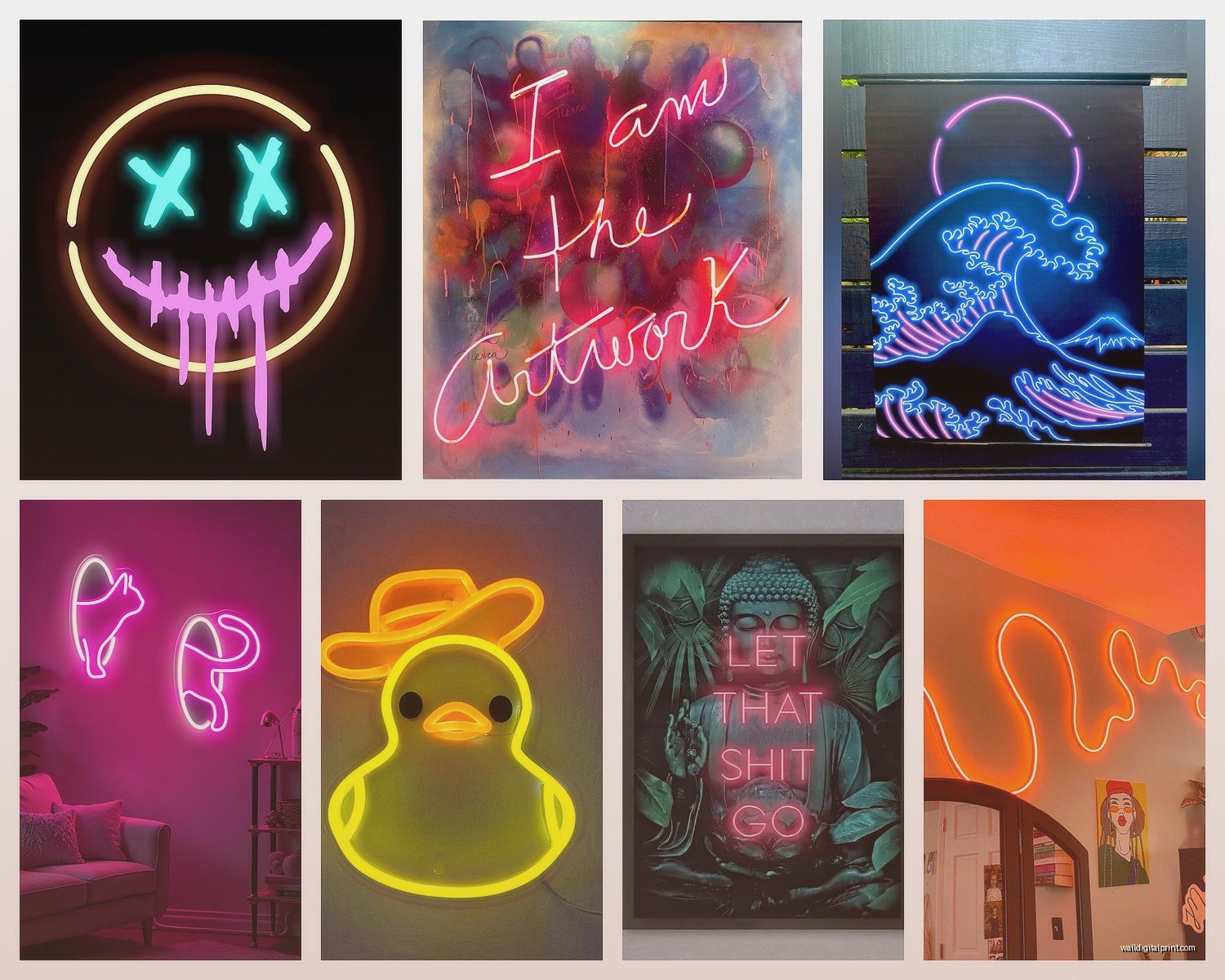
Yellowpop is more expensive but their designs are actually cool and not just the same Pinterest quotes everyone has. They do collabs with artists. I almost bought their wave design but my cat would definitely knock it off the wall so I passed.
Pre-Made Options
The pre-made route is way cheaper and you can find them literally everywhere now. Urban Outfitters, Target, even Home Depot has started carrying them. The Target ones are actually decent quality for like $30-$60 depending on size.
Sizing is Weird and No One Tells You This
Here’s the thing about sizing that messed me up initially—these things look WAY different in photos than in real life. A 12-inch sign sounds reasonable but it’s actually pretty small. Like picture-frame-on-your-desk small, not statement-wall-piece small.
For reference:
- 12-16 inches: good for shelves, small gallery walls, bedside tables
- 20-24 inches: decent for most walls, readable from across a room
- 30+ inches: statement piece territory, needs a big wall
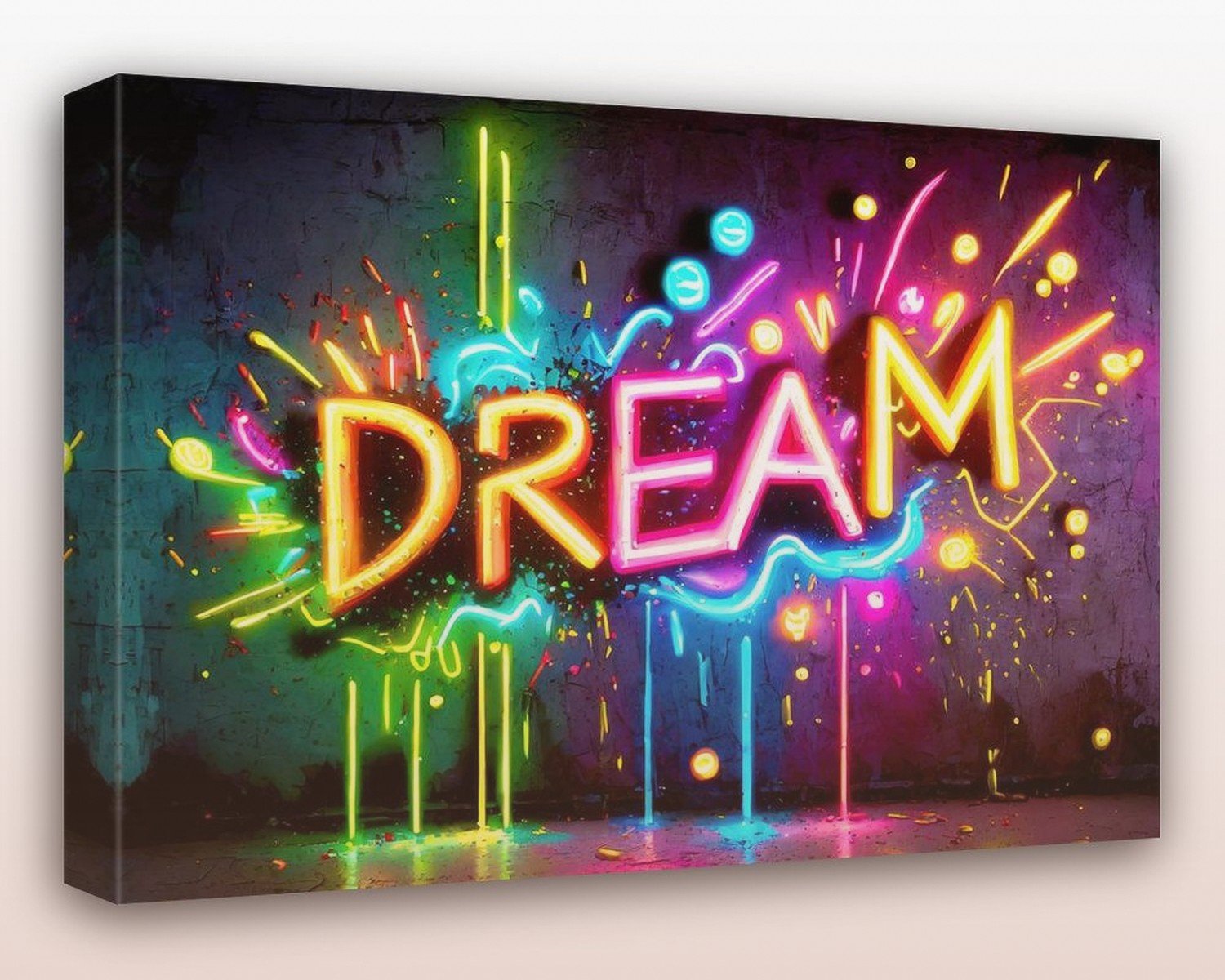
I put a 14-inch “Dream” sign above my workspace thinking it would be this cool focal point and it just looked sad and tiny. Ended up moving it to my bookshelf where it actually works.
Power Situations You Gotta Think About
Most LED signs plug into regular outlets but the cord situation can be annoying. They usually come with like a 6-foot cord attached to a power adapter box (that chunky rectangle thing). Some have USB power options which is cool if you wanna plug it into a power bank or hide it behind furniture.
Battery-powered ones exist but they’re dimmer and you’re gonna be changing batteries constantly. Not worth it unless you literally have no outlet access and can’t run an extension cord.
Oh and another thing—some of the fancier ones have dimmer switches or remotes with multiple settings. Worth it. Being able to dim the brightness is crucial because full blast at night is like staring into the sun.
Dealing With Visible Cords
This drove me crazy until I figured out some workarounds:
Cable raceways from hardware stores can be painted to match your wall. They’re like $8 and you just stick them on and run the cord through.
Behind furniture is the easiest if your layout allows it. I have one sign behind my bedroom dresser so the cord just drops down the back.
Get creative with the outlet location. I mounted one client’s sign specifically so it would be near a floor outlet and we ran the cord down behind a curtain panel.
Mounting These Things Without Destroying Your Wall
Most signs come with a clear acrylic backboard that has pre-drilled holes. You’re basically hanging a picture frame but it’s illuminated.
For renters or commitment-phobes, Command strips work for smaller signs under like 2 pounds. Check the weight limit on the package. I used the large picture hanging strips for my 16-inch moon sign and it’s been up for eight months no problem.
For anything bigger or heavier, you gotta use actual screws and wall anchors. Drywall anchors are your friend—the plastic ones work fine for signs under 5 pounds, but I usually use the metal toggle bolts for anything substantial because I’m paranoid.
Placement Ideas That Actually Work
I’ve installed these in like twenty different spaces at this point so here’s what actually looks good:
Behind the bed as a headboard alternative. This is probably the most popular placement and it works because you get that ambient glow without needing bedside lamps. Just make sure it’s dimmable or you’ll never sleep.
In a gallery wall. Mix them with regular art prints and it adds dimension. I did this in my entryway with a small lightning bolt sign surrounded by black and white photos and it’s the first thing people comment on.
Above a bar cart or coffee station. Very “I have my life together” energy even if you don’t. I have a coffee cup sign above my Keurig and it makes my sad kitchen corner look intentional.
In unexpected places like closets or pantries. Okay this is gonna sound weird but I put a small star sign inside my coat closet and it’s actually useful as a night light situation when I need to grab something without turning on harsh overhead lights.
Color Temperature Matters More Than You Think
Most LED signs come in warm white, cool white, or RGB (color changing). Here’s my honest take:
Warm white looks the most like actual vintage neon and works in basically any space. It’s that soft yellowish glow that feels cozy but not too intense.
Cool white is more modern and crisp but can feel clinical if your space is already minimalist. Good for offices or contemporary spaces.
RGB/color changing seems fun but you’ll probably settle on one color and never change it. I have one that can do like sixteen colors and I’ve used pink, blue, and that’s it. The remote is also easy to lose.
Single color options (just pink, just blue, just green) are usually cheaper and honestly if you know what you want, skip the RGB upcharge.
Styling Around Neon Signs Without Looking Like a Nightclub
The trick is treating it like any other art piece, not like the whole personality of the room. I see people put up a neon sign on a completely blank wall and wonder why it looks weird—it needs context.
Layer with other textures. Put it above a velvet headboard, next to macrame, over a leather couch. The contrast between the modern light and traditional textures makes it feel curated instead of random.
Keep the rest subtle. If your sign is bright pink, maybe don’t also have hot pink curtains and a magenta rug. Let it be the pop of color.
Consider what’s around it. I staged a reading nook with a “Read” neon sign but made sure to include actual books, a cozy chair, and a throw blanket so it felt cohesive with the theme instead of just slapped on the wall.
Maintenance is Basically Nothing But Here’s What I’ve Learned
These things are pretty low maintenance but the silicone tubing can collect dust. I just wipe mine down with a slightly damp microfiber cloth every few months. Don’t use harsh cleaners because it can mess with the silicone.
If a section stops working it’s usually the connection point where the LED strip meets the power source. You can sometimes fix this by unplugging and replugging everything firmly. If that doesn’t work, most sellers will replace it if it’s under warranty.
The lifespan is supposedly like 50,000 hours which is years of normal use. I haven’t had one die on me yet and my oldest is about two years old.
Custom Design Tips If You’re Going That Route
Custom signs are where you can really make it personal but there’s some stuff to know:
Font matters. Script fonts look cool in photos but can be hard to read in real life, especially from a distance. I learned this when a client ordered their last name in this elaborate cursive and you literally couldn’t tell what it said unless you were standing right in front of it.
Keep it simple. The more complex the design, the more it costs and the more fragile it becomes. Those elaborate designs with tons of details usually have weak points where the tubing connects at sharp angles.
Size up from what you think you need. Text especially needs to be bigger than you’d expect. A good rule is if your word or phrase is under six letters, aim for at least 20 inches wide. More letters, go bigger.
Get a mockup before they make it. Any decent custom shop will send you a digital mockup first. Actually look at it carefully because once it’s made, you’re stuck with it.
The Actual Cost Breakdown
Since I’ve bought way too many of these, here’s what you’re realistically looking at:
Small pre-made signs (under 12 inches): $25-$60
Medium pre-made (12-24 inches): $60-$150
Large pre-made (24+ inches): $150-$300
Custom small (12-20 inches): $100-$200
Custom medium (20-30 inches): $200-$400
Custom large or complex: $400-$1000+
The cheap Amazon ones are fine for trying out the look but the quality difference is noticeable if you’re putting it somewhere prominent. The tubing is thinner, the glow isn’t as even, and they tend to have visible dark spots where the LEDs are spaced too far apart.
My Actual Favorites I’ve Used
The moon phase sign from Etsy that I put in my bedroom—it’s five moons in different phases and it’s just pretty without being cheesy. Was like $120.
A custom “Cheers” sign I did for a client’s home bar in warm white. Simple, readable, classic.
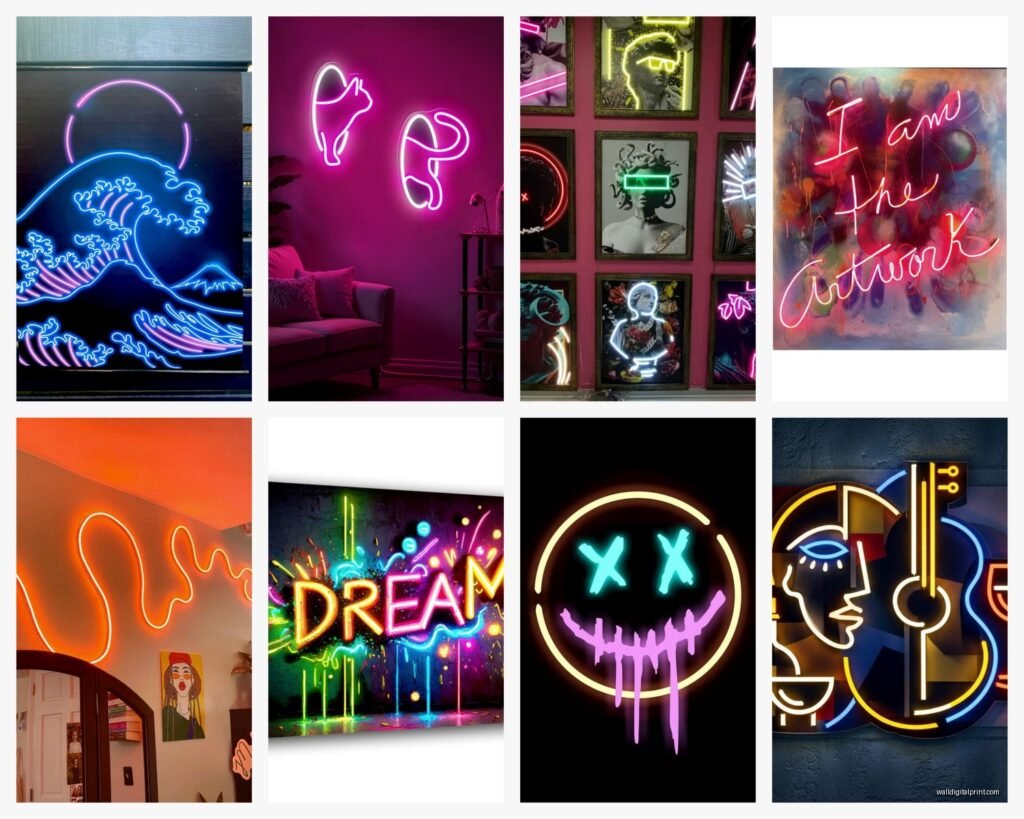
This weird abstract line art face situation from Yellowpop that I was sure I’d hate but it’s actually my favorite piece in my living room now. Sometimes you gotta take risks.
When Neon Signs Are Actually a Bad Idea
Real talk—they’re not for everyone or every space. If your aesthetic is traditional or farmhouse or anything with a lot of wood and neutral tones, a neon sign might look out of place. Not impossible to make it work but it’s harder.
Also if you’re sensitive to light when sleeping, don’t put one in your bedroom unless it’s dimmable and you’re disciplined about turning it off. I left mine on by accident one night and woke up thinking it was morning at like 2am.
They can read as trendy in a way that might feel dated in a few years. I’m not saying don’t get one, but maybe don’t invest in a $500 custom piece that says “Rosé All Day” unless you’re absolutely sure that’s forever your vibe.
Okay I think that’s everything I’ve figured out through way too much trial and error and probably spending too much money on illuminated words but at least now you don’t have to make the same mistakes.