Wall Art Guide, Wall Art Tutoriels
Copper Wall Art: Warm Metallic Rustic Designs
Mar
So I’ve been totally obsessed with copper wall art lately and honestly it started because a client wanted something “warm but industrial” and I was like…okay that’s basically copper. Let me just dump everything I’ve learned because I’ve made some mistakes you can skip.
Finding the Right Piece Without Spending Forever
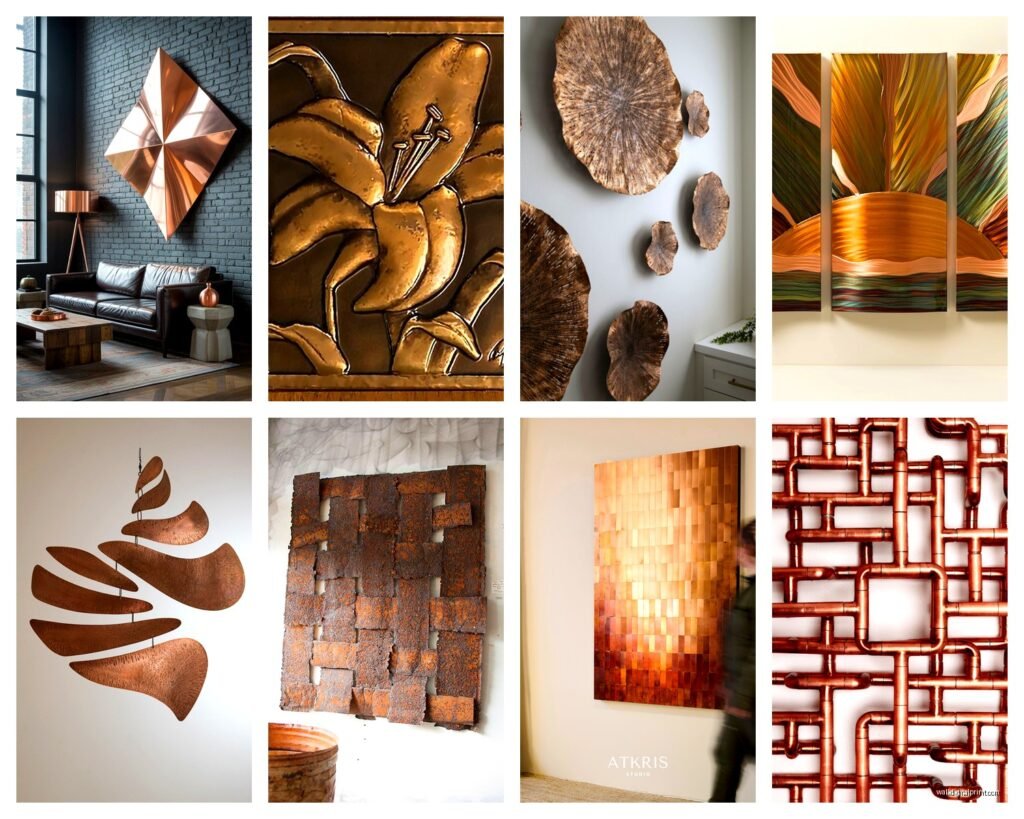
First thing – copper wall art comes in like three main categories and nobody tells you this upfront. You’ve got your actual copper sheets that are hammered or embossed, copper-plated pieces (which are usually steel or wood underneath), and then copper-toned finishes that aren’t really copper at all. The price jumps are WILD between these.
Real copper pieces start around $80-100 for something small, maybe 12×12 inches. I found this amazing tree silhouette piece from a metalworker on Etsy for $95 and it’s held up perfectly for two years. The copper plated stuff? You can find decent options for $30-60 but you gotta check reviews because some of it chips like crazy.
What Actually Matters When You’re Shopping
Okay so thickness is the thing everyone ignores. If you’re buying actual copper, ask about gauge – 16 gauge is sturdy enough for most wall pieces. Anything thinner than 20 gauge and it’s gonna feel flimsy, might dent if you look at it wrong. I learned this the hard way with a “rustic farmhouse copper” thing that arrived and I could literally bend it with my fingers.
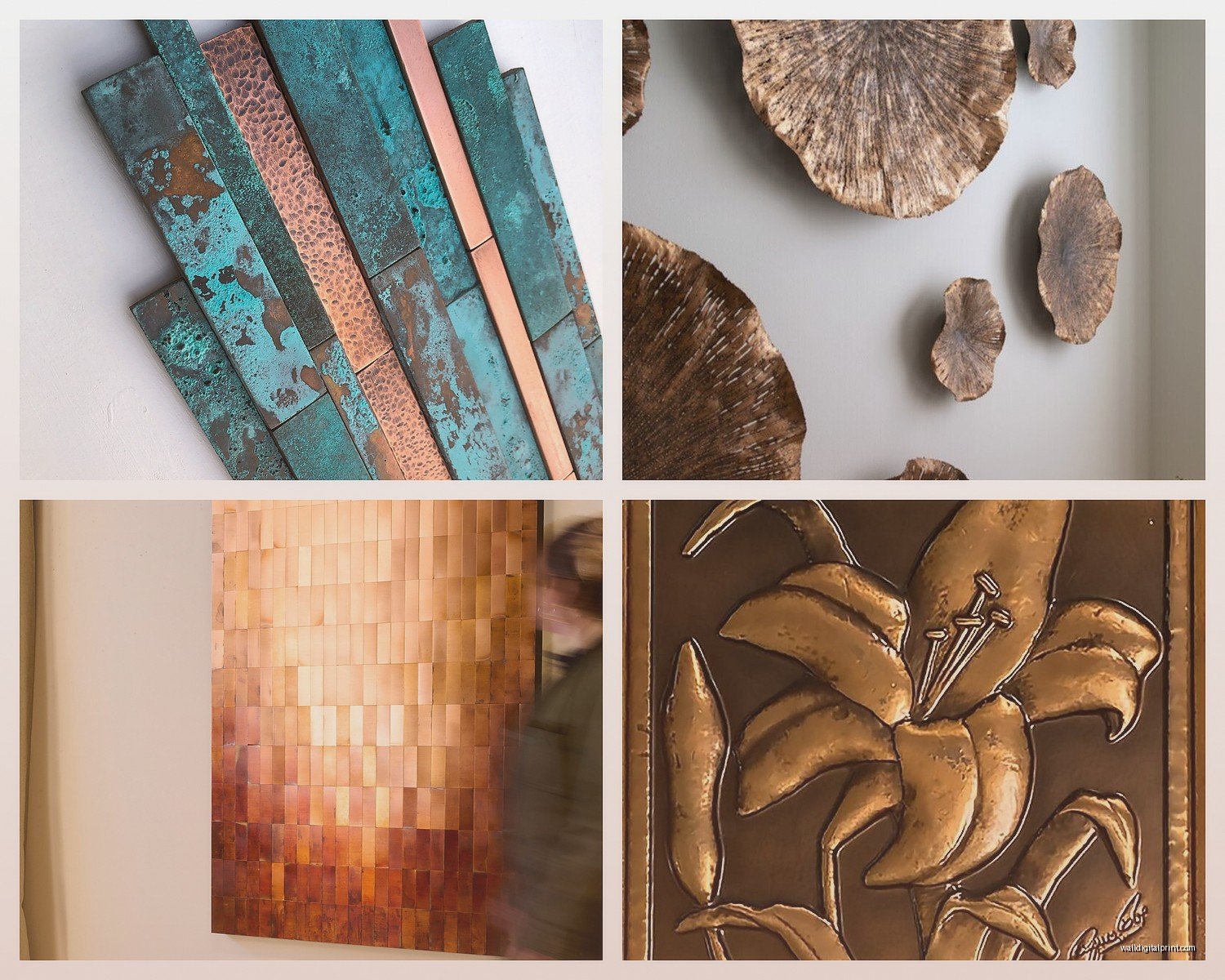
The finish matters more than I thought it would. You’ve got polished copper which is super shiny and orange-pink, hammered which has texture and catches light differently, and patina finishes that are more green-brown. For rustic designs, the hammered or patina stuff reads way better. The polished copper can look kinda…I dunno, too fancy? Unless that’s your vibe.
Where This Stuff Actually Works
Living rooms are the obvious choice but here’s what I’ve figured out – copper needs the right lighting or it just sits there doing nothing. Natural light makes it glow during the day, but you also want some ambient lighting at night. I put a copper mountain range piece above my couch and added a small picture light above it, total game changer.
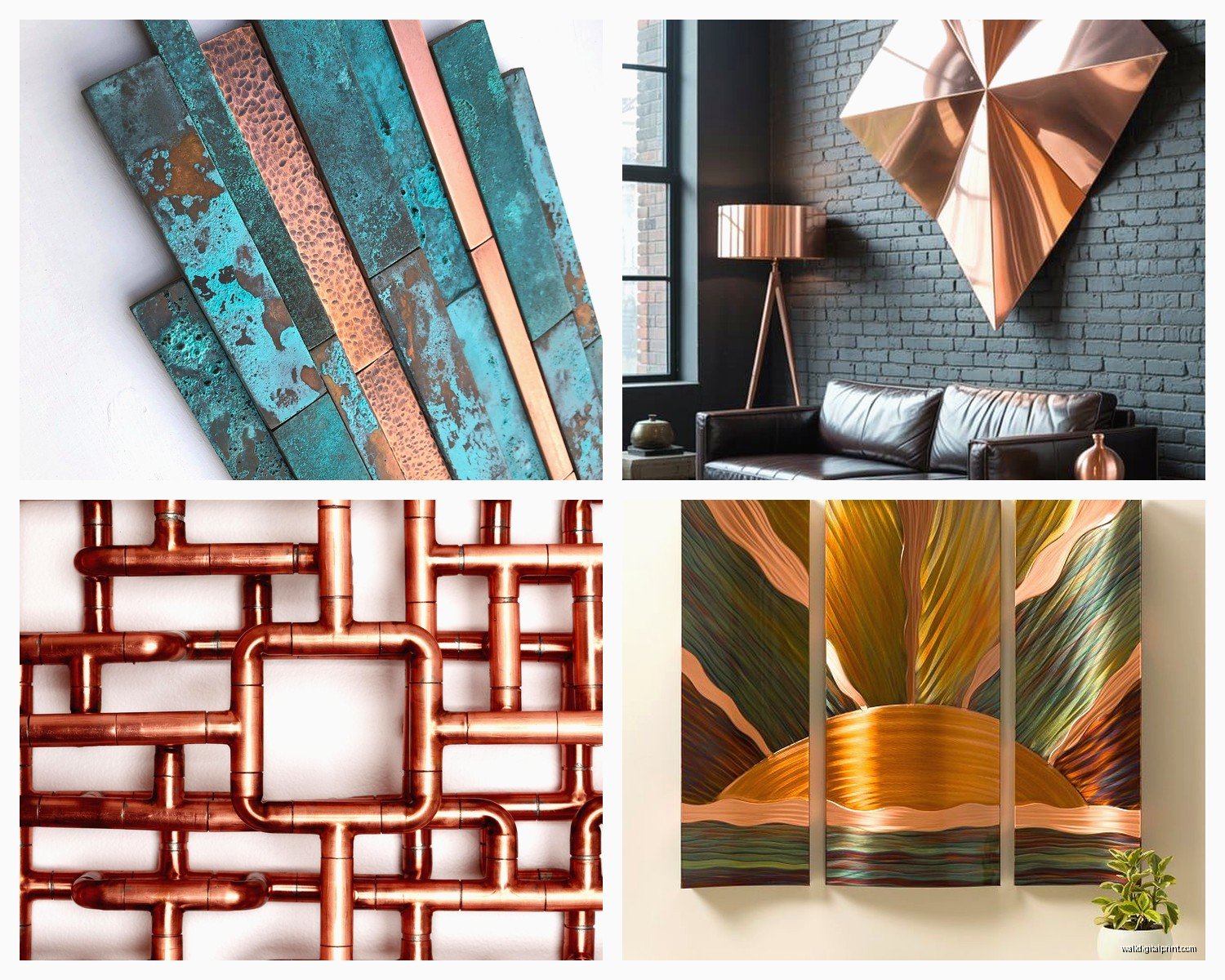
Dining rooms are actually perfect for copper because the warm tones make the space feel more intimate. My sister has this geometric copper panel thing in her dining room and everyone comments on it. The metallic picks up candlelight really nicely if you’re into that.
Bathrooms though…okay so funny story, I tried putting a small copper piece in my bathroom thinking the rustic vibe would work. The humidity made it develop this weird patina within like three months. Some people want that aged look but I wasn’t ready for it. If you’re doing bathroom copper, either seal it really well or just embrace the tarnish situation.
The Whole Patina Thing Nobody Explains Clearly
So copper changes over time, that’s just what it does. Starts bright and orange-toned, then it darkens to this rich brown, eventually can go greenish if there’s moisture. Most “rustic” copper art is actually pre-treated to speed up this aging process.
You can control it though. Clear lacquer seals it and keeps that bright copper look – I use Everbrite coating when I want pieces to stay shiny. It’s like $25 for a can that lasts forever. Just apply with a soft cloth, let it dry, done.
If you WANT the aged look faster, there’s this vinegar and salt trick. Mix white vinegar with salt, spray it on the copper, wait a few hours. It accelerates the oxidation. I did this on a copper sunburst piece that was too shiny and it worked perfectly. Just wear gloves because the solution is kinda harsh.
Styles That Actually Look Good Not Catalog-Staged
The geometric designs are everywhere right now – hexagons, triangles, abstract mountain ranges. These work really well in modern spaces that need warming up. I’ve used copper geometric pieces in apartments with lots of concrete and steel, balances everything out.
Nature motifs are the classic rustic choice. Trees, leaves, wildlife silhouettes. There’s this elk silhouette I keep recommending because it’s $45, looks way more expensive, and the copper is thick enough that it doesn’t feel cheap. The company is called something like Rustic Arrow…let me check…yeah Rustic Arrow Studios.
The Size Question Everyone Gets Wrong
People always buy too small. Like, always. A 12×12 piece on a big wall just disappears. My rule is go at least 24 inches in one direction for a standard living room wall. If you’re doing above a couch, think 36-48 inches wide minimum or do a grouping.
Groupings are actually easier than one big piece sometimes. Three different sized copper pieces arranged together costs less than one huge custom piece and you can adjust the arrangement. I did five copper circles in different sizes on my client’s wall – ranging from 8 inches to 18 inches diameter – and it cost maybe $200 total. One 40-inch custom piece would’ve been $400+.
Installation Tips Nobody Mentions
Copper is heavier than it looks. Those little sawtooth hangers that come attached? Not enough for anything over like 10 inches. I use picture hanging wire rated for at least double the weight, attached to D-rings screwed into the back.
For the actual wall mounting, find studs if the piece is over 5 pounds. Otherwise good wall anchors work – I like the self-drilling drywall anchors rated for 50 pounds. They’re blue usually, available at any hardware store for like $6.
The spacing thing for groupings…I measure everything on the floor first. Lay out your arrangement, measure the distances between pieces, take a photo with measurements labeled. Then transfer those exact measurements to the wall. Sounds obvious but I’ve redone so many arrangements because I eyeballed it.
Mixing Copper With Other Stuff
Copper plays really well with wood – like that’s the easiest combination. Dark walnut or reclaimed wood frames near copper pieces, chef’s kiss. Also works with matte black which I didn’t expect. The warmth of copper against flat black metal creates this nice contrast.
Brass and copper together can work but you gotta be careful. Too much warm metal gets muddy looking. I usually pick one as the dominant metal and use the other as an accent. Like copper wall art as the main piece, small brass candle holders nearby.
White walls are actually perfect for copper, don’t let anyone tell you otherwise. The contrast makes the copper pop. Gray walls work too but go for warmer grays not the cool-toned ones.
Maintenance Real Talk
It’s gonna tarnish unless you seal it, that’s just reality. I tell people upfront – do you want to maintain the bright finish or let it age? Because maintaining it means wiping with a soft cloth monthly and maybe resealing annually.
For cleaning, just mild soap and water usually works. Dry immediately though because water spots show up on copper like crazy. If it’s gotten tarnished and you want to reverse it, ketchup actually works. I know that sounds insane but the acid in it cleans copper. Rub it on, let sit for a few minutes, rinse, dry. My mom taught me that trick.
There are copper cleaning products too – Wright’s Copper Cream is the one I keep under my sink. It’s like $8 and works better than the natural methods if you’re dealing with heavy tarnish.
Budget Options That Don’t Look Cheap
Target actually has some decent copper wall decor in the $25-40 range. It’s not real copper, usually painted metal, but from a few feet away you can’t really tell. I’ve used their stuff in rentals where the client doesn’t wanna invest much.
Hobby Lobby has copper sheets you can cut yourself if you’re crafty. Like $15 for a decent sized sheet. You’d need metal snips and maybe a template but for simple shapes it works. I made copper arrow wall art this way for my niece’s room, total cost was maybe $30 including the wood backing.
Thrift stores sometimes have copper pieces but they’re usually super tarnished. Which again, if you want that aged rustic look anyway, could be perfect. I found this vintage copper sun face thing at Goodwill for $8, cleaned it up a bit, and it’s one of my favorite pieces now.
Custom vs. Mass Produced
Custom copper art from actual metalworkers starts around $150 and goes up from there. Worth it if you want something specific or you need an unusual size. I worked with this artist in Colorado who made a custom copper aspen tree scene – 30×40 inches, cost $380 but it’s absolutely stunning. The detail you get with custom work is just different.
Mass produced stuff from places like Wayfair or Overstock runs $40-120 usually. Quality is hit or miss. Read reviews and check the return policy. I’ve had good luck with pieces that have at least 50+ reviews averaging 4 stars or higher.
Common Mistakes I See All The Time
Hanging copper art where there’s no light source nearby. It just looks flat and muddy. You need either natural light or artificial light hitting it at an angle.
Buying copper that’s too thin and then being disappointed when it arrives feeling flimsy. Check the product specs, ask questions, read reviews that mention thickness.
Not considering the wall color before buying. Copper can get lost on certain terracotta or orange-toned walls. Test if you can – some stores let you return stuff, or order samples if available.
Oh and another thing – people forget about the hardware showing. If your copper piece has visible hanging wire or hooks, it looks unfinished. Either hide the hardware better or use keyhole hangers that sit flush with the wall.
Seasonal Changes Nobody Talks About
This is gonna sound weird but copper looks different in summer vs winter light. The angle of sunlight changes and affects how the metallic finish appears. That bright piece in July might look darker and richer in December. Not a bad thing, just something to be aware of.
Humidity affects copper too, especially unsealed pieces. Summer humidity can speed up patina development. Winter dry air can make sealed copper look dustier because static clings to it. Just wipe it down with a microfiber cloth occasionally.
Anyway I think that covers most of what I’ve learned through way too much trial and error. The main thing is just pick something you actually like, not what looks good in styled photos, because you’re gonna be looking at it every day. And honestly the “mistakes” with copper – the unexpected tarnish, the patina changes – those usually end up being the most interesting parts about it.