Wall Art Guide, Wall Art Tutoriels
Unusual Wooden Wall Art: Unique Carved Wood Designs
Mar
So I’ve been going down this total rabbit hole with carved wooden wall art lately and honestly it started because a client wanted something “unique but not weird” for their dining room and I was like okay, challenge accepted. The thing with carved wood is it’s actually way more varied than people think – like you’ve got everything from those geometric modern pieces to full-on baroque situations.
First thing you gotta know is the type of wood actually matters way more than I thought it would. I used to think wood was just… wood? But nope. Teak is gonna give you this rich, almost golden-brown color that ages really well, doesn’t warp with humidity changes which is huge if you’re anywhere near a coast or have a bathroom you want to put art in. I tested a teak mandala piece in my own bathroom for like eight months and zero warping. Cedar though – cedar’s interesting because it’s lighter, has that reddish tint, and it smells amazing when you first get it. The scent fades but for the first few weeks your room just smells like a fancy sauna.
Mango wood is having a moment right now and I’m kinda obsessed? It’s sustainable because they use wood from trees that don’t produce fruit anymore, and it has this gorgeous grain pattern. But here’s the thing – mango wood pieces tend to have more color variation, which can be stunning or can be annoying if you’re super matchy-matchy with your decor. I have this carved lotus panel in mango wood and honestly every time the light hits it different the colors shift from honey to almost amber.
Oh and another thing – reclaimed wood pieces. These are tricky because quality varies SO much. I’ve seen reclaimed barn wood carvings that are absolute works of art, all weathered and textured, and I’ve seen ones that are basically just old wood someone stuck on a router table for five minutes. Ask about the source. Good sellers will tell you exactly where the wood came from. I got this amazing piece from a seller who used old Indonesian fishing boats and you can still see the old paint layers peeking through the carved patterns.
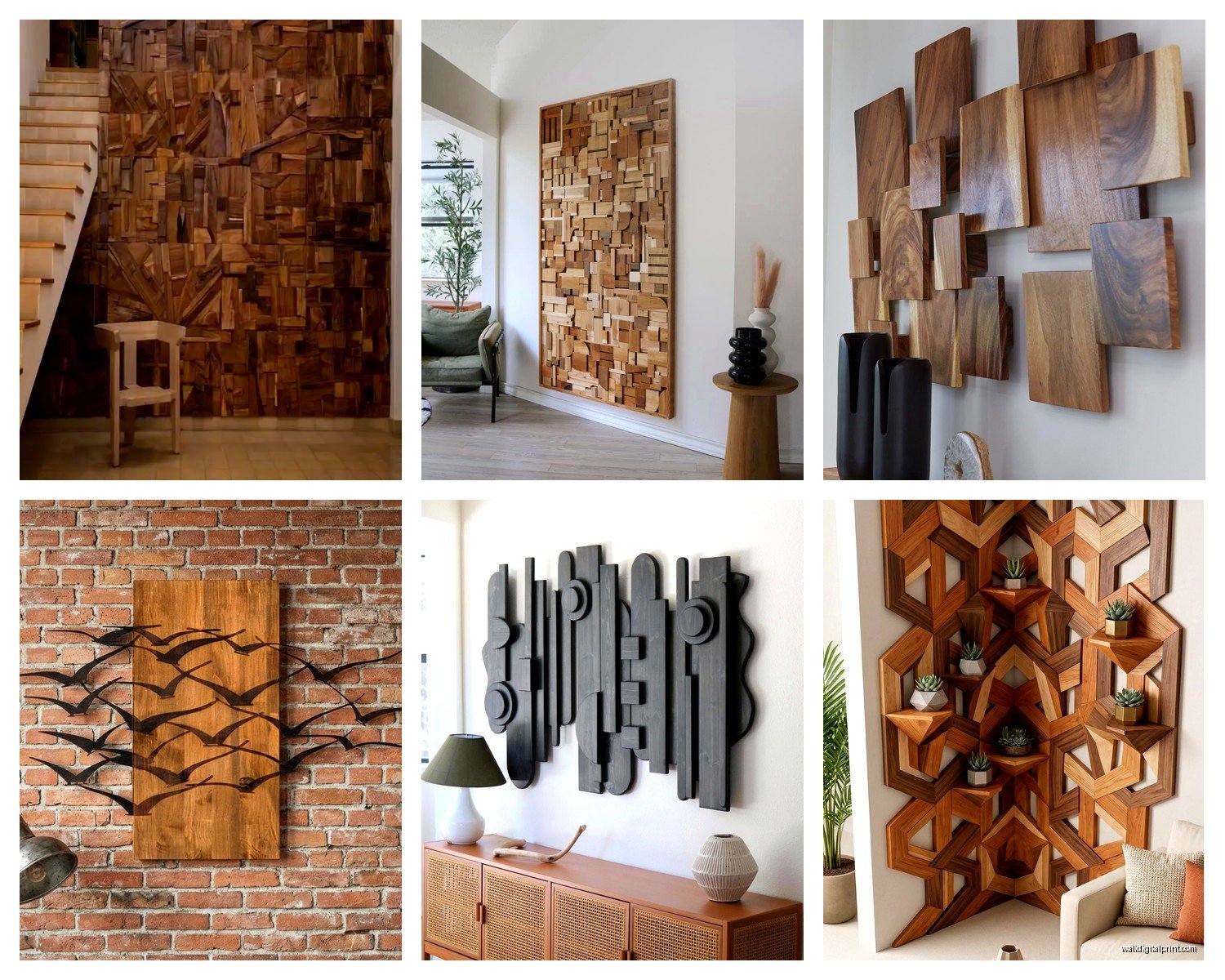
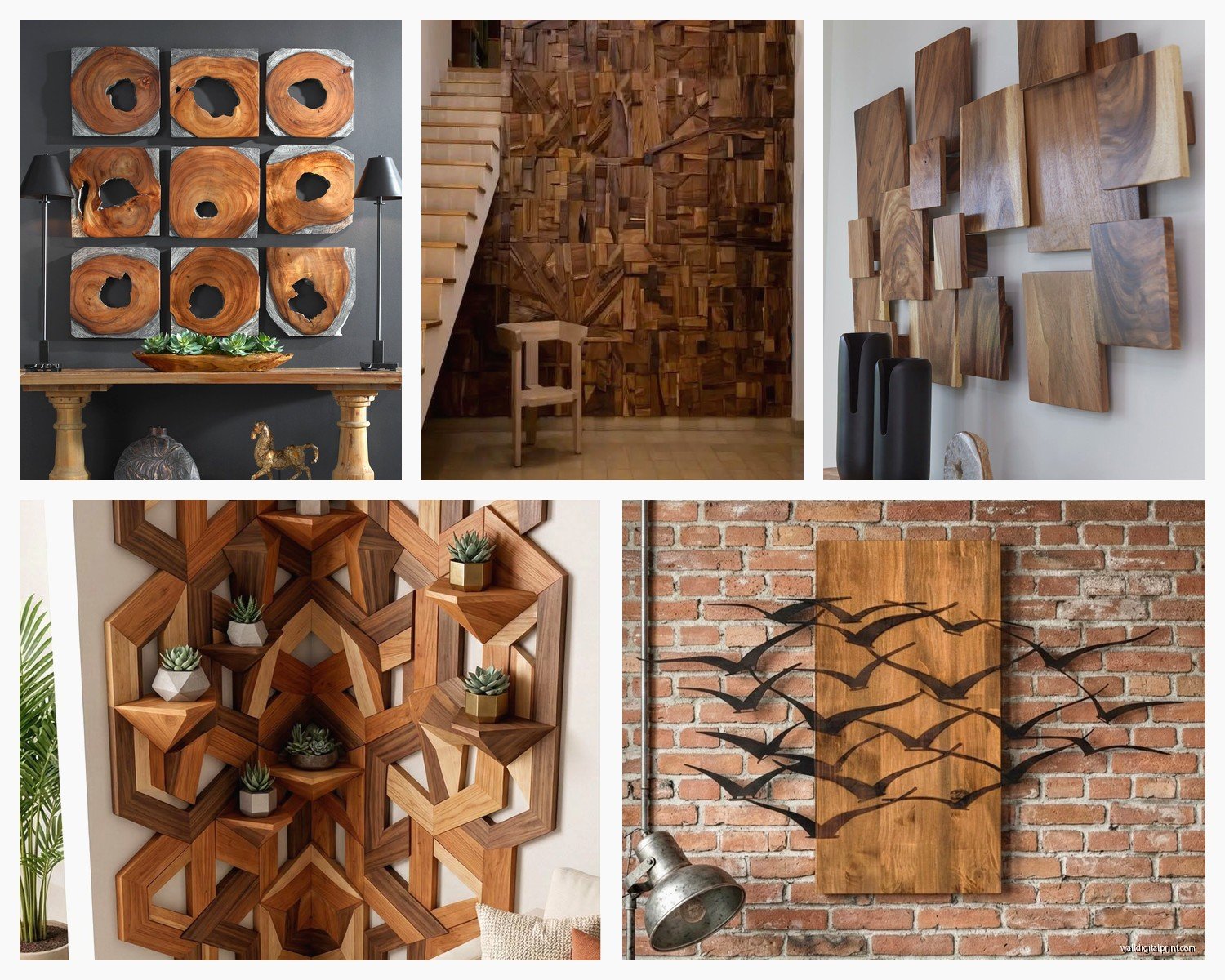
The carving styles break down into a few main categories and this is where it gets fun. Geometric patterns are probably the easiest to work with design-wise – think tessellations, 3D cube illusions, those satisfying repetitive patterns. They read as modern, work in minimalist spaces, don’t compete too much with other decor. I put a geometric walnut piece in a client’s home office and it literally elevated the entire room without being loud about it.
Then you’ve got the nature-inspired stuff which is like… huge right now but also has been popular forever? Tree of life designs, leaf patterns, florals, that sort of thing. These can go either really elegant or really gift-shop depending on the execution. The difference is usually in the depth of the carving and the finish. Shallow carving with a glossy finish often reads cheap. Deep relief carving with a matte or hand-rubbed oil finish looks expensive even when it’s not.
Mandalas and medallions are their own whole category. I was skeptical about these for so long because they felt very 2015 boho to me, but the right one in the right space is *chef’s kiss*. The key is size and placement. A 36-inch mandala centered above a bed or sofa becomes this focal point that’s almost architectural. Anything smaller than 24 inches kinda just looks like a decorative plate.
Wait I forgot to mention – hand-carved versus machine-carved is a real thing you need to consider. Hand-carved pieces have these tiny irregularities that actually make them more interesting. You’ll see slight variations in depth, the occasional tool mark, patterns that aren’t perfectly symmetrical. Machine-carved stuff is pristine and perfect and sometimes that’s what you want, but it can also feel a little soulless? I have both in my own place. The machine-carved geometric piece in my entryway is perfect for that space because it’s all about clean lines. But the hand-carved botanical panel in my bedroom has this warmth that a machine couldn’t replicate.
Price-wise, you’re looking at anywhere from like $50 for a small machine-carved piece from import retailers up to thousands for large-scale hand-carved installations. The sweet spot I’ve found for quality-to-price ratio is around $200-400 for a statement piece in the 30-36 inch range. At that price point you’re usually getting solid wood (not plywood base), decent carving depth, and proper finishing.
Speaking of finishing – this is gonna sound weird but run your hand over it if you can before buying, or really zoom in on photos if you’re shopping online. The finish should be smooth, even if the carving is rustic. Splinters or rough patches mean they rushed the sanding process. I learned this the hard way with a piece I bought online that looked gorgeous in photos but arrived feeling like a weapon. Had to return it.
Okay so funny story, I was watching this documentary about Balinese wood carvers while trying to decide on a piece for my living room, and it completely changed how I look at these things. The traditional carving process is insane – some pieces take weeks or even months. They’re working with chisels and mallets, no power tools, just skill passed down through generations. Now obviously not everything you’ll find is made that way, but understanding the craft made me way pickier about what I was willing to spend money on.
For mounting these things – most come with keyhole hangers or D-rings on the back. The weight varies a lot though. A 30-inch teak mandala can be surprisingly heavy, like 15-20 pounds. You’re gonna need proper wall anchors, not just nails in drywall. I use these heavy-duty picture hangers rated for 50+ pounds for anything substantial. My downstairs neighbor probably heard me cursing while trying to mount a massive carved panel by myself last month… definitely a two-person job if it’s over 24 inches.
Three-dimensional carved pieces are having a moment too. These are the ones that really pop off the wall, sometimes 3-4 inches of relief. They create these incredible shadow patterns that change throughout the day as light moves. I have one in my hallway that faces an east window and honestly the morning shadows are half the artwork. But heads up – they collect dust like nobody’s business. You’ll need to dust them regularly with a soft brush, maybe every couple weeks depending on your space.
The lotus flower design is super popular and I get why – it’s symbolic without being religious, pretty without being fussy. But here’s my hot take: everyone has a lotus these days. If you want something that’s gonna be a conversation starter, look for less common motifs. I found this incredible carved piece based on sacred geometry patterns that’s way more interesting than another lotus. Or there are these amazing ones inspired by traditional Islamic geometric patterns that are just mathematically beautiful.
Color and staining – natural wood tones are classic and versatile, but don’t sleep on stained or painted pieces. I was super anti-painted wood for the longest time because it felt like hiding the material, but then I saw this carved panel with a deep teal stain that let the grain show through and I was converted. Black-stained carved wood can be incredibly dramatic in the right space. Just make sure whatever finish they used is actually wood stain and not paint that obscures the grain entirely.
Size is where people mess up most often. They go too small. A tiny 12-inch carved piece on a big blank wall just looks lost. You want something that relates properly to the space and furniture around it. General rule – the art should be roughly 2/3 to 3/4 the width of the furniture below it. For a blank wall with no furniture, go bigger than you think you need. I almost always recommend clients size up.
oh and another thing about layered pieces – there’s this style where multiple carved panels are stacked or arranged together to create dimension. These are cool but you gotta commit to the look. One layer reads flat, three or more layers creates actual depth and shadow play. Two layers is awkward middle ground. I did a three-layer mountain scene piece for a client’s cabin and it’s stunning, each layer a different depth creating this topographic effect.
Maintenance is pretty minimal honestly. Dust regularly like I said, maybe twice a year wipe it down gently with a barely damp cloth if it’s getting grimy. If the wood looks dry you can use a tiny bit of furniture oil or wood conditioner but test it in an inconspicuous spot first. I learned that lesson when I enthusiastically oiled a piece and it darkened way more than I expected – still looked good but definitely different than I planned.
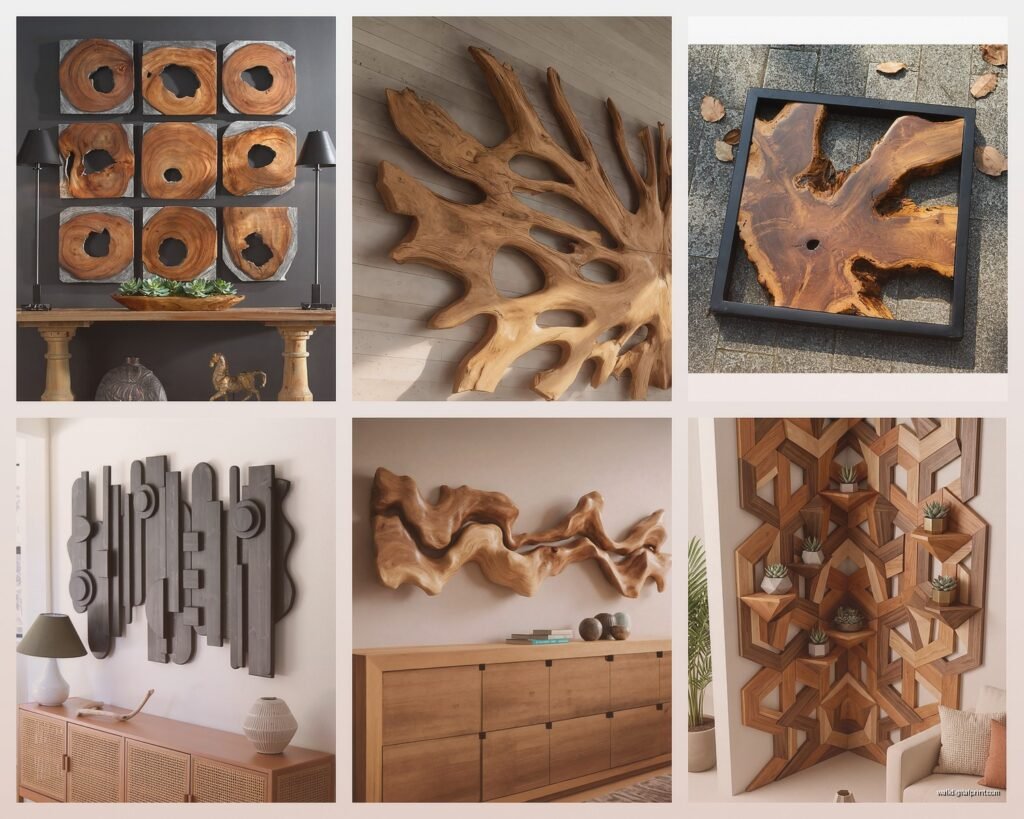
The abstract carved pieces are interesting because they’re harder to categorize but can be the most versatile. Organic flowing shapes, waves, undulating patterns – these work in modern, transitional, even traditional spaces depending on the finish and color. Less literal than florals or trees, more dynamic than geometric patterns.
For sourcing, I’ve had good luck with Etsy for unique handmade pieces, Wayfair for mid-range options with good photos and reviews, and local artisan markets for one-of-a-kind finds. Import stores can be hit or miss – sometimes you find incredible hand-carved pieces at reasonable prices, sometimes it’s mass-produced stuff that looks carved but is actually molded or stamped.
My cat knocked over a smaller carved piece last week and it survived without damage which tells you something about the durability of solid wood – these things are pretty resilient. Unlike canvas or paper art, carved wood can handle some abuse.
The texture is really what sets carved wood art apart from other wall decor. It adds this tactile dimension that prints or paintings just don’t have. People want to touch it, which sounds minor but actually creates a different relationship with the artwork. Just make sure guests have clean hands because oils from skin can darken the wood over time in high-touch spots.
If you’re gonna do this, commit to a substantial piece rather than several small ones. One impressive carved artwork makes a statement. Five small ones looks like you couldn’t decide, unless you’re intentionally creating a gallery wall situation which can work but is harder to pull off with dimensional pieces.