Wall Art Guide, Wall Art Tutoriels
Stainless Steel Wall Art: Industrial Metal Sculptures
Mar
So I’ve been working with stainless steel wall art for like three years now and honestly it’s one of those materials that sounds way more intimidating than it actually is. A client asked me last week about putting industrial metal sculptures in their loft and I realized I have SO many opinions about this.
The Finishes Actually Matter Way More Than You’d Think
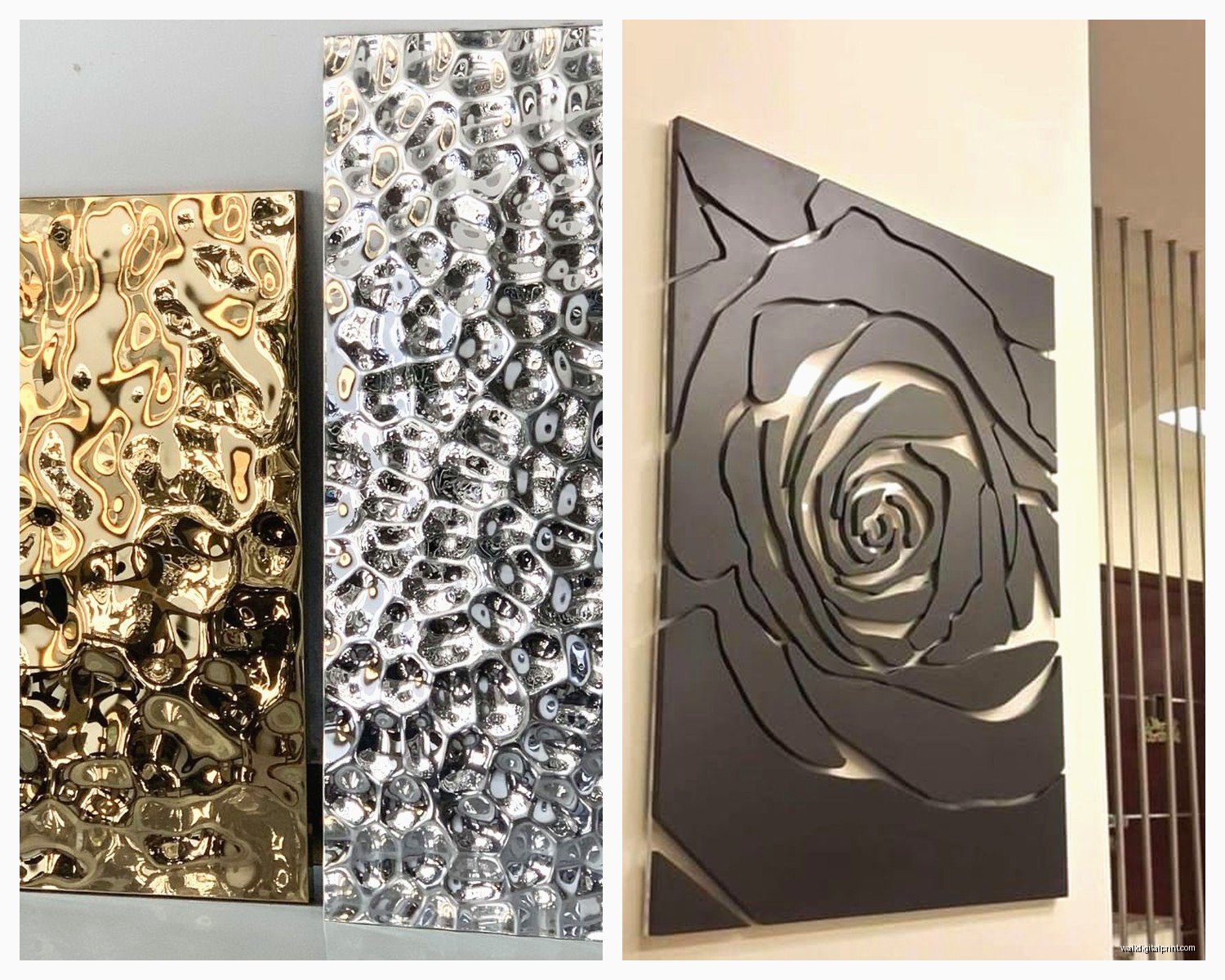
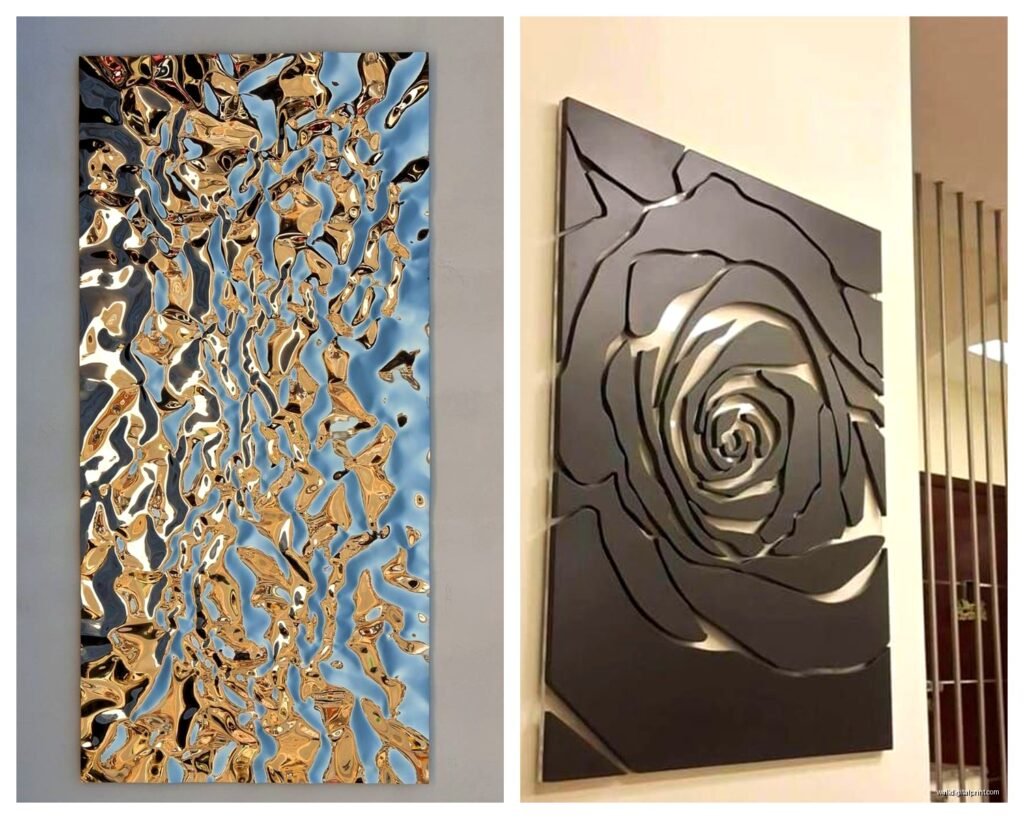
Okay so first thing – stainless steel comes in different finishes and this is where people get tripped up. You’ve got brushed, polished, and powder-coated options. Brushed is gonna be your most forgiving finish because it hides fingerprints and doesn’t show every single smudge. I learned this the hard way when I installed this gorgeous polished steel sculpture in a client’s entryway and within like two days it looked terrible because their kids kept touching it.
Polished stainless is beautiful, don’t get me wrong, but it’s basically a mirror and every fingerprint shows up. If you’re gonna go polished, put it somewhere people can’t reach or just accept that you’ll be wiping it down constantly. I use microfiber cloths with a tiny bit of glass cleaner – works way better than those special metal cleaners they try to sell you for $20 a bottle.
Powder-coated is interesting because you get color options but you’re kinda losing that industrial metal vibe? I’ve used it when clients want something softer or need to match specific colors in their space.
Weight and Wall Mounting Situations
This is gonna sound obvious but metal is HEAVY. I once ordered this abstract piece online without checking the weight specs and it showed up at like 45 pounds. My client’s drywall situation was not prepared for that at all.
For anything over 15 pounds you absolutely need to hit studs or use proper anchors. I’m talking heavy-duty toggle bolts at minimum. Most stainless steel wall art comes with hanging hardware but honestly half the time it’s inadequate. I keep a stash of:
- Heavy duty picture hangers rated for 50+ pounds
- Toggle bolts in various sizes
- French cleat systems for the really big pieces
- Wire hanging systems when I need adjustability
French cleats are my favorite for large industrial sculptures because they distribute weight so well and the piece just slides right on. Plus you can adjust positioning easier if you need to level it.
Finding Actually Good Pieces
The market is flooded with mass-produced stuff from overseas that looks cool in photos but shows up with rough edges and poor welding. I’ve learned to spot red flags in product listings – if they won’t show you close-up photos of the welds or the finish details, that’s suspicious.
Local metal artists are honestly your best bet if you want something unique. I follow a bunch on Instagram and the price difference isn’t as crazy as you’d think? Like a custom piece from a local fabricator might be $400-800 but you’re getting exactly what you want and the quality is just… so much better.
For ready-made stuff I’ve had good experiences with places that specialize in architectural metalwork. They’re used to making things that actually have to hold up in commercial spaces so their residential pieces are built way better.
Size Considerations That Nobody Talks About
Everyone wants to go big with industrial metal art but scale is tricky. I have this rule where the piece should take up about 60-75% of the wall space you’re filling. Too small and it looks like it’s floating awkwardly, too big and it overwhelms the room.
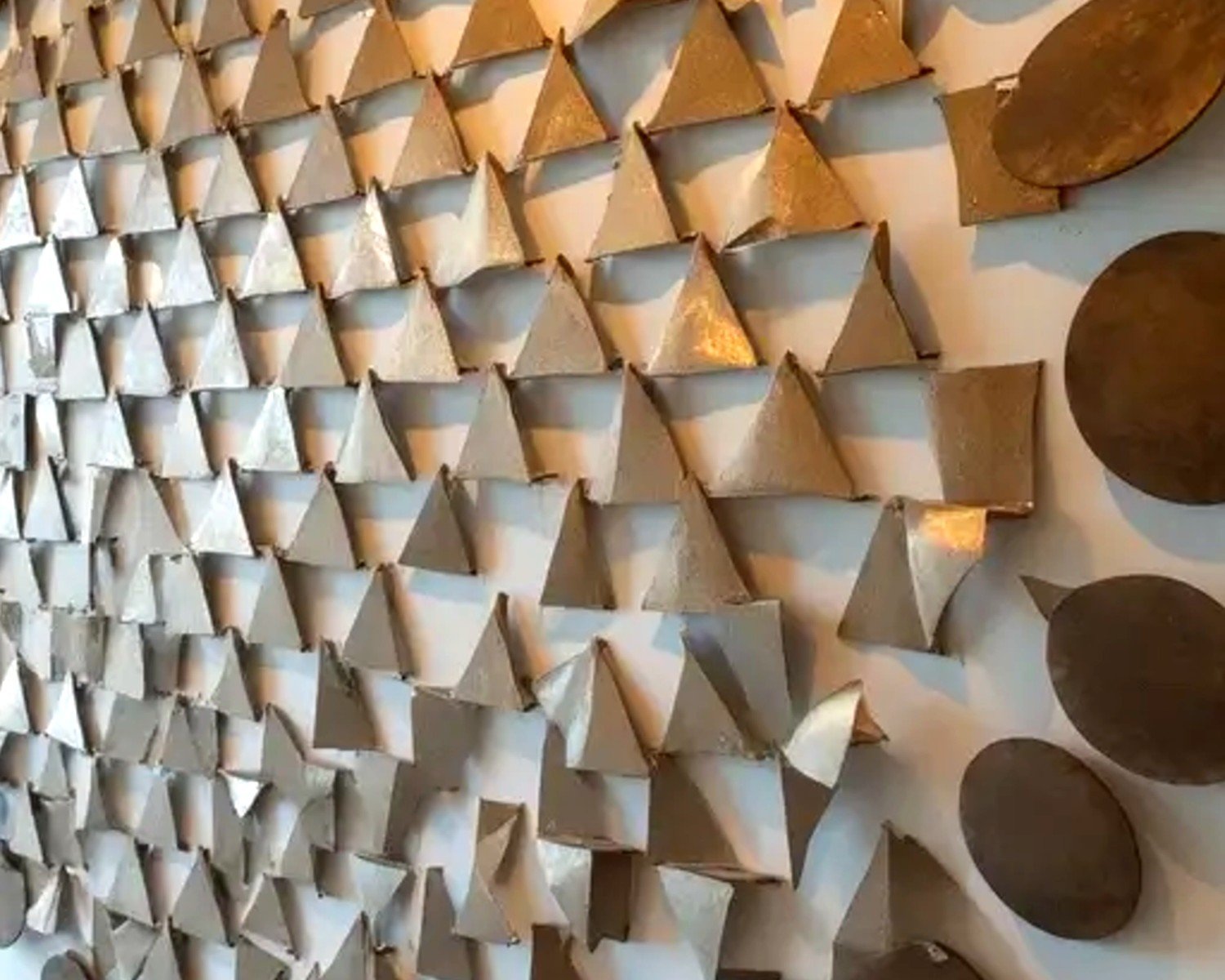
Also – and this might sound weird but – consider the shadows. Stainless steel sculptures create really interesting shadow patterns depending on your lighting, and I’ve seen people install gorgeous pieces that just disappear because they didn’t think about how the light hits them. My cat actually loves when I bring samples home because the shadows move and she tries to catch them which is adorable but also not helpful when I’m trying to photograph things.
Maintenance Real Talk
Stainless steel doesn’t rust the way regular steel does but it can develop water spots and something called “tea staining” which is this brownish discoloration that happens in humid environments or near saltwater. If you’re coastal, you gotta be more careful about the grade of stainless steel.
For regular cleaning I just use warm water and mild dish soap honestly. Every few months I’ll do a deeper clean with white vinegar diluted in water – it cuts through any buildup without scratching. Never use steel wool or abrasive scrubbers, you’ll scratch the finish and then you’re stuck with it.
Some people swear by olive oil for polishing but I think it just attracts dust? I’ve tried it and wasn’t impressed.
Styles That Actually Work in Real Homes
Industrial doesn’t mean it has to look like you stole it from a factory. I’ve installed pieces that range from super geometric and minimal to organic flowing designs that are definitely metal but feel softer.
Geometric abstract pieces work really well in modern spaces or lofts. Think circles, squares, angular designs. These tend to be cut from sheet metal so they’re lighter than sculptural pieces.
Nature-inspired sculptures like trees, leaves, or abstract organic shapes can bridge the gap if you’re trying to soften an industrial material. I did this whole living room last month where we used a brushed steel tree sculpture and it totally worked even though the rest of the space was pretty traditional.
Typography and words in metal are having a moment. Custom words or phrases in industrial fonts… I’m kinda over the “gather” and “blessed” trend but custom phrases or names actually look really good in steel.
Layering and Composition
Oh and another thing – you can layer metal pieces with other materials and it looks amazing. I’ve done:
- Stainless steel over reclaimed wood backgrounds
- Multiple metal pieces at different depths to create dimension
- Mixed metals like steel with copper or brass accents
- Steel sculptures with LED backlighting
The backlighting thing is actually easier than it sounds. You just mount the piece on spacers about 2 inches from the wall and run LED strip lights behind it. Creates this awesome halo effect at night.
Budget Breakdown From What I’ve Seen
Small pieces under 24 inches – expect $100-300 for decent quality
Medium pieces 24-48 inches – $300-800
Large statement pieces over 48 inches – $800-2000+
Custom commissioned work – starts around $500 and goes up from there
The super cheap stuff under $50 is usually thin gauge metal that looks flimsy in person. I made that mistake once buying something for my own place and it was so disappointing.
Installation Tips Nobody Tells You
Okay so funny story, I was installing this heavy abstract piece by myself because my usual installer was sick, and I learned some things the hard way.
Get a second person for anything over 20 pounds. Just do it. I know you think you can manage but it’s awkward and you need someone to hold it level while you mark holes.
Use a level app on your phone if you don’t have a physical level handy. Mark your pilot holes with painters tape so you can see them clearly. Drill your pilot holes slightly smaller than your anchor screws.
For wire-hung pieces, measure the distance from the wire to the top of the piece when the wire is pulled taut. That’s how far below your hook the top of the piece will hang. This seems obvious but I’ve messed it up multiple times.
Dealing With Different Wall Types
Drywall: Toggle bolts or heavy duty anchors, find studs when possible
Plaster: Pre-drill carefully, plaster cracks easy. Use toggle bolts or molly bolts
Brick: Masonry anchors and a hammer drill. Easier than you think actually
Concrete: Same as brick, hammer drill is essential, tapcon screws work great
I keep forgetting to mention – if you’re renting, there are some clever mounting systems that use multiple small holes instead of big ones. The damage is way easier to patch when you move out.
Outdoor vs Indoor Considerations
If you’re thinking about putting stainless steel art outside, you need 316 grade stainless minimum. 304 is fine for indoor but won’t hold up as well outdoors especially in humid or coastal areas. The 316 has more corrosion resistance.
I did an outdoor installation last summer and we sealed all the mounting points with silicone to prevent water getting behind the piece. Also made sure there was slight clearance from the wall for air circulation.
Mixing Stainless Steel With Your Existing Decor
This is where people get nervous but honestly stainless steel is pretty neutral. It reads as modern but it can work in lots of styles:
In industrial spaces it’s obvious, it fits right in with exposed brick and ductwork. But I’ve also used it successfully in:
- Scandinavian minimalist rooms – keeps things cool and clean
- Transitional spaces – bridges traditional and modern elements
- Even some bohemian spaces if you choose organic sculptural forms
The key is usually in what else is around it. Warm wood tones, textiles, and plants help balance the coolness of the metal.
Common Problems and Fixes
Piece looks cheap in person: The gauge of the metal matters. Thicker gauge (lower numbers) looks more substantial. Anything thinner than 18 gauge starts looking flimsy.
Visible seams or rough edges: Quality control issue, this is why I always check return policies. Good fabrication shouldn’t have sharp edges or obvious weld marks unless that’s part of the design.
Doesn’t match the photo: Lighting changes how stainless steel looks dramatically. Brushed steel photographs differently than it appears in person – it’s usually lighter/brighter in photos.
Wait I forgot to mention – when you first get a piece, wear gloves while handling it until it’s mounted. Oil from your hands will leave marks on polished finishes.
Where This Material Actually Makes Sense
I’ve installed stainless steel wall art in every room at this point but some spaces just work better:
Living rooms and entryways are obvious – statement pieces that set the tone. Dining rooms work well too, especially geometric pieces above a buffet or console. Home offices love industrial metal art because it feels professional but creative.
Kitchens can handle small pieces but be careful near stoves – heat and grease spatters are not friends of polished metal. Bathrooms are actually great if you use 316 grade because moisture isn’t an issue.
Bedrooms are trickier, the material can feel cold. If you’re gonna do it, go for something with softer lines or pair it with lots of textiles.
The piece I’m working on this week is for a client’s home gym and that’s actually a perfect application – industrial vibe, motivational, easy to clean.
Honestly once you get past the intimidation factor stainless steel wall art is pretty straightforward. Just pay attention to weight, get the right hardware, and don’t cheap out on quality. The good stuff lasts forever and gets better with age as the finish develops character.