Wall Art Guide, Wall Art Tutoriels
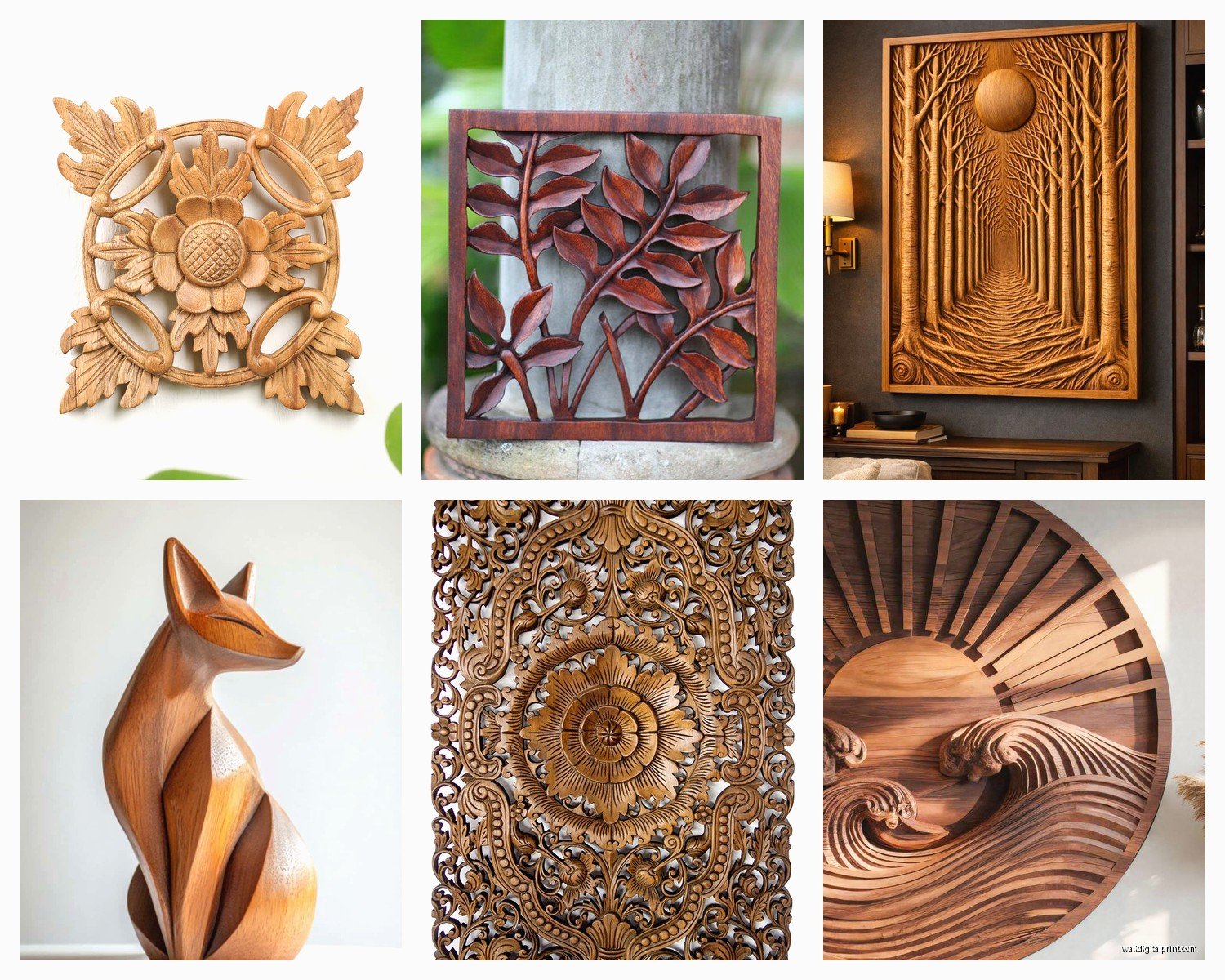
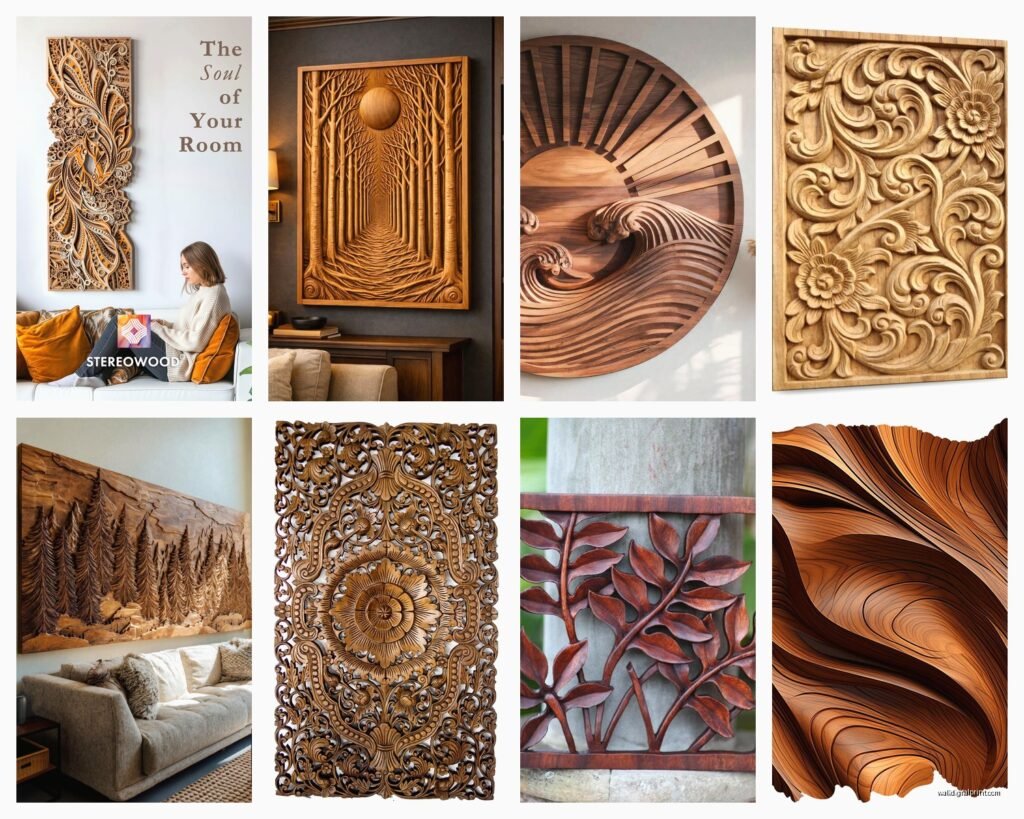
Carved Wood Wall Art: Hand-Carved Relief Sculptures
Mar
So I’ve been working with carved wood wall art for like seven years now and honestly it’s one of those things that sounds way fancier than it actually is to work with, but you gotta know what you’re buying because the quality range is WILD.
Wood Types Actually Matter More Than You Think
Okay so first thing – the wood itself. I learned this the hard way when I bought this gorgeous teak piece from Bali and it literally cracked within three months because my client’s house was so dry. Teak is beautiful, super durable against moisture, but it can split if your humidity drops too low. It’s dense though, so the carving detail stays sharp for years.
Walnut is probably my favorite to work with for clients. It’s got this rich chocolate color that deepens over time, and it’s stable enough that you don’t have to stress about seasonal changes destroying it. Plus the grain pattern shows through even intricate carvings which… *chef’s kiss*. It’s pricier but worth it if you’re doing a statement piece.
Mango wood is everywhere right now because it’s sustainable and cheap, but here’s the thing – it’s soft. Like really soft. I have a mango wood mandala piece in my own hallway and you can see tiny dings where I bumped it with a vacuum cleaner. If you have kids or dogs (my dog knocked into mine twice already), maybe skip mango for high-traffic areas.
Cedar smells amazing and resists insects naturally, but the color fades pretty fast in direct sunlight. I had one client who mounted a cedar relief sculpture opposite a west-facing window and within a year it went from this gorgeous reddish tone to almost gray.
Hand-Carved vs Machine-Assisted (Yeah There’s a Difference)
This is gonna sound weird but run your fingers over the piece if you can. Actually hand-carved work has slight irregularities – like the depth of cuts won’t be perfectly uniform, and you might feel tiny tool marks. Machine-routed pieces are suspiciously perfect. Both are fine honestly, but don’t pay hand-carved prices for machine work.
True hand-carved pieces take FOREVER to make. I visited a workshop in Ubud once and watched a guy spend like four hours on a single lotus petal. The detail you get is insane – undercuts, varying depths, texture variations that catch light differently. But you’re looking at $300-$2000+ depending on size.
Machine-assisted stuff can still look good though. They’ll do the rough cuts with a CNC router then finish by hand. You get maybe 70% of the character at like 40% of the cost. For a guest bedroom or something, totally fine.
How to Tell What You’re Actually Getting
Ask the seller these specific questions:
- What tools were used? (Hand chisels and gouges = fully hand-carved)
- How long did it take to make?
- Can you see photos of the workshop or artist?
- Are there slight variations between “identical” pieces? (Should be yes if hand-carved)
If they can’t answer or get defensive, it’s probably mass-produced.
Finishes and Sealants (Don’t Skip This Part)
Oh and another thing – the finish matters SO much for longevity. Raw unfinished wood looks organic and beautiful but it’s gonna absorb everything. Cooking oils if you put it near a kitchen, moisture from bathrooms, even just oils from your hands when you touch it.
Most pieces come with either oil finish, wax finish, or polyurethane. Oil finishes (like tung oil or linseed oil) penetrate the wood and let it breathe. They need reapplication every couple years but they keep the wood looking natural. I use this for most of my staging projects because it photographs well.
Wax gives you a soft sheen and some protection. It’s easy to reapply yourself – I just use Howard Feed-N-Wax which sounds like a cattle product but works great. You buff it on, let it sit for 20 minutes, buff it off. Takes maybe 15 minutes total.
Polyurethane is the tough stuff. It’s basically a plastic coating that seals everything. Good for humid environments or if the piece might get touched a lot, but it can look plasticky if applied too thick. And if it chips or scratches, you can’t really fix it easily.
Wait I forgot to mention – some imported pieces come with literally no finish at all and the sellers don’t tell you. I bought a huge Balinese panel once and it arrived completely raw. Had to seal it myself before installing which added three days to the project timeline and my client was NOT happy.
Testing for Existing Finish
Sprinkle a few drops of water on an inconspicuous spot. If it beads up, there’s some kind of sealant. If it soaks in within a few seconds, it’s unsealed or just oiled. Do this before you hang it so you know what you’re dealing with.
Installation is Trickier Than Regular Art
These things are HEAVY. Like way heavier than you’d think. A 3-foot diameter piece can easily weigh 20-30 pounds. You absolutely cannot use those sticky command strips or whatever. I learned this when a client texted me a photo of a $800 sculpture face-down on their floor because they used inadequate hardware.
For anything over 10 pounds you need proper wall anchors. I use these heavy-duty toggle bolts rated for like 50+ pounds each. Most carved pieces have either a keyhole slot on the back, D-rings, or a wire hanging system.
My Installation Process
- Find the studs if possible – always better to anchor into actual wood
- Mark where the hanging hardware sits on the back of the sculpture
- Measure carefully and mark the wall (I use painters tape to mark positions)
- Install anchors or screws into studs
- Get someone to help you lift it – seriously don’t do it alone
- Hang it and step back to check if it’s level
For really large pieces (like over 40 pounds), I use French cleats. It’s this two-part system where one piece mounts to the wall and one mounts to the sculpture, and they interlock. Super secure and you can slide the piece horizontally to adjust position.
Maintenance is Actually Pretty Easy
Okay so funny story – I had this client who was using Pledge furniture polish on a hand-carved teak piece and wondered why it looked dull and sticky. Don’t use silicone-based products on carved wood. Ever.
For regular dusting, I just use a soft brush attachment on a vacuum on low suction, or one of those microfiber dusters. Get into all the crevices because dust buildup in carved details looks really obvious.
Every six months or so, depending on your climate, you might want to condition the wood. For oil-finished pieces, I wipe them down with a barely damp cloth first (emphasis on BARELY – you’re not washing dishes here), let it dry completely, then apply a thin coat of wood oil with a cloth. Rub it in following the grain, let it sit for the recommended time (usually 15-30 minutes), then buff off the excess.
If you notice the wood looking dry or the color fading, it needs conditioning. If it still has a nice sheen and the surface feels smooth not rough, you can skip it.
Common Problems and Actual Solutions
Cracking: This is usually from humidity changes. If you live somewhere with harsh winters and you run the heat constantly, the indoor air gets super dry. I keep a humidifier running in rooms with valuable wood pieces during winter. Target 40-50% humidity.
If you already have cracks, small ones are kinda part of the character honestly. Large splits that go through detailed carving… that’s tougher. You can fill them with wood filler that matches the color, but it’ll never be invisible. Prevention is way easier than fixing.
Fading: UV light is the enemy. Don’t hang carved wood opposite windows with direct sun unless you’re okay with it aging. Some people actually like the weathered look, but if you want to preserve the original color, keep it away from bright light or use UV-filtering window film.
Pest damage: This is rare but I’ve seen it twice. Little holes appearing in the wood mean wood-boring beetles. Freeze the piece if it’s small enough (wrap it in plastic and put it in a freezer for a week), or call a professional. Don’t ignore it because they’ll spread to other wood furniture.
Where to Actually Buy Decent Pieces
Etsy has some legit artisans but you gotta dig through a LOT of resellers. Look for shops that show progress photos of their work, have inconsistencies between pieces (good sign), and can answer technical questions about their process.
World Market and similar stores have affordable options but they’re definitely machine-assisted at minimum. Fine for starter pieces or if you’re not worried about investment quality.
If you want serious quality, look for galleries specializing in woodwork or cultural art. I’ve found amazing pieces at museum gift shops too – they usually source from actual artisans and the prices aren’t as marked up as you’d think.
Estate sales and antique markets can be goldmines. I found a 1960s carved mahogany panel at an estate sale for $75 that would cost $600+ new. Just inspect carefully for damage and pest issues.
My cat just knocked something over, hang on… okay false alarm, she’s just being dramatic.
Sizing and Placement Tips
People always buy these too small. A 12-inch piece on a big blank wall just looks sad and lost. I usually recommend going at least 30-36 inches for a focal wall, or creating a grouping of smaller pieces.
For groupings, odd numbers look better – three or five pieces rather than four. And vary the sizes and depths. I did this installation last month with three circular mandala carvings in 24″, 18″, and 12″ sizes arranged in a cluster and it looked way more interesting than three identical ones.
Height matters too. The center of the piece should be roughly at eye level, which is usually 57-60 inches from the floor. Unless you’re mounting above furniture, then you want the bottom edge about 6-8 inches above the furniture top.
Style Considerations That Actually Matter
Geometric patterns work in modern spaces better than you’d think. I’ve put ornate carved panels in minimalist rooms and if everything else is simple, the carved piece becomes this amazing textural moment without looking cluttered.
Floral and nature motifs obviously work in traditional or bohemian spaces but they can also soften industrial interiors. I did a loft apartment with exposed brick and concrete where we mounted this huge carved lotus panel and it was *perfect* for warming up all that hard surface.
Religious or cultural symbols – just be respectful about this. Don’t buy a Ganesha carving because it “looks cool” if you don’t have any connection to Hindu culture. There are plenty of non-religious options with similar aesthetic qualities.
Abstract or contemporary carved work is harder to find but so worth it. Look for artists doing sculptural relief work that’s more about form and shadow than representational imagery.
Budget Real Talk
You can find machine-made pieces starting around $50-$80 for something small. These are fine, truly. Not everything has to be an heirloom.
Mid-range hand-finished work runs $150-$400 depending on size and complexity. This is the sweet spot for most people – good quality without the investment anxiety.
High-end fully hand-carved pieces from master craftspeople start around $500 and go up to… well, I’ve seen pieces for $5000+. At this level you’re paying for artistry, time, and skill. The detail and execution is noticeably different.
Don’t forget to budget for proper installation hardware – another $20-$40 depending on what you need. And maybe a wood conditioning product, another $10-$15.
Honestly the biggest mistake I see is people cheaping out on the hardware and then the piece falls and gets damaged. Spend the extra $20 on proper anchors.
Final Random Tips
Take photos before you hang it so you have documentation for insurance if needed. I started doing this after a moving company damaged a client’s piece and we had no proof of its original condition.
If you’re buying online, ask for photos of the actual piece you’ll receive, not stock photos. Variations in wood grain and carving can be significant.
Consider the room’s function – intricate carvings in a kitchen will collect grease film and be annoying to clean. Save the detailed stuff for living areas and bedrooms.
And honestly? Sometimes the $80 piece from HomeGoods looks just as good from 6 feet away as the $800 artisan piece. Know what matters to you – if it’s purely decorative and you’re not worried about provenance or resale value, don’t overspend.
But if you love the idea of supporting individual craftspeople and having something with a story and soul… yeah, save up for the real deal. I have one piece in my living room that I spent way too much on and I genuinely smile every time I look at it, so there’s that.