Wall Art Guide, Wall Art Tutoriels
Crystal Glass Wall Art: Faceted Clear Sparkling Designs
Mar
So I’ve been completely obsessed with crystal glass wall art lately and honestly it started because a client asked me to source something that would catch light in her entryway and I went down this massive rabbit hole. Like, I thought it’d be simple but then I discovered there’s actual faceted crystal glass versus regular glass with a coating versus acrylic that just *looks* like crystal and wow the price differences are wild.
What You’re Actually Looking At Material-Wise
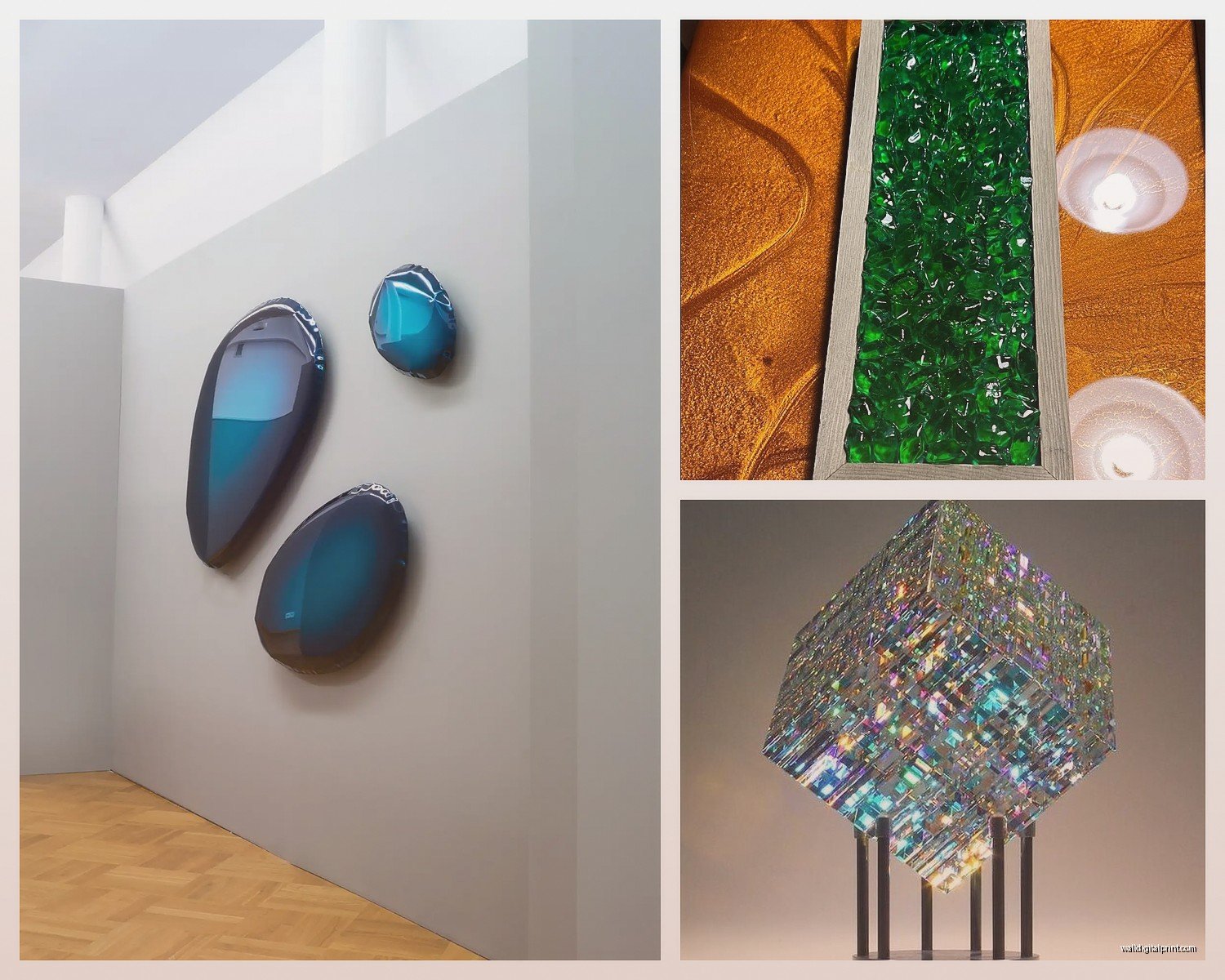
Okay so first thing – true crystal glass has lead oxide in it which is what gives it that insane sparkle factor. It bends light differently than regular glass because of the lead content, usually between 24-30% for quality pieces. I spent like three hours one night (my dog was snoring next to me, very distracting) comparing how light moved through different samples and the real crystal stuff? It literally throws rainbows across your wall when sunlight hits it right.
But here’s where it gets tricky – a lot of “crystal” wall art is actually just clear glass that’s been faceted. Still pretty, definitely cheaper, but it doesn’t have that same prismatic quality. You can tell the difference if you hold it up to light and look for that rainbow spectrum effect. Real crystal will give you those color separations, regular glass just stays…clear.
The Weight Test Nobody Tells You About
Real crystal is HEAVY. Like surprisingly heavy. I picked up this gorgeous faceted piece at a trade show thinking it was gonna be light and nearly dropped it because I wasn’t expecting the weight. If someone’s selling you a large crystal wall installation for like $50, it’s probably acrylic or thin glass. A genuine 12-inch crystal panel will weigh several pounds at minimum.
Faceting Styles and What Actually Works on Walls
The faceting is everything with these pieces. I’ve tested probably 20 different styles by now and some patterns just eat light while others scatter it beautifully.
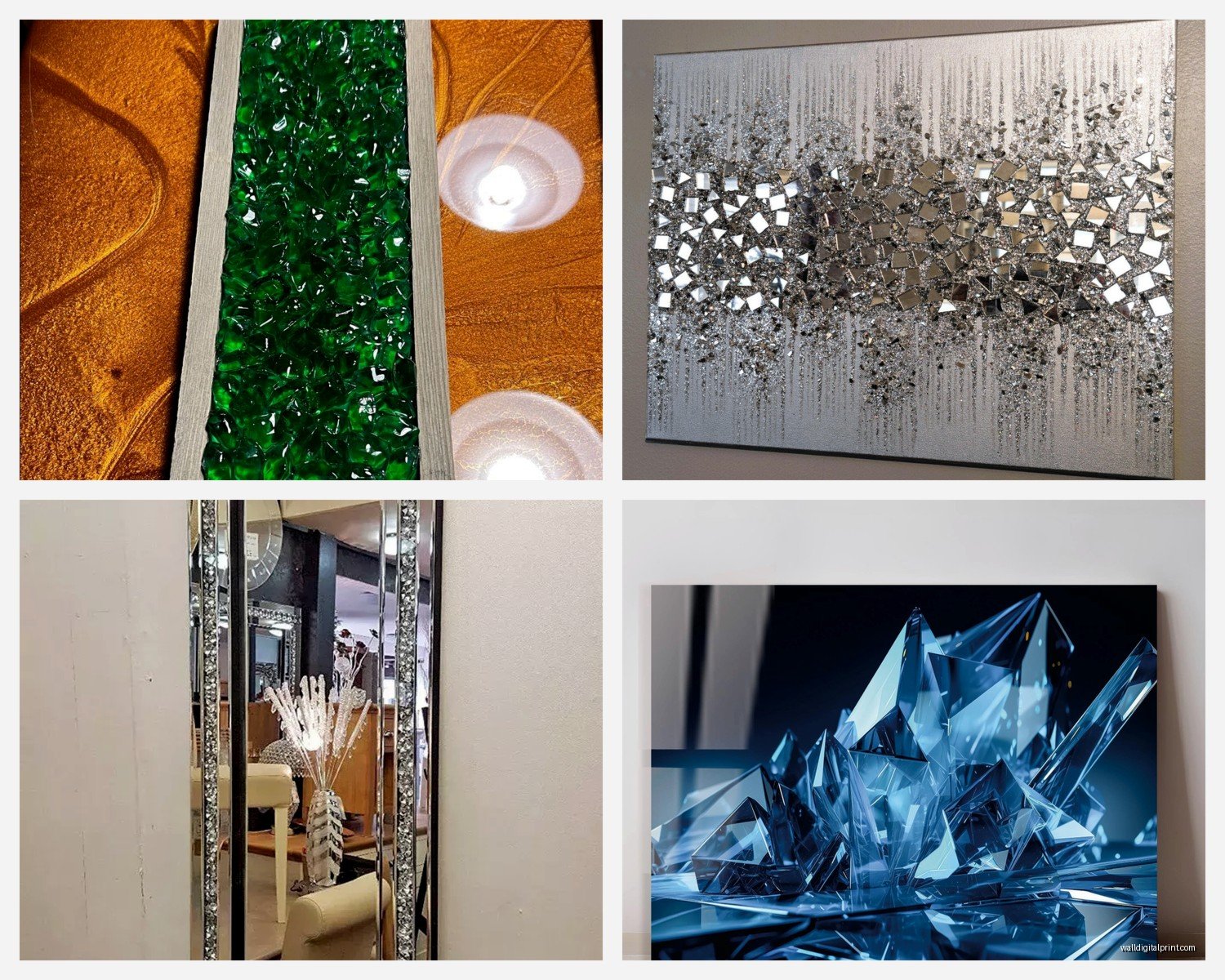
Geometric facets – these are your classic diamond cuts, usually arranged in repeating patterns. They’re the most common and honestly they work. Each facet acts like a tiny prism so you get tons of light play. The deeper the cuts the better the effect though. Shallow faceting looks kinda flat unless you’re in really direct light.
Organic/irregular facets – this is where artists get creative with asymmetrical cuts. I installed one in my own hallway that has these random angular facets and it creates this almost chaotic light scatter that I’m obsessed with. Changes completely depending on time of day.
Beveled edges – technically not faceting but often combined with it. The beveled edges catch light from the side and create these bright lines of refraction. Super effective for pieces that hang near windows.
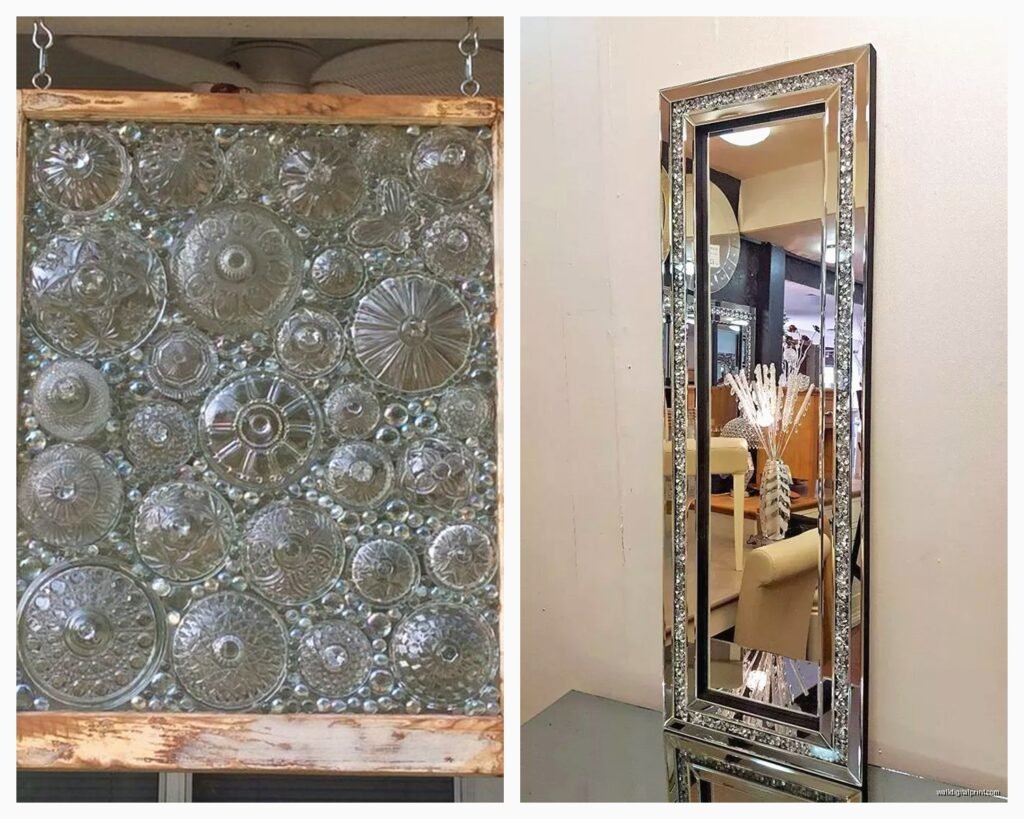
Wait I forgot to mention – the backing matters SO much. Some crystal panels are clear all the way through, others have frosted or mirrored backs. The mirrored backing amplifies the sparkle but you lose that ethereal see-through quality. Frosted gives you privacy if you’re hanging it in front of a window but diffuses the rainbow effects. Clear backing is my preference for maximum light play but you gotta be okay with whatever’s behind it showing through.
Installation Real Talk
Okay so funny story – I once tried to hang a crystal panel with regular picture hanging wire and it literally pulled the mounting hardware right out of the drywall. These things are NOT lightweight art prints.
You need proper wall anchors. For anything over 5 pounds I use toggle bolts or find the studs. The bigger installations sometimes come with their own mounting systems which is great but a lot of the mid-range pieces just have D-rings or wire on the back and expect you to figure it out.
Mounting Hardware That Actually Works
- Heavy-duty D-rings rated for at least 2x the weight of your piece
- Braided steel picture wire, not that thin stuff
- Wall anchors rated for 50+ pounds if you’re going into drywall
- French cleats for really large installations – this changed my life honestly
The French cleat system is genius for heavy crystal art because it distributes weight across a horizontal line instead of putting all the stress on two points. You mount one piece to the wall, one to the back of the art, and they hook together. Super secure and you can adjust positioning easily.
Where to Position These Things
Light source is everything and I learned this the hard way. Bought this beautiful faceted crystal piece for above my couch and it just sat there looking like expensive glass for three months because there was no direct light hitting it. Moved it to a wall perpendicular to my window and suddenly it’s throwing light patterns everywhere.
Best positions I’ve found:
– Directly across from windows where morning or afternoon sun will hit it
– In entryways with skylights (if you’re lucky enough to have one)
– On walls adjacent to windows where angled light can catch the facets
– Near light fixtures if you’re gonna use artificial light
Oh and another thing – these pieces change dramatically throughout the day. That crystal panel in my hallway looks completely different at 8am versus 3pm versus evening with lamps on. It’s almost like having different art pieces depending on lighting conditions.
Artificial Lighting Setup
If you don’t have great natural light, you can fake it with the right artificial setup. LED spotlights work better than you’d think. I use narrow beam angle spots (like 15-25 degrees) positioned to hit the crystal at an angle. Direct frontal lighting is boring – you want that light coming from the side or slightly above to activate all those facets.
Warm white LEDs (2700-3000K) give you more amber tones in the refractions while cool white (5000K+) creates sharper, more blue-tinted rainbows. I usually go warm because it feels less clinical but that’s personal preference.
Price Ranges and What You Get
So I’m gonna be real about pricing because this market is all over the place.
Under $100 – You’re probably getting acrylic or thin glass. Not necessarily bad, just know what you’re buying. Some of the acrylic pieces are actually pretty convincing from a distance.
$100-$300 – This is where you start seeing real glass with decent faceting. Probably machine-cut rather than hand-cut. Quality varies wildly in this range though.
$300-$800 – Solid crystal glass territory. Better faceting, heavier pieces, usually better mounting hardware included. This is my sweet spot for client projects.
$800+ – We’re talking art gallery pieces here. Hand-cut crystal, unique designs, often from specific artists. I have a client who spent $2400 on a custom faceted crystal installation and yeah it’s stunning but like…you gotta really love it.
Maintenance Because Nobody Talks About This
Crystal glass collects dust like crazy and the facets make it super obvious. I clean mine maybe once a month? More if they’re in high-traffic areas.
Use a microfiber cloth slightly dampened with water and a tiny bit of glass cleaner. Don’t spray directly on the piece because cleaner can seep into the mounting hardware. Spray the cloth instead. Wipe following the facet lines because going against them feels weird and you can see streaks more easily.
For really intricate faceting I sometimes use a soft paintbrush to get dust out of the deep cuts first, then wipe with the cloth. My cat likes to watch me do this for some reason, very unhelpful.
The Fingerprint Problem
If you have kids or you’re gonna be touching these pieces during installation, wear cotton gloves. Fingerprints on faceted crystal are SO visible and annoying to clean off. The oils from your skin get into all those tiny angles and you end up wiping the same spot five times.
Combining Multiple Pieces
This is where it gets really fun – creating installations with multiple crystal panels. I did a cluster of five different sized faceted squares for a client’s dining room and the way they all interact with light at different times is incredible.
When you’re combining pieces, think about:
– Varying the facet patterns so they’re not all identical
– Different sizes create more visual interest than same-size grid
– Spacing matters – too close and they compete, too far and they feel disconnected
– I usually do 2-4 inches between pieces depending on size
You can also mix crystal with other materials. I’ve paired faceted crystal with brass geometric pieces, with natural wood frames, even with concrete tiles. The contrast between super sparkly crystal and matte materials is really striking.
Custom vs Ready-Made
Ready-made pieces are obviously easier and cheaper. You can find decent options on Etsy, specialty home decor sites, even occasionally at places like West Elm or CB2 though their crystal stuff tends to be more expensive for what you get.
Custom crystal art is a whole other world. You’re working directly with artists or glass studios, can specify exact dimensions and facet patterns, choose your glass type. Lead time is usually 4-8 weeks minimum. I’ve done this for a few high-end residential projects and the results are always unique but you’re paying for that customization.
Questions to Ask Custom Artists
- What’s the lead oxide percentage in your crystal?
- Is the faceting hand-cut or machine-cut?
- What’s included for mounting hardware?
- Do you provide installation instructions or templates?
- What’s the thickness of the glass?
Thickness affects both weight and light refraction. Thicker crystal (like 1/2 inch or more) has more depth for light to travel through so you get more complex rainbow effects but it’s also significantly heavier.
Common Issues I’ve Dealt With
The mounting wire breaking – happened twice. Always use steel wire rated way above your piece’s weight.
Pieces arriving with chips – crystal is fragile during shipping. Make sure seller packs it properly with corner protection.
Colors looking different than photos – this is tough because so much depends on lighting. Ask sellers for photos in different lighting conditions if possible.
Wall damage from improper installation – use those proper anchors I mentioned. Learned this one the expensive way when I had to patch and repaint a client’s wall.
Oh and one more thing – some crystal pieces hum or vibrate slightly in certain conditions. Had a large panel that would make this weird subtle sound when the AC kicked on. Air movement across the facets I guess? Not loud but noticeable in a quiet room. Repositioning fixed it but just something to be aware of.
My Current Favorite Sources
I’m not gonna name specific brands because things change but I’ve had good luck with artisan glass studios on Etsy, specialty lighting stores (they often carry crystal decor), and architectural salvage places sometimes have vintage crystal panels that are incredible.
Estate sales can be gold mines too. Found an amazing Art Deco era faceted crystal piece at an estate sale for $85 that would easily cost $400+ new. Just gotta check carefully for chips or cracks.
The key thing is seeing pieces in person when possible or at minimum getting really detailed photos and videos showing how light moves through them. Static product photos don’t tell you much about how these pieces actually perform in a space.
Anyway that’s basically everything I’ve learned from installing probably 30+ crystal wall art pieces over the past couple years. It’s such a specific thing but when you get it right the effect is just magical, especially in spaces that could use more light and sparkle without adding more lamps or fixtures.