Wall Art Guide, Wall Art Tutoriels
Large Metal Wall Art: Oversized Sculpture Statement Pieces
Mar
So I spent like three hours last weekend hanging this massive metal sculpture in my living room and honestly wish someone had just texted me all this before I started because wow, there’s so much nobody tells you about oversized metal wall art.
The Weight Thing Nobody Warns You About Properly
Okay first thing – these pieces are HEAVY. Like way heavier than you think. I’m talking 30-60 pounds for most statement pieces, and some of those industrial ones can hit 80+ pounds. My neighbor bought this gorgeous abstract piece from West Elm and didn’t check the weight specs, just assumed it’d be like hanging a picture frame. Ended up pulling the drywall anchors right out of the wall at 2am. Her dog lost it.
You gotta check if you’re mounting on drywall, plaster, or brick because that changes everything. Drywall needs those heavy-duty toggle bolts – the ones that open up behind the wall. I use the SnapToggle brand usually, rated for like 200+ pounds. For anything over 40 pounds though? Find the studs. Just find them. I have this Zircon stud finder that’s saved my life multiple times.
What Actually Works for Mounting
- French cleats for anything over 50 pounds – these distribute weight SO much better
- D-rings with braided wire if the piece came with them (don’t swap these out unless you know what you’re doing)
- Multiple anchor points – never trust just one or two mounting spots for large pieces
- Wall plate systems for textured walls because toggle bolts can be weird with texture
The French cleat thing is gonna sound complicated but it’s literally just two pieces of wood or metal mounted at angles that lock together. One on the wall, one on the artwork. Super secure and you can adjust the piece side to side after mounting which is clutch.
Metal Types and What They Actually Mean for Your Space
This is where I see people mess up constantly. They fall in love with a piece online and don’t think about what metal it’s made from.
Steel is the most common and it’s heavy but durable. Comes in different finishes – brushed, powder-coated, raw. Raw steel will patina over time which some people love but if you’re in a humid climate it’s gonna rust faster than you want. I had a client in Charleston who learned this the hard way with a $800 piece.
Aluminum is lighter which makes installation easier but it can look cheaper if it’s not done well. The good aluminum pieces have this almost silvery quality that works amazing in modern spaces. I’ve got an aluminum geometric piece in my office that weighs maybe 15 pounds but looks substantial.
Copper and brass are having a moment right now but they’re expensive and they WILL patina. Like that’s the whole point. If you want that shiny penny look forever, you gotta seal it with something like ProtectaClear. I do this every six months on my brass sunburst piece.
Finish Options That Actually Matter
Powder-coated finishes are the most durable. They’re baked on so they resist scratching and fading. Black powder-coat is super popular right now – goes with everything, doesn’t show dust.
Painted finishes are hit or miss. Cheap ones chip easily. If you’re buying painted metal art, scratch it gently with your fingernail in an inconspicuous spot before buying. If paint flakes off, walk away.
Patina finishes are cool but inconsistent. Each piece looks different. I actually love this but some people want exact color matches and that’s not happening with natural patina.
Size Considerations That’ll Save Your Sanity
Okay so funny story – I ordered this 6-foot wide piece for above a sectional and didn’t measure the stairwell. Couldn’t get it upstairs. Had to return it and pay shipping both ways which was like $200. Measure your doorways, stairwells, hallways, ALL of it.
For proportion, the general rule is your wall art should take up about 60-75% of the furniture width below it. So if you’ve got an 8-foot sofa, you’re looking at roughly 5-6 feet of art width. But honestly this rule is more of a suggestion? I’ve broken it plenty of times when the piece just feels right.
Height-wise, the center of your piece should be at eye level, which is usually 57-60 inches from the floor. But with oversized pieces this can look weird because if the piece is 4 feet tall, you’re mounting it pretty high. I usually go a bit lower with really tall pieces, maybe center at 54 inches.
Where to Actually Buy Quality Pieces
I’ve tested a bunch of sources and here’s what I’ve found:
Etsy sellers can be amazing but wildly inconsistent. Look for shops with lots of reviews and detailed photos showing the mounting hardware. I’ve found incredible custom pieces there for way less than galleries charge. Search terms like “industrial metal wall art” or “modern metal sculpture” work better than just “metal wall art.”
West Elm and CB2 have solid mid-range options. Their stuff is well-made and the mounting hardware is usually good. Prices range from $200-$800 mostly.
AllModern has a huge selection and I’ve had good luck with their pieces. Free shipping over $49 which is clutch for heavy items.
Local metal artists are honestly my favorite though. You can see the work in person, understand the weight, and usually they’ll help with installation advice. Plus you’re supporting local which feels good.
Red Flags When Shopping Online
- No weight specifications listed – this means they don’t want you to know how cheap/light it is
- Only renders shown, no actual product photos
- Unclear return policies for large items
- No close-up shots of the finish quality
- Suspiciously cheap prices for large pieces (under $100 for anything over 3 feet is usually garbage)
Installation Day Realities
Get a second person. Just do it. I tried hanging a 4-foot piece by myself and dropped it, dented my hardwood floor. Not worth it.
Have a level and use it obsessively. These large pieces show even slight tilts really obviously. I use a laser level for anything over 3 feet wide because it projects a line across the whole wall.
Oh and another thing – mark your pilot holes with painters tape. I write “LEFT” and “RIGHT” on the tape pieces because I’ve definitely drilled holes in the wrong spots before and had to patch them.
The actual hanging process usually takes longer than you think. Give yourself 45 minutes minimum, even if you’re experienced. There’s measuring, leveling, drilling, mounting brackets, hanging the piece, adjusting, stepping back, adjusting again…
Styles That Are Working Right Now
Abstract geometric stuff is everywhere and for good reason – it works in almost any space. Think overlapping circles, angular shapes, asymmetrical compositions. These tend to be statement pieces without being too literal.
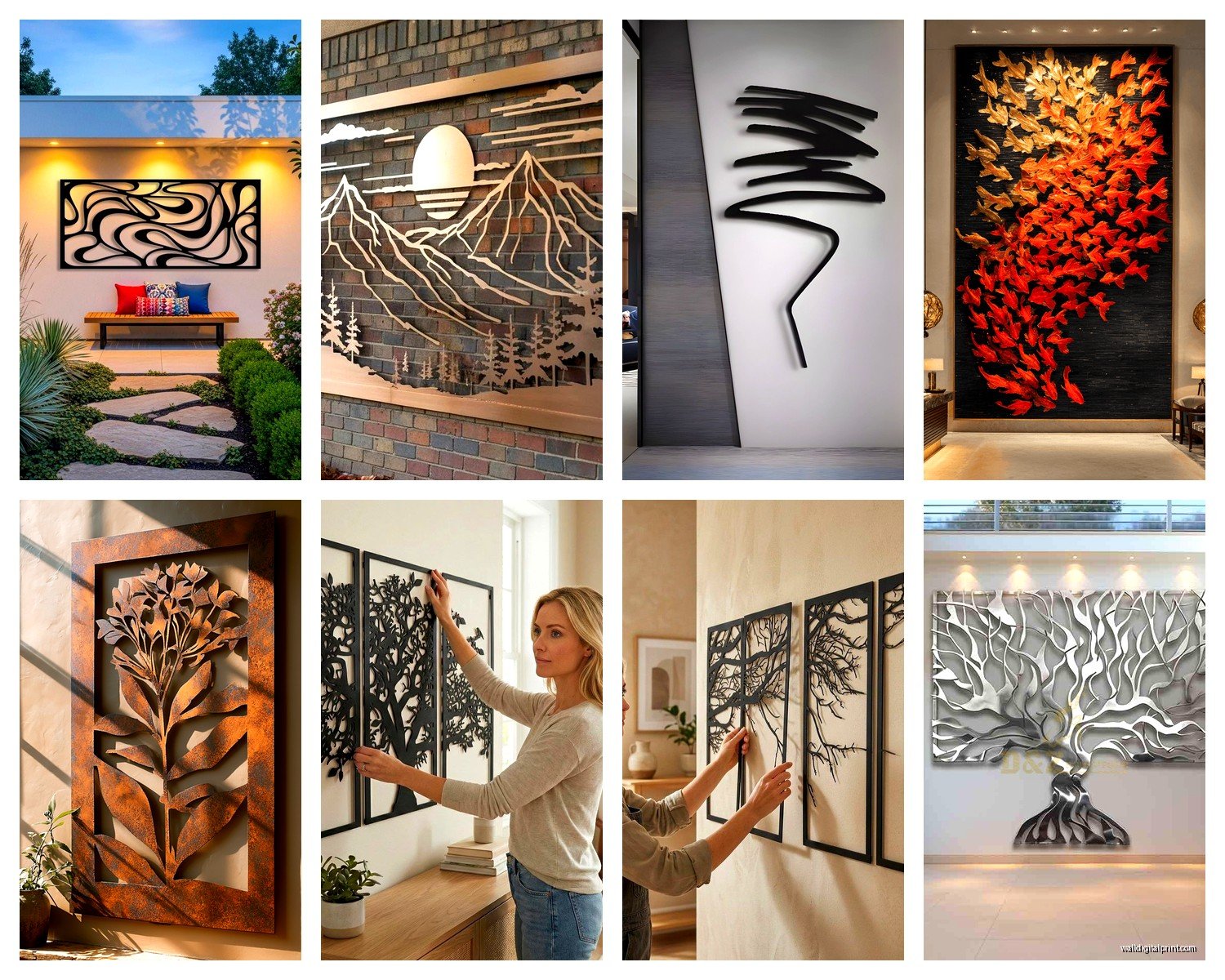
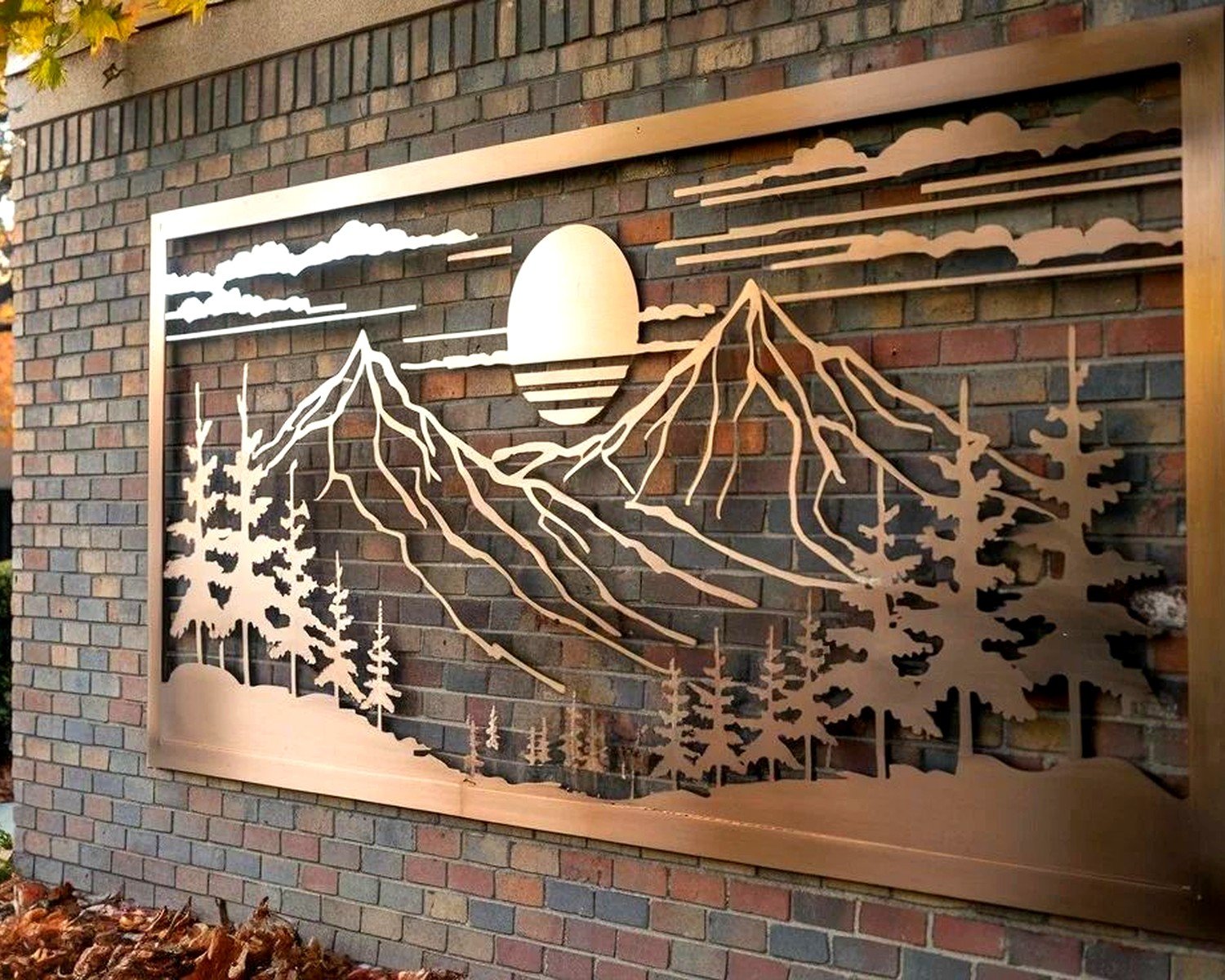
Nature-inspired metalwork is huge. Trees, leaves, mountains, waves. I was watching The Last of Us while researching pieces last month and kept seeing these branch-like sculptures that would’ve been perfect for the vibe. They add organic movement to spaces that feel too angular.
Industrial minimalist pieces – simple lines, raw finishes, architectural vibes. Usually steel or iron. These work amazingly in lofts or modern spaces but can also create cool contrast in traditional homes.
Typography and word art in metal is either really good or really bad, no in-between. “Home” and “Gather” pieces can look cheap quickly. But custom phrases or meaningful quotes in good fonts? Those can be stunning.
What to Avoid Unless You’re Really Committed
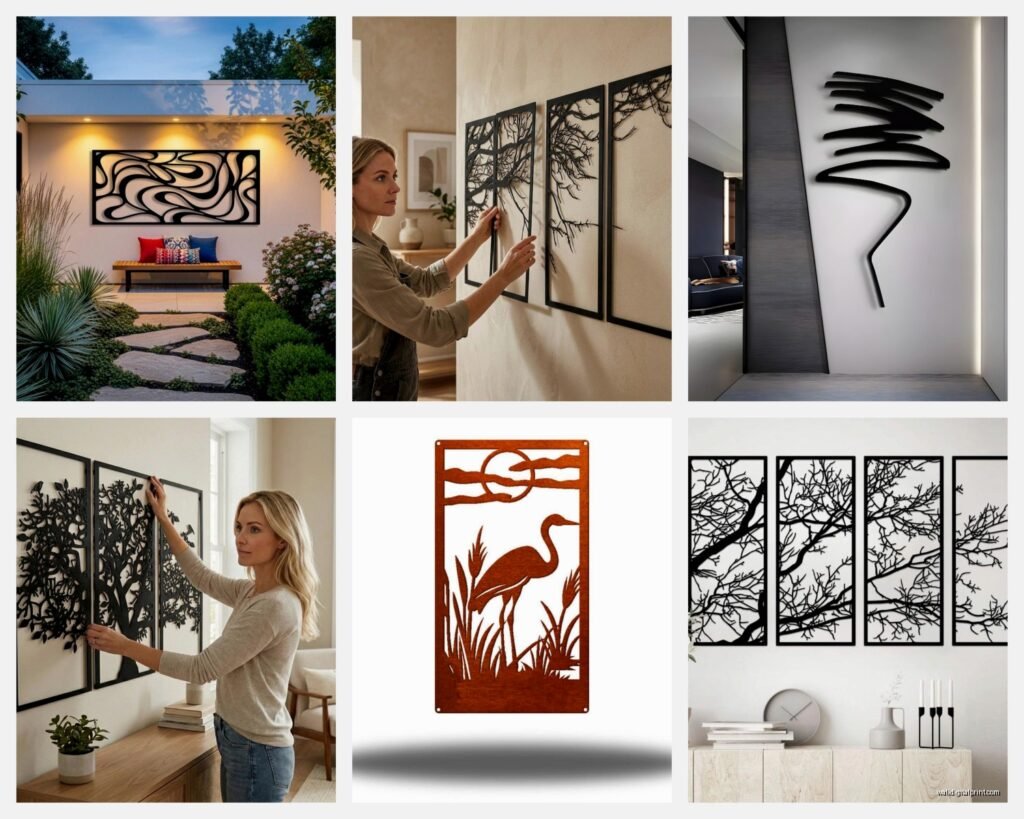
Those multi-panel sets where you hang like 5 separate pieces – they’re SO hard to get right. One piece slightly off and the whole thing looks wonky. I’ve installed dozens and they still stress me out.
Super trendy specific shapes that’ll date quickly. Like those arrow wall art pieces from 2016? Nobody wants those anymore. Stick with abstract or timeless designs unless you’re okay redecorating in a few years.
Anything that looks like it came from HomeGoods clearance section. You know what I mean. The mass-produced stuff with visible seams and rough edges. It just reads as cheap no matter how you style it.
Maintenance Nobody Mentions
Dust accumulates on metal art more than you’d think, especially textured or dimensional pieces. I use a microfiber duster every couple weeks and a slightly damp cloth monthly.
For outdoor pieces or pieces in humid rooms, check for rust spots every few months. Catch them early and you can treat them with naval jelly or a rust converter. Wait too long and you’re dealing with structural issues.
The mounting hardware can loosen over time, especially in houses that settle or have temperature fluctuations. I check mine twice a year, usually when I change smoke detector batteries so I remember.
Mixing Metals and Other Materials
Okay this is gonna sound weird but I actually love mixing metal finishes. The old rule about matching all your metals is dead. Black metal art with brass accents in the room? Beautiful. Copper sculpture with chrome fixtures? Can totally work.
The key is repeating finishes at least twice in a space. So if you have copper wall art, bring in copper somewhere else – maybe a lamp base or decorative objects. This makes it look intentional rather than random.
Metal plays really well with wood, concrete, and stone. The contrast between cold metal and warm wood is chef’s kiss. I have a steel piece above a reclaimed wood console and it’s probably my favorite vignette in my house.
Glass and metal together can get tricky – sometimes it reads too cold. Add in textiles, plants, or warm lighting to balance it out.
wait I forgot to mention – if you’re hanging metal art above a heat source like a fireplace or radiator, make sure it’s rated for temperature changes. Some finishes can discolor or warp with heat exposure. Most quality pieces are fine but cheap painted ones can bubble.
Budget Breakdown Reality Check
Small statement pieces (2-3 feet): $100-$300
Mid-size focal pieces (3-5 feet): $300-$800
Large statement sculptures (5+ feet): $800-$2500+
Custom commissioned work: $1500-$5000+
You can definitely find deals outside these ranges but this is what I typically see for quality pieces that’ll last. The super cheap stuff under $100 for large pieces is usually thin metal that looks flat and cheap in person.
Installation costs if you hire someone: $100-$300 depending on complexity and your area. Worth it for really heavy or expensive pieces.
The Lighting Factor Everyone Forgets
Metal art looks completely different depending on lighting. Matte finishes are more forgiving but reflective metals need careful light placement. I learned this after installing a polished steel piece that created this insane glare in the afternoon sun.
Picture lights or wall washers can make dimensional metal pieces look incredible at night. The shadows and highlights bring out details you can’t see in flat lighting. I use LED picture lights that don’t heat up because heat + metal can be problematic over time.
Natural light considerations are real too. If your piece will get direct sunlight, think about how finishes might change. Painted pieces can fade, raw metals will patina faster, and some finishes will show every fingerprint and dust particle.
Alright that’s basically everything I wish someone had told me before I started collecting and installing these pieces. The main thing is just measure twice, use proper hardware, and don’t be afraid to go bigger than feels comfortable – oversized art is supposed to make a statement.