Wall Art Guide, Wall Art Tutoriels
3D Metal Wall Art Sculpture: Dimensional Steel Designs
Mar
So I’ve been working with 3D metal wall art for like three years now and honestly it’s one of those materials that looks way more intimidating than it actually is. You just gotta know what you’re dealing with before you buy something that’s gonna weigh 40 pounds and cost you $300.
The Weight Thing Nobody Warns You About
Okay first thing – steel is HEAVY. Like I had this client last month who ordered this gorgeous dimensional piece online, didn’t check the weight, and her drywall literally couldn’t handle it. We’re talking proper anchors here, not those sad little nails that come in the package. I always use toggle bolts for anything over 10 pounds, and most 3D steel sculptures are gonna be in the 15-30 pound range for medium-sized pieces.
You need to find the studs if possible. I use one of those stud finder things from the hardware store – costs like $20 and saves you so much headache. If you can’t hit a stud, get heavy-duty drywall anchors rated for at least double the weight of your piece. Better safe than having a metal sculpture crash down at 2am and scare the hell out of everyone.
Types of Steel Finishes You’ll Actually See
The finish matters SO much more than I thought when I started. Here’s what you’re gonna encounter:
Raw/Natural Steel
This is the unfinished metal look – it’ll have that industrial vibe but here’s the thing, it WILL rust over time if you don’t seal it. Some people want that patina effect, which fair enough, looks cool in the right space. But if you’re putting it anywhere with humidity (near a bathroom, in a basement, coastal areas) you gotta seal it with a clear coat. I use Renaissance Wax for my pieces because it doesn’t change the color much.
Powder Coated
This is probably what most commercial pieces use. It’s durable as hell, comes in any color you want, and doesn’t need much maintenance. The powder coating is baked on so it’s not gonna chip easily like regular paint. I’ve had powder coated pieces in outdoor covered patios for two years with zero issues.
Brushed or Polished
Brushed steel has those linear scratch patterns that catch light really nicely – super modern look. Polished is mirror-like and honestly shows every fingerprint and dust speck, so unless you’re committed to wiping it down weekly, maybe skip the high polish. Brushed is way more forgiving.
Oxidized/Rusted Intentionally
Some artists actually force the rusting process to create specific color patterns – oranges, browns, deep reds. It’s sealed after so it won’t keep rusting, but you get that aged look immediately. My friend has one in her dining room and people always think it’s way older than it is.
Gauges and Thickness
Okay so this is gonna sound weird but the gauge number works backwards – higher number means thinner metal. Most wall art uses 16 to 20 gauge steel.
16 gauge is about 1/16 inch thick – this is what you want for larger pieces or anything with intricate cuts because it holds its shape better and feels substantial. 18 gauge is thinner, works fine for smaller pieces or layered designs where weight is a concern. 20 gauge starts getting pretty thin and can feel flimsy on bigger sculptures.
I made the mistake once of ordering a piece that was 22 gauge and it just… looked cheap when it arrived? The dimensional effect wasn’t as pronounced because the metal could bend too easily.
Understanding the Dimensional Aspect
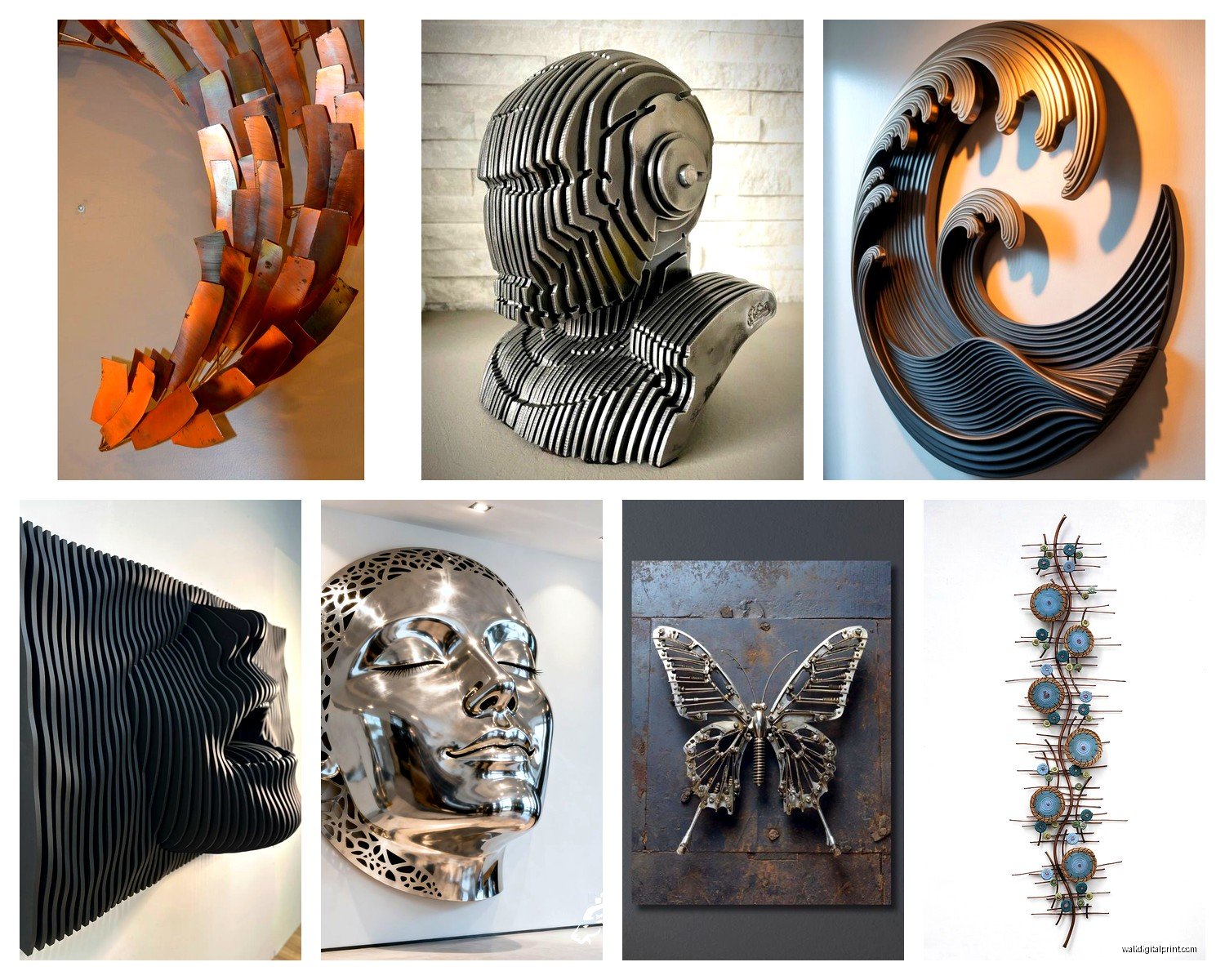
This is what makes 3D metal art actually interesting versus flat metal prints. The dimensionality comes from a few techniques:
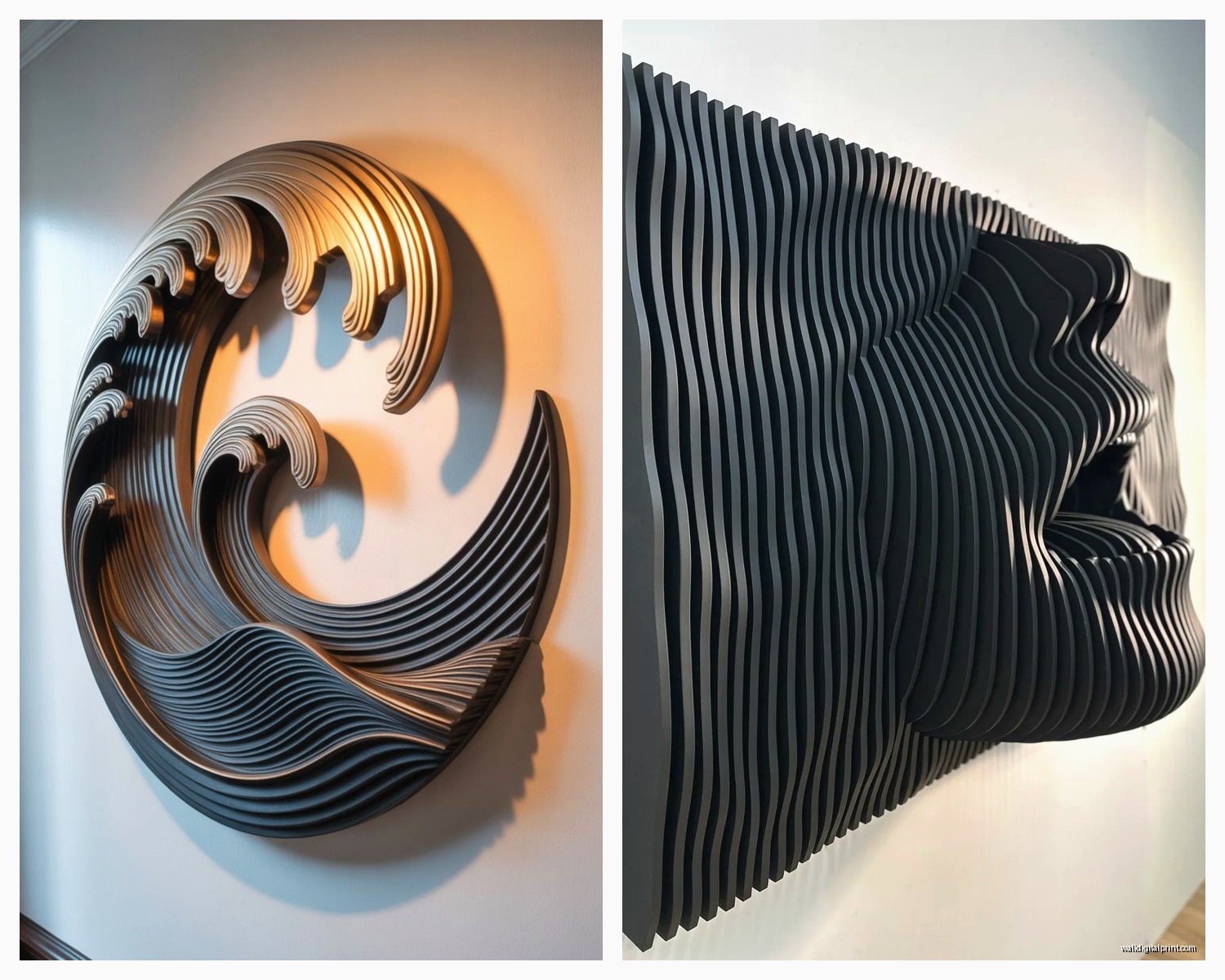
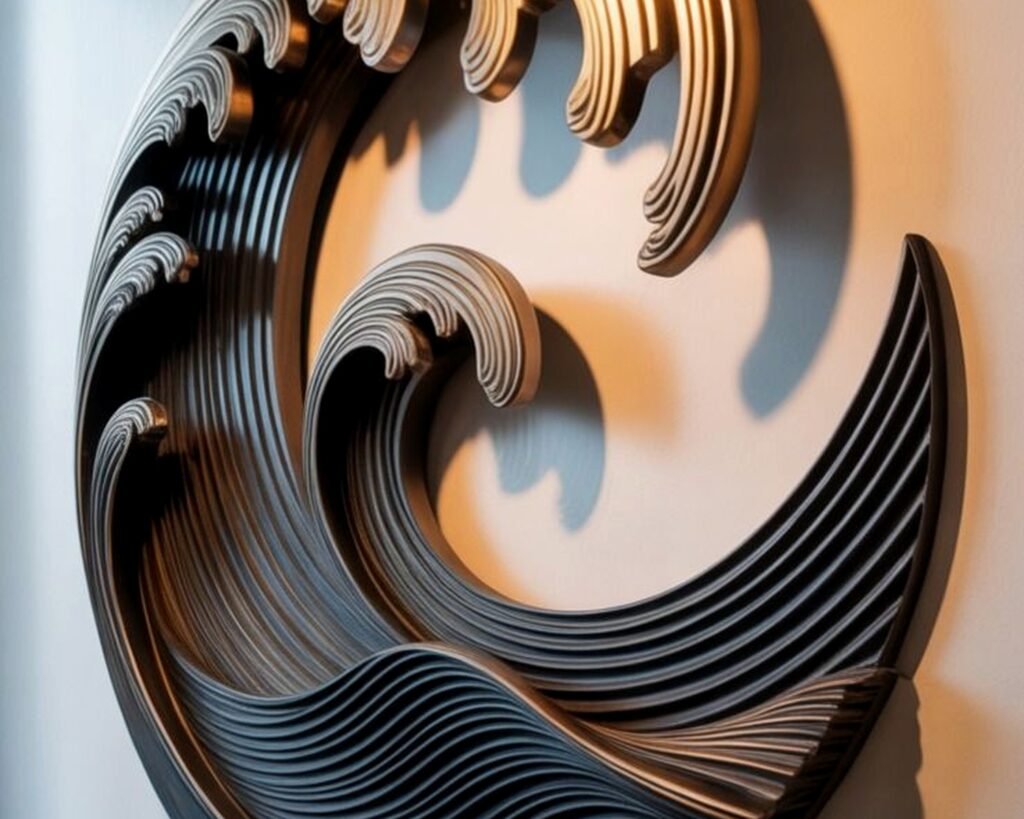
Layering – multiple pieces of metal stacked with spacers between them, creates actual depth and shadow play. The spacers are usually 1/4 inch to 2 inches depending on the effect.
Bending and forming – the metal is literally bent into curves or angles. This requires thicker gauge metal to hold the shape without supports.
Welded elements – pieces welded at angles to create 3D structures. You can see the weld points usually, which I actually think adds to the handmade appeal.
Cut-outs with backing – a design is cut from one sheet, then mounted on another sheet in a contrasting color or finish, creates a shadow box effect.
The best pieces combine multiple techniques. I’ve got this one sculpture in my office that has layered elements AND bent pieces and the way it catches afternoon light is just *chef’s kiss*.
Sizing Considerations That Actually Matter
Here’s what I tell everyone – 3D pieces need MORE space around them than flat art because the shadows they cast become part of the visual footprint. A 36-inch wide sculpture might need like 48 inches of wall space to really breathe and show off its dimensionality.
Also consider the viewing distance. Really intricate 3D work needs to be somewhere people can get close to appreciate it, but larger abstract dimensional pieces can be viewed from across a room. I usually do this thing where I hold up a cardboard template at different distances to see where it looks best.
Oh and another thing – measure the depth of the piece, not just width and height. Some 3D sculptures project 4-6 inches from the wall, which matters if you’re putting it near a doorway or in a hallway where people walk past.
Small Spaces vs Large Walls
For small spaces like entryways or powder rooms, go with pieces that are 12-24 inches and have simpler dimensional elements. Too much complexity in a small space just looks cluttered.
Large walls (like over a sofa or in a two-story foyer) can handle 48-72 inch pieces or even gallery walls of multiple 3D sculptures. But don’t just size up – the dimensional elements should also be more pronounced so they read from farther away.
Lighting Makes or Breaks These Pieces
I cannot stress this enough – 3D metal art is basically useless without proper lighting. The whole point is the shadows and highlights created by the dimensional elements, and in flat overhead lighting you lose like 60% of the impact.
Track lighting or picture lights mounted above and angled down work amazingly. You want the light source to hit the piece at about a 30-45 degree angle to maximize shadow depth.
Wall sconces on either side can work for smaller pieces, creates interesting cross-lighting effects.
Natural light is great during the day if you have it, but be aware that direct sunlight on certain finishes can create glare. I had to move a polished steel piece once because the afternoon sun made it basically blinding.
My dog knocked over a floor lamp last week and it ended up pointing at this geometric steel sculpture I have and honestly it looked better than my intentional lighting setup, so sometimes happy accidents teach you things.
Maintenance Real Talk
Most finishes just need dusting. I use a microfiber cloth or one of those Swiffer duster things. For brushed or matte finishes, that’s literally all you need to do.
Polished finishes need actual cleaning – I use glass cleaner or stainless steel cleaner and a soft cloth. It’s annoying but necessary if you want to maintain that mirror shine.
Raw steel that’s been sealed still needs occasional re-sealing, maybe once a year depending on your environment. Just wipe it down with a clean cloth, apply the wax or sealant, buff it out. Takes like 15 minutes.
If you notice rust spots developing on something that shouldn’t be rusting, catch it early. Light rust can be removed with fine steel wool and then re-seal immediately. Heavy rust… honestly you might be stuck with it or need professional restoration.
Where to Actually Buy Quality Pieces
Direct from metal artists is gonna be your best quality but also most expensive. Instagram and Etsy have tons of metalworkers doing custom and semi-custom pieces. You can often request specific sizes or finish combinations.
Online retailers like Wayfair, AllModern, and West Elm carry 3D metal art but quality varies wildly. Read the reviews specifically about the gauge of metal and finish quality. If multiple people say it arrived damaged or feels flimsy, believe them.
Local metal fabricators – this is my secret weapon. Most towns have places that do custom metal work for commercial clients, and they can often create wall art pieces for way less than you’d pay retail. You just need to have a clear design idea or reference images.
Galleries and art shows – if you want actual investment-quality sculpture, this is the route. Prices start around $500 and go up to… I’ve seen $15,000 for large commissioned pieces. But the craftsmanship is next level.
Installation Tips From Someone Who’s Done This Too Many Times
Always use a level. Like seriously, 3D pieces make crooked installation SO obvious because the shadows will be off.
If your piece has multiple hanging points, measure the distance between them exactly and transfer those measurements to your wall before drilling. I use painter’s tape to mark drill points.
Get a second person to help with anything over 20 pounds. I tried to hang a 35-pound piece by myself once and nearly dropped it on my foot. Not worth it.
For really heavy pieces (40+ pounds), consider French cleats instead of traditional hanging hardware. They distribute weight better and make adjustments easier.
Test your anchors before committing the piece. I literally hang a bag of books or weights from the installed anchors to make sure they’ll hold.
Style Combinations That Actually Work
Modern/contemporary spaces – geometric 3D designs in brushed steel or black powder coat, clean lines, abstract shapes
Industrial – raw or rusted finishes, exposed welds, mechanical-looking elements
Transitional – curved dimensional pieces in neutral metallics, nothing too edgy
Organic/nature themes – leaf patterns, tree branches, flowing water designs in oxidized or natural finishes work in almost any style
Wait I forgot to mention – mixed metal finishes are having a moment right now. Like copper elements combined with steel, or brass accents on a steel base. Just make sure the other metals in your space coordinate. If you’ve got brushed nickel light fixtures, a copper and steel sculpture might clash unless you intentionally want that eclectic look.
Custom vs Ready-Made
Ready-made is obviously faster and usually cheaper. You can order today and have it next week. But you’re limited to whatever dimensions and finishes are available.
Custom lets you get exactly what you want – specific size to fit your space, colors that match your palette, designs that mean something personal. But expect 4-8 weeks for production and 30-50% higher cost.
I usually go custom for statement pieces in main living areas and ready-made for secondary spaces or when I’m working on a tight timeline.
Common Mistakes to Avoid
Ordering without checking the actual dimensions – what looks big online might be tiny in person
Ignoring the weight specifications until it arrives
Not planning for lighting before installation
Hanging it too high – the center should be at eye level, roughly 57-60 inches from the floor to the center of the piece
Choosing a finish that doesn’t match the maintenance level you’re willing to commit to
Putting outdoor-rated pieces indoors is fine, but indoor pieces outside will deteriorate fast
The thing with 3D metal wall art is it’s one of those investments that actually changes a room immediately. Like flat art is nice but dimensional steel just commands attention in a different way. You just gotta do the homework upfront about installation and maintenance so you’re not dealing with problems later.
Okay I think that covers most of what you need to know? Feel free to ask if you’re looking at a specific piece and want me to weigh in on whether it’s worth it.