
Wall Art Guide, Wall Art Tutoriels
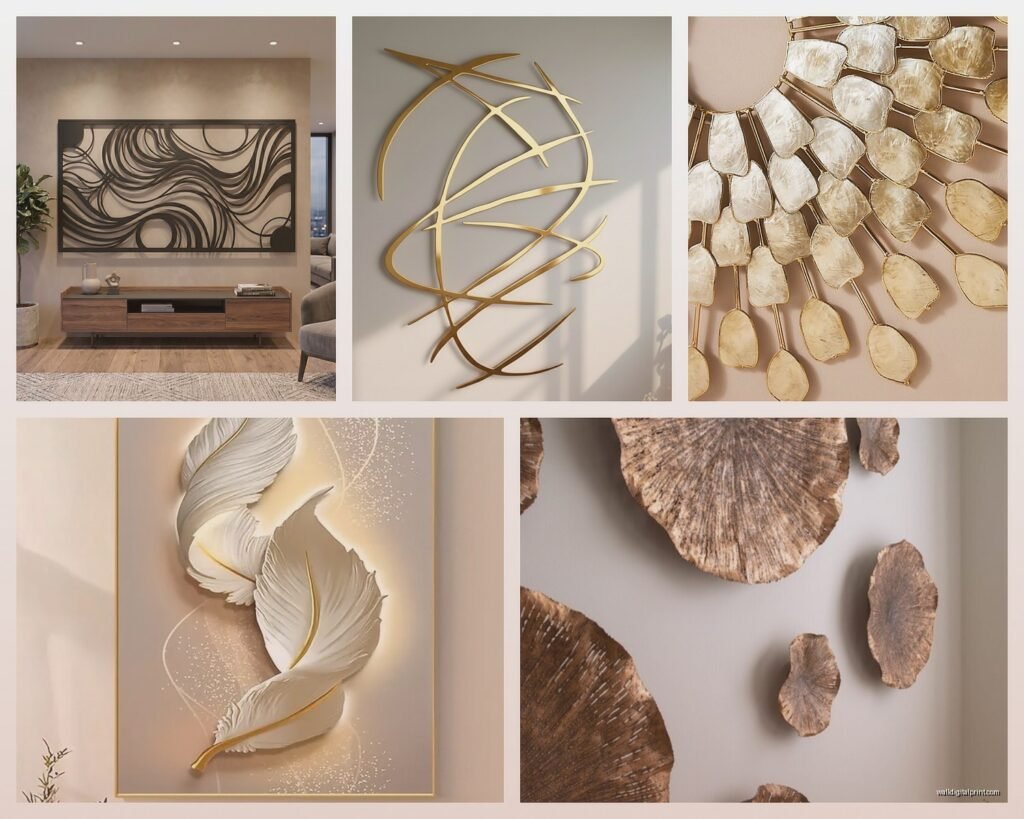
Large Metal Wall Art for Living Room: Oversized Sculptures
May
So I’ve been installing these massive metal wall pieces in living rooms for like three years now and honestly, the first time a client asked for one I was terrified because they’re SO much harder to hang than regular art but also they completely transform a space in ways that paintings just… don’t?
The Weight Thing Nobody Warns You About
Okay so first thing – these sculptures are HEAVY. Like, way heavier than you think. I made the mistake of ordering this gorgeous abstract metal piece for my own living room, didn’t check the weight, and it arrived at 47 pounds. My partner was at a conference and I tried to hang it myself and… yeah, that lasted about five minutes before I called my neighbor. You’re gonna need at least two people, sometimes three if we’re talking those 6-foot statement pieces.
The weight matters for your wall too. If you’ve got drywall (which, most of us do), you absolutely need to find studs or use heavy-duty anchors. I use toggle bolts rated for at least double the sculpture’s weight because the last thing you want is to wake up at 3am to a crash. Been there with a client’s piece – not fun, and their cat didn’t come out from under the bed for two days.
What Actually Works on Different Wall Types
- Drywall: Toggle bolts or heavy-duty wall anchors, minimum 50lb capacity each
- Plaster: Molly bolts work better here, but test a small area first because old plaster can be crumbly
- Brick or concrete: You’ll need a masonry bit and concrete anchors, which is actually the most secure option
- Wood paneling: This is ideal because you can screw directly into the wood backing
Size and Scale Because Everyone Gets This Wrong
The biggest mistake I see is people going too small. If you’re thinking about metal wall art for above your sofa, the piece should be at least two-thirds the width of the sofa, preferably three-quarters. I had this client who bought this beautiful geometric metal piece but it was only 30 inches wide above their 8-foot sectional and it just looked… lost. Like a postage stamp.
For a standard living room wall (let’s say 12-15 feet wide), you want something in the 48-72 inch range. Bigger rooms can handle those massive 6-8 foot pieces. My own living room is pretty average sized and I went with a 60-inch abstract metal sculpture and it’s perfect – takes up about half the wall width which feels substantial without overwhelming.
Oh and another thing about scale – consider the ceiling height. I was watching this home renovation show the other night (while comparing finishes for another project, very productive multitasking), and they hung this tall vertical piece in a room with 8-foot ceilings and it made the whole room feel cramped. Horizontal pieces work better for standard ceiling heights, vertical pieces need at least 10-foot ceilings to really shine.
Styles That Actually Work in Real Living Rooms
Abstract Geometric Pieces
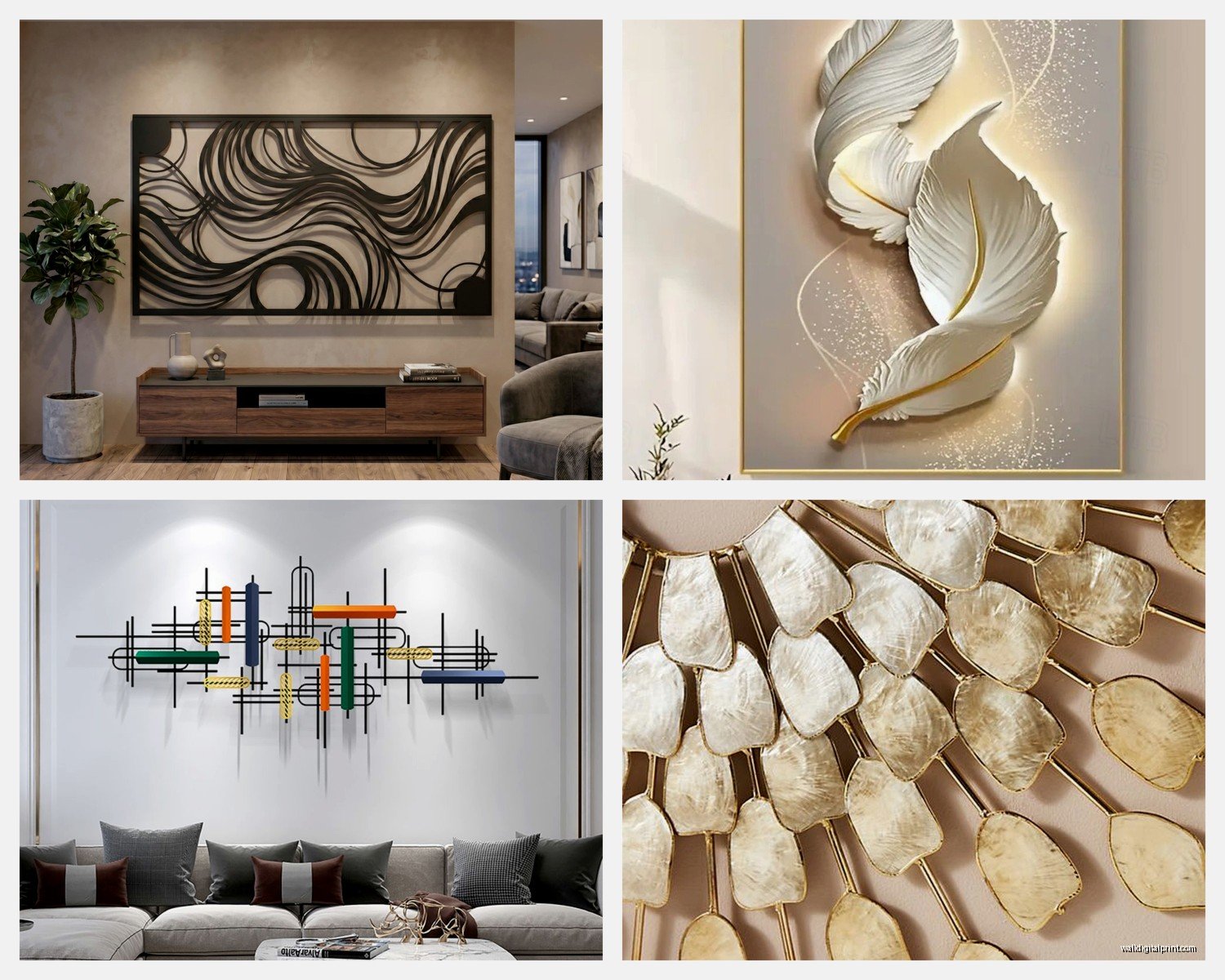
These are my go-to recommendation for most people because they’re versatile. The interlocking circles, angular designs, layered dimensional pieces – they work with modern, transitional, even some traditional spaces if you choose the right finish. I just installed a bronze-finished geometric piece in a client’s space that has mostly traditional furniture and it bridged everything perfectly.
The depth matters here. Flat metal art is fine but those pieces with 2-4 inches of dimensional depth? They create shadows throughout the day as light changes and it’s just more interesting to look at.
Nature-Inspired Sculptures
Tree branches, leaves, botanical designs – these work really well if your living room has any natural elements. Wood furniture, plants, neutral colors. I’m kinda obsessed with those metal tree branch sculptures right now, especially the ones that look like they’re blowing in wind. There’s this one company that makes them with individual leaves that actually move slightly when air circulates and my cat is FASCINATED by it, which is either a feature or a bug depending on your perspective.
Industrial Metal Art
Gears, raw steel, deliberately rough finishes – if you’ve got exposed brick, concrete, or an industrial vibe going on, these pieces are perfect. They’re usually heavier though because the metal is thicker and less decorative. I worked with a loft space last year where we installed this massive gear-design piece that weighed 85 pounds and we had to use six mounting points. Worth it though.
Finishes and How They Change Everything
Okay so funny story – I ordered what I thought was a brushed silver piece for a client based on online photos and it arrived this super shiny chrome finish that reflected everything like a mirror. Looked completely different in their space. So finishes are CRUCIAL.
Matte black is the safest choice honestly. Works with everything, doesn’t show fingerprints or dust as much, creates strong contrast against light walls. It’s what I use probably 60% of the time.
Bronze or copper finishes add warmth and work beautifully with wood tones and warm color palettes. They can patina over time which some people love and some hate, so ask about protective coatings.
Brushed silver or steel looks modern and clean but can feel cold if your space doesn’t have other metal elements to tie into. I usually add silver metal picture frames or a steel coffee table base to make it feel intentional.
Mixed metal pieces with multiple finishes are having a moment and I actually really love them because they’re easier to work with – they already have variety built in so they coordinate with more stuff in your room.
The Actual Installation Process
Wait I forgot to mention – before you even order the piece, take a photo of your wall and use painter’s tape to outline where the sculpture would go. Live with that for a few days. I cannot tell you how many times I’ve done this and realized the placement I initially thought was perfect was actually way too high or off-center.
Step by Step That Actually Works
Make a paper template the exact size of your sculpture. Most don’t come with templates which is annoying, so I trace mine on kraft paper or tape together newspaper. Mark where the hanging points are.
Get a laser level if you’re gonna do this more than once. Changed my life. They’re like $25 and so much better than regular levels for large pieces.
Mark your hanging points on the wall through the template. Use a stud finder first – if you can hit studs, always hit studs. If not, mark where your anchors will go.
For pieces over 40 pounds, I use a French cleat system instead of individual mounting points. It’s a two-part hanging system that distributes weight evenly and you can adjust the piece side to side after mounting. This is gonna sound weird but it’s the same system used for hanging kitchen cabinets and it’s incredibly secure.
Have someone hold the piece up while you step back and look. Phone photos help here – sometimes what looks level in person photographs crooked. Don’t ask me why, but it’s true.
Placement Ideas Beyond Above the Sofa
Everyone defaults to above the sofa but there are so many other options. I’ve installed large metal pieces:
- On the wall opposite the main seating area as a focal point when you enter
- Above a console table in that awkward space behind the sofa in open floor plans
- On a narrow wall between windows where a bookshelf wouldn’t fit
- In the corner of an L-shaped living room to anchor that dead space
- Above a fireplace instead of a traditional mirror or painting
The fireplace placement is tricky though because heat can discolor some finishes over time. Keep it at least 12 inches above the mantel and ask the manufacturer about heat tolerance.
Lighting Considerations
This changes everything and most people don’t think about it. Metal reflects and creates shadows, so lighting matters way more than with flat art. I always add picture lights or install track lighting to hit these pieces at an angle. The dimensional ones especially need directional light to show off their depth.
If you’ve got recessed lighting, make sure at least one fixture aims toward where your sculpture will hang. Natural light is great during the day but these pieces can look completely flat at night without proper artificial lighting.
What to Actually Look for When Shopping
Hanging hardware included – some pieces come with proper mounting hardware, some come with these flimsy picture wire situations that are completely inadequate. Check before ordering.
Powder-coated finishes last way longer than painted finishes, especially if your living room gets direct sunlight. The sun will fade painted pieces within a year or two.
Welded construction is sturdier than bolted pieces. Check customer photos if available because product photos don’t always show construction quality.
Return policy because colors and scale are SO hard to judge online. I only order from places with free returns now after getting burned too many times.
Maintenance Reality Check
These things get dusty. The dimensional ones especially trap dust in all their crevices. I use a microfiber duster every couple weeks and a soft brush attachment on the vacuum for detailed pieces. Don’t use water unless the manufacturer specifically says it’s okay – some finishes can water spot or rust.
My client canceled last week so I spent an hour comparing different metal art suppliers and honestly, the price ranges are WILD. You can find pieces from $80 to $2000+ and sometimes the expensive ones aren’t even better quality, you’re just paying for designer names. Mid-range ($200-500) tends to be the sweet spot for quality that’ll actually last.
The super cheap ones under $100 are usually thinner gauge metal that can bend or look flimsy on the wall. I learned this the hard way with my first apartment where I bought this $65 piece that looked amazing online but in person was so thin it literally bent when we were hanging it.
Mixing Metals and Other Wall Decor
You can totally mix your metal sculpture with other art, you just gotta be intentional about it. I usually do a large metal piece as the anchor and then add smaller framed pieces or floating shelves around it. The metal piece should be the dominant element though – if everything competes for attention it just looks chaotic.
And yeah, you can mix metal finishes in the same room. The old rule about matching all your metals is pretty much dead. I regularly mix black metal art with brass lamps and chrome picture frames. Just make sure each finish appears at least twice in the room so nothing looks accidental.
Okay so that’s basically everything I wish someone had told me before I started working with these pieces. They’re honestly one of my favorite ways to add drama and personality to a living room without the commitment of paint or wallpaper, and they photograph really well which matters if you’re ever gonna sell your house.
