Wall Art Guide, Wall Art Tutoriels
Amazon Wall Art: Online Marketplace Best Sellers 2026
May
So I’ve been deep in the Amazon wall art rabbit hole lately and honestly it’s kind of wild how much the marketplace has changed this year. Like, I was updating my home office last month and thought “oh I’ll just grab something quick from Amazon” and then three hours later I’m comparing pixel density on canvas prints at midnight with my dog judging me from the couch.
What’s Actually Selling Right Now
Okay so the biggest shift I’m seeing in 2026 is that people are finally over those generic “live laugh love” vibes. Thank god. The best sellers are leaning heavily into either hyper-specific niches or really sophisticated abstract stuff that doesn’t look like it came from a marketplace at all.
The abstract canvas prints in earthy terracas and sage greens are absolutely dominating. I ordered this three-piece set for a client’s living room – the kind with texture you can actually see, not just printed texture but like raised gel medium – and it was shockingly good quality for $180. The brand was something like “Modern Artistry Co” and they’re using this newer printing technique that layers the ink so it doesn’t look flat.
Oh and another thing, botanical line art is still holding strong but it’s evolved. We’re not talking about those simple single-line face drawings anymore. The trending stuff now is more detailed vintage botanical illustrations, the kind that look like they came from an old science textbook but colorized. I bought a set of four for my own hallway and my sister immediately asked where I got them.
Size Matters More Than You Think
This is gonna sound obvious but I see people mess this up constantly. Everyone thinks they need huge statement pieces, but the best sellers are actually in the medium range – like 24×36 inches or sets of smaller prints. I learned this the hard way when I ordered a 60×40 inch canvas for above my sectional and it looked absolutely ridiculous. Like a billboard in my living room.
The sweet spot seems to be:
- Living room above couch: 40×30 or a three-piece set that spans about 50 inches total
- Bedroom: 24×36 single piece or two 20×24 pieces flanking the bed
- Hallways: multiple 16×20 pieces in a gallery wall situation
- Small spaces like bathrooms: 12×16 max, anything bigger overwhelms
Wait I forgot to mention – measure your wall before you order. I know, I know, everyone says this but I literally watched my neighbor hang a piece that took up maybe 30% of the wall space when it should’ve been more like 60-70%. It floated there looking sad and confused.
Frame vs Frameless vs Canvas Wrap
So here’s where it gets interesting. The framed prints on Amazon have gotten SO much better. Like there are sellers now using actual wood frames, not that plastic stuff that looks cheap under any lighting. The brand “Americanflat” has been killing it – their frames are solid and they come with real glass, not plexiglass that scratches if you breathe on it wrong.
Canvas wraps are still the most popular best sellers though. The edges are printed so you don’t have that awkward white border thing, and they’re ready to hang which people love. But here’s my hot take: the really cheap canvas wraps under $40 start to sag after like six months. The canvas literally gets loose on the frame. I’ve seen it happen multiple times.
If you’re gonna do canvas, spend at least $60-80 for anything larger than 24×30. The difference in materials is noticeable. The higher-end ones use thicker canvas that’s actually gallery-wrapped around solid wood stretcher bars.
Frameless prints with clips are having a moment too. Very minimalist, very “I’m artsy but not trying too hard.” The top sellers are using these magnetic wood hangers and honestly they look expensive. Got a set for my nephew’s nursery and his wife thought I spent way more than I did.
Print Quality Red Flags
Okay so funny story – I ordered what looked like a gorgeous sunset photograph for a client’s beach house and when it arrived it was so pixelated I could see individual color blocks from like five feet away. Turns out the seller was using low-res images blown up way too large.
Here’s what to check:
- Read reviews that specifically mention print quality and resolution
- Look for sellers that mention giclée printing or at least 300 DPI
- Check if they offer satisfaction guarantees – the good sellers do
- Avoid any listing where the preview image looks soft or blurry
The best-selling prints right now are from sellers who photograph their actual products. Like you can tell it’s a real photo of the canvas on someone’s wall, not just a digital mockup. Those are usually safer bets.
Color Accuracy Is Tricky
This drives me crazy but you gotta know that what you see on your screen isn’t exactly what you’ll get. Monitors display colors differently, and then there’s the whole printing process which shifts things again. The really popular sellers now are including color swatches in their listings or multiple photos taken in different lighting.
I always read the reviews where people post actual photos in their homes. That’s the most reliable way to see true colors. Just last week I almost bought this deep navy abstract piece but the customer photos showed it was actually more of a dusty blue-gray. Would’ve clashed with everything in the room I was designing.
What’s Actually Worth The Money
The $30-50 range is where you find the most best sellers but honestly? Sometimes they’re best sellers because they’re cheap, not because they’re good. I’ve had better luck spending $80-150 on single pieces or sets from sellers who clearly give a damn about quality control.
There’s this one shop – I think it’s called “Hatcher and Ethan” or something similar – that does these incredible neutral abstract prints with gold leaf accents. They’re like $120 for a 30×40 but the quality is legitimately comparable to what I’d find in a boutique for three times that. My client has one in her dining room and every single person who comes over asks about it.
On the flip side, I’ve bought $200+ pieces from Amazon that were disappointing. Price doesn’t always equal quality on marketplaces, you really gotta do your homework.
Trending Styles That Don’t Suck
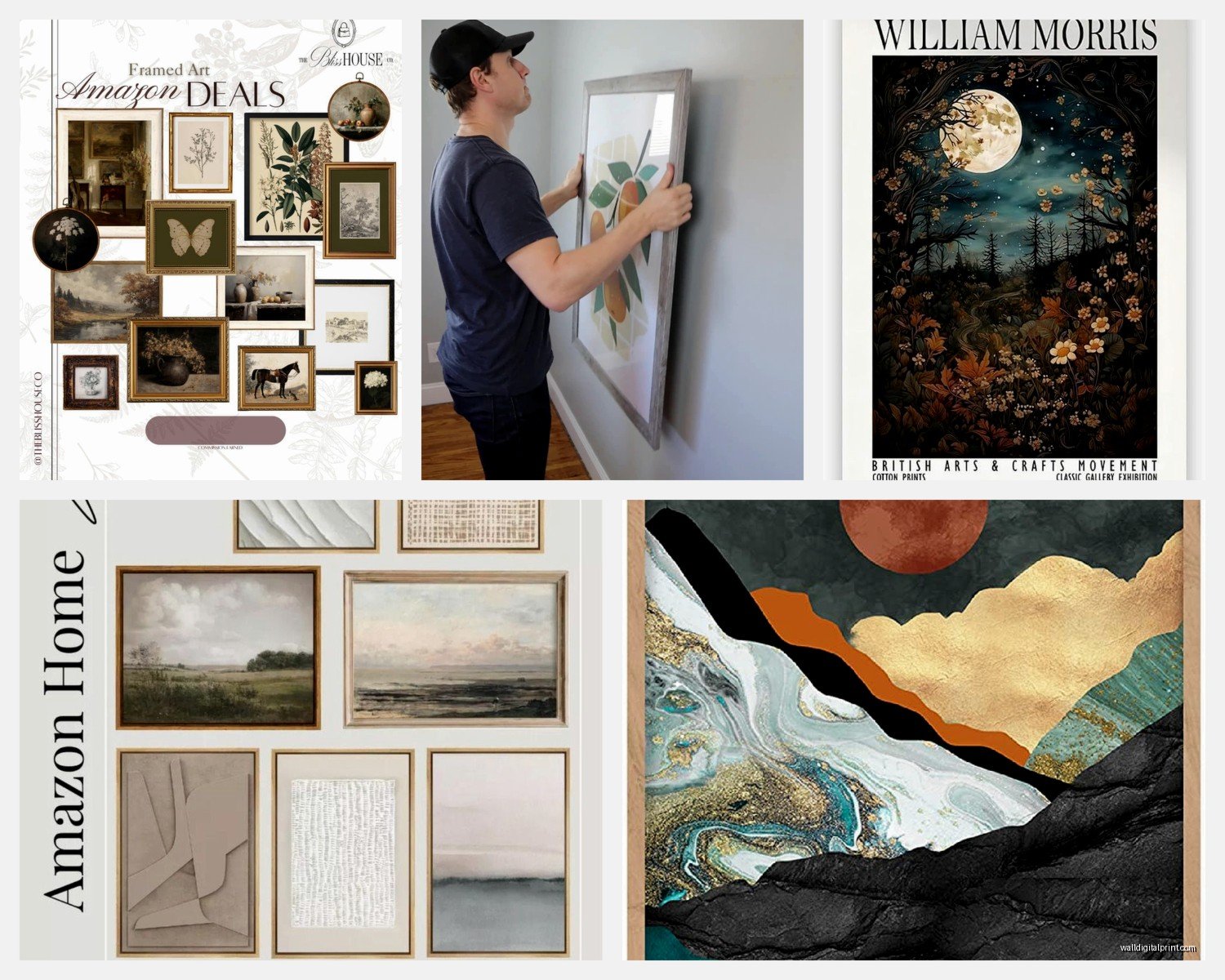
The maximalist gallery wall vibe is back but it’s more curated now. People are mixing different frame colors and sizes but keeping the actual art cohesive by sticking to a color palette. The best-selling gallery wall sets come with 7-9 pieces in varying sizes with a layout template, which honestly is genius because nobody wants to make a million nail holes figuring out spacing.
Vintage travel posters are having a weird resurgence. Not the super obvious Eiffel Tower stuff but more obscure destinations or national parks. There’s a seller doing retro-style prints of state parks that are consistently in the top 50 best sellers.
Black and white photography is eternal – it’s always selling well. But the trend has shifted toward architectural photography and nature shots rather than portraits. Lots of minimalist stuff like a single tree in fog or geometric building details.
Oh and texture is huge right now. The best sellers aren’t just flat prints anymore, they’re incorporating actual dimensional elements or at least the illusion of texture through printing techniques. My coffee table books were literally sitting there while I compared these textured prints and my cat knocked one off because she’s helpful like that.
Installation Tips Nobody Tells You
Most Amazon wall art comes with hanging hardware but it’s usually the bare minimum. Those little sawtooth hangers on the back of frames? They’re fine for small pieces but anything over 20 inches should really be hung with proper picture hanging hooks or anchors.
The canvas wraps usually have wire or D-rings on the back. Use a level. I know it seems basic but I’ve seen so many crooked pieces and once you notice it you can’t unsee it. There are even phone apps now that work as levels if you don’t have the tool.
For gallery walls, lay everything out on the floor first. Take a picture, then reference it while hanging. Or use paper templates taped to the wall. The best-selling gallery sets usually include a paper template which is honestly the only way I’ll do it anymore because free-handing it is a nightmare.
Return Policies Actually Matter
Amazon’s return policy is generally good but some third-party sellers have their own rules. I always check this before buying wall art because sometimes the colors or quality just don’t work in person. The top-rated sellers tend to have easy returns because they’re confident in their products.
I had to return a set of prints last month because the blue was way too bright – looked electric rather than the soft sky blue in the listing. The seller processed the return immediately and even sent a replacement in a different color at no extra charge. That’s the kind of service that keeps them in the best seller rankings.
My Actual Recommendations
If I’m shopping Amazon for wall art right now, I’m looking for:
- Sellers with at least 500+ reviews and 4.5 stars minimum
- Listings that show the art in actual room settings with measurements
- Clear descriptions of materials and printing methods
- Multiple photos including close-ups of texture and corners
- Customer photos in the reviews
The abstract neutrals are probably the safest bet if you’re unsure. They work with basically any decor style and the best sellers in this category are consistently good quality. There’s less risk of it looking dated in two years.
For something more specific like botanical prints or geometric patterns, I’m spending more time in the reviews looking for mentions of color accuracy and whether the prints look cheap or elevated.
And honestly? Sometimes it’s worth buying two options and returning one. The return process is pretty painless and seeing them in your actual space with your lighting makes all the difference. I did this with two different abstract sets for my bedroom and the winner was so obvious once I saw them on the wall.
The marketplace has genuinely improved since like 2023-2024. There are sellers now who are treating Amazon as a legitimate platform for quality art rather than just a place to dump cheap prints. You just gotta know what to look for and be willing to do a bit of research before clicking buy.