Wall Art Guide, Wall Art Tutoriels
Islamic Metal Wall Art: Arabic Calligraphy Sculpture
Jul
So I’ve been working with Islamic metal wall art for probably the last five years now and honestly it’s one of those design elements that can completely transform a space but also… you can mess it up really easily if you don’t know what you’re looking for.
First thing – and I learned this the hard way after mounting a gorgeous piece backwards in a client’s dining room – you gotta understand what you’re actually buying. Arabic calligraphy reads right to left, and some pieces are specifically designed with a top and bottom. I spent like three hours one Saturday remounting this massive Ayat al-Kursi piece because I didn’t check the orientation marks on the back. My dog was just sitting there judging me the entire time.
What Actually Makes Quality Islamic Metal Art
Okay so the metal itself matters way more than I initially thought. You’ve got basically three tiers:
Powder-coated steel – this is your budget-friendly option and honestly for indoor spaces it works perfectly fine. I’ve used pieces from like $40-$150 range and they hold up. The powder coating prevents rust and the finish stays matte black which is what most people want anyway. Just make sure it’s actually powder-coated and not just spray painted because that’ll chip within months.
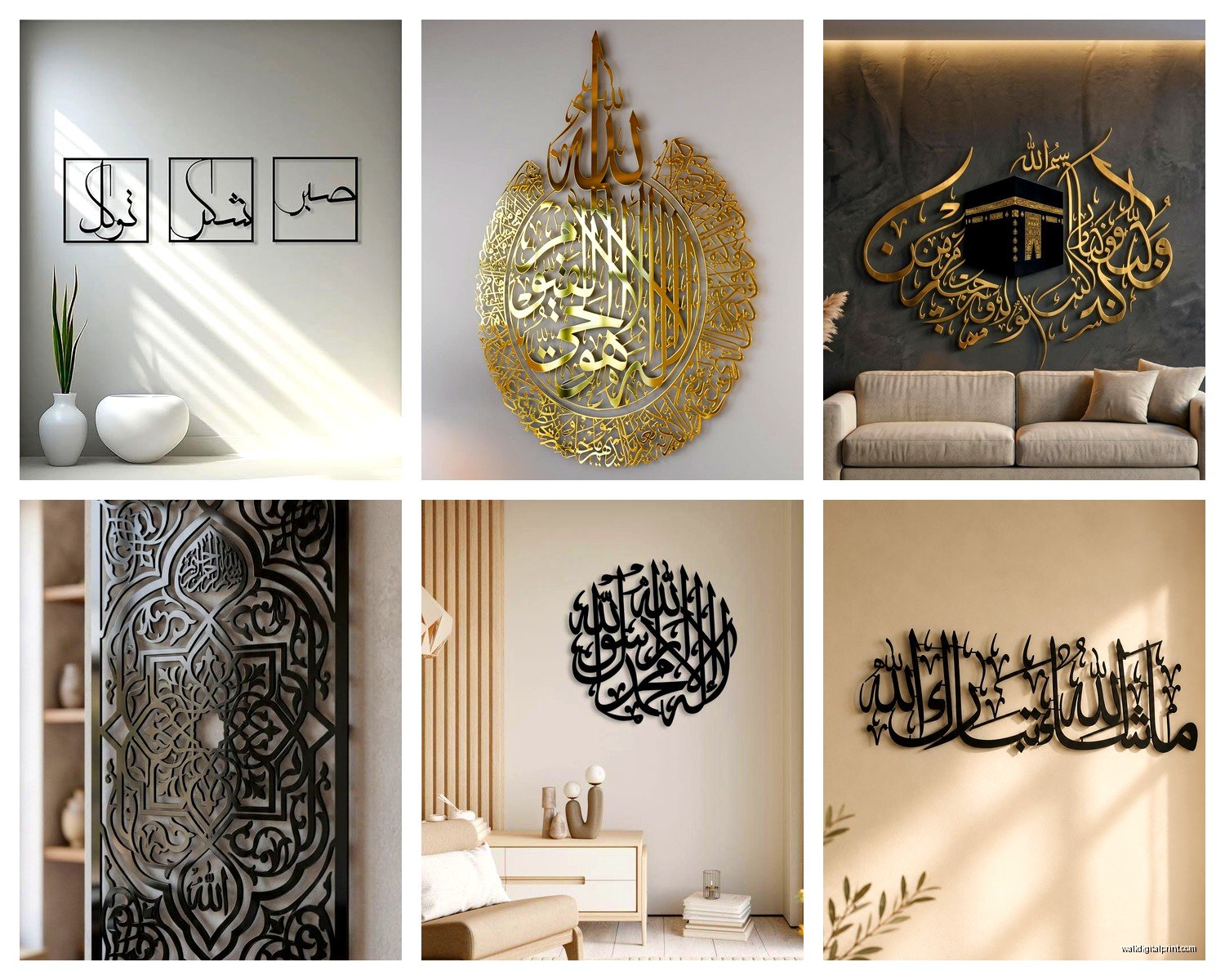
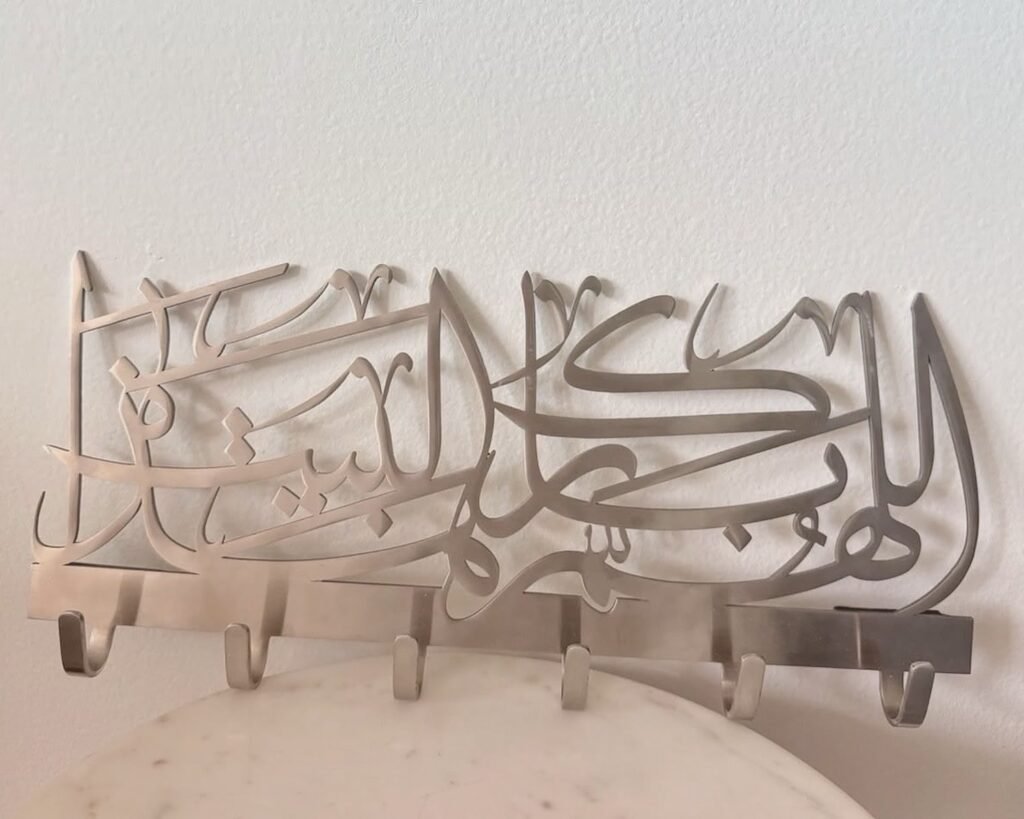
Brushed aluminum or stainless steel – mid-range, usually $150-$400 depending on size. Lighter weight which matters when you’re mounting on drywall. The brushed finish catches light differently throughout the day which is actually really beautiful in living rooms with good natural light.
Brass or copper – high end, we’re talking $400+ and honestly unless you’re going for a very specific aesthetic or it’s a large statement piece, I don’t think it’s necessary for most homes. Though I did use a copper piece in a client’s entryway last year and it developed this patina over time that was *chef’s kiss*.
Sizing This Stuff Without Losing Your Mind
This is gonna sound weird but I always tell people to use painter’s tape first. Like actually tape out the dimensions on your wall before ordering because what looks “medium” online is either tiny or absolutely massive when it arrives.
For reference – above a sofa you want something that’s roughly 2/3 the width of the sofa. So if you’ve got a standard 84-inch couch you’re looking for pieces around 50-60 inches wide. But here’s where it gets tricky with Islamic calligraphy because a lot of phrases are horizontal and long versus tall pieces.
Bismillah pieces tend to be horizontal and work great above furniture. Ayat al-Kursi can go either way depending on the design. The 99 Names of Allah… those are usually arranged in circles or grids so they work better as focal points on larger blank walls.
Wall Space Reality Check
I measured this out after installing probably 30+ pieces in different homes:
- Small accent pieces (12-24 inches): hallways, bathroom walls, above light switches
- Medium statement pieces (24-40 inches): above beds, sofas, console tables
- Large focal pieces (40+ inches): main living room walls, prayer room feature walls, above fireplaces
Wait I forgot to mention – if you’re hanging multiple smaller pieces together you need like minimum 2-3 inches between each piece or it looks crowded. I learned this while binge-watching that new documentary series and just kept moving pieces around until the spacing felt right.
The Calligraphy Styles Nobody Explains Properly
Okay so there are different Arabic calligraphy styles and they give totally different vibes:
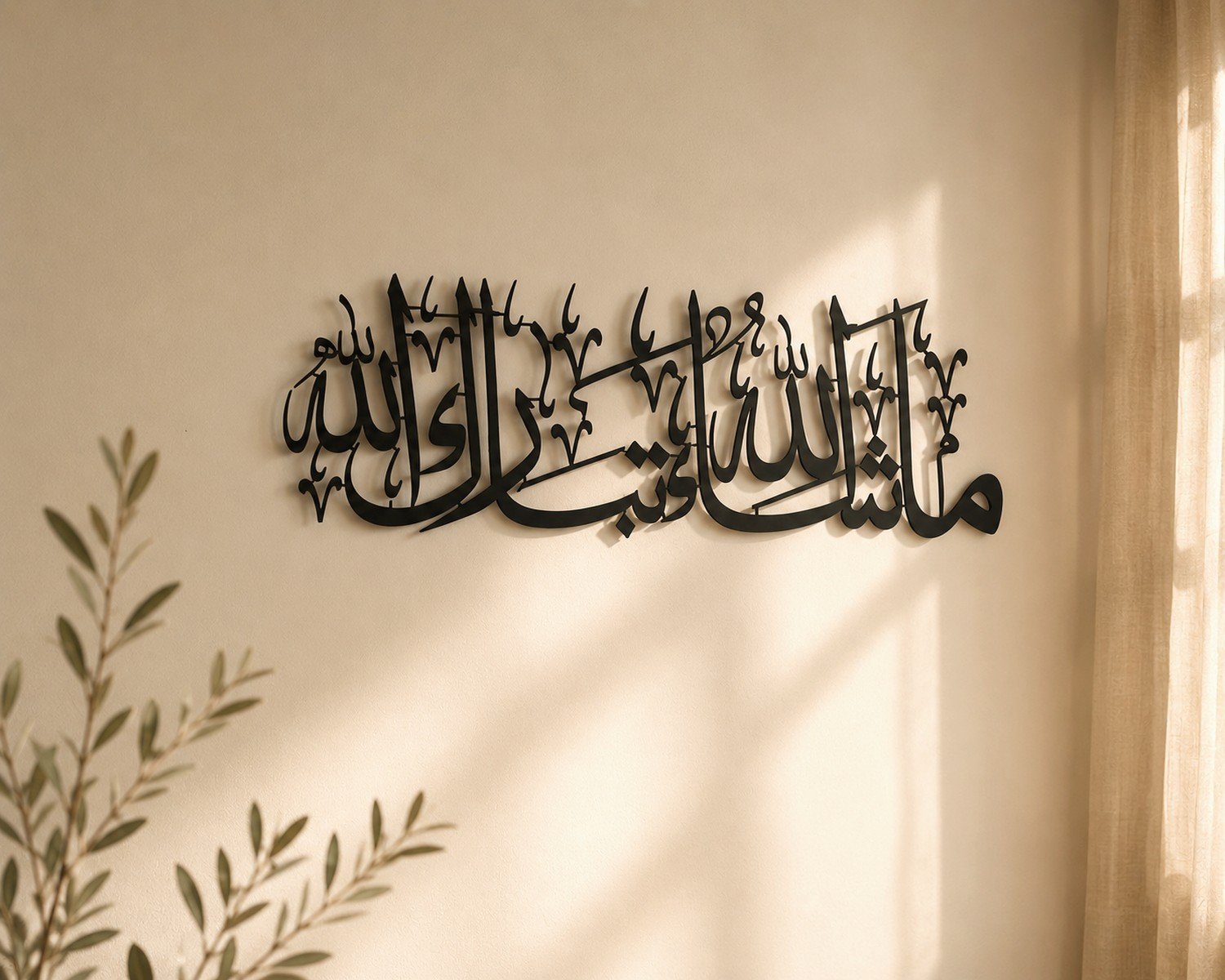
Thuluth – this is the curvy, flowing one you see most often. Very elegant, works in traditional and modern spaces. The letters have these sweeping curves and it’s super readable even if you don’t read Arabic.
Kufic – angular, geometric, very modern looking. This is what I use in contemporary homes or minimalist spaces. It almost looks like abstract art if you’re not familiar with the script.
Diwani – super ornate and decorative, lots of loops and flourishes. Honestly this one can look busy so I only use it in spaces that are otherwise pretty simple and neutral.
Mounting These Things Without Destroying Your Walls
Oh and another thing – the mounting situation is not intuitive. Most pieces come with these little keyhole slots on the back but they’re never where you expect them to be.
Here’s what actually works:
Get a laser level. Like seriously just buy the $20 one from the hardware store because eyeballing it means you’ll be off and it’ll bug you forever. I still have a piece in my own house that’s slightly tilted and I see it every single day and hate myself.
For lightweight pieces under 5 pounds you can use those 3M command strips but here’s the trick – use more than you think you need. I use four strips rated for 3 pounds each even on a 2-pound piece because metal shifts and settles differently than canvas art.
For anything heavier you’re gonna need anchors. I use toggle bolts for drywall and they’ve never failed me. Two bolts for pieces up to 15 pounds, three for anything heavier. And please please please use a stud finder first because if you can hit a stud that’s always better.
My Actual Mounting Process
- Tape paper template to wall, mark mounting points
- Level it like three times because I’m paranoid
- Drill pilot holes
- Insert anchors or find studs
- Screw in mounting hardware
- Hang the piece and step back about 10 feet to check if it’s actually level because up close you can’t tell
Where to Actually Buy This Stuff
So Etsy has a ton of options and I’ve ordered from probably 15 different sellers at this point. The ones based in Turkey and Egypt tend to have better craftsmanship but longer shipping times – we’re talking 3-4 weeks sometimes. Domestic US sellers ship faster but the quality is more hit or miss.
Look for sellers with actual close-up photos of the welds and edges. If all the photos are super filtered or far away that’s usually a red flag. I want to see the texture of the metal and how clean the cuts are.
Islamic decor specialty websites tend to be more expensive but they usually have better quality control. I’ve had good experiences with a few but honestly the markup is significant – sometimes 40-50% more than Etsy for basically the same piece.
Amazon… okay so Amazon is tricky. There are good pieces there but also a lot of cheap imports that look nothing like the photos. Read the reviews that have photos attached and check if people mention the actual dimensions because I’ve seen pieces listed as 36 inches that arrived at 24 inches.
Styling These in Different Room Types
Living rooms – this is where I use the bigger statement pieces. Above the sofa is obvious but I also love putting them on the wall opposite the main seating area so it’s what you see when you walk in. Pair it with some neutral throw pillows and maybe one or two smaller decorative items on the coffee table but don’t go overboard because the calligraphy should be the focal point.
Bedrooms – Ayat al-Kursi above the bed is super popular and for good reason. It’s meaningful and the horizontal format works perfectly. I usually go for a width that’s about half the width of the bed. So queen bed gets roughly 30-36 inch piece, king bed can handle 40-48 inches.
Prayer rooms – okay this is where you can really go all in. I’ve done entire feature walls with multiple pieces arranged together. The Qibla direction piece, 99 Names, relevant Quranic verses all grouped together. Just make sure there’s a visual hierarchy – one main piece with smaller supporting pieces around it.
Entryways – Bismillah pieces are perfect here. You want something that makes an immediate impression but isn’t so large it overwhelms a typically smaller space. 24-30 inch pieces work well.
Color Choices That Actually Matter
Matte black is classic and works with literally everything. Like I default to this 90% of the time.
But gold or brass finish can be gorgeous in the right space – think cream walls, warm wood tones, traditional furniture. It picks up lamplight really beautifully in the evening.
White or silver for very modern spaces or if you’ve got dark accent walls. I used a white Bismillah piece on a charcoal gray wall last month and it was super striking.
Oil-rubbed bronze if you’re going for that rustic or industrial vibe. Works well with exposed brick or reclaimed wood elements.
Mixing Metals
This is controversial but I think you can mix metal finishes if you do it intentionally. Like black calligraphy with brass light fixtures works because there’s enough contrast. What doesn’t work is mixing black with gunmetal or bronze with copper – too similar but not matching so it just looks like a mistake.
Common Mistakes I See All The Time
Hanging it too high. The center of the piece should be at eye level which is roughly 57-60 inches from the floor. Exception is above furniture where you want 6-8 inches of space between the furniture and the bottom of the art.
Choosing pieces that are too small. When in doubt size up. A piece that’s slightly too large looks intentional, a piece that’s too small looks like you ran out of money or couldn’t find the right size.
Not considering the actual phrase or verse. Make sure you know what the calligraphy says and that it’s appropriate for the room. I had someone who wanted Ayat al-Kursi in their bathroom and I had to gently redirect them to a more appropriate choice.
Ignoring the rest of the room’s style. Islamic calligraphy can work in modern, traditional, eclectic spaces but you gotta make sure the specific piece matches your overall aesthetic. A super ornate Diwani piece is gonna look weird in a minimalist Scandinavian room.
Maintenance and Care
Honestly these are pretty low maintenance. Dust them every couple weeks with a microfiber cloth or one of those Swiffer dusters. For the textured pieces you might need a soft brush to get into the crevices.
If you’ve got powder-coated pieces you can occasionally wipe them down with a slightly damp cloth but make sure you dry them immediately.
For brass or copper pieces that you want to maintain the shine you’ll need metal polish maybe twice a year. Or just let them patina naturally which I actually prefer.
Don’t use any harsh chemicals or abrasive cleaners because you’ll damage the finish.
Budget Breakdown From My Actual Projects
Budget option: $40-$100 – small to medium powder-coated steel pieces from Etsy or Amazon, perfect for starting out or doing multiple rooms
Mid-range: $150-$300 – larger pieces or better quality metals, this is where I spend most of my client budgets
Investment pieces: $400+ – large statement pieces, premium metals, custom work
I’ve honestly gotten beautiful pieces at every price point. One of my favorite installations ever was a $65 Bismillah from Etsy in a client’s entryway and people always ask about it.
Custom vs Ready-Made
Custom pieces let you choose the exact phrase, size, finish, and style but you’re looking at 4-6 weeks production time and usually minimum $200-$300 even for smaller pieces.
Ready-made is obviously faster and cheaper and honestly unless you need something super specific the ready-made options are extensive enough that you’ll find what you need.
I only go custom when a client has a specific verse that’s meaningful to them or we need an unusual size to fit a particular space.
Oh and another thing – some sellers offer personalization like adding family names or dates below the main calligraphy. This is cool for wedding gifts or new home presents but make sure you triple check the spelling because I’ve seen some unfortunate mistakes.
Okay so that’s basically everything I’ve learned from actually installing these in real homes. The main thing is just don’t overthink it too much – pick something meaningful, make sure it fits your space properly, mount it securely, and it’ll look great. The beauty of Islamic calligraphy is that it’s both art and spiritually significant so even a simple piece adds something special to a room.