Wall Art Guide, Wall Art Tutoriels
Lion and Lioness Wall Art: African Big Cat Pride Pair
Jul
So I’ve been totally obsessed with lion and lioness wall art lately and honestly it started because a client wanted something “powerful but romantic” for their bedroom and I was like…okay, that’s specific. But then I fell down this whole rabbit hole of African big cat art and now I have Opinions.
Why the Pride Pair Thing Actually Works
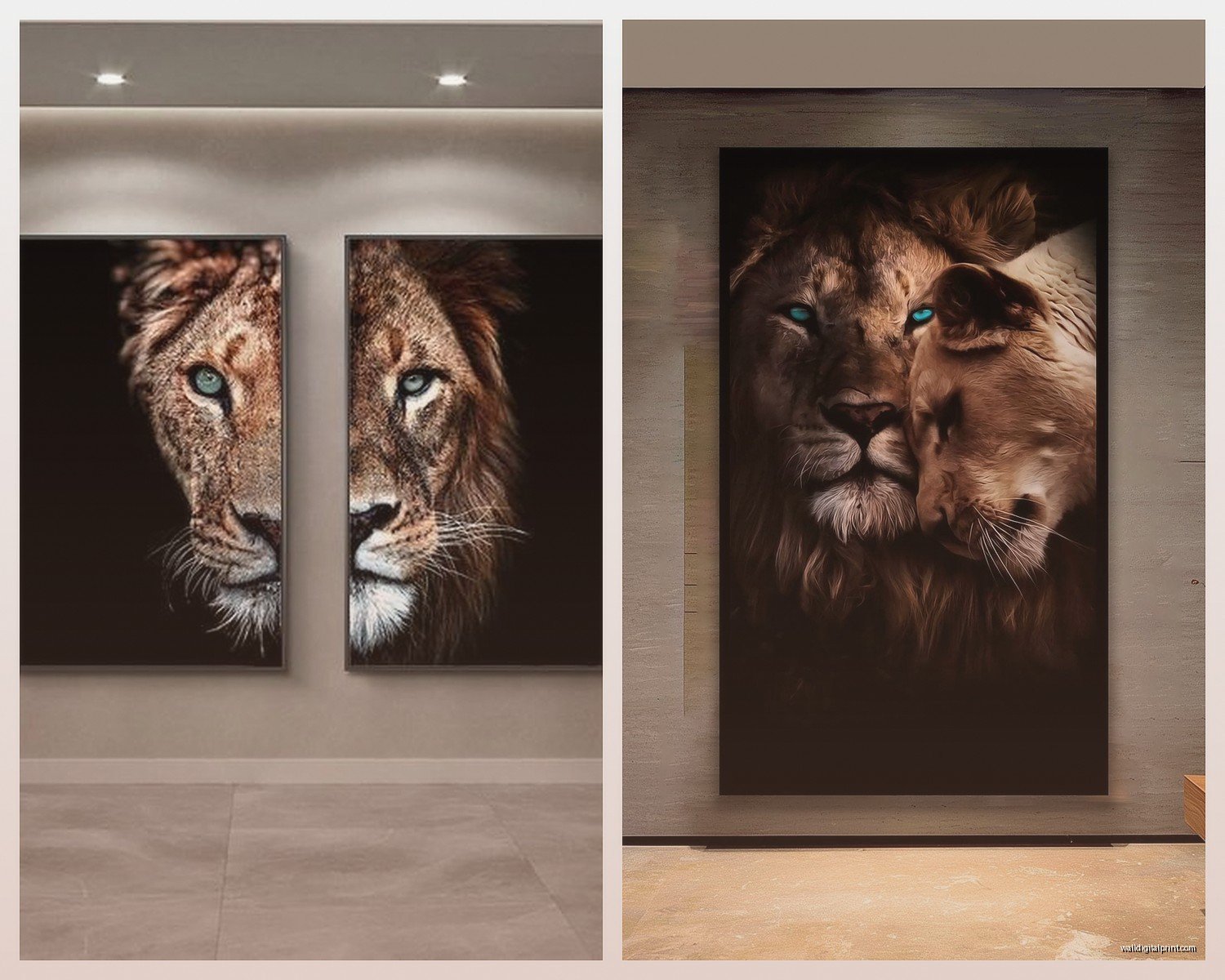
The whole lion and lioness together concept is surprisingly versatile. Like, you’d think it’s super niche but it’s not? I’ve used these pieces in modern lofts, traditional homes, even this weird industrial farmhouse situation (don’t ask, the homeowner had…ideas). The key is that the pairing reads as both fierce and intimate at the same time. You’re getting that raw Africa energy but also there’s this partnership vibe that makes it work in spaces where you want strength without aggression.
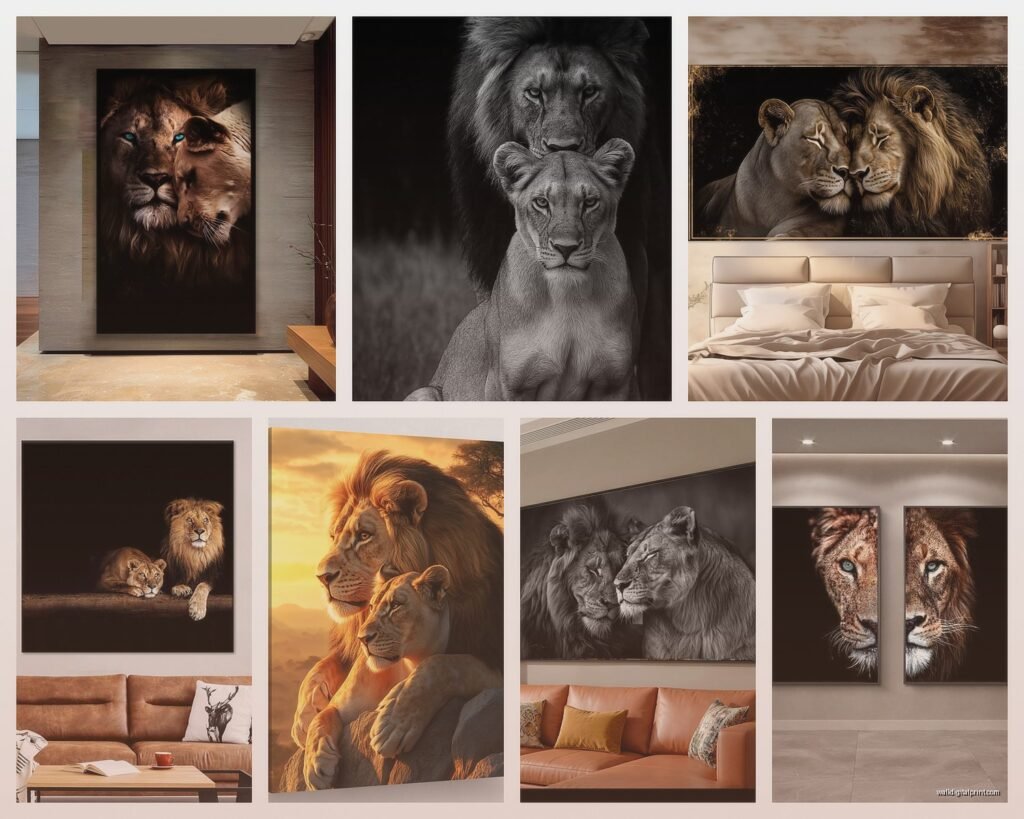
I tested a bunch of different styles in my own studio last month when my cat knocked over a lamp and I had to rearrange everything anyway. The black and white photography style? Chef’s kiss for modern spaces. The watercolor interpretations work better than you’d think in softer interiors. And then there’s the really saturated golden-hour photography that’s having a moment right now.
Sizing This Thing Out
Okay so this is where people mess up constantly. You cannot just slap any size lion art on any wall and call it done. I learned this the hard way during a project in Brooklyn where we had to return THREE different pieces because the client kept saying “bigger” and I kept listening until we basically had a billboard in their living room.
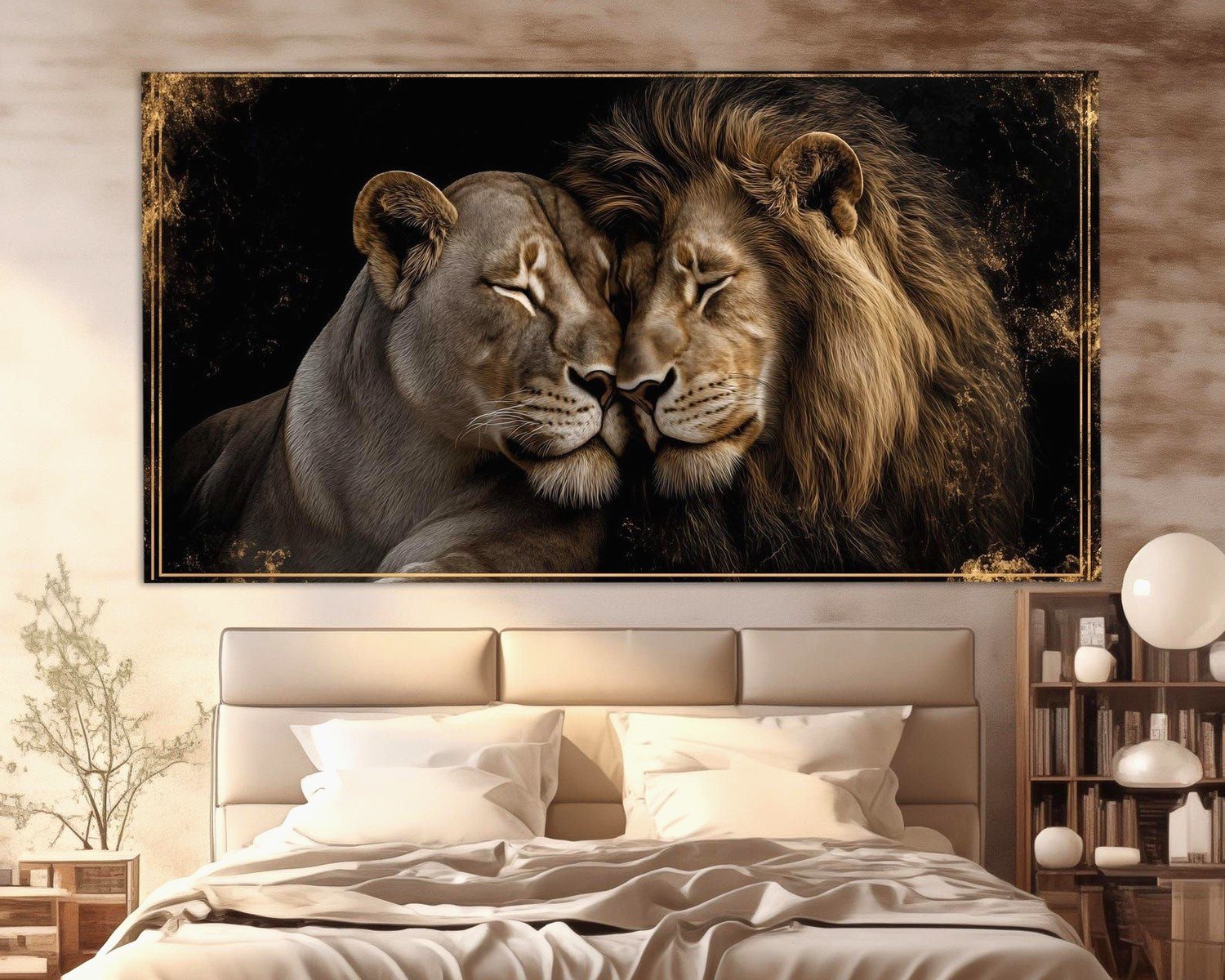
For above a bed, you want something that’s roughly two-thirds the width of your headboard. So if you’ve got a queen bed with a standard headboard, you’re looking at around 48 to 60 inches wide. King bed? Go 60 to 72 inches. The pride pair works really well here because you can do diptych or triptych formats that fill the space without feeling like one massive chunk.
Living room is trickier because it depends on your furniture layout. Above a sofa, same rule applies – two-thirds the sofa width. But here’s what I actually do in real life: I cut out paper templates the size of the art I’m considering and tape them up. Sounds ridiculous but it works. My partner walked in on me doing this at 11pm once with like six different paper rectangles on the wall and I was standing there with wine just…staring. But it WORKS.
The Finish and Material Situation
Canvas is the default everyone goes for and yeah, it’s fine. It’s got that gallery-wrapped look, no glare issues, relatively affordable. But I’m gonna be honest, I’m more into metal prints for lion photography right now. The way the light catches the metallic surface makes the lions’ eyes look actually alive? It’s wild. There’s this specific piece I used in a dentist’s office (weird flex but okay) with a lioness on brushed aluminum and patients kept asking about it.
Acrylic prints are having their moment too. Super glossy, really vibrant colors, very contemporary. The depth is insane – it literally looks like the image is floating. Downside is they’re heavy as hell and you need proper mounting hardware. I nearly dropped one on my foot last Tuesday and I’m still thinking about it.
Framed prints give you more control over the vibe. Black frame = modern and dramatic. Natural wood = warmer and more organic. Gold or brass frame = you’re going full luxury and you better commit to that energy throughout the room. I did a lioness pair in thin gold frames for a client who collects African artifacts and it was *perfect* but that same frame would’ve been terrible in literally any other context I’ve worked with.
Color Palette Considerations That Actually Matter
The natural tones of lions – those golds, tawny browns, amber eyes – are actually super easy to work with. They’re warm neutrals that play well with a ton of different color schemes. I’ve successfully incorporated lion art into rooms with:
- Navy and cognac leather situations
- Sage green and terracotta modern boho stuff
- All-white Scandinavian minimalism with natural wood accents
- Deep jewel tones like emerald and sapphire
- Industrial grey and black schemes
What doesn’t work as well? Really cool-toned spaces with lots of icy blues and silvers. The warm gold of the lions fights it. Unless you go full black and white photography, then you’re good.
Oh and another thing – the background of your art matters more than the lions themselves sometimes. A pride pair against a sunset? That’s gonna read as VERY warm and you need to account for all that orange and pink. Lions against a stormy grey sky or minimal background? Way more versatile.
Styling Around Your Big Cats
This is where it gets fun. Lion and lioness art is a statement piece, right? So you gotta decide if it’s THE statement or if it’s one of several bold elements. I usually vote for making it the star and keeping everything else supporting cast.
For a bedroom setup, I like the pride pair above the bed with really simple flanking – maybe just two small sconces or nothing at all. Then you can bring in African-inspired textiles in smaller doses. Mudcloth pillows, a Bamileke feather juju hat on another wall, some carved wooden bowls on your dresser. You’re building a subtle theme without going full safari, which can get costume-y fast.
Living rooms give you more room to play. I did this whole thing last year where we had a large triptych of a lion and lioness across three panels above the sofa, then pulled the warm tones through with a rust-colored rug, some brass accessories, and these amazing leather poufs. Added lots of greenery – fiddle leaf fig, snake plants, a dramatic palm – to give it that savanna-adjacent feel without being literal about it.
The Lighting Component Nobody Thinks About
Okay so funny story, I installed this gorgeous lion pair in someone’s hallway and it looked AMAZING during the day and then at night it was just…dead. Dark hallway, dark art, no light source. We had to add picture lights and it completely transformed it.
Natural light is your friend with these pieces. If you’ve got good window light, position your art where it’ll catch it during the time of day you’re actually in that room. Morning light in a bedroom? East wall. Evening light in your living room where you hang out after work? West wall.
For artificial lighting, I’m obsessed with picture lights lately. They’re having a resurgence and they add this gallery quality that makes your art feel important. LED strips behind the canvas are cool too for a more modern vibe – creates this floating effect that’s very now.
Track lighting or adjustable can lights work if you already have them but make sure you’re not creating glare. Matte finishes are more forgiving here than glossy ones.
Where to Actually Source These Pieces
I’ve bought from basically everywhere at this point so I can actually help here. Etsy is great for custom sizes and unique artistic interpretations – lots of digital artists doing really cool stylized versions. Quality varies wildly though so read reviews and ask for high-res previews.
Society6 and Redbubble have decent options and you can get the same image in multiple formats which is handy when you’re testing. Not the highest quality in my experience but good for rentals or temporary situations.
For photography prints, I really like buying directly from wildlife photographers when possible. There are several who specialize in African big cats and sell limited editions through their websites. More expensive but the quality is noticeably better and you’re supporting actual artists who spent time in the field.
Wait I forgot to mention – if you want something really high-end, galleries that specialize in wildlife or African art are the move. I’ve sourced pieces from galleries in London and South Africa for clients with bigger budgets. You’re paying for authenticity and often for pieces taken by photographers who are also conservationists, which is cool if that matters to you.
DIY and Budget-Friendly Alternatives
Look, not everyone has gallery money and that’s totally fine. I’ve done plenty of high-impact lion art installations on tight budgets. Here’s what actually works:
Get a high-resolution image (legally, through stock sites with the right license) and have it printed large format at a local print shop. Way cheaper than buying pre-made wall art. Then you can get it mounted on foam board or stretched on canvas yourself. It’s not hard – there are YouTube tutorials and I’ve done it in my living room while watching reality TV.
Fabric printing is another option nobody thinks about. You can print on canvas fabric and hang it with a dowel rod or curtain rod. Very affordable, very customizable, and if you get sick of it you’re not out hundreds of dollars.
Thrift stores and estate sales sometimes have African wildlife art. I found an amazing vintage lion photograph at an estate sale for $30 once. Needed reframing but the bones were good.
What Style Actually Fits Where
Photorealistic wildlife photography works best in modern, contemporary, or transitional spaces. It reads as sophisticated and collected. I use these in offices, dens, primary bedrooms.
Watercolor or painterly interpretations are better for softer, more traditional, or eclectic interiors. They’re less intense, more artistic in an obvious way.
Line drawings or minimalist interpretations – just outlines or geometric shapes suggesting lions – are perfect for Scandinavian or minimalist modern spaces. Very “less is more” vibes.
Abstract or artistic pieces with bold colors work in eclectic, maximalist, or really contemporary spaces where you’re already playing with color and pattern.
The “golden hour” saturated photography with lots of warm tones? That’s your best bet for spaces with warm wood, leather, and that whole cozy modern thing everyone’s doing right now.
Horizontal vs Vertical Orientation
Most lion pride pairs work better horizontal because that’s how we naturally see them in relationship – side by side or one slightly behind the other. Vertical can work if you’re doing a stacked diptych situation but it’s less common.
I did see this cool thing once where someone did three vertical panels – lion on the left, shared space in the middle with both their profiles, lioness on the right. It was like 8 feet tall and absolutely stunning in a space with high ceilings.
For standard 8 or 9 foot ceilings though, stick with horizontal. It won’t overwhelm your wall height and it’ll feel more balanced with your furniture.
The Maintenance Thing
Canvas and paper prints need dusting regularly. Just use a soft dry cloth or a feather duster. Don’t use cleaning products unless the manufacturer specifically says you can.
Glass or acrylic-covered prints can be cleaned with glass cleaner but avoid getting moisture in the frame edges.
Metal and acrylic prints are actually super easy – just wipe them down with a slightly damp microfiber cloth.
Keep all art out of direct harsh sunlight if you can. UV will fade anything over time. If you’ve got a sun-drenched room, consider UV-protective glazing or just accept that you might need to replace things eventually.
The best lion and lioness art I’ve ever installed was this massive custom commission – real wildlife photography taken in Tanzania, printed on brushed metal, with this incredible moment captured where they’re just…existing together. Not roaring, not hunting, just being. It cost a fortune but it transformed the entire space and five years later it still stops people in their tracks.
You don’t need to spend that much to get the impact though. The key is choosing something that genuinely speaks to you and sizing it properly for your space. Everything else is just details.