Wall Art Guide, Wall Art Tutoriels
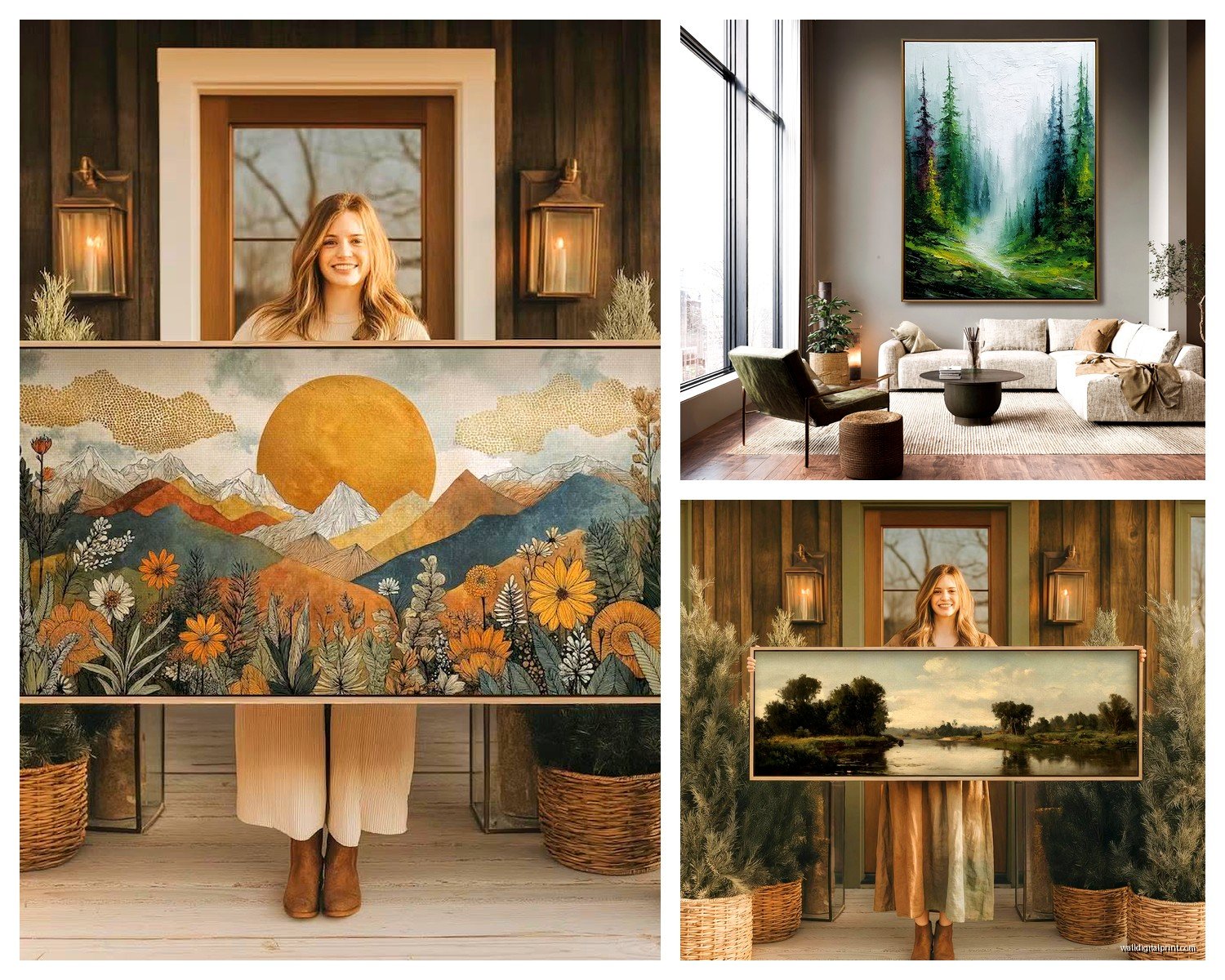
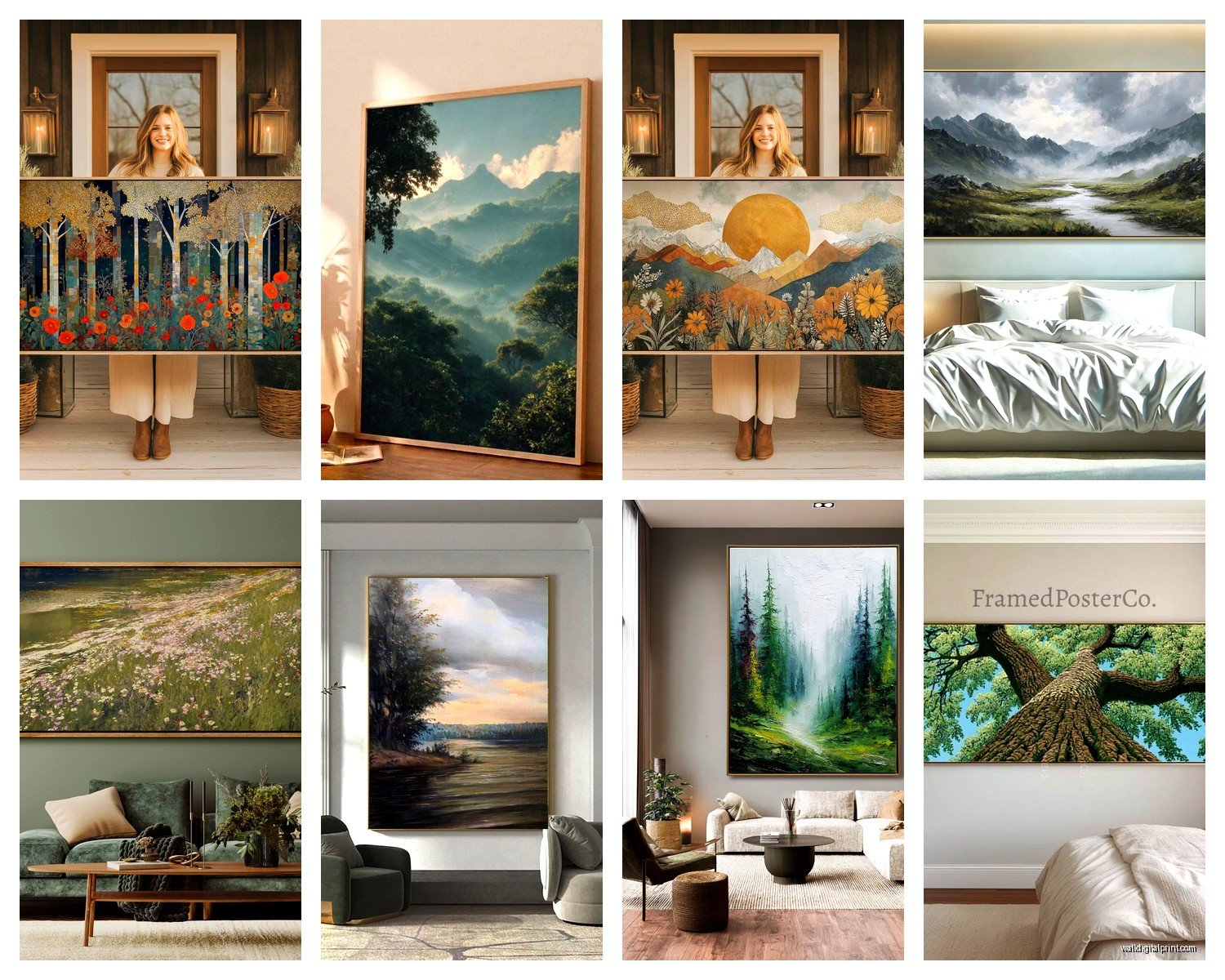
Large Nature Wall Art: Oversized Outdoor Landscape Scenes
Jul
So I’ve been installing these massive nature prints for clients for like three years now and honestly the learning curve was…let me just save you the headaches I went through.
The Size Thing Everyone Gets Wrong
Okay so first mistake I see constantly is people ordering a 40×60 thinking it’ll look huge and then it arrives and looks like a postage stamp on their wall. I did this in my own living room and wanted to cry. Here’s what actually works: measure your wall width, then go for art that’s at least 60-75% of that width. So if you have an 8-foot sofa (96 inches), you want your landscape piece to be minimum 60 inches wide. I usually push clients toward the 70-80 inch range because nature scenes NEED that scale to feel immersive.
The height thing is trickier though. Standard ceiling height is what, 8 feet? You’ve got room to go tall. I’ve done 60×90 vertical forest scenes that absolutely transform a space. But horizontal landscapes in that 40×80 or 50×100 range…that’s where the magic happens for most rooms.
Material Choices That Actually Matter
Canvas is what everyone defaults to and yeah it works but here’s the thing – for large nature photography, I’m kinda obsessed with aluminum prints right now. They make the colors in landscape shots SO vibrant. I installed this 72×48 aluminum print of Yosemite for a client last month and the depth in the shadows of those granite cliffs…it’s just different. The metallic base adds this luminosity that paper or canvas can’t touch.
But aluminum is heavy. Like really heavy. You need proper anchoring which we’ll get to in a sec.
Acrylic (or plexiglass face-mounted prints) is the other option that looks insanely high-end. The glass creates this floating effect and the colors pop like you’re looking through a window. Downside is they’re expensive and they show every fingerprint. I have a dog who somehow gets nose prints on EVERYTHING so…consider your life situation.
Canvas is still totally valid especially for those really oversized pieces like 80×120 inches because the weight becomes manageable. Gallery-wrapped canvas (where the image wraps around the sides) looks cleaner than framed in my opinion. No frame means the landscape just…flows.
What About Framing Large Pieces
Oh and another thing – if you DO frame, keep it simple. Thin black metal frames or light wood. I see people put ornate gold frames on modern landscape photography and it’s like…why. The nature scene should be the statement, not the frame competing for attention.
For canvas, I usually skip frames entirely. Get a 1.5 inch or 2 inch deep gallery wrap so it has presence on the wall without needing that frame border.
Hanging Heavy Artwork Without Destroying Your Walls
Okay so this is where I learned some hard lessons. That Yosemite aluminum print I mentioned? 35 pounds. Just casually hanging on someone’s drywall with the included sawtooth hanger would’ve been a disaster waiting to happen.
Here’s my current system:
- Anything over 20 pounds gets French cleats or heavy-duty picture hanging wire with two anchor points
- I use toggle bolts or molly bolts if I’m not hitting studs (which you usually aren’t with large horizontal pieces)
- For pieces over 40 pounds, I find at least one stud or use multiple anchor points distributed across the width
- Canvas pieces can sometimes get away with heavy-duty picture hangers rated for the weight, but I always double up
Wait I forgot to mention – measure like three times before drilling. I once installed a 6-foot wide ocean scene a full 4 inches off-center because I was rushing and didn’t measure from both edges of the wall. Had to patch and repaint. Not my finest moment.
Which Landscape Scenes Actually Work in Different Rooms
This is gonna sound weird but I’ve noticed patterns in what works where.
Living rooms: Mountain ranges, wide open vistas, dramatic skies. Anything with depth and layers. That atmospheric perspective thing where mountains fade into the distance…it makes rooms feel bigger. I’m obsessed with those misty mountain scenes from the Smoky Mountains or Pacific Northwest. Blues and grays and greens that work with basically any color scheme.
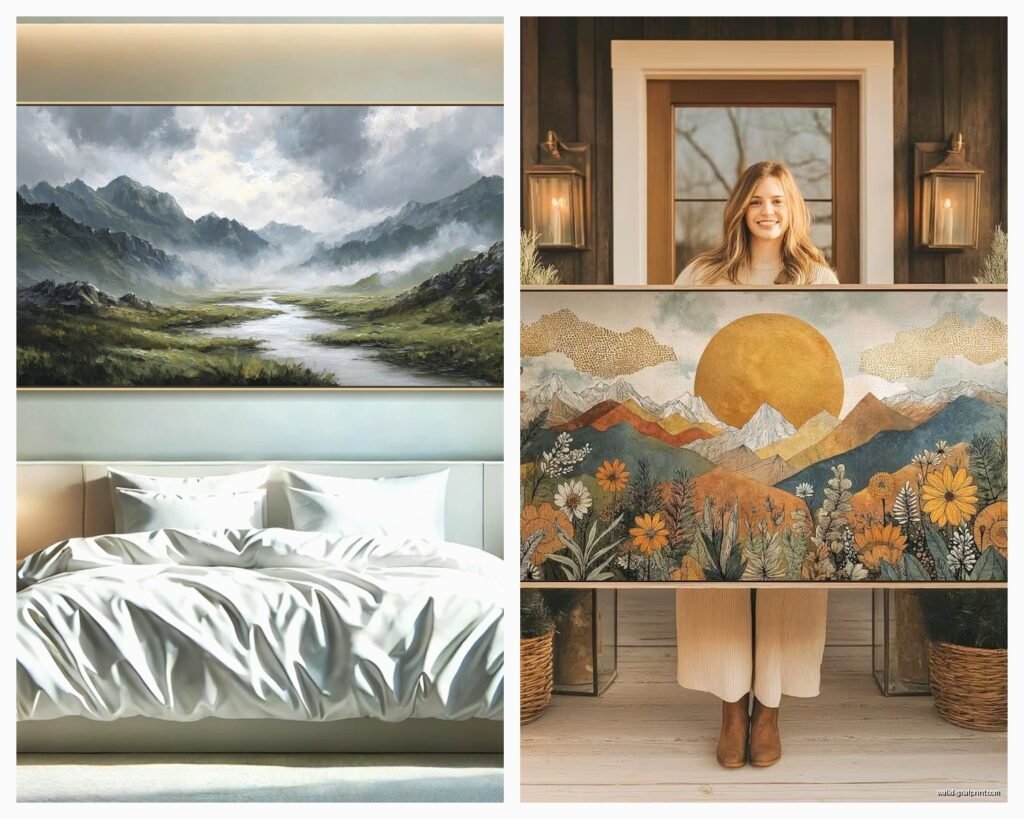
Bedrooms: Forests, calm water scenes, meadows. You want that peaceful vibe obviously. I did a massive redwood forest print (50×75) above a client’s bed and she said she sleeps better now which sounds like BS but also…the room does feel more serene. Avoid dramatic stormy scenes or intense red sunsets in bedrooms – too much energy.
Dining rooms: Honestly anything goes but I love Tuscany vineyard scenes, golden hour fields, autumn landscapes. Warmer tones make sense where you eat. Just installed a 60×40 California wine country piece and it makes the whole space feel more sophisticated.
Home offices: This is where I go for inspiring views. Mountain peaks, desert landscapes, anywhere that feels expansive. Working from home gets claustrophobic so a 70-inch wide Grand Canyon or Iceland scene gives you somewhere for your eyes to escape to during Zoom calls.
The Color Coordination Question
Okay so funny story – I used to try matching artwork perfectly to room colors and it looked SO forced. Now I just make sure there’s one or two colors that echo what’s already in the space. Like if you have navy pillows, a landscape with blue sky tones creates cohesion without being matchy-matchy.
Neutral rooms (grays, whites, beiges) can handle pretty much any landscape. That’s actually when I go bold with autumn colors or dramatic sunset scenes because the room needs that punch.
If your room already has color – say teal accents or terracotta tones – look for landscapes that include those hues naturally. Desert scenes for warm terracotta spaces, coastal or forest scenes for cooler color palettes.
Where to Actually Buy Quality Large Format Prints
I’ve tried…so many vendors at this point. My client canceled yesterday so I literally spent an hour comparing print quality from different companies using my own photos.
For photography prints: I keep coming back to professional photo labs that do custom printing. Nations Photo Lab and Mpix both do excellent large format work. The color accuracy is just better than mass-market options.
For curated landscape art: Minted and Artfully Walls have good selections of large-scale nature photography and paintings. Quality is consistent, prices are mid-range. I’ve ordered probably 30+ pieces from them combined.
For budget options: IKEA actually has some decent large landscape prints now. The photography quality isn’t amazing up close but from normal viewing distance? Totally acceptable. And they’re already framed which saves hassle.
Original photography: Etsy has tons of landscape photographers selling large format prints. You can often get custom sizes. Just check their reviews carefully and ask about paper/material quality before ordering a 60-inch print.
Print Quality Things to Look For
Resolution matters SO much at large sizes. You want at least 150 DPI, preferably 300 DPI. Most professional vendors handle this automatically but if you’re uploading your own images, a photo that looks sharp at 16×20 can look pixelated at 40×60.
Ask about color gamut and paper quality. For nature photography specifically, you want papers or materials that can handle a wide color range. Those deep forest greens and rich sunset oranges need good color reproduction or they’ll look muddy.
Lighting Your Oversized Nature Art
This makes such a bigger difference than people realize. I installed this gorgeous 80-inch wide misty forest scene and it looked…fine. Then we added two picture lights and holy hell it transformed into a focal point.
Picture lights work great for traditional look. I use the ones that project down from above, usually in brass or black finish depending on the room style.
But honestly? Track lighting or adjustable can lights aimed at the art from the ceiling work better for really large pieces. You get more even coverage across a 6 or 7 foot wide landscape.
Natural light is tricky – you want some but direct sunlight will fade prints over time. I learned this when a client’s ocean print turned weirdly pink after two years in direct afternoon sun. UV-protective glass or acrylic helps but positioning matters more.
The Viewing Distance Formula
Okay this is geeky but useful – the ideal viewing distance for large art is roughly 1.5 to 2 times the width of the piece. So a 60-inch wide landscape should be viewed from about 90-120 inches away (7.5 to 10 feet).
This is why massive nature scenes work so well in open concept spaces or across from seating areas. You NEED that viewing distance for the image to resolve properly and feel immersive rather than overwhelming.
I put a 72-inch mountain range in a narrow hallway once and it was…not good. Too close, too intense, couldn’t see the whole composition. Moved it to above their sofa with 10 feet of viewing distance and suddenly it worked.
Mixing Multiple Landscape Pieces vs One Statement Print
I go back and forth on this. A single massive landscape has more impact usually. It’s a commitment though.
Gallery walls with multiple nature scenes can work if you’re careful about cohesion. I did a set of three 30×40 vertical forest scenes that spanned about 100 inches total width – same color palette, same forest location, different compositions. Looked intentional.
Where people mess up is mixing random landscape styles. Like a tropical beach next to snowy mountains next to desert scene…unless there’s a specific theme or color story connecting them, it reads as chaotic.
If you’re gonna do multiple pieces, stick to one ecosystem or climate zone. All forests, all mountains, all coastal scenes. Or commit to a color story like all blue-toned landscapes or all golden hour photography.
Horizontal vs Vertical Orientation
Most landscape art is horizontal obviously because…landscapes. But I’m seeing more vertical nature photography lately and it’s actually really useful for certain walls. Next to doorways, in stairwells, flanking windows.
That vertical 60×90 forest piece I mentioned earlier? Perfect for a narrow wall section that couldn’t accommodate a wide horizontal landscape. Trees read vertically anyway so it feels natural.
Maintenance and Longevity
Canvas needs dusting every few months. I use a microfiber cloth or soft brush. Don’t use cleaning products – just dry dusting.
Acrylic and glass you can actually clean with glass cleaner but honestly I just use a damp microfiber cloth most of the time because cleaning products can leave streaks.
Aluminum prints are basically indestructible. Wipe with damp cloth, done. This is why I love them for high-traffic areas.
The biggest longevity issue is placement near moisture. Don’t put canvas prints in bathrooms or anywhere with humidity issues. I watched a beautiful forest canvas develop mold after a year in a bathroom with poor ventilation. Acrylic or aluminum for humid spaces always.
Oh and keep them away from heating vents if possible. The constant temperature fluctuation can warp canvas over time.
When to Go Custom vs Ready-Made
Ready-made is fine if you find something you love in a size that works. Way cheaper and faster.
But I end up doing custom about 60% of the time because:
- The exact size I need isn’t available
- Client wants a specific location or scene
- Color palette needs to match their existing decor
- They want unusual dimensions like 30×120 for above a long console
Custom isn’t even that much more expensive honestly. Like maybe 30-40% more than ready-made from the same vendor. And you get exactly what you want.
I have this ongoing project where I’m slowly replacing all my own wall art with custom prints of national parks I’ve actually visited. Currently have Arches and Olympic, working on Glacier next. It’s gonna take forever but it feels more meaningful than random pretty landscapes you know?
Anyway that’s basically everything I wish someone had told me before I started working with large-scale nature art. The main thing is just commit to going bigger than feels comfortable because these scenes NEED scale to have impact and you’ll wish you went larger way more often than you’ll wish you went smaller.