
Wall Art Guide, Wall Art Tutoriels
Giraffe Wall Art: Tall African Spotted Animal Safari
Jul
So I’ve been totally obsessed with giraffe wall art lately and honestly it started because a client wanted to do this whole safari nursery thing but then I realized it works in like, SO many other spaces too. Let me tell you what I’ve learned because I’ve literally spent the past three weeks comparing prints and canvas sizes and placement options.
Size Actually Matters Way More Than You Think
Okay so first thing – you gotta think about scale differently with giraffes because they’re already tall right? I made this mistake in my own hallway where I bought what I thought was a big print but it was like 16×20 and it just looked… sad? Like a giraffe that got shrunk in the wash.
For living rooms or above a couch you really want to go at least 24×36 minimum. I actually prefer 30×40 or even bigger if you’ve got the wall space. The thing with giraffe art is that their necks create this natural vertical line that draws your eye up and if the print is too small it just doesn’t have that same impact.
My friend Sarah just did a 40×60 canvas in her entryway and it’s honestly stunning. The giraffe’s head goes almost to the ceiling and it makes the whole space feel taller. Which is weird because you’d think a tall animal would make a room feel smaller but it’s the opposite.
Multi-Panel Situations
Oh and another thing – those three-panel sets are really popular right now but here’s what nobody tells you. The spacing between panels matters SO much. I hung a set in a client’s bedroom and we did 2 inches between each panel and it looked fine but not great. Redid it with 4 inches and suddenly it looked intentional and gallery-like.
Also if you’re doing a multi-panel giraffe piece make sure the giraffe isn’t like, decapitated between panels in a weird way. I’ve seen some where the neck is split awkwardly and it just looks wrong.
Color Schemes That Don’t Look Like a Kid’s Room
This is gonna sound weird but the biggest challenge with giraffe art is making it look sophisticated and not like you’re decorating a three-year-old’s bedroom. Unless you ARE decorating a kid’s room in which case ignore this whole section.
For adult spaces I’ve found these color combos work really well:
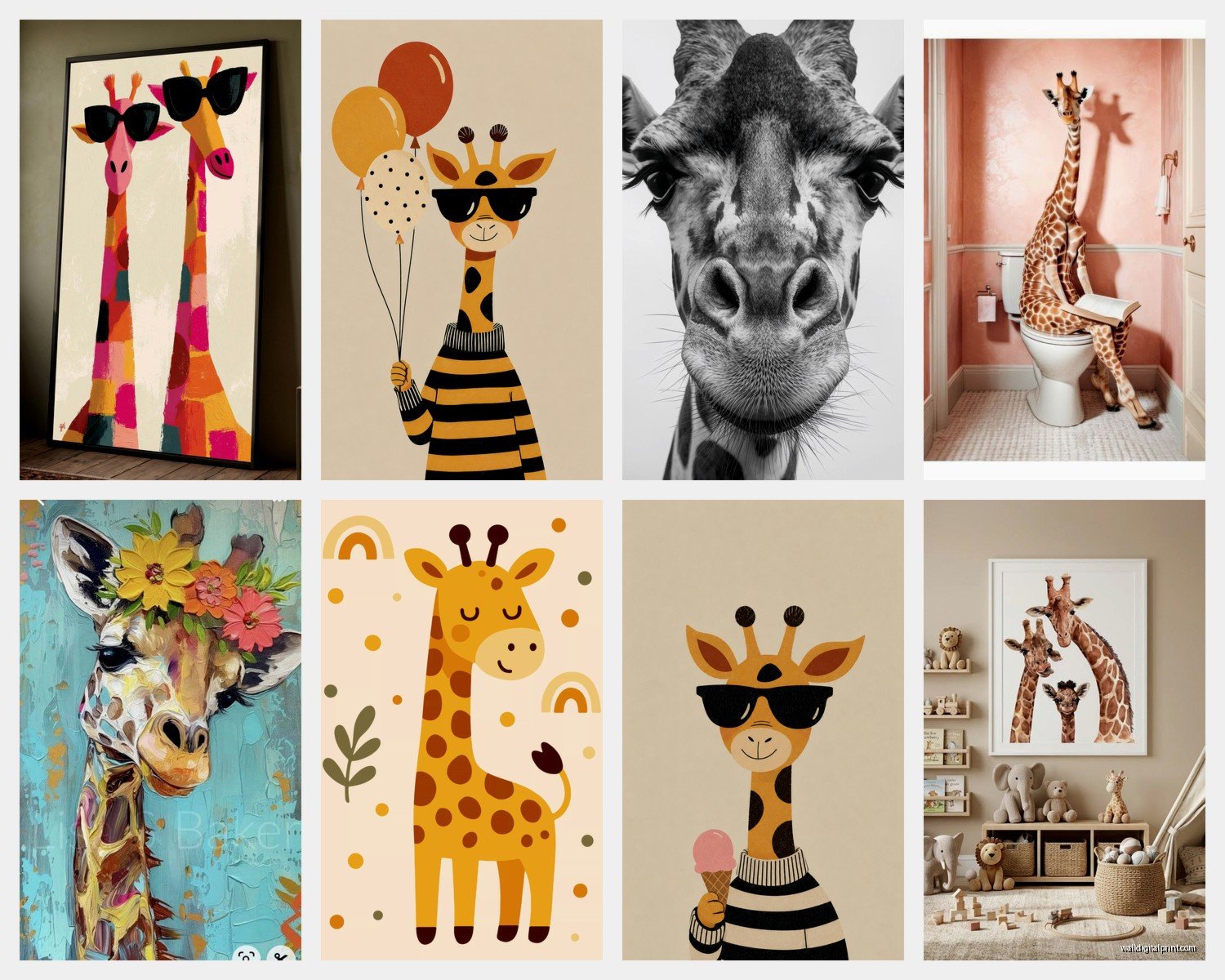
- Black and white photography style – super modern and the spots become almost abstract
- Sepia or warm browns with cream backgrounds – vintage safari vibes without being too themed
- Navy blue backgrounds with the giraffe in natural colors – this is my current favorite actually
- Dusty pink or blush with gray giraffes – sounds weird but works amazing in bedrooms
- Deep green jungle backgrounds – but make sure it’s a sophisticated green not bright lime
The worst combo I’ve seen is bright yellow with cartoon-style giraffes in an adult living room and I’m still having flashbacks. Just don’t.
Realistic vs Abstract vs Geometric
So there’s basically three main styles you’ll see and they create completely different moods.
Realistic photography or photorealistic paintings – these are what I usually recommend for people who want that safari lodge aesthetic or nature-inspired spaces. They work great in offices too because they’re sophisticated. I hung a massive realistic giraffe photo in my home office last month and I swear it makes video calls more interesting because everyone asks about it.
Abstract or watercolor giraffes – these are more artistic and work well in eclectic spaces or modern bedrooms. The watercolor ones especially are having a moment right now. Just make sure the quality is good because bad watercolor giraffe art looks like a high school art project.
Geometric or minimalist line art – okay so I was watching The Great British Baking Show the other night (my dog was snoring through the whole thing) and got distracted looking at geometric giraffe prints on my phone and honestly these are SO versatile. Single line drawings of giraffes or geometric polygon-style ones work in literally any modern space. They’re subtle enough that they don’t scream “safari theme” but still interesting.
Framing Options Because This Gets Complicated
Canvas prints are the easiest because they come ready to hang and you don’t need a frame. But here’s what I’ve learned – cheap canvas prints look cheap. The edges matter. Make sure it’s gallery wrapped which means the image continues around the sides. Seeing white canvas edges or worse, staples, ruins the whole thing.
For paper prints you need frames and my go-to is simple black or natural wood. Don’t do ornate gold frames unless you’re going for some kind of maximalist colonial thing which could work but is very specific. White frames can work too but they need to be matte white not glossy.
Metal prints are another option I’ve been experimenting with – the giraffe image gets printed directly on aluminum and it has this cool modern look. More expensive but super durable and the colors pop.
Placement Ideas That Aren’t Obvious
Everyone thinks above the couch right? But let me tell you where giraffe art actually works better sometimes.
Dining rooms – hear me out. A tall giraffe portrait on the wall opposite your dining table creates this amazing focal point and starts conversations. I did this in my own place and dinner guests always comment on it.
Stairway walls – the vertical nature of giraffes is PERFECT for stairways. You can do a series of smaller giraffe prints going up the stairs or one large vertical piece.
Bedroom above the bed – but here’s the trick, go horizontal not vertical. Get a wide landscape-style print of a giraffe bending down to drink or a side profile. The horizontal orientation works better above beds.
Bathroom – okay this sounds random but a small giraffe print in a powder room is unexpectedly chic. Keep it simple and maybe black and white.
Home office – already mentioned mine but seriously, giraffes in offices work. They’re interesting without being distracting.
Mixing Giraffe Art with Other Safari Elements
So you don’t want your whole room to look like a zoo gift shop right? Here’s how to balance it.
If you’re doing giraffe wall art keep other safari elements subtle. Maybe some woven baskets, natural wood furniture, some greenery. But don’t also add zebra pillows and elephant sculptures and lion prints everywhere. Pick your main animal and let it be the star.
I did a living room last year where we had a huge giraffe canvas as the focal point then brought in safari colors through pillows and throws – lots of terracotta, sand colors, deep greens. Added some African mudcloth pillows. The giraffe was the only actual animal representation and it looked curated not themed.
Oh wait I forgot to mention – texture matters so much when you’re building around giraffe art. Since giraffes have that spotted pattern you want to balance it with some solid colors and interesting textures. Chunky knit throws, linen curtains, jute rugs. This grounds the space.
Where to Actually Buy Good Giraffe Art
My client canceled yesterday so I spent like an hour comparing options and here’s what I found:
Etsy – tons of options from independent artists. You can get custom sizes and find unique pieces nobody else has. Quality varies wildly though so check reviews and ask about print quality before ordering.
Society6 – good for more artistic interpretations. Artists upload their work and you can get it printed on different materials. I’ve ordered from here and quality is decent for the price.
Minted – higher end, really good quality prints. More expensive but worth it if you want something that’ll last. They have some gorgeous giraffe photography.
Amazon – honestly has some surprisingly good options if you read reviews carefully. I’ve found decent canvas prints here for like $40-60 which is pretty good. Just avoid anything that looks too cheap in the photos.
Local art fairs or galleries – if you want something truly unique and are willing to spend more. I found an amazing giraffe painting at a local art fair last summer and it’s one of my favorite pieces.
DIY Options If You’re Crafty
Okay so if you wanna save money or make something personal there’s a few routes.
You can buy high-res giraffe photos from stock photo sites and get them printed at a local print shop. Just make sure the resolution is high enough – at least 300 DPI for the size you want. I did this for a client on a budget and got a 30×40 print made at a local printer for like $35.
Painting your own if you’re artistic – obviously this takes skill but even simple silhouette giraffes can look cool if you do them right. My sister did this in her son’s room and used painter’s tape to create clean lines.
Vinyl wall decals are another option especially for kids’ rooms or if you’re renting and can’t put holes in walls. They’re removable and some of the designs are actually really cute.
Common Mistakes I See People Make
Hanging it too high – this is the biggest one. The center of your artwork should be at eye level which is usually around 57-60 inches from the floor. I see so many giraffes hung way too high because people think “tall animal = hang it high” but that’s not how it works.
Going too literal with the theme – if you have giraffe art you don’t need giraffe-print pillows and giraffe bookends and giraffe everything. It becomes too much.
Wrong lighting – giraffe art especially photography-style pieces need good lighting to show the details and textures. Add a picture light or make sure there’s enough ambient light.
Buying too small because you’re scared to commit – seriously just go bigger than you think. You can always go down but undersized art is one of the most common decorating mistakes.
Not considering the room’s existing colors – if your room is all cool grays and blues maybe don’t get a giraffe print with warm orange sunset backgrounds. Make sure the colors work together.
Specific Product Types to Look For
Canvas gallery wraps are gonna be your most popular option – ready to hang, no frame needed, modern look. Look for at least 1.5 inch depth on the frame for a quality appearance.
Framed prints under glass give you more protection and a classic look. Good for formal spaces.
Metal or acrylic prints are super modern and the colors are really vibrant. More expensive but very durable.
Poster prints are the budget option – just make sure you frame them nicely or they look cheap.
Wooden wall art where the giraffe is laser cut or painted on wood panels – these are trendy right now and add good texture.
Making It Work in Different Room Styles
Modern minimalist – go for black and white photography or single line drawings. Keep it simple and let the giraffe be the main focal point in an otherwise neutral space.
Bohemian – watercolor or artistic interpretations work great here. Mix with lots of plants and textured textiles.
Scandinavian – light and airy giraffe prints with lots of white space. Simple frames, natural wood accents.
Industrial – metal prints or canvas with darker backgrounds. The giraffe becomes an unexpected soft element against all the hard edges.
Traditional – more realistic paintings or vintage safari photography. Use classic frames and pair with traditional furniture.
The thing is giraffe art is more versatile than people think. It doesn’t automatically make your space look like a safari theme unless you push it that way with all the other elements.
Anyway that’s basically everything I’ve learned through trial and error and working with clients and my own spaces. The main things are getting the size right, picking a style that fits your room, and not going overboard with the theme. Oh and hanging it at the right height which I can’t stress enough because I’ve had to rehang so many pieces for people.
