Wall Art Guide, Wall Art Tutoriels
Blown Glass Wall Art: Hand-Crafted Artisan Sculpture
Aug
So I’ve been obsessing over blown glass wall art lately and honestly it started because I walked into this gallery in Seattle last month and just stood there like an idiot staring at this massive turquoise piece that looked like frozen ocean waves. My cat knocked over my coffee while I was researching later that night and I barely noticed because I was so deep into artisan glass rabbit holes online.
What You’re Actually Looking At When You Buy Blown Glass
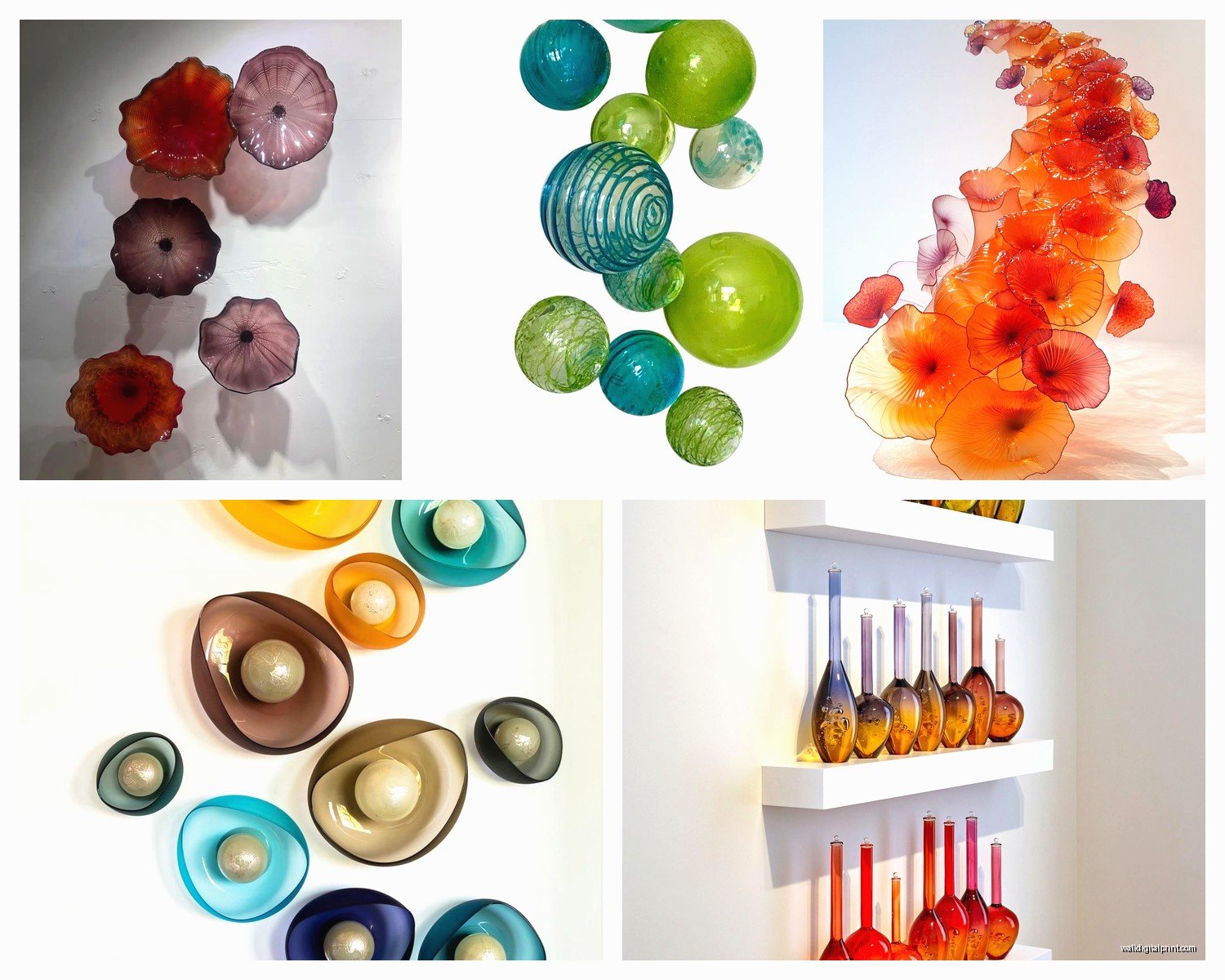
Okay so first thing – not all “blown glass” wall art is actually hand-blown. Some pieces are molded or kiln-formed which is fine but it’s a completely different price point and aesthetic. When you’re looking at real hand-blown pieces, you should see slight irregularities. Like the thickness won’t be perfectly uniform, there might be tiny air bubbles (which are actually kinda beautiful), and the colors will have this depth that flat glass just doesn’t have.
I learned this the hard way when I bought what I thought was an amazing deal on Etsy and it turned out to be basically fancy colored glass panels. Still pretty but not the same thing at all.
The Price Reality Check
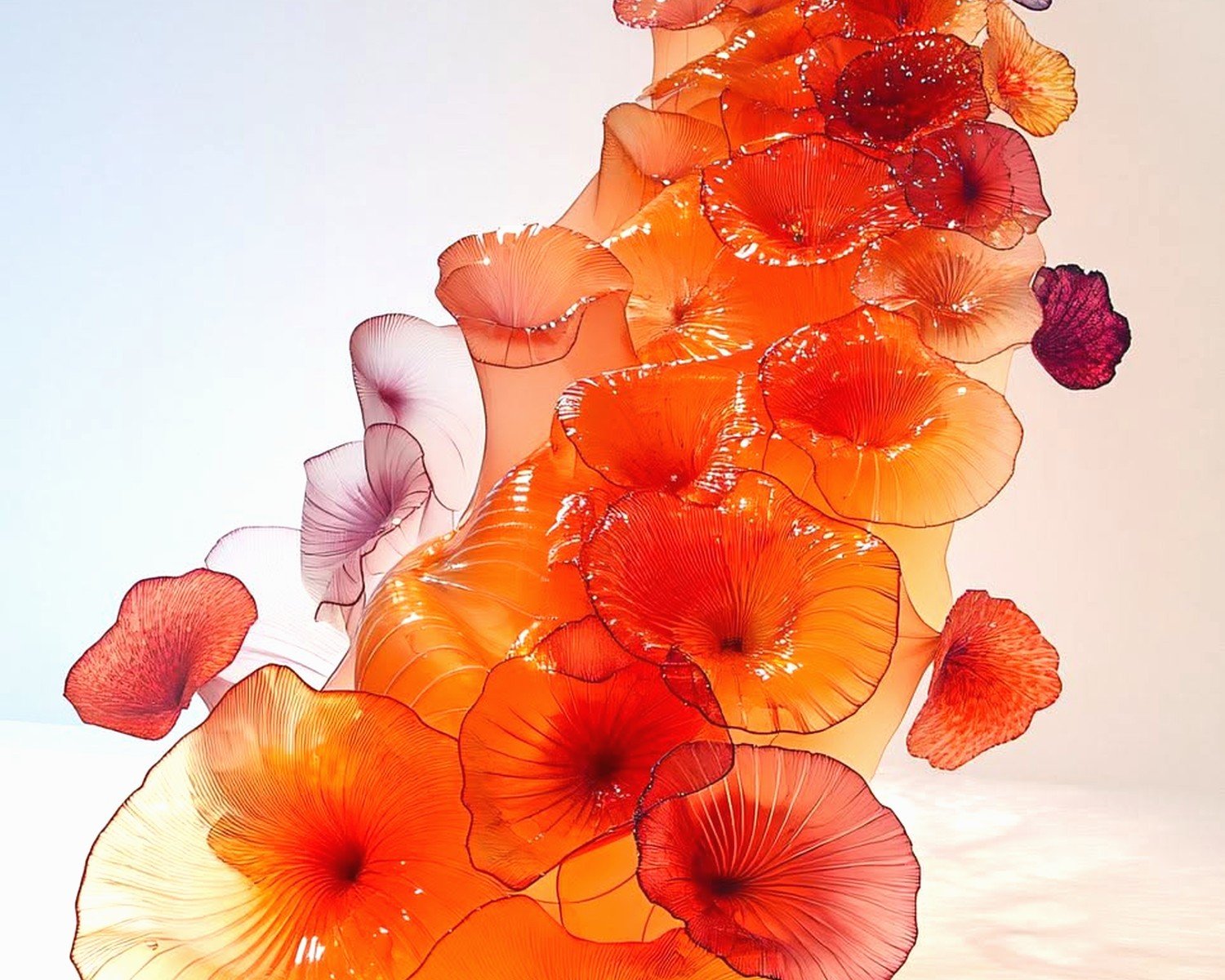
Real artisan blown glass wall sculptures start around $200-300 for smaller pieces, maybe 12-15 inches. Mid-size pieces that actually make a statement are gonna be $500-1500. Large installation pieces or work from established glass artists can easily hit $3000-10000 or more. I had a client who spent $8500 on a Dale Chihuly-inspired piece for their foyer and honestly it was worth every penny because people literally gasped when they saw it.
If someone’s selling “hand-blown glass wall art” for like $75 shipped, it’s not what you think it is.
Where to Actually Find Quality Pieces
The best stuff I’ve found comes from:
- Direct from glass blowing studios – most cities have at least one and they usually have galleries attached
- Craft shows and art fairs, especially ones that jury their artists
- Specific online platforms like Artful Home or 1stDibs for higher-end pieces
- Etsy but you gotta be really careful and read descriptions thoroughly
- Local art galleries that specialize in contemporary craft
I’ve had good luck on Instagram too actually, finding emerging glass artists who are still building their client base. Their prices are usually more reasonable and you can watch their process videos to see it’s legit.
Questions to Ask Before Buying
When I’m working with clients or buying for myself, I always ask:
Is this hand-blown or kiln-formed? Both are valid art forms but the price should reflect the technique.
What type of glass was used? Borosilicate glass is super durable and resistant to thermal shock. Soft glass (soda-lime) is more traditional for art pieces and has more vibrant colors but it’s more fragile.
How is it mounted? This is SO important and people don’t think about it until the piece arrives. Some pieces have metal brackets, some have wire loops, some need to be professionally installed with specific hardware.
What’s the weight? I once ordered a piece without checking and it was like 25 pounds. My drywall anchors were not prepared for that situation.
The Installation Part Nobody Warns You About
Oh man, so installing blown glass wall art is not like hanging a painting. These pieces are heavy and often have weird weight distribution because the glass thickness varies.
What You Actually Need
- A stud finder – don’t even try to use drywall anchors alone for anything over 10 pounds
- Level (obviously but I’ve seen some crooked expensive glass and it haunts me)
- Usually special brackets or a French cleat system for heavier pieces
- Sometimes a second person because these things are awkward to hold
- Felt pads or bumpers for the back so it doesn’t scratch your wall
I always tell people to hire a professional installer for pieces over $1000 or anything really large. The $150 installation fee is worth not dropping a $2000 glass sculpture.
Wait I forgot to mention – think about lighting before you install. Blown glass looks completely different depending on whether it has backlighting, side lighting, or just ambient room light. I installed this amber and red piece in my dining room and it was pretty in daylight but when the evening sun hit it through the window it literally looked like it was on fire. Total accident but now I planned the whole room around that moment.
Styles and What Actually Works in Real Spaces
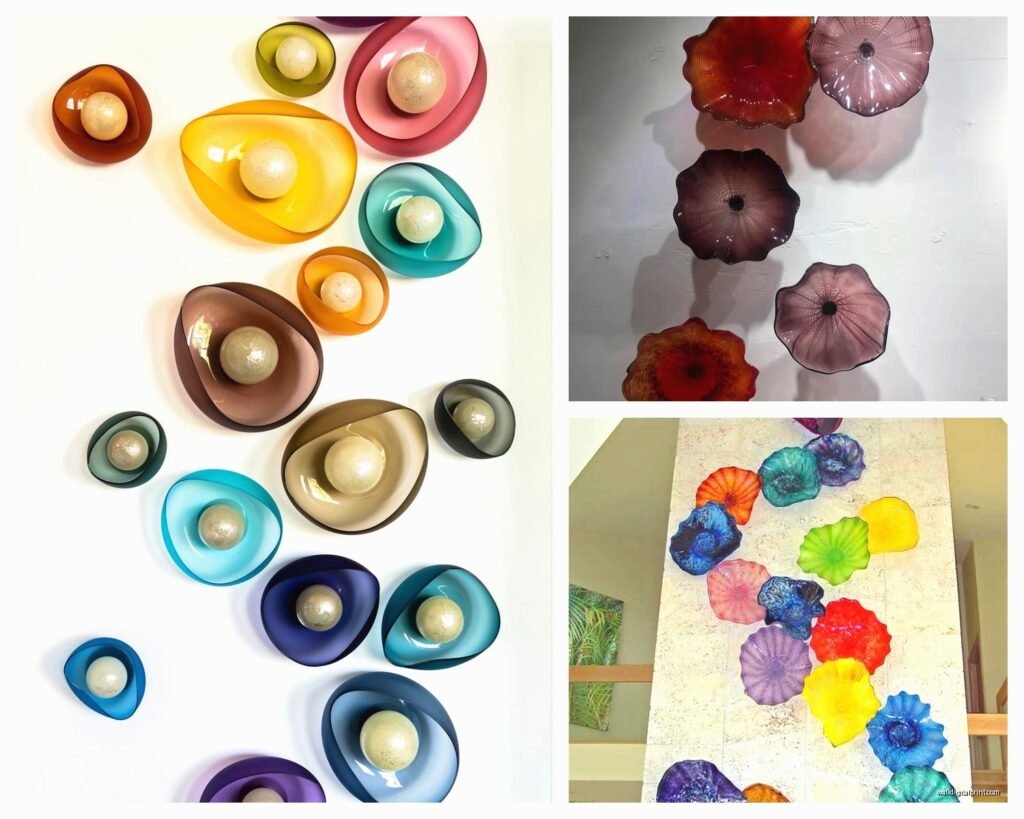
The style you choose matters way more than I initially thought. Some pieces are sculptural and three-dimensional, jutting out from the wall. Others are flatter and more panel-like. Some are abstract, some are representational like flowers or ocean themes.
For Modern Minimalist Spaces
Go for pieces with clean lines and maybe just one or two colors. I love clear glass with single color accents – like clear with cobalt blue swirls or clear with amber. These don’t overwhelm a minimal aesthetic but add that organic handmade element that keeps the space from feeling cold.
For Eclectic or Bohemian Vibes
This is where you can go wild with color. Multi-colored pieces with lots of swirls and movement. I have a client with this insane piece that has like seven different colors and it shouldn’t work but it totally does because her whole house is maximalist anyway.
For Traditional Spaces
People think blown glass is too contemporary for traditional interiors but that’s not true. Pieces in jewel tones – emerald, sapphire, ruby red – can work beautifully in traditional settings. I put a deep green piece with gold inclusions in a very traditional study and it looked like it belonged there.
Caring for Your Glass Art
Okay so funny story – I used to use Windex on everything glass and then an artist friend literally grabbed the bottle out of my hand and was like “NO.” Apparently ammonia-based cleaners can damage some glass finishes over time, especially if there are metallic inclusions or special surface treatments.
Actual Care Instructions
- Dust with a soft microfiber cloth – that’s it for regular maintenance
- For actual cleaning use just water or water with a tiny bit of mild dish soap
- Dry immediately with a lint-free cloth
- Don’t use paper towels because they can scratch
- Keep it away from heat sources and direct prolonged sunlight (some colors can fade)
Most blown glass is pretty durable for wall art since it’s not being handled, but you gotta be careful during cleaning. I knocked a small piece off the wall once while dusting too enthusiastically and yeah, that was a $400 mistake.
Commission vs. Ready-Made
So commissioning a piece is amazing if you have a specific vision and the budget for it. Most glass artists charge 30-50% more for custom work and you’re looking at 2-6 months lead time usually.
I commissioned a piece last year for a client’s entryway – we wanted specific colors to match this vintage rug she had. The artist sent sketches, we went back and forth on the color palette, and the final piece was exactly what we envisioned. But it cost about $2800 and took four months.
Ready-made pieces are great because you see exactly what you’re getting and you get it faster. The downside is you might see something similar in someone else’s house, though honestly with hand-blown glass even “identical” pieces have variations.
Working with Artists on Commissions
Get everything in writing – dimensions, colors, techniques, timeline, payment schedule, shipping arrangements. Most artists want 50% upfront and 50% on completion.
Ask to see progress photos if it’s a big commission. Some artists do this automatically, others you have to request it.
Be clear about your wall space limitations – give exact measurements and mention any obstacles like light switches or furniture placement.
The Shipping Nightmare
This is gonna sound weird but the most stressful part of buying blown glass art online is the shipping. These pieces need serious packaging – we’re talking custom crates for larger pieces, multiple layers of bubble wrap, foam inserts, the whole thing.
Always get insurance. Always. I don’t care if it adds $50 to your order.
Expect to pay $75-200 for shipping on medium to large pieces. One time I bought a piece and the shipping was $180 and I almost had a heart attack but then I saw how it arrived – in a wooden crate with foam and it was packaged better than some furniture I’ve received.
Inspect it immediately when it arrives. Take photos before you even open the packaging fully. If there’s damage you need to document it right away for insurance claims.
Mixing Blown Glass with Other Art
I’ve been watching this show about art collectors and it got me thinking about how blown glass works in gallery walls or mixed media displays. It’s tricky because glass is so different texturally from paintings or prints.
What I’ve found works: Don’t try to make glass pieces “match” other art. Let them be their own thing. I like using glass as an anchor piece with more subtle artwork around it, or creating a dedicated glass installation separate from other wall art.
Three-dimensional glass pieces need breathing room. Don’t crowd them. They interact with light and cast shadows and reflections – you want space for that to happen.
Red Flags When Shopping
- Stock photos instead of photos of the actual piece (unless it’s clearly stated as an example of the style)
- No information about the artist or studio
- Descriptions that are vague about technique – “glass art” without specifying blown, fused, slumped, etc.
- Prices that seem too good – real hand-blown glass takes hours of skilled labor
- No mention of how it mounts or hangs
- Sellers who can’t or won’t answer basic questions about the piece
Oh and another thing – be skeptical of pieces described as “Chihuly style” unless they’re actually expensive. Real pieces influenced by his technique require serious skill and equipment. Cheap knockoffs are usually just colored glass that vaguely looks wavy.
Size Considerations Nobody Mentions
I’ve made this mistake – seeing a piece online and not really grasping the size. A 24-inch piece sounds medium but when it’s on your wall it can read really large or really small depending on the wall size and surrounding furniture.
For above a sofa you want something at least 2/3 the width of the sofa. For a narrow wall, a vertical piece works better than horizontal. For a large empty wall, don’t be afraid to go big – a small piece will look lost.
I always make a paper template of the dimensions and tape it to the wall before buying. Sounds extra but it’s saved me from several sizing mistakes.
The thing about blown glass is it has presence beyond its physical dimensions because of how it catches light and creates shadows. A 20-inch piece can feel bigger than a 30-inch painting depending on the colors and depth.