
Wall Art Guide, Wall Art Tutoriels
Office Wall Art: Professional Workspace Productivity Decor
Sep
So I’ve been working on office spaces for like 8 years now and honestly the wall art thing is where most people totally mess up their workspace vibe. Let me just dump everything I know because I literally just finished staging three different home offices this month and my brain is still in that mode.
The Psychology Part Nobody Tells You About
Okay so first thing – office wall art isn’t the same as your living room art and this is where everyone goes wrong. You’re not trying to make a statement or show off your taste necessarily. You need stuff that makes your brain feel calm but alert at the same time which sounds contradictory but it’s actually not that hard once you get it.
I had this client who hung these super intense abstract pieces behind his desk – all red and black angular stuff – and he wondered why he felt anxious during video calls. Like your subconscious is picking up on everything in your peripheral vision all day long. You want art that’s interesting enough to give your eyes a break when you look up from the screen but not so chaotic that it’s basically visual noise.
What Actually Works in Different Office Setups
For home offices where you’re on video calls a lot, you gotta think about what’s behind you. I always tell people to put something with horizontal lines or geometric patterns behind their desk because it photographs well and doesn’t distract. Avoid anything with words unless you want people reading your wall instead of listening to you… learned that one the hard way with my own setup.
The side walls are where you can get more experimental. This is your eye-break zone. I usually do:
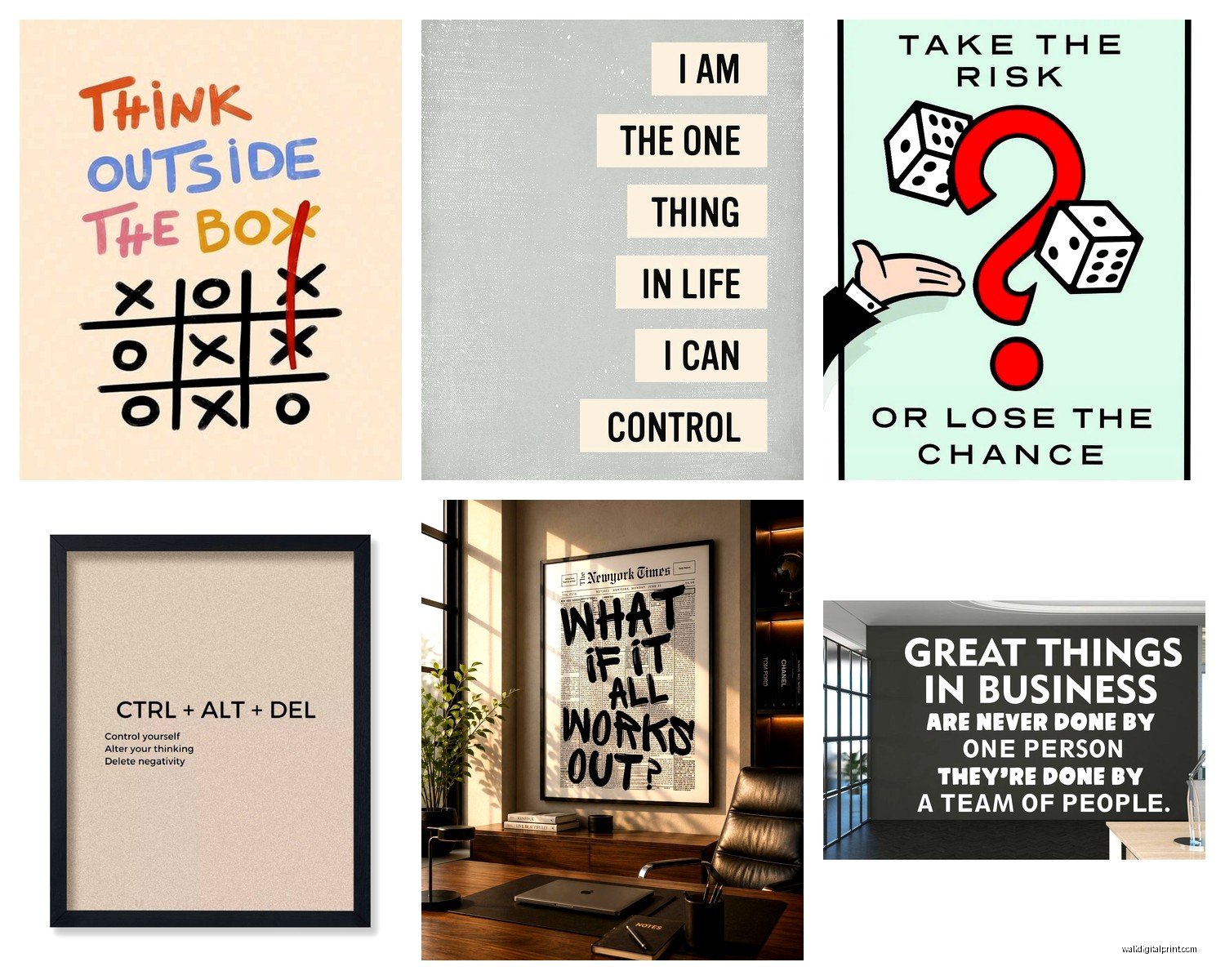
- One larger piece on your main side wall (the one you naturally glance at)
- A small gallery wall on the opposite side if you have the space
- Nothing directly in your main line of sight when working because that’s just distracting
Size Matters More Than You Think
Everyone buys art that’s too small and then wonders why their office looks sad. My general rule is go bigger than feels comfortable when you’re shopping online. For the wall behind your desk, you want something that takes up about 2/3 of the width of your desk. So if you have a 60-inch desk, you’re looking at 40 inches of art width minimum.
For side walls, one large piece (like 30×40 inches or bigger) beats five small ones every time. Unless you’re doing a proper gallery wall which is its own thing that I’ll get to in a sec.
Color Psychology That’s Actually Backed Up
Blue increases productivity – this is actually researched, not just designer BS. Blue-greens are even better because they have that calming effect without making you sleepy. I use a lot of navy, teal, and sage in office spaces.
Yellow is tricky because it can boost creativity but too much makes people anxious. Small pops of yellow in artwork = good. Entire yellow wall = you’re gonna hate it in three weeks.
Neutrals with one accent color is your safest bet honestly. Gray, beige, black and white as your base, then bring in one color that matches your work style. Creative field? Go with warmer tones. Finance or tech? Cooler blues and grays read more professional on video.
What I Actually Buy and Where
Okay so this is gonna sound weird but I get like 40% of my office art from Minted and Artfully Walls. They’re not paying me or anything, they just have good quality prints that don’t look cheap on camera. The framing is decent enough that you don’t need to reframe immediately.
For budget options, Society6 has gotten way better. Just avoid anything too trendy because you’re gonna be staring at it for hours every day and trends get old fast. I learned this when I bought that geometric mountain print that was everywhere in 2019 and now I can’t stand looking at it.
If you want original art but don’t wanna spend thousands, Saatchi Art has emerging artists with pieces in the $200-800 range. I’ve found some really good abstract landscapes there that work perfectly for offices.
The Frame Situation
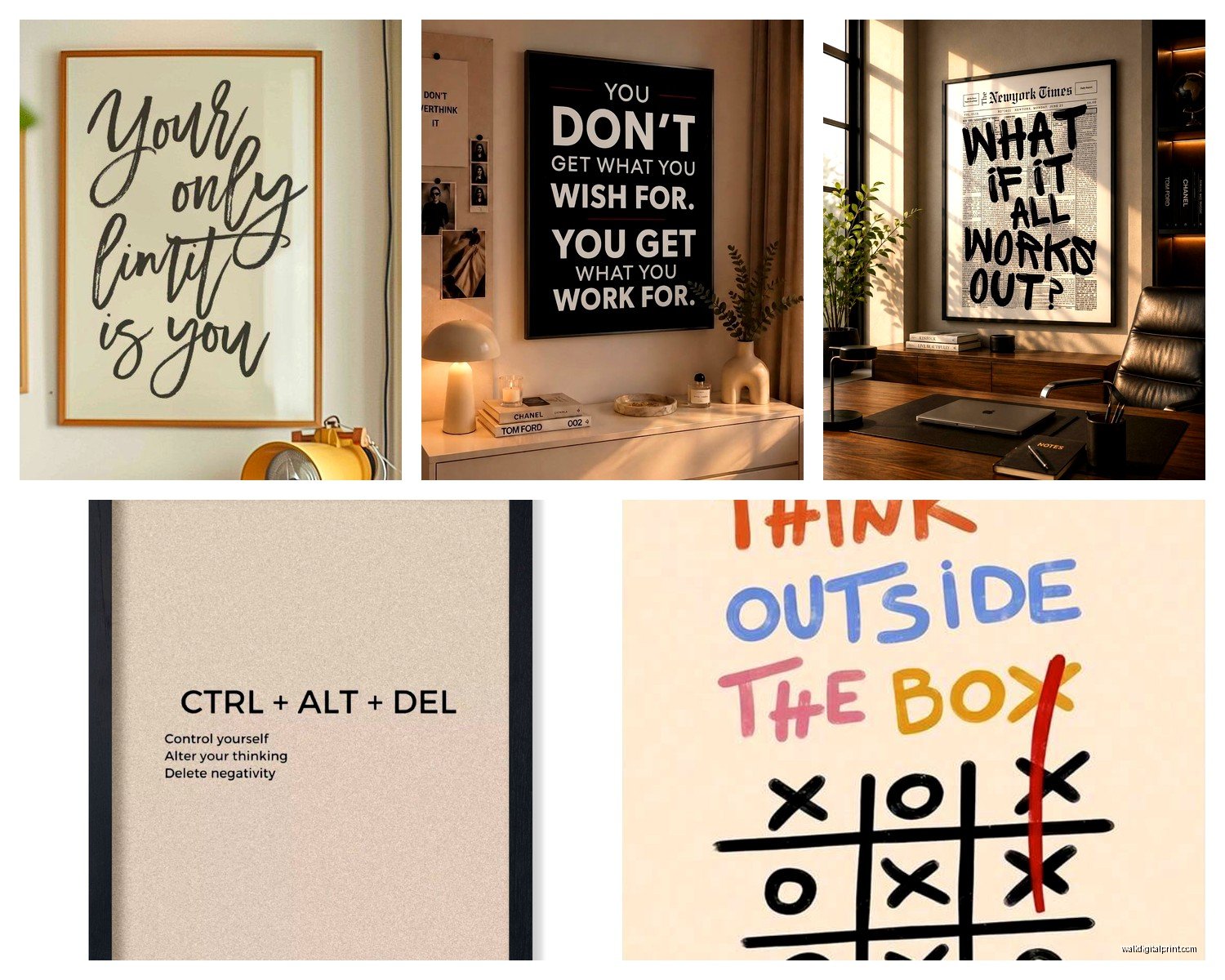
Black frames for modern offices. Wood frames for warmer traditional spaces. White frames if your walls are white and you want everything to blend. It’s really that simple.
Oh and another thing – get frames with plexiglass not regular glass. Less glare on video calls and they’re lighter so hanging is easier. My cat knocked over a regular glass frame last month and I’m still finding tiny pieces.
Gallery Walls That Don’t Look Messy
If you’re doing a gallery wall in your office, you need a system or it’ll look chaotic. I use the same frame color for everything – usually black. Then I do either all black and white photos or all the same color palette.
Layout trick: arrange everything on the floor first and take a photo from above. Then use that photo as your hanging guide. Sounds obvious but most people just start nailing stuff up and then it’s wonky.
For spacing, keep 2-3 inches between frames consistently. Use a level. I know everyone says this but seriously, use a level. Your eye will catch crooked frames on every single video call.
What to Avoid Completely
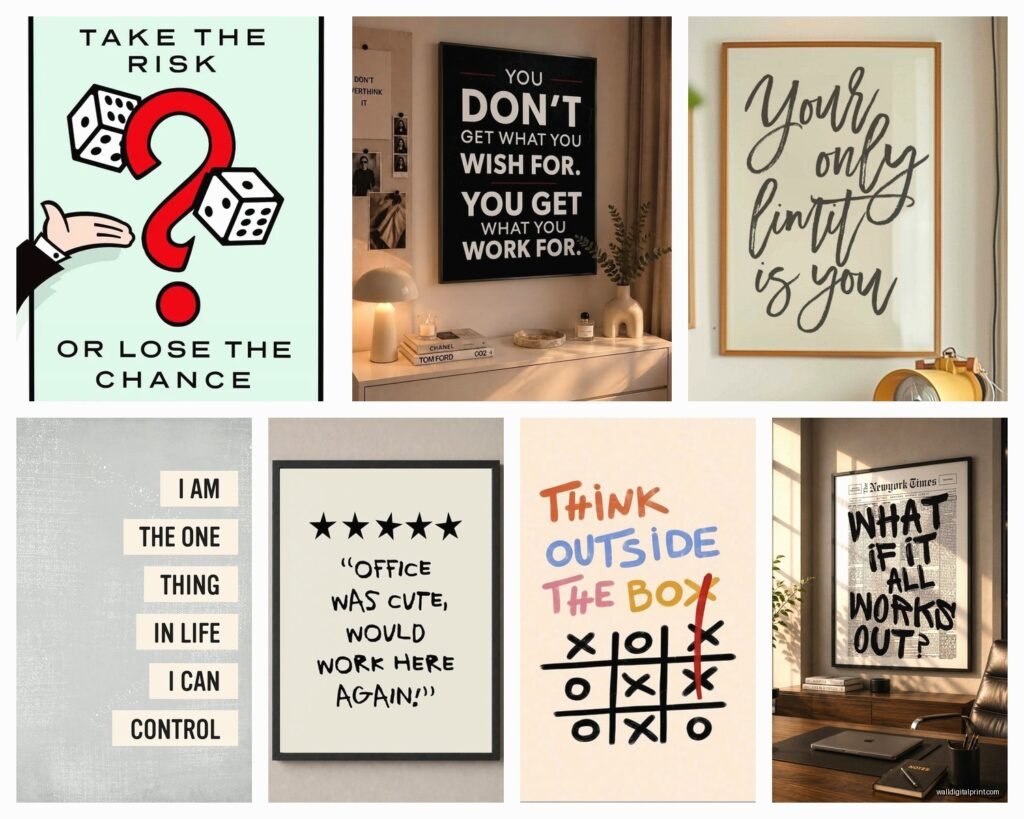
Motivational quote art. Just no. It reads as unprofessional on video calls and it’s basically visual clutter. If you need motivation, set it as your phone wallpaper not your office wall.
Family photos in the main camera view. Keep those on a side shelf or different wall. You want to look professional on calls and having your kids’ school photos right behind you is… it’s a choice.
Anything too personal or political. Even if you work from home and rarely have people over, you never know when you’ll need to hop on a client call. Keep it neutral.
Really busy patterns. Your brain is already processing a million things during work. Abstract art is fine but if you can’t tell what you’re looking at or there’s too much going on, it’s counterproductive.
The Lighting Component
Wait I forgot to mention – lighting makes or breaks wall art in offices. If you have overhead fluorescents, they’re gonna wash out everything and create glare on frames. I always add a desk lamp plus either picture lights or track lighting aimed at the art.
For home offices, warm white LEDs (2700-3000K) make art look better and are easier on your eyes during long work days. Cool white is too harsh unless you’re in a creative field where color accuracy matters.
Quick Lighting Setup
- One adjustable desk lamp for task lighting
- One floor lamp or wall sconce for ambient lighting
- Picture lights for any art you really want to highlight
- Dimmer switches if possible because your lighting needs change throughout the day
Types of Art That Actually Boost Productivity
Abstract landscapes work really well because they give your brain something to rest on without being too literal. Your mind can wander for 30 seconds looking at an abstract piece then snap back to work.
Geometric patterns in blues and greens. There’s something about organized shapes that helps people focus. I’ve used this in probably 50 offices at this point.
Black and white photography of architecture or nature. Classic, doesn’t get old, looks good on camera, doesn’t distract.
Minimalist line art. Super trendy right now but the simple ones are actually timeless. One-line drawings of faces or objects. Keep it simple though.
What doesn’t work: busy florals, intense colors everywhere, anything too dark and moody (you’ll feel depressed), anything too bright and chaotic (you’ll feel scattered).
DIY Options That Don’t Look DIY
If you’re on a tight budget, you can totally make this work. Print your own art on nice paper – I use Artifact Uprising for prints that look expensive. Frame them in identical frames from IKEA (the RIBBA frames are actually good). Suddenly you have a cohesive gallery wall for under $200.
Another trick is to buy vintage prints from Etsy – botanical prints, architectural drawings, maps. Get them professionally scanned and printed at a print shop. Frame them all the same way. Looks like you spent way more than you did.
Or just go full minimalist with one large canvas in a neutral color. You can DIY this with a big canvas from the craft store and some acrylic paint. Abstract art is forgiving. My friend did this in navy and cream stripes and it looks so good on her video calls.
Practical Hanging Tips
Use proper wall anchors not just nails. Drywall anchors if you’re in typical walls, toggle bolts if you’re not sure. Art falling mid-video call is not the vibe.
Eye level means the center of the art is at 57-60 inches from the floor. This is standard gallery height and it just looks right.
If you’re hanging above furniture, leave 6-8 inches between the furniture top and the bottom of the frame. This creates visual connection without looking cramped.
For gallery walls, start with the middle piece and work outward. Much easier than trying to plan the whole thing at once.
When to Switch Things Up
You don’t need to change your office art constantly but if you’re feeling stuck or uninspired, swapping one piece can totally shift the energy. I change my main office piece maybe twice a year – usually spring and fall because apparently I’m predictable like that.
Keep a few extra prints you like and rotate them seasonally if you want. Doesn’t have to be seasonal themes, just different vibes. Lighter colors in summer, richer tones in winter. Whatever works for you.
The Video Call Test
Before you commit to any art placement, do a test video call and see what actually shows up in your frame. I use Photo Booth on my Mac or just start a Zoom meeting with myself – yes I know how that sounds but it works.
Check for glare, check what’s actually visible, make sure nothing looks weird or distracting. Adjust accordingly. This saves so much hassle later.
Also consider what the art says about you professionally. You want it to look intentional and put-together without being too formal or stuffy. That middle ground is where good office art lives.
One more thing – if you work in a corporate office with those gray fabric walls, command strips are your friend. Get the heavy duty ones rated for more weight than you need. I’ve had exactly zero pieces fall using this method and it doesn’t damage the walls when you leave.
The whole point of office wall art is creating a space where you actually want to spend time working. It doesn’t have to be complicated or expensive. Just thoughtful about what makes your specific brain work better. Start with one good piece and build from there. You don’t need to do everything at once – honestly my office evolved over like two years before I was totally happy with it and I literally do this for a living so don’t stress about getting it perfect immediately.
