Wall Art Guide, Wall Art Tutoriels
Line Drawing Wall Art: Continuous Single-Line Minimalist Art
Oct
So I’ve been totally obsessed with single-line drawings lately and honestly it started because I was watching The Crown and doodling on my iPad between episodes and suddenly I’m like… wait, this could actually be wall art?
What Makes Single-Line Art Actually Work
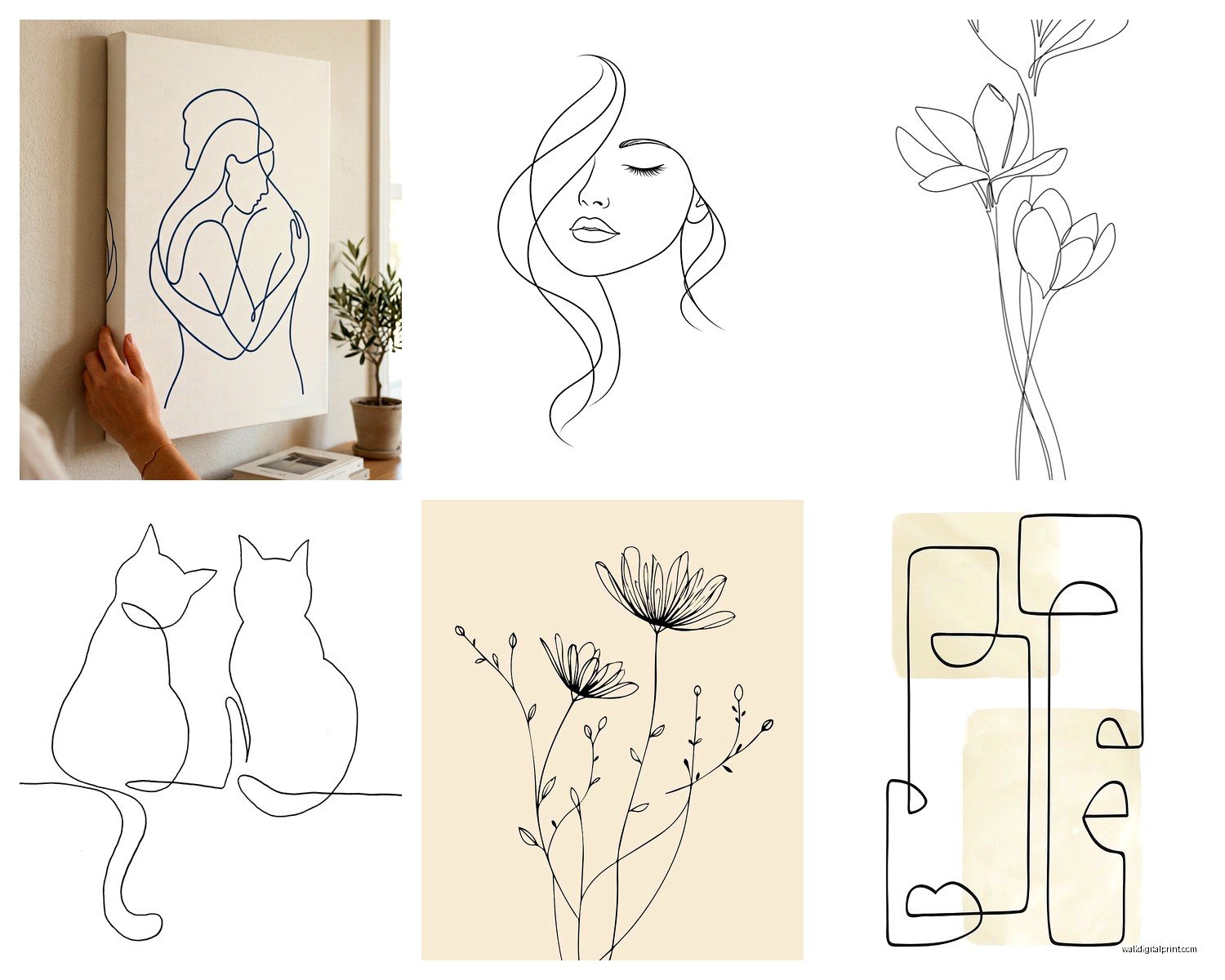
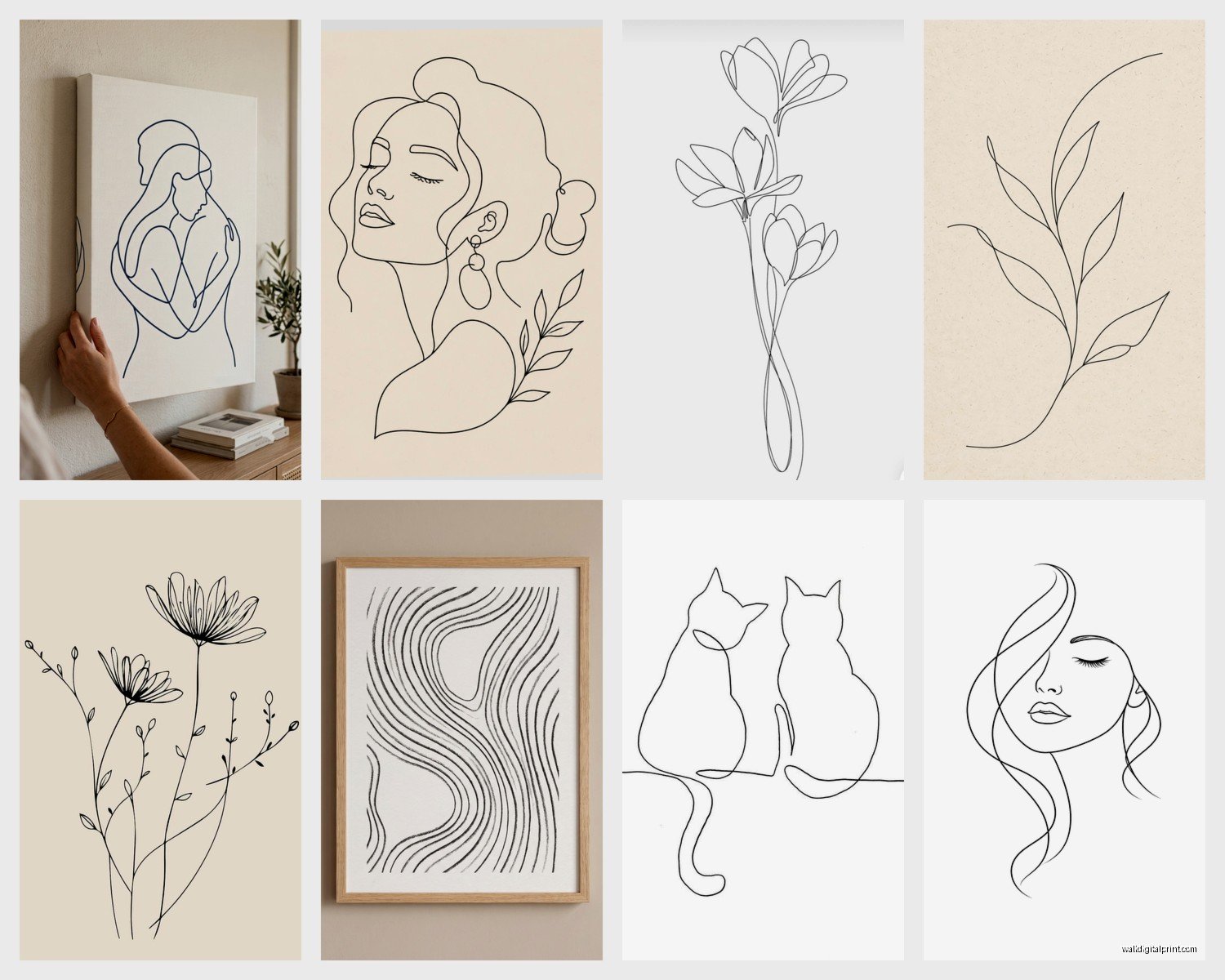
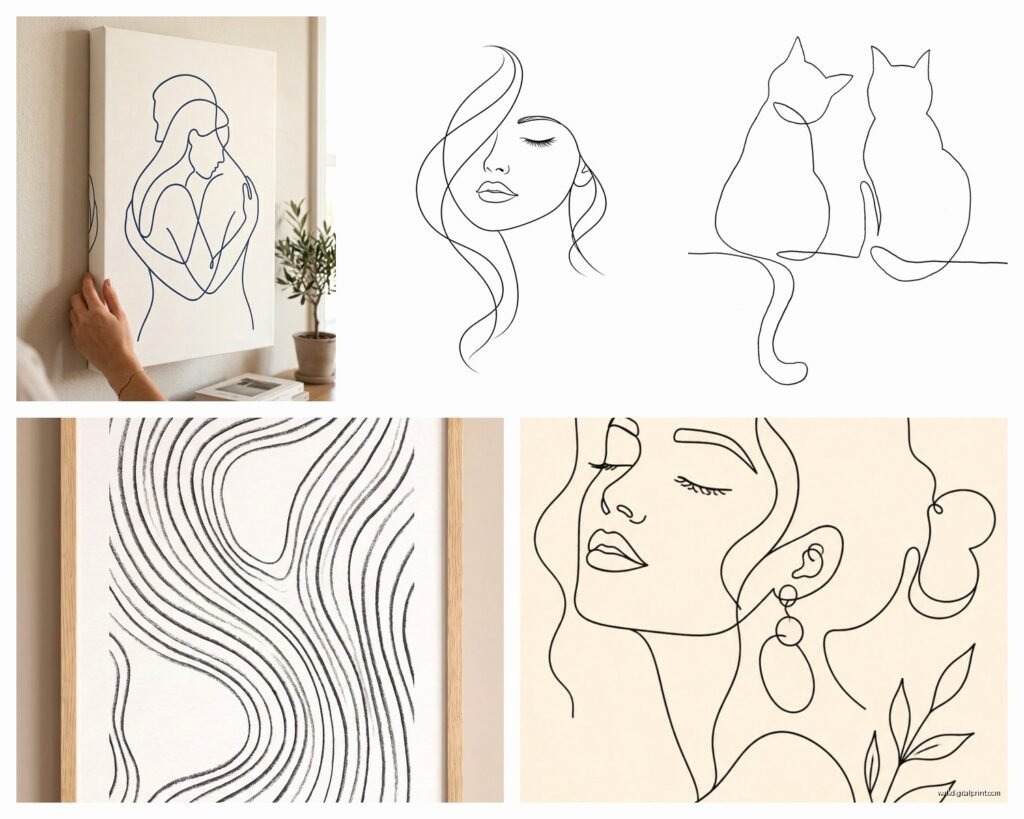
Okay so the whole point is that the drawing never lifts the pen. It’s one continuous line that somehow creates a face or a body or whatever, and when it’s done right it’s absolutely mesmerizing. But here’s the thing – not all line art is created equal and I learned this the hard way after buying three prints from different Etsy shops that looked identical in the thumbnails but were SO different in person.
The best ones have this flow to them where your eye naturally follows the line around. I had this one client who wanted a minimalist bedroom and we got this single-line face print from a small artist in Copenhagen and it completely changed the room. The line weight matters more than you’d think – too thin and it disappears on the wall, too thick and it loses that delicate feeling.
Where to Actually Find Good Prints
Etsy is obvious but you gotta filter through a lot of digital downloads that people just… print on their home printer and it shows. Look for sellers who use professional printing services or better yet, sell originals. I’ve had really good luck with:
- Minted – their quality is consistent and they frame it for you which is huge
- Society6 – hit or miss on the artists but their large format prints are solid
- Desenio – Scandinavian company, very affordable, ships kinda slow though
- Independent artists on Instagram who link to their shops
Oh and another thing, those “downloadable printable art” listings for like $3? I bought a bunch thinking I’d save money by printing them myself and the resolution was garbage. Learned that lesson. If you’re gonna go the printable route, make sure it’s at least 300 DPI and ask the seller what size it prints well at.
DIY-ing Your Own Single-Line Art
This is gonna sound weird but I actually started making my own after my cat knocked over my coffee onto a $200 print (RIP). Turns out it’s not as hard as it looks if you follow some basic rules.
Start with tracing paper over a photo. I know, I know, it feels like cheating but literally everyone does this when they’re learning. Pick a simple profile shot – front-facing is actually harder because symmetry is brutal. Put your pen down and just… don’t lift it. The first few will look like a toddler drew them and that’s fine.
The trick is planning your route before you start. Where does the line begin? I usually start at the top of the head and work my way down, but some people start at the chin. There’s no right way but you gotta commit to a path. When you hit a dead end, you loop the line back on itself to get where you need to go, and that’s actually where the interesting visual stuff happens.
Materials That Don’t Suck
Regular printer paper shows every wobble and your hand oils. Get some smooth bristol board or even just decent cardstock. For pens I’m obsessed with Micron pens in 0.5mm or 0.8mm – they don’t bleed and the line is consistent. Uni Pin fine line pens are good too and cheaper.
If you’re doing this digitally (which honestly is easier because undo button), Procreate has a setting where you can turn on a guide that shows you where your line has been. Life changing. I use the technical pen brush and turn the streamline way up so my shaky hands don’t show.
Framing Without Spending Your Entire Paycheck
Custom framing is insane expensive. I’m talking $300 for a simple frame. Don’t do it unless you have a weird size that absolutely won’t work with standard frames.
IKEA frames are fine, actually. The RIBBA series comes in black or white and they’re clean enough that they don’t compete with the minimalist art. I’ve used them in clients’ homes and no one has ever said “oh is that from IKEA” because once art is in it, it just looks intentional.
Wait I forgot to mention – measure your wall space first because I cannot tell you how many times I’ve bought a print that looked perfect online and then it’s either way too small or doesn’t fit the space. A single-line drawing needs some breathing room around it. If you’re putting it over a sofa, the general rule is it should take up about 2/3 to 3/4 of the sofa width, but honestly I break that rule all the time if the composition calls for it.
Styling It So It Doesn’t Look Lonely
One single-line print on a massive wall can look kinda sad. You’ve got options:
Go big: Get it printed large format. Like 24×36 or bigger. Suddenly it’s a statement piece and can hold its own.
Create a gallery wall: Mix different single-line drawings together. I did this in my own hallway with five different face prints in the same frame style and it looks way more expensive than it was. Keep the frames consistent – all black or all natural wood – so the different line styles are what creates variety.
Pair it with something textural: A woven wall hanging or a small shelf with plants next to it gives the eye something else to look at. The contrast between the super minimal line art and something organic actually makes both look better.
Color Considerations That Actually Matter
Most single-line art is black on white which is classic for a reason, but I’ve been experimenting with colored paper backgrounds. A single black line on terracotta paper? Chef’s kiss. Navy line on cream? So good.
You can also get them printed in different ink colors. Sepia or dark grey instead of black softens the whole vibe. I have one client who got a series printed in this dusty rose color and it’s feminine without being cutesy.
Common Mistakes I See Literally Everyone Make
Hanging it too high. Art should be at eye level which is lower than you think – generally 57-60 inches from the floor to the center of the artwork. Unless you have cathedral ceilings then honestly just wing it.
Choosing a drawing that’s too complex. Sometimes more isn’t better. A simple profile or abstract figure reads better from across the room than something with tons of detail. The whole point of single-line art is that elegant simplicity thing.
Mixing too many art styles in one space. If you’re going minimalist with the line drawings, maybe don’t also have a baroque gold frame situation happening on the next wall. It confuses the vibe.
Artists Worth Following If You Want The Real Deal
Okay so funny story, I discovered most of these because I was trying to find dupes of expensive art and ended up just following the original artists instead.
- Christiane Spangsberg – Danish artist, her female figures are iconic
- Quibe – does celebrity portraits in one line and they’re weirdly recognizable
- Differantly – faces and bodies, very fluid
- DL Art – clean, architectural quality to the lines
A lot of these artists sell prints directly which is usually cheaper than buying through a retailer, plus you’re supporting them directly which feels good.
The Digital Download Route
If you’re gonna go this way, here’s what you need to know. Find a local print shop that does quality work – FedEx and Staples are hit or miss, sometimes great, sometimes the colors are off. I use a local place that specializes in art prints and yeah it costs more but the paper quality is noticeably better.
Get the largest file size available. Ask the seller about DPI and what dimensions it’s meant for. A file designed for 8×10 will look pixelated at 16×20 even if the seller says it scales up.
Paper matters – ask for cardstock or photo paper, not regular copy paper. Matte finish usually looks better for line drawings than glossy which can create glare.
Making It Work in Different Rooms
Bedroom: Single-line figure drawings or faces work great above the bed. Keep it simple and not too stimulating – you’re trying to sleep here. I lean toward profiles or abstract figures rather than full-on portraits staring at you.
Living room: This is where you can go bigger and bolder. A large-scale botanical single-line drawing or an abstract figure piece can anchor the whole room. Layer it with other minimal art or let it stand alone.
Bathroom: Okay this sounds random but a small single-line drawing in a simple frame adds so much to a bathroom. It elevates the space without trying too hard. Just make sure it’s not directly in the shower splash zone.
Home office: Keep it clean and not distracting. Abstract shapes or simple botanical drawings work better than faces which can be weirdly distracting when you’re on Zoom calls.
Budget Breakdown From Someone Who’s Done This Too Many Times
Cheap route: $15-30 for a digital download plus $20-40 for printing and $15-25 for an IKEA frame. Total: $50-95 per piece.
Mid-range: $40-80 for a quality print from Minted or Society6 that comes printed well, $30-60 for a better frame. Total: $70-140.
Splurge: $150-400 for an original or limited edition print from an actual artist, $100-200 for custom framing. Total: $250-600.
I mix all three levels in my own home and in client projects. Not everything needs to be investment-level art.
Quick Tips I Wish Someone Had Told Me
Use museum putty or command strips for smaller frames instead of nails if you’re renting or indecisive about placement. You can move them around until it feels right.
Take a photo of your wall and use an app to mock up the art placement before committing. I use an app called WallApp but there are tons of options.
Natural light can fade prints over time so if you’re putting it in direct sunlight, maybe use UV-protective glass or just accept that you might replace it in a few years.
Three of the same print in different sizes creates a cool effect and is usually cheaper than buying three different pieces.
The single-line trend isn’t going anywhere because it’s classic enough to not feel dated. Unlike that chevron phase we all went through in 2014… anyway.
If you’re drawing your own, practice on cheap paper first. I wasted so much good bristol board before I figured out my technique. Also your hand will cramp – take breaks.
Honestly the best part about this art style is that it works with literally any decor style. Modern, traditional, boho, whatever. A good line drawing just fits.