
Wall Art Guide, Wall Art Tutoriels
Bismillah Wall Art: Islamic Arabic Calligraphy In God’s Name
Nov
So I’ve been completely obsessed with Bismillah wall art lately and honestly it started because a client asked me to help her find the perfect piece for her entryway and I went down this whole rabbit hole. Like, I thought it’d be simple but there’s SO much to consider with Islamic calligraphy art.
Finding the Right Style for Your Space
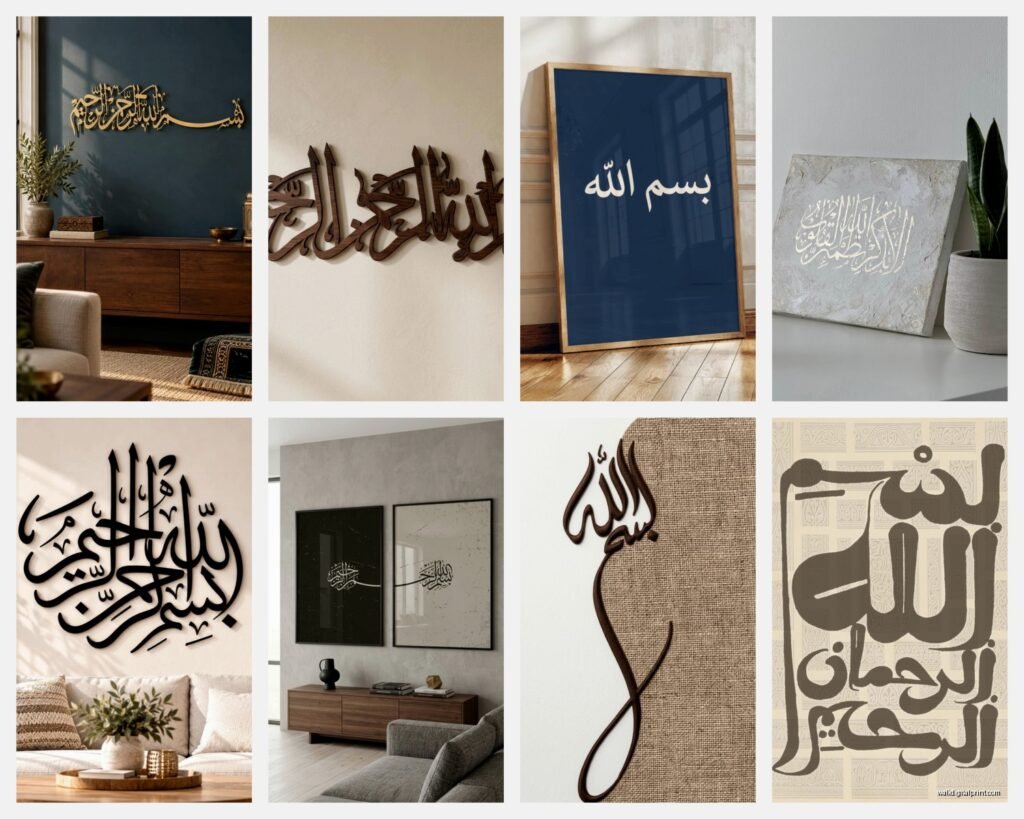
Okay so first thing – Bismillah pieces come in like a million different styles and you gotta figure out what vibe you’re going for. There’s the super traditional Arabic calligraphy that’s all flowing and ornate, then there’s modern minimalist versions that are just clean lines, and everything in between.
The traditional Thuluth script is gorgeous but it can be really elaborate. I had this piece in my own hallway for a while that was so detailed people would literally stop and stare at it for minutes. Beautiful but maybe too much if you’ve got a lot going on in that room already. The Kufic style is more geometric and angular – works amazing in modern spaces or if you’re going for that contemporary Islamic aesthetic.
Material Choices That Actually Matter
Here’s where I made mistakes initially so you don’t have to. Canvas prints are everywhere and they’re affordable but the quality varies SO much. I ordered three different ones from different Etsy sellers last month (my dog was sick so I was online shopping at 2am, don’t judge) and one arrived looking pixelated and cheap while another was absolutely stunning.
Metal wall art is having a moment right now and honestly I get it. The dimensional aspect adds something special – light hits it differently throughout the day which is pretty cool. Just make sure you’re checking the thickness of the metal because some of the cheaper ones are flimsy and look it.
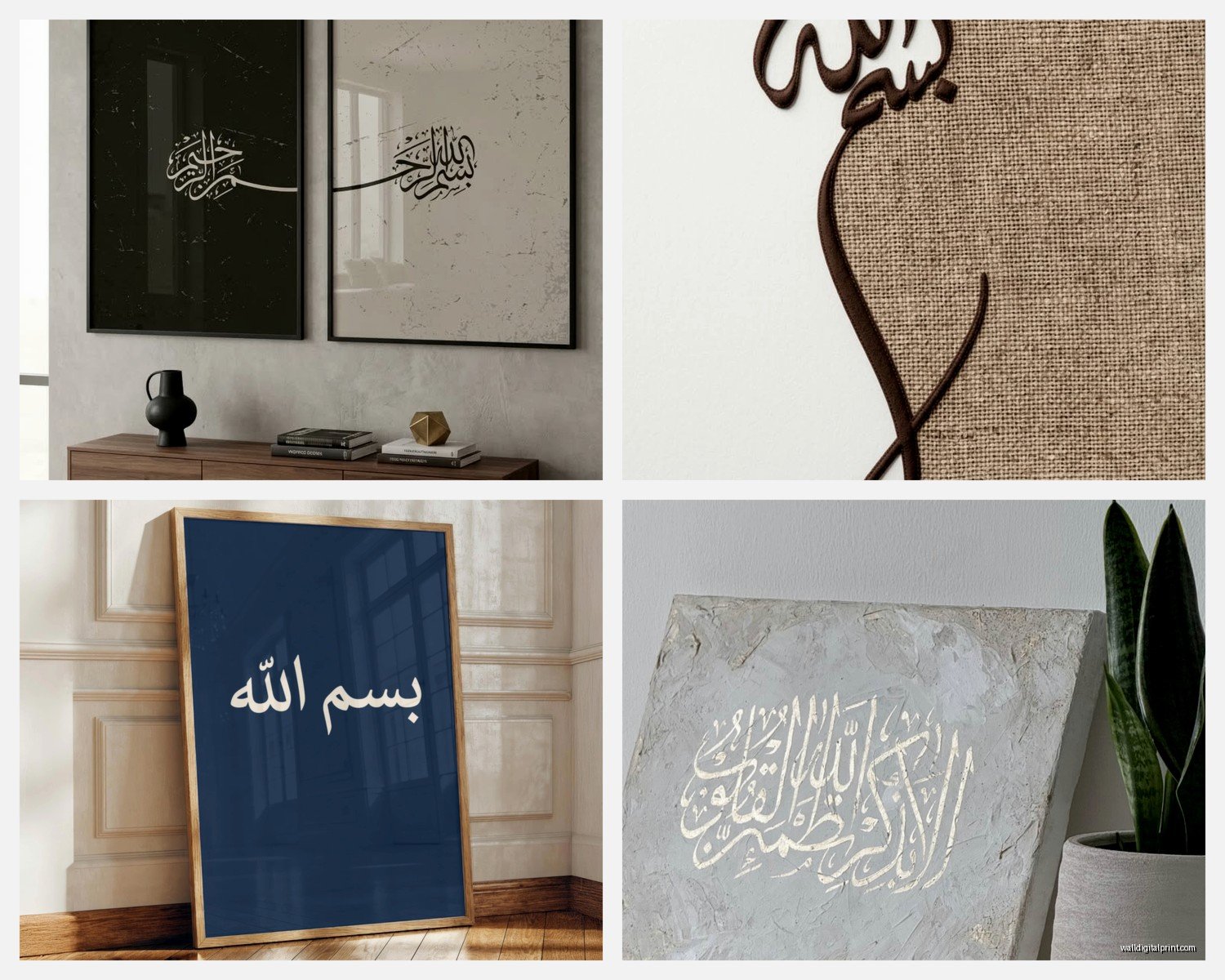
Wood carved pieces are my personal favorite when done right. There’s this warmth to them that feels appropriate for something spiritual. But they’re heavy so you gotta use proper wall anchors, learned that the hard way when one nearly fell on my head at like 6am.
Size and Placement Strategy
This is gonna sound obvious but measure your wall space before you get excited about a piece. I cannot tell you how many times clients send me photos like “I love this!” and it’s a 6-foot piece for a wall that’s maybe 4 feet wide.
For entryways and above doorways, you want something that draws the eye but doesn’t overwhelm. Usually 24-36 inches wide works well. Living rooms can handle bigger statement pieces – 40-60 inches if you’ve got the wall space. Bedrooms I usually recommend going smaller and more intimate, maybe 18-24 inches.
Height Placement Rules
Center of the artwork should be at eye level, which is typically 57-60 inches from the floor. But honestly if you’re hanging it above furniture, ignore that rule. You want 6-8 inches above whatever’s below it – couch, console table, whatever.
Oh and another thing – if you’re doing a gallery wall situation with multiple Islamic art pieces, the Bismillah should probably be the focal point. I usually place it center or slightly above center and arrange other pieces around it.
Color Schemes That Work
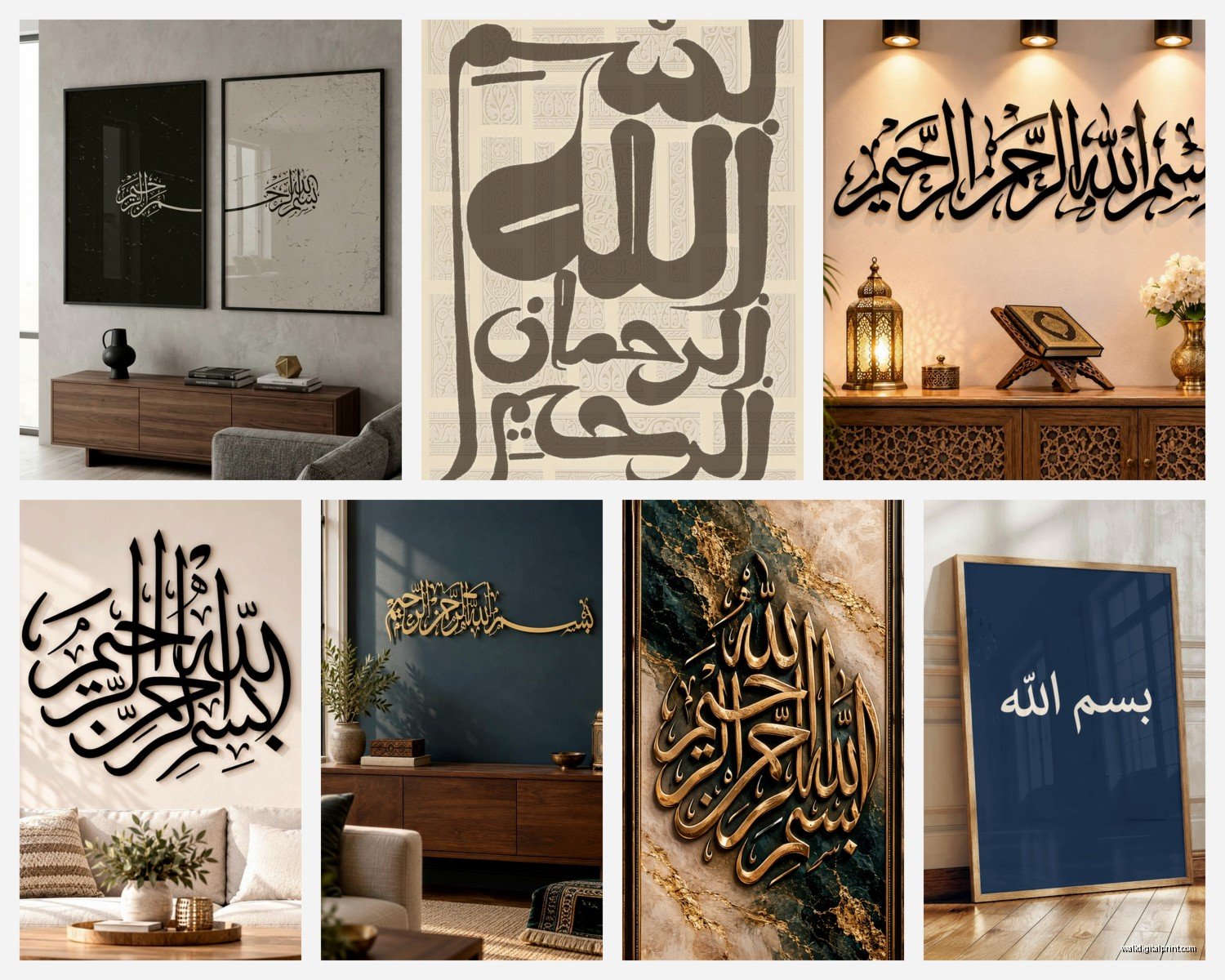
Black and gold is classic for a reason. It works in literally any space and has that timeless elegant thing going on. I’ve used black and gold Bismillah pieces in ultra-modern apartments and traditional homes and it just works.
But don’t sleep on other options. Navy and gold is gorgeous and feels a bit more unique. White on natural wood is beautiful for Scandinavian or minimalist spaces. I did a client’s office recently with a teal and gold piece that was stunning against gray walls.
Wait I forgot to mention – consider your existing color palette. If your room is already busy with colors and patterns, go neutral with the calligraphy. If your space is pretty neutral, that’s when you can have fun with colored pieces.
Where to Actually Buy Quality Pieces
Etsy is honestly my go-to for unique handmade pieces. Search for “Bismillah wall art” and filter by reviews – anything under 4.5 stars skip it. Read the reviews carefully because people will tell you if colors were off or if quality was disappointing.
Islamic bookstores often carry wall art and the quality tends to be good because they understand the significance. Prices are usually reasonable too. There’s one near me that I visit probably too often.
Amazon has options but it’s really hit or miss. The mass-produced stuff can look cheap in person even if the photos are nice. That said, I’ve found some decent metal pieces there when I filter by Prime and check reviews obsessively.
Local Islamic art galleries or craft fairs are worth checking out if you want something truly unique. I found this incredible hand-painted piece at a cultural festival last year that I’ve literally never seen anything similar to.
Custom Options
If you want something specific, custom is the way to go but expect to pay more. I work with a calligrapher who does commission pieces and her work is absolutely worth the investment. Typical custom pieces run anywhere from $150-500 depending on size and complexity.
You can usually choose your script style, colors, size, and material. Some artists will even incorporate other elements like geometric patterns or floral designs around the calligraphy.
Installation Tips Nobody Tells You
Okay so funny story – I hung a beautiful metal Bismillah piece for a client using regular picture hangers and it lasted exactly three days before crashing down at midnight and scaring them half to death. Use appropriate hardware for the weight.
For anything over 10 pounds, use wall anchors or hit a stud. Those 3M command strips work for lightweight canvas pieces but read the weight limits carefully. I usually go one size up from what they recommend just to be safe.
Level everything. Like seriously, even if you think you can eyeball it, use a level. An off-kilter Bismillah is gonna bug you forever. I keep a small level in my purse now because I’m that person.
Lighting Considerations
This is something I didn’t think about initially but lighting makes such a difference. If you’ve got a piece with metallic elements, consider adding a picture light or positioning it where natural light hits it during the day.
Avoid direct sunlight on canvas or painted pieces because they’ll fade over time. I learned this when a client’s beautiful burgundy and gold piece turned kinda pinkish after a year in a sunny hallway.
Styling Around Your Bismillah Art
The art should be the star but you can style around it thoughtfully. I usually keep the immediate area pretty simple – maybe a plant or a small decorative object on the console below but nothing competing for attention.
If you’re doing an entryway vignette, the Bismillah goes on the wall and then maybe add a small table with a lamp and a tray for keys. Keep it functional and simple. You don’t want clutter distracting from the calligraphy.
In living rooms, I’ve had success flanking larger Bismillah pieces with simple wall sconces or smaller coordinating art. Just make sure the other pieces are clearly secondary – different sizes, simpler designs.
Combining with Other Islamic Art
You can totally create a gallery wall but there’s a balance to it. I usually do the Bismillah as the largest central piece, then add smaller pieces like Ayat al-Kursi, the 99 names, or geometric Islamic patterns around it.
Keep consistent framing or color schemes so it looks intentional rather than random. All black frames, or all gold accents, or all the same wood tone. Mix your sizes but keep some visual cohesion.
Spacing Between Pieces
Leave 2-3 inches between frames in a gallery wall. Closer than that looks cramped, farther apart looks disconnected. I literally use painter’s tape on the wall to map everything out before hammering a single nail because rearranging is the worst.
Maintaining Your Wall Art
Dust regularly with a microfiber cloth – weekly if you can remember, monthly at minimum. For metal pieces, you can use a slightly damp cloth but dry immediately to prevent water spots.
Canvas pieces are more delicate. Don’t spray anything directly on them. If they need cleaning beyond dusting, take them to a professional. I ruined a beautiful piece once trying to spot-clean it myself, still mad about it.
Wood pieces can be treated with wood polish occasionally to keep them looking fresh. Just test it in an inconspicuous spot first because some finishes react weird to certain products.
Budget Breakdown
You can find decent printed canvas pieces for $30-60. These work fine if you’re on a tight budget or want to try out a style before investing more.
Mid-range metal or quality canvas pieces usually run $80-150. This is the sweet spot for most people – good quality without breaking the bank.
Premium handcrafted pieces, custom calligraphy, or large statement pieces can easily hit $200-500+. Worth it if it’s a focal point in your home and you want something special.
When to Splurge vs Save
Splurge on pieces for high-visibility areas like entryways or main living spaces. These are what guests see and what you see daily, so quality matters.
Save on pieces for bedrooms or private spaces where fewer people see them and you can appreciate them for their meaning more than their artistic execution.
Common Mistakes to Avoid
Don’t buy a piece just because it’s cheap without checking dimensions. I’ve seen so many people order what they think is a large piece and receive something tiny because they didn’t read the listing carefully.
Avoid super busy elaborate pieces if your walls are already busy with color or pattern. It’ll just look chaotic. My cat knocked over a plant while I was photographing this exact problem for a blog post last week, perfect timing.
Don’t forget to consider the weight before ordering. A 40-pound metal piece needs serious installation and maybe that’s not what you want to deal with right now.
Skip pieces where the calligraphy looks weirdly stretched or distorted. Sometimes sellers resize designs poorly and the proportions get messed up. If it looks off in the listing photo, it’ll look worse in person.
Oh wait, one more thing – make sure you’re actually buying authentic Arabic calligraphy and not some decorative squiggles that are supposed to look Arabic but aren’t. This happens more than you’d think, especially on mass-market sites. If you’re unsure, ask someone who reads Arabic to verify it before buying.
The whole process seems overwhelming but honestly once you narrow down your style preference and budget, it gets easier. I probably spent 20 hours researching this stuff initially and now I can spot quality pieces in like 30 seconds. You develop an eye for it.
