Wall Art Guide, Wall Art Tutoriels
Black Metal Wall Art: Dark Industrial Sculptures
Mar
So I’ve been obsessing over black metal wall art lately and honestly it started because a client wanted this whole industrial vibe for their loft and I went down this rabbit hole that lasted like three weeks. Now my apartment looks like a gothic gallery but whatever, let me tell you what I actually learned because there’s so much garbage out there.
The Metal Types Actually Matter Way More Than I Thought
Okay so first thing – not all black metal is created equal and I learned this the hard way. You’ve got your powder-coated steel, wrought iron, aluminum that’s been treated, and then this newer laser-cut steel that everyone’s obsessed with right now.
Powder-coated steel is honestly my go-to for most situations. It’s durable, the finish stays matte black without getting all shiny and weird over time, and it doesn’t weigh a million pounds. I installed this geometric piece above my couch last month and it’s held up perfectly even though my cat keeps trying to climb it (she can’t, thankfully). The powder coating is basically this process where they electrostatically apply dry powder then cure it under heat, which sounds fancy but really just means it won’t chip off when you inevitably bump it with a ladder.
Wrought iron is heavier and more expensive but god it looks amazing for those really ornate pieces. Like if you want something with scrollwork or organic shapes, wrought iron has this depth to it that lighter metals just can’t match. But you’re gonna need serious wall anchors. I’m talking toggle bolts minimum, sometimes even mounting into studs depending on the size.
Finishes Beyond Just “Black”
Wait I forgot to mention – black isn’t just black with this stuff. There’s matte black, satin black, hammered black, distressed black with rust undertones… it goes on.
Matte black is super popular right now because it photographs well and doesn’t create glare, which matters more than you’d think if you have windows or overhead lighting. I did a whole gallery wall for someone last spring and we went with matte because their living room gets afternoon sun and anything glossy would’ve been a nightmare.
The hammered or textured finishes are interesting though. They hide imperfections better and add this tactile quality that makes the piece feel more handcrafted. I found this sculptor on Etsy who does these abstract face profiles in hammered black metal and the texture catches light in this really subtle way that… okay I’m getting distracted but texture matters.
Distressed or rust-accent finishes can look either really cool or really try-hard depending on your space. If you’ve got exposed brick or concrete, the industrial vibe works. If you’ve got like, a beige suburban living room, it might read as costume-y? Just something to think about.
Installation Reality Check
Nobody talks enough about how annoying installation is with heavy metal art. I’ve installed probably 40 pieces at this point between client work and my own experimenting, and here’s what you actually need to know.
For anything under 10 pounds, basic picture hanging strips or a couple of nails work fine. But most of the good sculptural pieces are heavier than they look. That geometric mountain range thing that’s all over Instagram? Weighs like 15 pounds minimum. You need wall anchors.
I keep a whole kit now: toggle bolts for drywall, masonry bits and anchors for brick or concrete, a stud finder that actually works (spent $40 on a decent one and it changed my life), and a level because eyeballing it always ends badly. Always. I have a photo somewhere of this sunburst piece I hung “level” without checking and it’s tilted like 3 degrees and you can’t unsee it once you notice.
Style Categories That Actually Help When Shopping
Okay so when you’re browsing and everything looks the same, here’s how I mentally categorize this stuff:
Geometric/Abstract – Your circles, hexagons, mountain silhouettes, angular shapes. These work basically anywhere and don’t require commitment to a full industrial theme. I have this set of three hexagon shelves that are technically wall art but also hold my coffee mugs and they’re powder-coated steel and cost like $60 total.
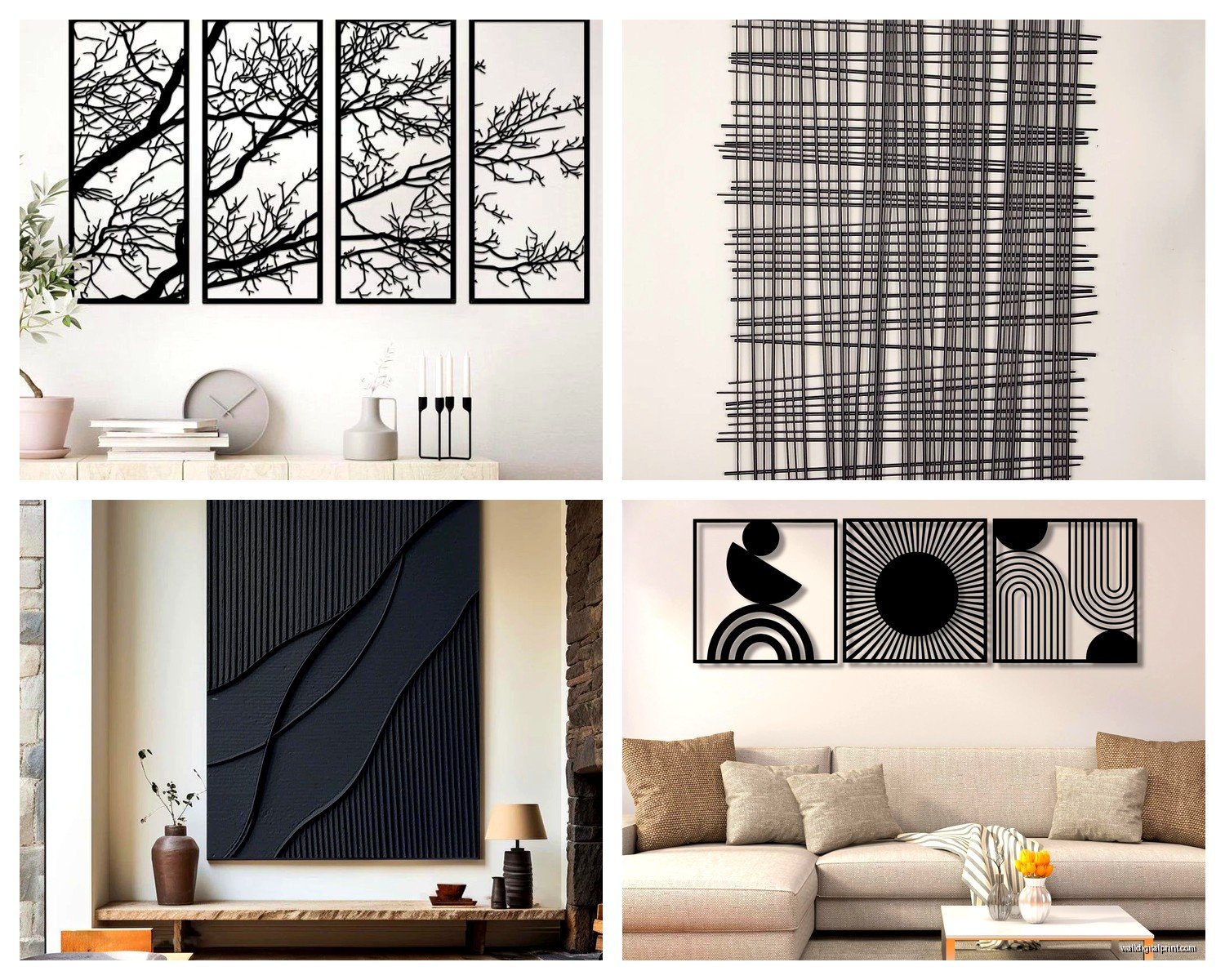
Organic/Nature-Inspired – Tree branches, leaves, flowers, animals. The metal medium makes them feel less cottage-core and more modern. There’s this tree silhouette piece that’s like 4 feet wide that I used in a dining room last year and it totally made the space. The black metal kept it from being too literal or cutesy.
Architectural/Industrial – Gears, blueprints, cityscapes, structural elements. This is the most obviously industrial category and honestly the easiest to overdo. One statement piece usually works better than multiple smaller pieces in this style.
Typography/Words – Metal letters or phrases, usually inspirational quotes that I personally find cheesy but clients love them so. If you go this route, pick something meaningful to you not just what looks good on Pinterest. Nothing sadder than generic “live laugh love” vibes in metal form.
Mixed Media – Metal combined with wood, glass, or stone. These pieces tend to be pricier but they add warmth and prevent the space from feeling too cold or monochromatic. I’m watching this show about luxury homes right now and they use mixed media metal art constantly.
Size and Scale Without Making Expensive Mistakes
This is gonna sound weird but I started using painter’s tape to map out pieces before buying them. Just tape the dimensions on your wall and live with it for a day or two. Because a 36-inch piece sounds reasonable until you realize your wall is awkward and it looks tiny, or it completely overwhelms your furniture.
General rule I follow: your wall art should take up about two-thirds to three-quarters of the width of the furniture below it. So if your couch is 90 inches, you’re looking at 60-68 inches of art width. That might be one large piece or a grouped arrangement.
For height, I hang the center of the piece at about 57-60 inches from the floor, which is standard gallery height. Unless you’re hanging above furniture, then you want 6-8 inches of space between the furniture top and the bottom of the art. I’ve messed this up before and hung something too high and it just floats awkwardly like it’s not connected to the room.
Where to Actually Buy This Stuff
Oh and another thing – sourcing matters because quality varies wildly and returns are a pain with heavy items.
Etsy has been my secret weapon honestly. You can find independent metal artists who do custom work, and the quality is usually better than mass-produced stuff. I’ve ordered from at least a dozen different shops and only had one issue where a piece arrived bent (they replaced it immediately though). Search terms like “modern metal wall art” or “industrial steel sculpture” work better than just “black metal art” which brings up band merch.
West Elm and CB2 for mid-range pieces that look expensive but won’t destroy your budget. They do good geometric and abstract styles, and their installation hardware is usually solid. I’ve used their stuff in client projects when we need reliable delivery and easy returns.
Wayfair is hit or miss. Read reviews carefully and check the actual dimensions because their photos can be misleading. But you can find good deals, especially on larger statement pieces. Just expect it to arrive in 47 pieces that you have to assemble, which isn’t always disclosed clearly.
Local metal fabricators or welders – if you want something custom or really unique, find a local artist. It’ll cost more but you get exactly what you want. I worked with a welder last fall who created this insane abstract piece based on a client’s favorite mountain range and it turned out incredible.
Maintenance Nobody Mentions
Black metal shows dust like crazy, which I didn’t anticipate. Microfiber cloths are your friend – just wipe it down monthly or whenever you notice it looking dull. For powder-coated pieces, that’s literally all you need to do.
If you have wrought iron or pieces with any rust-accent finishes, you might want to apply a clear sealant annually to prevent actual rust from developing. Especially in humid climates or bathrooms. I learned this after a piece in someone’s powder room started showing real rust spots after like 6 months.
Don’t use harsh chemicals or abrasive cleaners. Mild soap and water if something actually gets on it, but usually dry dusting is enough. The powder coating is tough but not indestructible.
Styling It Without Going Full Gothic Warehouse
So the tricky part is incorporating dark metal art without making your space feel like an abandoned factory. Balance is everything.
Mix in warm elements – wood furniture, brass accents, warm-toned textiles. I have black metal art in my bedroom but it’s paired with a wood headboard and cream bedding and it feels intentional not dreary.
Lighting matters so much. If your room is dark, black metal art will disappear into the walls. You need either good natural light or strategic artificial lighting. I installed picture lights above two of my larger pieces and it completely changed how they read in the space.
Don’t forget negative space. You don’t need to fill every wall. Sometimes one dramatic black metal piece on an otherwise empty wall makes more impact than a whole gallery wall. I’m still learning this myself because my instinct is always to add more.
Color pops help too. Black metal art actually makes colors look more vibrant by contrast. Deep jewel tones work especially well – emerald, sapphire, burgundy. Even just colorful throw pillows or a statement rug can prevent the black from feeling heavy.
The Price Reality
You can spend anywhere from $30 to $3000+ on black metal wall art and honestly both extremes can be worth it depending on what you’re getting.
Budget options ($30-100): Target, Amazon, HomeGoods. Fine for smaller pieces or if you’re just testing the vibe. Quality is variable but sometimes you find gems. I got this little geometric shelf sculpture from Target for $35 and it’s held up for two years.
Mid-range ($100-500): This is the sweet spot for quality pieces that’ll last. Etsy, West Elm, independent artists. You’re paying for better materials, cleaner welds, more thoughtful design.
Investment ($500+): Custom work, large-scale pieces, established artists. I’ve specified pieces in this range for clients with bigger budgets and yeah, you can tell the difference. The metal is heavier gauge, the finish is flawless, the design is more complex.
Common Mistakes I’ve Made So You Don’t Have To
Buying something too trendy. That geometric fox head thing that was everywhere in 2019? Already dated. Stick with abstract or classic shapes that won’t scream a specific era.
Not considering the wall material before buying. Mounted this heavy piece on a client’s plaster walls once and… yeah we had to bring in a contractor to properly reinforce it. Could’ve avoided that with planning.
Forgetting about doorways and hallways. Measure your path from front door to installation spot. I’ve had pieces that couldn’t navigate a turn in a stairwell and had to be returned.
Going too matchy-matchy. If you have black metal light fixtures, black metal art, black metal furniture – it’s too much. Mix your metals or your finishes at minimum.
Anyway that’s basically everything I wish someone had told me before I started collecting this stuff. My studio apartment now has like 8 different black metal pieces and it works somehow but I’m probably done adding more unless I find something really special.
The main thing is just start with one piece you actually love, live with it, see how it feels in your space, then build from there if you want. Don’t try to do a whole room at once because you’ll second-guess everything and probably return half of it.