Wall Art Guide, Wall Art Tutoriels
Extra Large Wall Art for Living Room: Statement Pieces Guide

Apr
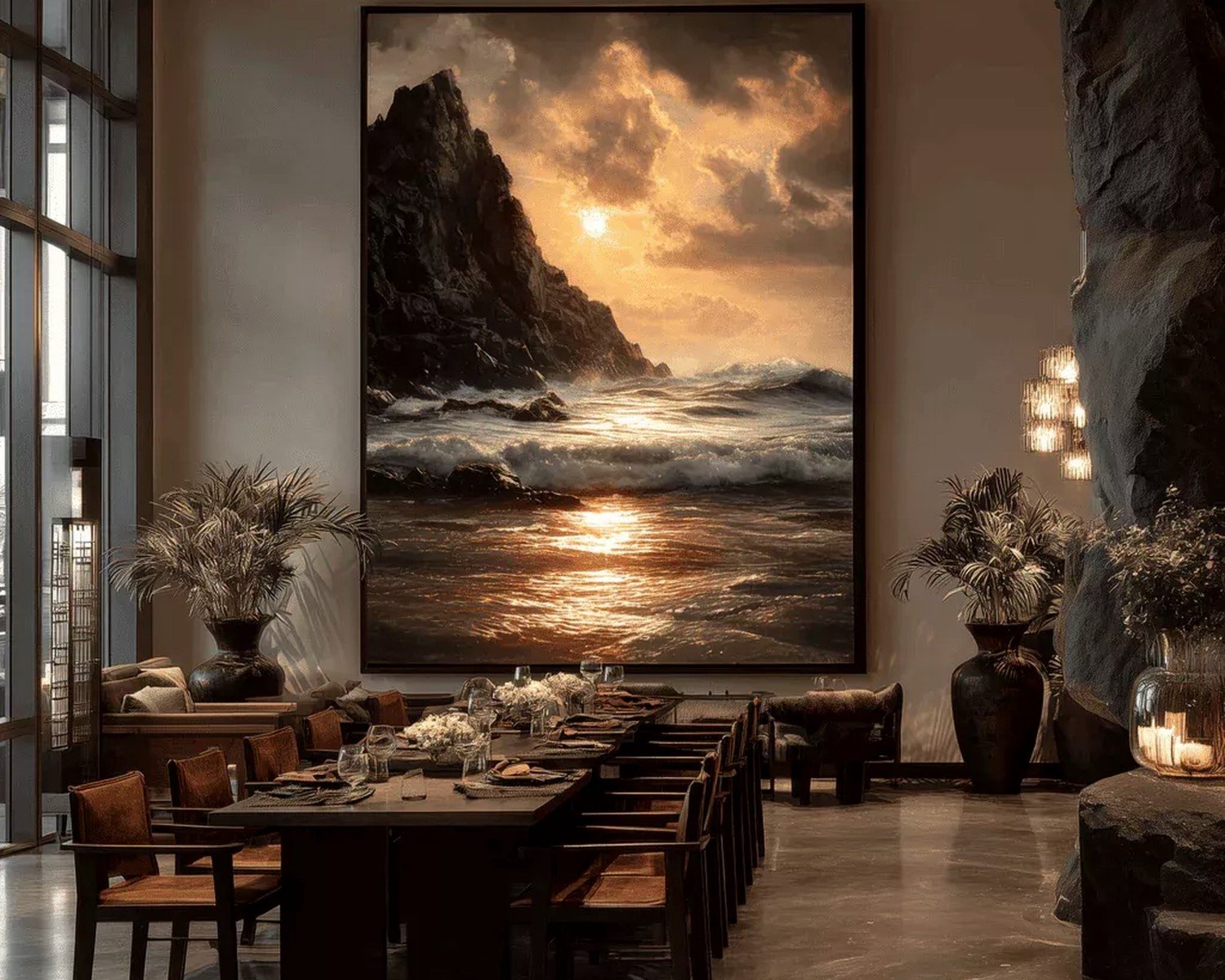
So I’ve been styling living rooms for like 15 years now and extra large wall art is honestly where most people freeze up because the scale feels terrifying, right? But here’s the thing – once you understand what you’re actually buying and how to hang it without destroying your wall or your budget, it’s probably the easiest statement piece you can add.
What Actually Counts as Extra Large
Okay so first, let’s define this because I’ve had clients show me 24×36 prints thinking that’s “huge” and like… no. For living room statement art, we’re talking 40 inches minimum on the shortest side. I usually work with pieces that are 60×40, 72×48, or those massive 80×60 ones that make people gasp a little when they see them in person.
The rule I tell everyone is your art should take up about two-thirds to three-quarters of your furniture width. So if you’ve got an 8-foot sofa, you’re looking at art that’s roughly 5-6 feet wide. Sounds insane until you see it and then you’re like oh yeah, that smaller piece I was considering would’ve looked like a postage stamp.
Material Options and What They Actually Mean
Canvas Prints
This is where most people start because they’re everywhere and relatively affordable. Canvas stretched over wooden frames, usually about 1.5 inches deep. I’ve ordered probably hundreds of these for clients and here’s what actually matters – the thickness of the canvas and whether it’s gallery wrapped.
Gallery wrapped means the image continues around the sides so you don’t need a frame. Looks cleaner, more modern. But cheap canvas prints will show the wooden frame texture through the canvas and it looks… not great. You want at least 400gsm canvas weight, though most companies don’t advertise this which is annoying.
The biggest issue with canvas at extra large sizes is sagging. I learned this the hard way with a 72×48 piece I hung in my own living room – six months later the center was drooping like a sad face. Now I only buy canvas pieces that have center support bars, especially anything over 60 inches wide.
Oh and the colors can look weirdly muted compared to what you see online because canvas absorbs ink differently than paper. Not bad, just different. More painterly I guess?
Acrylic and Metal Prints
These are gonna be pricier but honestly the durability is unmatched. Acrylic prints are basically your image printed on paper then mounted behind a thick acrylic sheet – usually 1/4 inch thick. The depth and color saturation is incredible, like the image is floating.
Metal prints are dye infused directly onto aluminum sheets. Super modern looking, almost glowy? My cat knocked over a lamp that hit my metal print once and there wasn’t even a scratch, so there’s that.
The thing nobody tells you is both of these are HEAVY. Like a 60×40 acrylic print weighs around 25-30 pounds. You absolutely cannot use those little sawtooth hangers or command strips. We’re talking serious wall anchors or hanging wire rated for like 50+ pounds because you want a safety margin.
Framed Paper Prints
This is actually my favorite for fine art photography or detailed illustrations because the paper quality makes such a difference. But getting custom framing for extra large sizes is where costs explode – I’m talking $800+ just for the frame sometimes.
I’ve found a workaround though. IKEA and a few online places sell pre-made large frames (Framebridge goes up to 36×48 I think?) and you can order your print to fit their standard sizes. Not as many options but you’re saving like $500.
The glass is the tricky part at large sizes. Regular glass can shatter, plexiglass scratches if you look at it wrong, and museum glass costs more than my first car. I usually go with acrylic glazing for anything over 40 inches – lighter weight and safer.
Where to Actually Buy This Stuff
Okay so I’m gonna be real with you, I’ve tested basically every option because my client canceled last month so I literally spent an entire afternoon comparing prices and quality across like 12 different sites while watching that Netflix show about interior design (which is terrible btw, don’t watch it).
CanvasDiscount and EasyCanvasPrints – good for basic canvas prints, frequent sales. Quality is fine for the price. Colors tend to run slightly cooler than the preview.
Shutterfly – surprisingly decent for large metal and acrylic prints. Their upload interface is clunky but prices are reasonable and I’ve never had quality issues.
Mpix – this is where I order when clients have bigger budgets. Professional lab quality, color accuracy is spot on. More expensive but worth it for photography.
Society6 and Redbubble – great if you want artist-designed pieces. The markup is high because artists get a cut (which is fair), but you’re getting unique designs. Quality varies by product type – their tapestries are better than their canvases honestly.
Etsy – hit or miss. I’ve found amazing custom abstract pieces from sellers who’ll do custom sizes, but I’ve also received some truly terrible prints that looked nothing like the listing. Always read reviews and ask for actual photos.
Wait I Forgot to Mention Art.com
They have this huge catalog of licensed art and photography, and they do sales constantly. Like 50-60% off. I never pay full price there, just wait two weeks and whatever you want will be on sale. Their framing options are decent too, though assembly quality can be hit or miss on the cheaper frames.
Hanging Extra Large Art Without Losing Your Mind
This is gonna sound weird but the hanging part is where I see the most disasters. People eyeball it or use inadequate hardware and then six months later there’s a giant hole in their wall and a broken frame.
For anything over 30 pounds you need wall anchors if you’re not hitting studs. I use these toggle bolt anchors rated for 100+ pounds – overkill probably but I like sleeping at night knowing nothing’s falling. If you can hit studs obviously do that, but most living rooms don’t have studs conveniently placed where you want your art centered.
The height thing – center of the art should be at 57-60 inches from the floor. This is the standard gallery height and it just looks right. But here’s the trick nobody mentions: measure from the center of where the FRAME will hang, not from where the wire or hanger sits. I cannot tell you how many times I’ve had to rehang pieces because someone measured wrong.
For extra wide pieces like 72+ inches, use two hanging points instead of one centered wire. Way more stable and the piece won’t tilt forward at the top.
Oh and another thing – get someone to help you. I once tried hanging a 60×40 metal print by myself and dropped it (on carpet thankfully), but like… just don’t. Hold it up against the wall first to make sure you like the placement before you start drilling.
What Art Actually Works in Living Rooms
Color-wise, you’ve got two approaches. Either pull colors from your existing room palette for a cohesive look, or go completely contrasting for drama. I usually suggest pulling at least one color from the art into your throw pillows or accessories so it feels intentional.
Abstract art is the easiest because it doesn’t compete with your furniture and works with most styles. Large scale photography can be stunning but pick carefully – you don’t want something too busy or it’ll feel chaotic in a living space.
Black and white photography is my go-to recommendation if someone’s really stuck. It’s sophisticated, works with everything, and large scale black and white landscapes or architectural shots are just… chef’s kiss.
Avoid super trendy stuff unless you’re okay replacing it in a few years. That geometric triangle art that was everywhere in 2018? Yeah nobody wants that anymore. Classic abstracts, landscapes, or fine art photography have more staying power.
Orientation Matters More Than You Think
Horizontal pieces work better over sofas and consoles. Vertical pieces are trickier in living rooms – they can work on a feature wall or between windows, but they need higher ceilings to not look awkward. Like 9+ foot ceilings minimum for anything taller than 60 inches.
Square pieces are actually really versatile and trending right now. A 48×48 or 60×60 square piece can anchor a space really well, especially in modern or minimalist rooms.
Budget Real Talk
You can find decent extra large canvas prints for $200-400 if you shop sales. Metal and acrylic will run you $400-800 depending on size. Custom framed pieces start around $600 and go up to… well, I’ve spent $3000 on a single framed piece for a client’s living room.
If budget’s tight, honestly consider removable wallpaper or a large scale wall decal as an alternative. I know that sounds like cheating but a well-done wall mural can look just as impactful as art and costs like $150.
Another option is buying the print separately and DIY framing or just mounting the print directly to foam board. Not as polished but for a temporary solution or rental situation it works.
Care and Maintenance Nobody Talks About
Canvas needs dusting every few months with a soft brush or microfiber cloth. Don’t use cleaning products, just dry dusting.
Acrylic and glass can be cleaned with glass cleaner but use a microfiber cloth to avoid scratches, and never spray directly on the piece – spray the cloth first.
Metal prints just need occasional dusting, they’re pretty indestructible.
Keep all art out of direct sunlight if possible. UV rays will fade anything over time, even the supposedly fade-resistant prints. I learned this when a client’s gorgeous blue abstract turned greenish after two years next to a south-facing window.
The other thing is humidity – if you live somewhere humid, canvas can warp or develop mold. Metal and acrylic are better choices for bathrooms or basement living spaces.
Common Mistakes I See All the Time
Buying art that’s too small because you’re scared. Go bigger than feels comfortable, I promise it’ll look better.
Not considering the wall color. That gorgeous white and cream abstract will disappear on your beige wall. You need contrast.
Hanging it too high. Seriously, lower than you think.
Cheaping out on hanging hardware. Just spend the extra $15 on proper anchors and wire.
Not planning for the space around the art. You need at least 8-12 inches of wall space on either side of your art and above/below furniture. If your wall is too crowded, the art loses impact.
Okay I think that covers most of it? The main thing is just commit to the size and make sure your hanging hardware is solid. Everything else is pretty forgiving honestly.