Wall Art Guide, Wall Art Tutoriels
Fabric Wall Art: Textile Quilted & Tapestry Designs
Mar
So I’ve been down this rabbit hole with fabric wall art lately because honestly, regular framed prints were feeling kinda flat in my studio space and I needed something with more texture, you know? Plus my cat keeps jumping at anything shiny so I figured soft textiles might be safer.
The Basic Categories You’re Actually Looking At
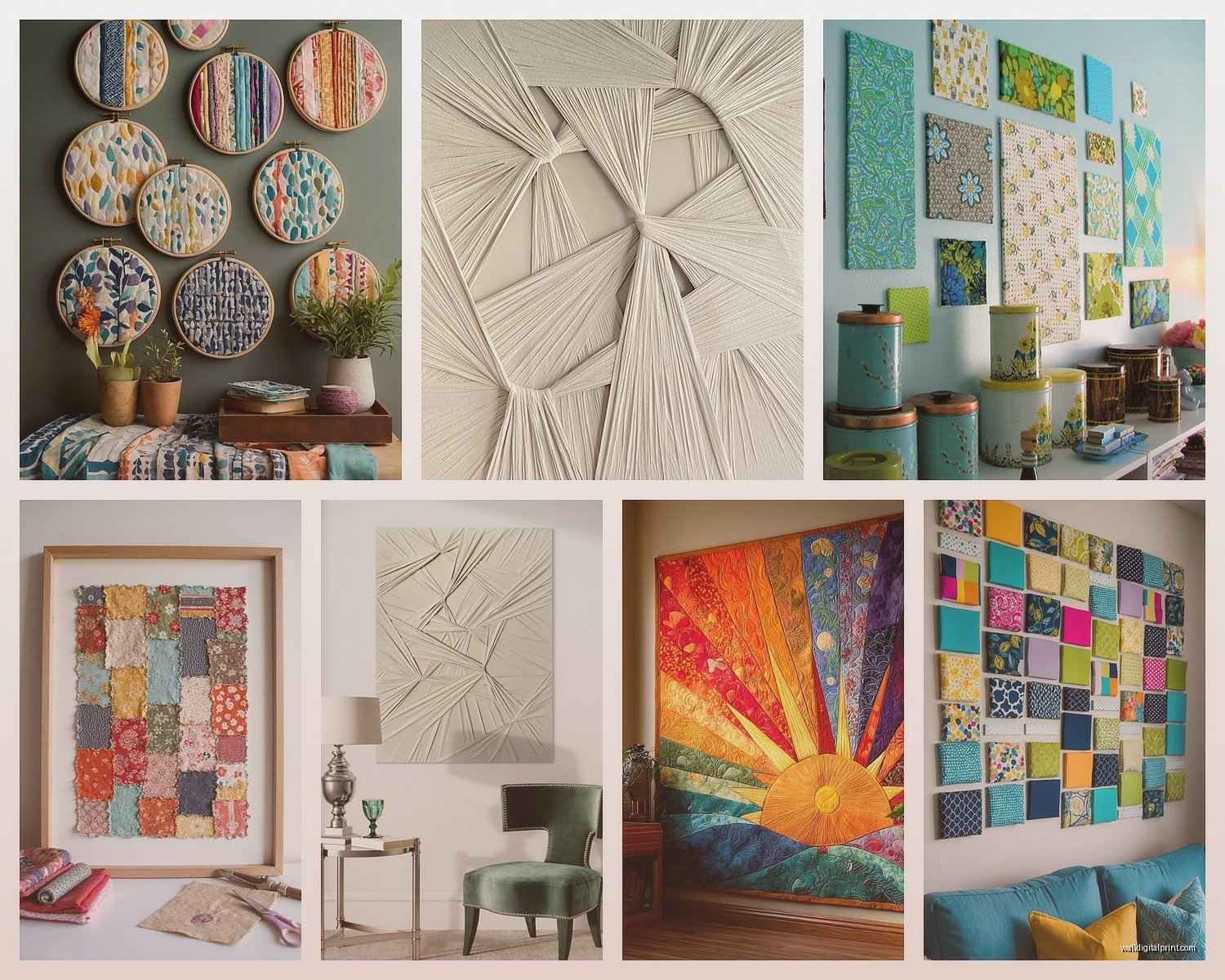
Okay so there’s basically three main types here and they’re totally different even though people lump them together. You’ve got your quilted pieces which are usually cotton-based and have that puffy layered thing going on, then tapestries which are woven and flat, and then there’s this third category of mixed media textile art that’s kinda whatever the artist wants.
Quilted wall hangings are my favorite for adding dimension. They’re made with at least two layers of fabric with batting in between, and the stitching creates these raised patterns. The thing is they collect dust like crazy if you have them in a high-traffic area. I learned this the hard way in a client’s entryway and we had to vacuum it with the upholstery attachment like every two weeks.
What Actually Works Material-Wise
Cotton is gonna be your most common and honestly most practical option. It’s durable, you can spot clean it, and the colors stay pretty true over time if you’re not putting it in direct sunlight. I had a cotton quilted piece in my south-facing window for like eight months before I noticed any fading, which isn’t bad.
Linen tapestries have this gorgeous natural texture but they wrinkle if you look at them wrong. I mean it’s part of the aesthetic but you gotta be okay with that rumpled look. They’re also more expensive usually because linen just costs more to produce.
Wool tapestries are heavy and substantial which is great for sound dampening actually. Put one on the wall opposite your TV and it genuinely helps with echo in the room. But moths. Oh my god, moths love wool. You need to check it regularly and maybe use cedar sachets nearby.
Silk is beautiful but so high maintenance I honestly can’t recommend it unless you’re really committed. Water spots, sun damage, it’s delicate during hanging… I used a silk brocade piece once in a client’s formal dining room and we had to have special UV-filtering glass installed in the windows.
How to Actually Choose One That Won’t Look Weird
Scale is everything and everyone gets this wrong initially including me. A tiny quilted square on a huge wall looks lost, but an oversized tapestry in a small room can feel overwhelming. I measure the wall space and aim for the art to take up about two-thirds to three-quarters of the intended area.
The texture matters more than you think for the room’s vibe. Heavily quilted pieces with lots of dimension work great in casual spaces like bedrooms or reading nooks. Flat-woven tapestries feel more formal and work better in living rooms or dining areas where you want sophistication without being too stuffy.
Color saturation is another thing… bright saturated colors in quilted work can read as craft-fair-ish real quick. Not that there’s anything wrong with craft fairs but if you’re going for a curated look you want either muted tones or go full bold vintage tapestry style. The middle ground is where things get tricky.
Where to Source This Stuff
Etsy is obvious but overwhelming. I filter by “made to order” when I want something specific size-wise. There are artists who do custom quilted pieces and they’re not as expensive as you’d think. Like $200-400 for a medium-sized piece which is comparable to a decent framed print honestly.
Estate sales and antique shops for vintage tapestries are goldmines. I found this insane 1970s woven landscape piece for $35 last month and it’s now the focal point of my gallery wall. You gotta check for moth damage though, look at the back and check for tiny holes or loose threads.
West Elm and CB2 have started carrying modern tapestries that are actually pretty good quality. They’re machine-made but the designs are cooler than the mass-market stuff. I bought one during a sale for like $80 and it’s held up great.
Local fiber art guilds if you have them in your area. The artists there are usually doing more experimental stuff and you can commission pieces. I worked with a quilter who incorporated vintage fabrics from my client’s grandmother’s dress collection into a wall hanging and it was stunning.
Hanging Methods That Won’t Destroy Everything
Okay so this is where people mess up constantly. You cannot just nail a tapestry to the wall with thumbtacks, I mean you CAN but it’ll look terrible and damage the piece.
For quilted work, if it has a hanging sleeve on the back that’s the easiest. You slide a wooden dowel through the sleeve and then hang the dowel on two small nails or hooks. The weight distributes evenly and you’re not stressing any one point. If there’s no sleeve you can sew one on pretty easily, just a tube of fabric across the back.
Tapestry rods are worth buying the nice ones. I got a cheap one from Amazon and it bent under the weight of a medium tapestry. Spent $40 on a proper brass one from a specialty site and it’s been perfect. You want something that complements the piece not distracts from it.
Velcro mounting is what museums use and it works great for lighter pieces. You attach one side of industrial-strength velcro to a board mounted on the wall and the other side to the back of the textile. Super secure and you can remove it without damage. This is what I do for rotating pieces seasonally.
wait I forgot to mention the clip hanger method which is actually my go-to for smaller pieces. You get these decorative clips that hang from a rod and they grip the top edge of the fabric. Works great for pieces without built-in hanging mechanisms and looks intentional.
The Maintenance Reality Check
Dusting is non-negotiable. I use a vacuum with soft brush attachment on the lowest setting, going over the piece every few weeks. My dog sheds like crazy so this is basically mandatory in my house or everything would be covered in golden retriever fur.
Spot cleaning for quilted pieces… test your method in an inconspicuous corner first. I use a barely damp cloth with mild soap for most stains. Let it air dry completely before rehanging. Never rub aggressively because you’ll damage the stitching.
Professional cleaning exists for valuable pieces and it’s not that expensive. Maybe $50-100 depending on size. I do this annually for my vintage tapestries because the dust buildup dulls the colors even if you can’t see it.
Rotation is smart if you’re gonna be a textile art person long-term. I swap pieces seasonally which keeps the space feeling fresh and also gives each piece a break from light exposure and dust accumulation. Store them rolled, not folded, in acid-free tissue paper.
Design Integration Without Looking Like a Dorm Room
Layer with other art but don’t go crazy. A fabric piece plus maybe one or two smaller framed elements works. All fabric wall art everywhere reads as very specific bohemian vibe which is fine if that’s your thing but hard to pull off if it’s not.
The surrounding decor needs to support it. Fabric art works best with natural materials around it – wood furniture, ceramic vases, woven baskets. When you mix it with super modern chrome and glass it can feel disjointed unless the textile itself is very contemporary.
Lighting makes a huge difference. I installed picture lights above my quilted pieces and the texture becomes way more dramatic. Side lighting also works great for bringing out the dimensionality. Overhead lighting tends to flatten everything out.
DIY Versus Buying Finished
I tried making a quilted wall hanging once and… look, if you’re into quilting as a hobby go for it. But the time investment is massive. We’re talking 40+ hours for something medium-sized. My attempt is still unfinished in a closet somewhere judging me.
Simple tapestry weaving on a frame loom is more doable. I made a small one during the pandemic while binging that show about chess and it turned out okay. Very meditative process actually. But again, time intensive.
Buying from artists is supporting small businesses and you get expertise you probably don’t have. Unless you’re really committed to learning the craft, just buy the thing. Your time is worth something.
Price Reality and What You Actually Get
Under $100: You’re looking at mass-produced tapestries or small handmade pieces. Quality varies wildly. Read reviews carefully and check return policies.
$100-300: Sweet spot for decent handmade work from emerging artists or nice vintage pieces. This is where I shop most often. You get good quality without the investment piece price tag.
$300-800: Established fiber artists, larger pieces, or really exceptional vintage tapestries. The craftsmanship is noticeably better and these become statement pieces.
Over $800: Art gallery territory or museum-quality vintage. I’ve worked with clients at this level and yes there’s a difference but you gotta really care about fiber arts to justify it.
Common Problems and Actual Solutions
Sagging happens with heavier pieces over time. The fix is better support – add more hanging points or upgrade to a sturdier rod. I had to do this with a large wool tapestry after about six months.
Color bleeding if you get it wet. This is why spot cleaning needs to be careful and why you test first. If it happens, sometimes a professional can fix it but prevention is key.
The piece doesn’t fit your space like you thought it would. This happened to me last month, ordered something online and the colors were way more saturated in person. Some places take returns but many fiber artists don’t so really scrutinize photos and ask questions before buying.
It looks dated or craft-fair-ish in your space. Sometimes the piece is fine but the styling around it is off. Try different locations, change what’s near it, adjust lighting. If it still doesn’t work, there’s no shame in reselling it and trying something else.
oh and another thing, if you’re buying vintage check the smell. Seriously. Some old tapestries have this musty smell that never fully goes away even with airing out and I learned this lesson the expensive way. If you can’t smell it in person before buying, it’s a gamble.
The whole fabric wall art thing has become kind of trendy lately which means there’s more options but also more junky mass-produced stuff trying to look handmade. You develop an eye for it after a while but basically look at the stitching quality, evenness of the weave, and whether the design feels intentional or just random.
I’ve probably spent too much time thinking about this but when you find the right piece it really does transform a space in a way that regular prints don’t. The texture and craftsmanship add this human element that feels less generic, you know? Just gotta do your homework and be realistic about maintenance.