Wall Art Guide, Wall Art Tutoriels
Glass Wall Art Decor: Stained & Fused Glass Artwork
Mar
So I’ve been working with glass wall art for like six years now and honestly it’s one of those things where you really gotta know what you’re buying before you commit because returning a 40-pound piece of fused glass is… not fun. Trust me on that one.
The Actual Difference Between Stained and Fused Glass
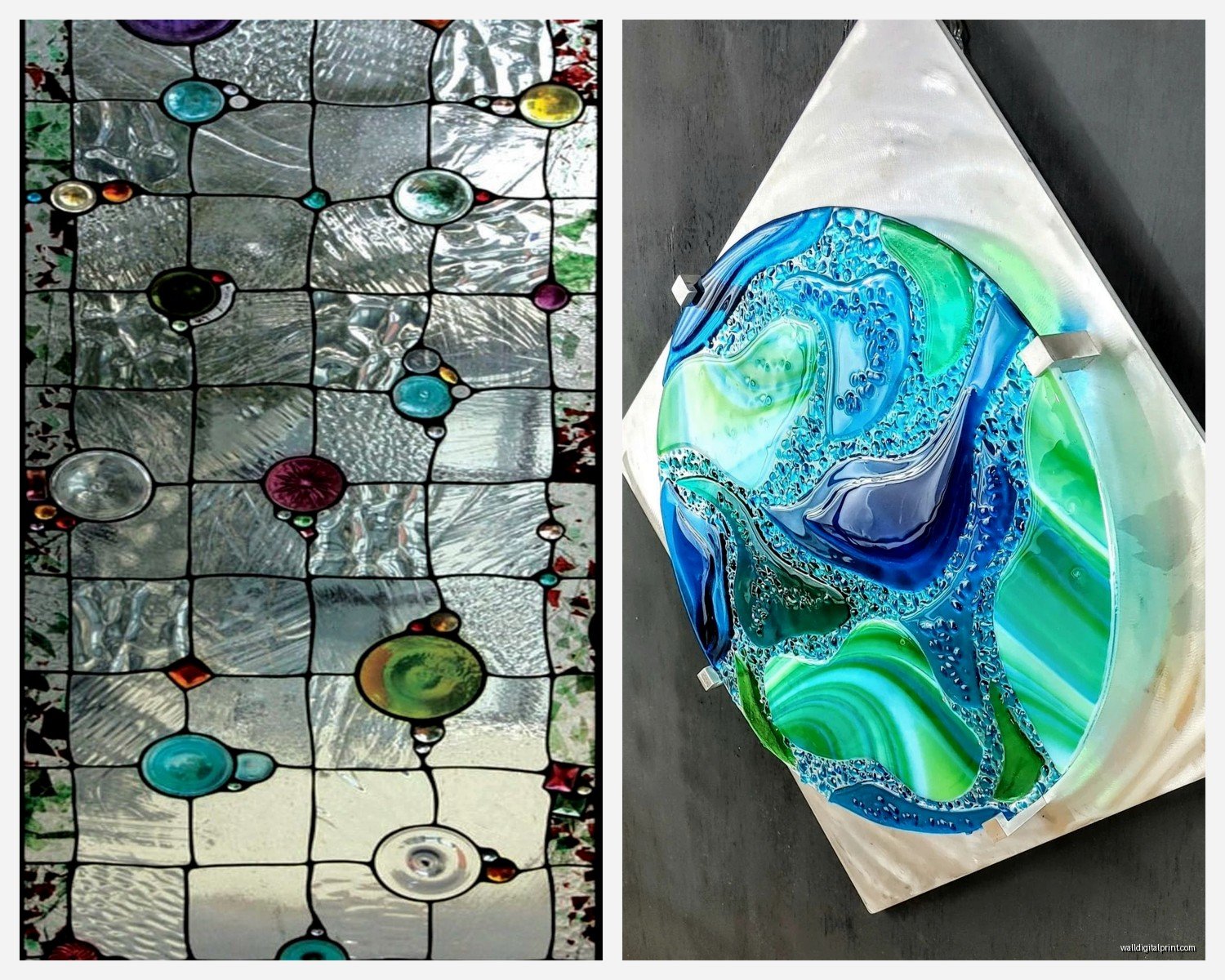
Okay so first thing – stained glass and fused glass are completely different processes and people mix them up constantly. Stained glass is what you’re thinking of when you picture church windows, right? It’s individual pieces of colored glass held together with came (that’s the metal framing, usually lead or zinc or copper). Fused glass is when you literally melt pieces of glass together in a kiln so it becomes one solid piece.
I learned this the hard way when a client asked for “stained glass artwork” and I ordered this beautiful fused piece and she was like… where are the black lines? So yeah. Stained glass has visible seams and framework, fused glass looks more like a painting made of glass.
Stained Glass Characteristics
- Has metal came lines creating the design structure
- Individual glass pieces you can see separately
- Usually hung in windows or in front of light sources
- More traditional looking, Victorian vibes
- Can be more fragile at the seams
- Generally lighter in weight
Fused Glass Characteristics
- Solid single piece (or layered but melted together)
- No visible metal framework
- Can be mounted directly on walls
- More contemporary aesthetic usually
- Heavier – like sometimes REALLY heavy
- More durable overall
Where to Actually Hang These Things
This is gonna sound weird but I keep a light meter app on my phone now because glass art is SO dependent on lighting. Like that piece that looked amazing in the gallery? Might look completely dead on your north-facing living room wall.
Stained glass needs backlighting to really work. I’ve mounted pieces in front of windows, installed them as room dividers with LED panels behind them, even seen people build lightboxes for them. Without light coming through, stained glass just looks… dark and kind of muddy? My dog knocked over a lamp once and I realized the stained glass panel I’d positioned nearby basically disappeared without that light source.
Fused glass is more flexible. You can mount it on any wall and it’ll still show the colors and texture, though it definitely looks better with some strategic spotlighting. I usually use track lighting or picture lights to highlight texture and depth.
Installation Reality Check
Oh and another thing – installation is where people really underestimate what they’re getting into.
For Stained Glass Panels
Most stained glass pieces come with a metal frame or chain for hanging. You’re basically treating it like a heavy picture frame. Use these steps:
- Find studs in your wall (seriously, don’t skip this)
- Use heavy-duty picture hooks rated for at least double the weight of your piece
- If hanging in a window frame, get tension rods or mounted brackets
- Consider earthquake putty in the corners if you’re in a seismic zone – learned that one after a small quake sent a $400 piece crashing
The chain that comes with most stained glass is usually fine but I always replace it with vinyl-coated aircraft cable if it’s gonna be in a high-traffic area. Kids, pets, whatever – the vinyl coating prevents the metal from scratching the glass if it shifts.
For Fused Glass
This is where it gets real. Fused glass pieces can weigh anywhere from 5 to 50+ pounds depending on size and thickness. I’ve got this one piece in my hallway that’s probably 35 pounds and mounting it was a whole thing.
Most artists will include mounting hardware but double-check before buying. You need:
- French cleats or Z-clips for pieces over 20 pounds (this is the way to go honestly)
- Heavy-duty wall anchors if you can’t hit studs
- A level because glass shows even slight tilts really obviously
- Felt pads or rubber bumpers for the bottom corners so it doesn’t scratch your wall when it settles
Wait I forgot to mention – some fused glass art comes with standoffs, which are those metal spacers that hold the glass slightly away from the wall. They look super modern and professional but they’re a pain to install level. You need to mark all four points (or however many standoffs), drill, install the standoffs, then hang the glass on them. Get a friend to help because holding a 30-pound piece of glass while you try to align it with tiny metal posts is basically impossible alone.
Buying Tips That Actually Matter
Okay so funny story – I once bought this gorgeous fused glass piece from an online gallery and when it arrived the colors were COMPLETELY different than the photos. Like they’d photographed it in direct sunlight and I hung it in my dining room with warm LED lighting and it looked… brown. Everything just looked brown.
Questions to Ask Before You Buy
What’s the actual thickness? This matters more than you think. Thin fused glass (1/4 inch or less) can look cheap and flat. Thicker pieces (1/2 inch+) have depth and presence but weigh a ton.
What type of glass was used? There’s bullseye glass, spectrum glass, youghiogheny (yeah that’s really how it’s spelled), and a bunch of others. Bullseye and Spectrum are pretty standard quality. Some artisan glass has more variation and character but can also have more bubbles and imperfections.
Is it kiln-formed or kiln-cast? Kiln-formed is layered and melted flat. Kiln-cast uses molds and creates dimensional pieces. Cast pieces are usually way heavier and more expensive.
How should it be cleaned? Some glass has texture that traps dust like crazy. Others have special coatings that you can’t use regular glass cleaner on.
Where to Actually Buy
I’ve bought from all over and here’s my honest take:
Local art fairs and galleries: You can see the piece in person and usually talk to the artist. This is ideal but obviously limited selection. Prices are often higher because gallery commission.
Etsy: Huge selection, lots of independent artists. Quality varies wildly though. I only buy from sellers with tons of reviews and detailed photos showing the piece from multiple angles and in different lighting. Ask for a video if they don’t have one posted.
Online galleries specializing in glass art: Places like Artful Home or specialty glass galleries usually have good quality control and better photography. More expensive but less risk.
Direct from artists: If you find an artist whose style you love, buying direct saves the gallery markup. Most glass artists have Instagram or websites with portfolios. Just be prepared to wait – custom pieces can take weeks or months.
Style Matching Your Space
This is where my interior stylist brain kicks in. Glass art is weirdly specific about what decor styles it works with.
Stained glass reads traditional almost automatically. It works great with Victorian, craftsman, gothic, or eclectic boho styles. I’ve made it work in modern spaces but you really have to commit to making it the focal point and keep everything else super minimal. Like that piece becomes THE thing and everything else is supporting cast.
Fused glass is more versatile. Abstract fused pieces work with mid-century modern, contemporary, minimalist spaces. Landscape or figurative fused glass can work with transitional or even traditional if the colors are right.
Color is huge here. I was watching this design show the other day while working on a mood board and they had this fused glass piece with teals and oranges and it totally clashed with the client’s navy and gray room. Glass art colors are SATURATED – they’re not gonna be subtle accent colors. They’re gonna be bold statement colors so your room palette needs to accommodate that.
Maintenance Stuff Nobody Tells You
Dust. So much dust. Glass shows every speck and if your piece has texture (which most fused glass does) it’s gonna collect dust in all those little crevices.
For smooth glass surfaces: regular glass cleaner and microfiber cloths work fine. I use the Windex with vinegar because it doesn’t streak as much.
For textured surfaces: compressed air first to blow out the dust from crevices, then a soft brush (I use a clean makeup brush), then barely damp microfiber cloth. Don’t spray cleaner directly on textured glass because it pools in the low spots and leaves residue.
For stained glass: be gentle around the came lines. Water can get under the came and cause oxidation over time. I use barely damp cloths and dry immediately. Never use abrasive cleaners on the metal parts.
Sun Fading Reality
Yeah so glass itself doesn’t fade but if your piece has any painted elements or metallic inclusions, those CAN fade or oxidize with direct sun exposure. I learned this when a piece I had in a south-facing window started looking washed out after like two years. UV-filtering window film helps if you’ve gotta have glass art in direct sun.
Common Problems and Fixes
The piece looks different on my wall than it did in the store: It’s the lighting. Add a picture light or spotlight. Warm LEDs bring out reds and oranges, cool LEDs bring out blues and greens. I keep both on hand and test before permanently installing.
It’s too heavy for my wall: Toggle bolts rated for the weight, or mount it on a sturdy easel instead of hanging. Some really heavy pieces work better on mantels or shelves anyway.
The colors clash with my room: This is tough because glass art colors are hard to modify. You can try changing your lighting temperature, or honestly you might need to either change your room colors or find a different piece. I’ve done both depending on the client’s budget and commitment level.
It looks cheap or flat: Add depth with lighting. A single spotlight from above creates shadows that emphasize texture. Sometimes pieces that look flat in ambient lighting come alive with directed light.
Price Expectations
Small fused glass pieces (like 8×10 inches): $100-$300
Medium stained glass panels (12×18 inches): $250-$600
Large fused glass statement pieces (24×36 inches): $800-$2000+
Custom commissioned work: honestly anywhere from $500 to several thousand depending on size and artist reputation
I’ve seen people balk at these prices but here’s the thing – good glass art takes HOURS to create. A fused piece might go through multiple kiln firings, each taking 12-24 hours. Stained glass requires cutting, grinding, foiling or came-ing, soldering… it’s labor intensive. Plus quality glass materials aren’t cheap.
That said, you can find deals. End-of-season art fair sales, artists clearing inventory to make room for new work, estate sales sometimes have gorgeous vintage stained glass for way less than new.
Safety Stuff
If you have kids or pets, think about placement. I mounted a fused piece in a hallway once and didn’t realize my client’s dog’s tail was exactly at the right height to whack it every time he walked by. We moved it up eight inches and problem solved.
Earthquake zones need extra consideration. Museum putty, cable systems with safety catches, or just keeping pieces under a certain weight threshold.
Glass edges can be sharp even when they look smooth. Run your finger along edges before handling – some artists leave sharp edges intentionally for the aesthetic. Wear gloves if you’re moving pieces around.
Okay I think that covers most of what I’ve learned through trial and error… and there’s been a LOT of error honestly. The main thing is just to see pieces in person when possible, ask tons of questions, and really think about lighting before you commit to a location. Glass art is amazing when it’s right but it’s also unforgiving when it’s wrong.