Wall Art Guide, Wall Art Tutoriels
Large Waterproof Outdoor Wall Art: Weather-Resistant Decor
Mar
So I basically destroyed three pieces of outdoor art before I figured out what actually works, and honestly I’m still learning but here’s what I know from testing stuff on my own patio and at client properties.
The Material Thing Everyone Gets Wrong
Okay so first thing – waterproof doesn’t mean what you think it means. I bought this gorgeous metal piece last year, said “waterproof” right on the label, and within like two months it had rust spots bleeding down my fence. Turns out waterproof can just mean the print itself won’t run, not that the whole piece won’t deteriorate. You gotta look for weather-resistant AND rust-proof AND UV-protected. It’s annoying but yeah.
The materials that actually hold up:
Powder-coated aluminum is probably your best bet for metal art. I have a piece that’s been outside for three years now and it still looks basically new. The powder coating is baked on so it doesn’t chip like regular paint. My neighbor has one of those cheap painted metal suns and it’s literally flaking off in sheets.
Marine-grade stainless steel if you’re near the coast or anywhere with humidity. Regular stainless will still corrode eventually. I learned this the hard way at a beach house project where the client was NOT happy about the orange streaks after one summer.
Acrylic prints are actually surprisingly durable? I was skeptical but I’ve had one mounted on my back wall for two years through Minnesota winters and it’s held up. The colors haven’t faded at all. You want UV-printed acrylic specifically, not just a regular print stuck behind acrylic because moisture will get in there and create this gross foggy effect.
Porcelain enamel on steel – this is what they use for road signs and it lasts forever. More expensive but if you’re putting something in full sun it’s worth it. The colors stay vibrant in a way that other materials just don’t.
What Doesn’t Work (Save Yourself the Money)
Canvas, even “outdoor canvas,” is gonna fade and get moldy unless it’s under a covered porch. I don’t care what the product description says. Maybe in Arizona it’s fine but anywhere with actual weather? Nope.
Wood without proper sealing is obviously a disaster. Even cedar which everyone says is naturally weather-resistant will crack and warp. I mean it might look cool in a rustic way but that’s not everyone’s vibe.
Regular resin – it yellows in the sun. Outdoor-rated resin is different but you gotta specifically check because sellers will just say “resin” and hope you don’t notice.
Size Considerations That Nobody Mentions
Large pieces are weirdly harder to waterproof than small ones? Like the seams and joints are where water gets in, so the bigger the piece, the more potential failure points. I’ve found that single-panel pieces under 36 inches do better long-term than those massive multi-panel installations.
Oh and another thing – wind load is real. I had a lightweight metal piece that was technically weather-resistant but it rattled against the wall so much during storms that it scratched both the art and my siding. Heavier is often better, or you need to mount it with standoffs so there’s space behind it. My dog hates the rattling too which didn’t help.
Weight limits for your wall type:
- Vinyl siding: max 10-15 lbs unless you hit a stud
- Brick or concrete: basically whatever as long as you use proper anchors
- Wood fence: 20 lbs max and it’ll still sag eventually
- Stucco: this is tricky, you need special anchors and honestly maybe call someone
The Actual Best Products I’ve Used
So my client canceled last Thursday and I spent like two hours going through my photos of outdoor installations to figure out what’s actually lasted. Here’s what’s still looking good:
The Statements2000 metal art pieces – they’re on Amazon and kinda pricey but they use powder-coated aluminum and the mounting hardware is stainless steel. I have their wave design and it’s been through hail, ice storms, full summer sun, and it looks the same as day one.
UV-printed aluminum composite panels from places that do custom printing – you can get your own photos or art printed. More expensive than buying ready-made but the quality is insane. I did a 40×60 inch panel of a client’s favorite landscape photo and it’s been outside for 18 months with zero fading. The composite is like a plastic core sandwiched between aluminum sheets so it’s lightweight but rigid.
Ceramic tile murals are actually making a comeback and they’re completely weatherproof. Heavy though. You’re basically mounting tiles to your wall so installation is more involved but it’s permanent in a good way.
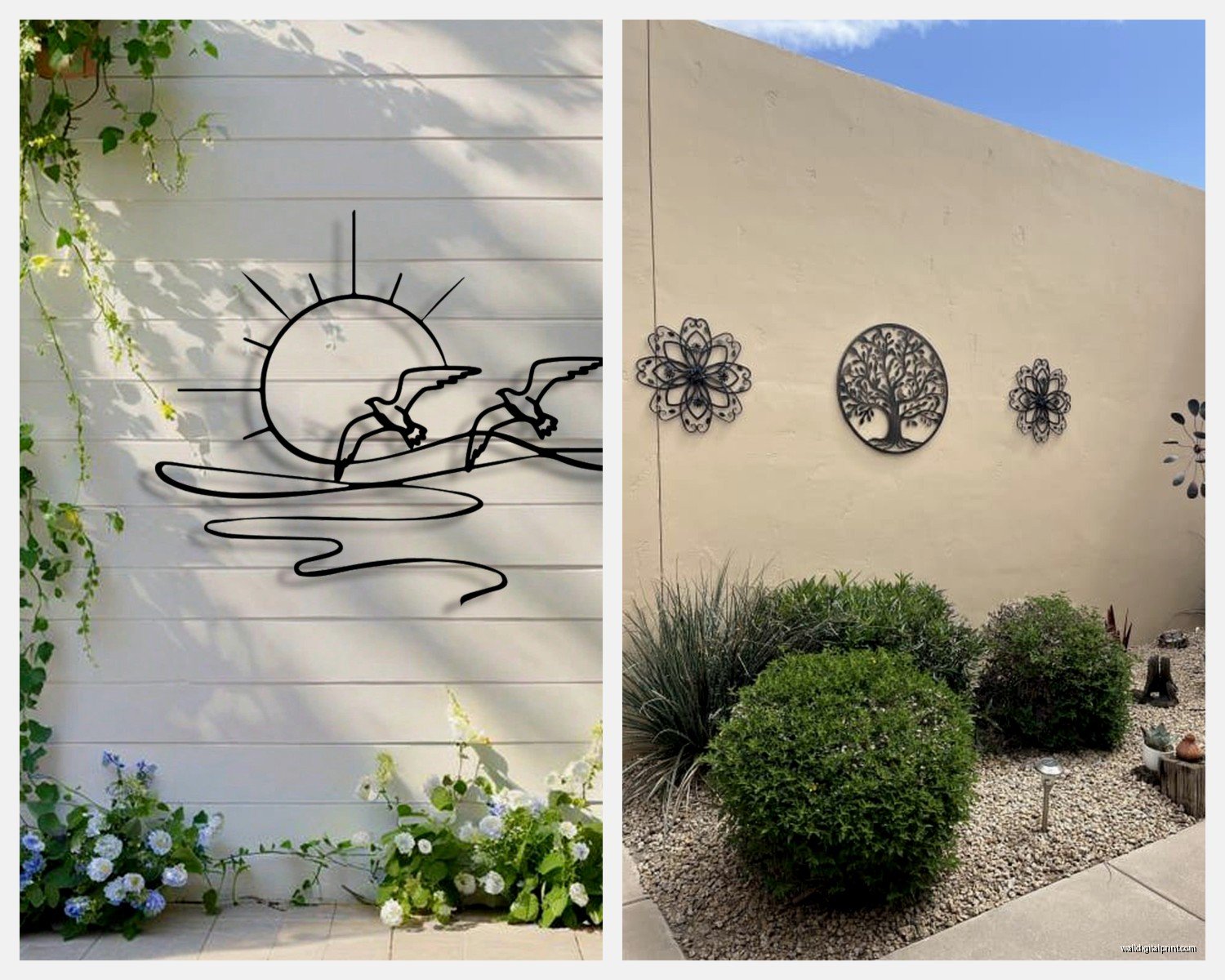
Wait I forgot to mention – there’s this company called Metal Art of Wisconsin (I think?) that does these cool tree and animal silhouettes in thick steel with a black powder coat. Expensive but they have a lifetime warranty and I’ve never had one fail. They’re heavy enough that they don’t rattle but the silhouette design means wind passes through.
Mounting Methods That Actually Work
Okay so this is where most DIY attempts fall apart. You can have the most weather-resistant art in the world but if you mount it wrong, water gets behind it and you get mold, rust, or the whole thing falls off.
French cleats are your friend for heavy pieces. One cleat on the wall, one on the art, they hook together. Leaves a gap behind for drainage and air circulation. This is gonna sound weird but the gap is actually protective because trapped moisture is worse than exposed moisture.
Stainless steel standoffs for lighter pieces – those little posts that hold the art away from the wall. You can get them at hardware stores or online. Quarter-inch to half-inch standoff is usually enough. They look modern and professional.
Do NOT use:
- Regular picture hanging wire (it’ll rust and snap)
- Command strips (I mean come on, they’re not rated for outdoor use)
- Construction adhesive directly on the wall (you’ll trap moisture and probably damage your siding when you try to remove it)
- Nails or screws without anchors in masonry
For brick or concrete you want tapcon screws or sleeve anchors. For vinyl siding you gotta hit the studs behind it or use a mounting block. For stucco… honestly I usually hire someone because I’ve cracked it before and the repair cost more than professional installation would have.
Sealing and Edge Protection
Even weather-resistant art benefits from edge sealing. The edges are where water infiltrates. I use clear marine sealant on the backs of pieces that don’t come pre-sealed. Just a bead around all the edges and any holes or seams. Takes five minutes and adds years to the lifespan.
For acrylic pieces, make sure the edges are polished or sealed. Raw cut edges will let moisture into the layers.
Metal pieces should have finished edges – rolled, hemmed, or powder-coated on the edges too, not just the face. Check this before buying because cheaper manufacturers skip the edges.
Color and UV Fading Reality Check
Everything fades eventually, just some things take longer. Here’s what I’ve observed:
Blues and greens fade fastest in direct sun. Like noticeably faster than other colors. If you’re getting a blue piece for a south-facing wall in full sun, just know you’re gonna see fading within a year or two even with UV protection.
Reds and oranges hold up better surprisingly? I have a red metal sculpture that’s been in full sun for four years and it’s barely faded.
Black and white are obviously the most stable. Boring but true.
UV-protective coatings help but they’re not magic. I’d say they maybe double the time before noticeable fading? So instead of obvious fading in two years you get four years. Still worth it but manage your expectations.
If color accuracy long-term is critical, you want porcelain enamel or ceramic. The colors are literally fused into the material so they can’t fade. This is why old signs from the 1950s still have vibrant colors.
Maintenance Nobody Tells You About
You gotta clean outdoor art. I know it seems obvious but like… dirt and pollen build up and hold moisture against the surface which accelerates deterioration. I spray mine down with a hose every couple months and wipe with a soft cloth. For metal pieces, car wax once a year adds a protective layer.
Check your mounting hardware annually. Screws can loosen, especially in wood. Rust can develop on hardware even if the art itself is fine. I carry stainless steel screws in my car now because I’ve had to do emergency repairs at properties.
If you live somewhere with freeze-thaw cycles, check after winter. Ice expansion can crack things or loosen mounts. I’ve had to remount several pieces after harsh winters.
Touch up chips immediately if they happen. A tiny chip in powder coating can lead to rust spreading underneath. Keep some matching outdoor paint or clear sealant on hand.
Where to Actually Buy This Stuff
I’ve ordered from all over and here’s my honest take:
Wayfair has a huge selection but quality varies wildly. Read reviews specifically mentioning how long it’s been outside. Photos in reviews are your friend.
Amazon – same deal, but easier returns if something shows up and it’s clearly not gonna last. Look for pieces with at least 50 reviews.
Etsy for custom metal work – lots of small fabricators doing really quality powder-coated pieces. You can often request specific sizes. More expensive but usually better quality than mass market stuff.
Local metal fabricators – honestly this is my go-to now for clients with budget. You can see samples, choose your own powder coat color, get custom sizes. Not much more expensive than buying online when you factor in shipping costs for large pieces.
Home Depot and Lowes have outdoor art sections now but it’s pretty basic. Good for mounting hardware though.
Avoid: those kiosks at home and garden shows. The markup is insane and I’ve never seen one with quality that justified the price. They’re betting on impulse purchases.
Climate-Specific Considerations
If you’re in a coastal area, salt air destroys everything faster. Marine-grade is not optional, it’s required. Even “stainless steel” needs to be 316 marine-grade, not regular 304 stainless.
Desert environments – UV is your main enemy. Colors fade faster. Go with lighter colors that reflect heat and UV-stabilized materials.
Humid climates – mold and mildew are the issues. You need good air circulation behind pieces and materials that don’t trap moisture. Avoid anything with fabric or porous surfaces.
Cold climates with snow – weight of snow and ice can damage pieces or pull them off walls. Avoid pieces with horizontal surfaces where snow accumulates. Slanted or vertical designs shed snow better. Also my neighbor’s outdoor art fell off during an ice storm and broke their window so like… make sure it’s REALLY secure.
Design Mistakes I See Constantly
Putting art too low where sprinklers hit it. Seems obvious but I’ve done it. Sprinkler water has minerals that leave deposits.
Forgetting about plant growth – that cute spot next to the climbing roses becomes completely hidden in three months.
Not considering shadows – that wall that gets full sun at noon might be perfect at 3pm. Pay attention to sun patterns before you mount something permanently.
Mixing metal finishes in a way that causes galvanic corrosion. Don’t use steel screws with aluminum art. Don’t let copper touch aluminum. Use compatible metals or insulate between them.
Going too small – outdoor spaces are bigger than interior rooms so art that seems large inside looks tiny outside. I usually recommend going at least 50% larger than you think you need.
Budget Real Talk
You can find decent weather-resistant art starting around $100 for smaller pieces (24×24 inches or so). Large pieces (48+ inches) that will actually last more than a couple years are usually $300-800. Custom work or premium materials can easily hit $1000+.
The cheap stuff ($30-50 range) is almost always gonna be disappointing. It might look okay for a season but then it fades, rusts, or warps. I’d rather have one good piece than three cheap ones that I have to replace.
Think about cost per year – a $500 piece that lasts 10 years is cheaper than a $100 piece you replace every two years. Plus you’re not constantly dealing with mounting and disposal.
Oh and factor in mounting costs if you’re hiring someone. Professional installation for a large piece can be $150-300 depending on your wall type and access.
Okay I think that’s everything I’ve learned through trial and error and client projects. The main thing is just… don’t assume “outdoor” or “waterproof” actually means it’ll hold up. Check materials, check hardware, and when in doubt go heavier duty than you think you need because weather is harsh and replacing stuff is annoying.