
Wall Art Guide, Wall Art Tutoriels
Large Wood Wall Art: Oversized Rustic Statement Pieces
Mar
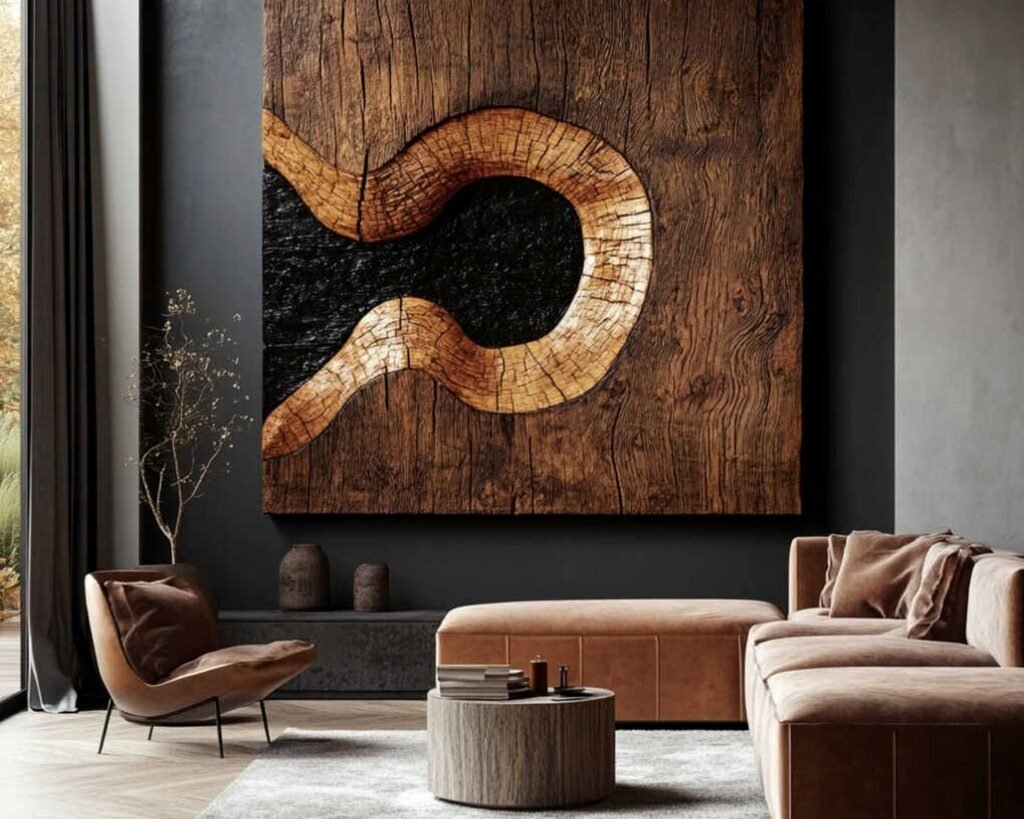
So I’ve been obsessing over these massive wood wall pieces lately and honestly it started because a client asked me to find something that wouldn’t look like every other farmhouse Pinterest board, and now I’m kinda down a rabbit hole with this stuff.
First Thing About Size – You’re Probably Thinking Too Small
Okay so here’s what I learned the hard way. When you’re standing in a store or looking at measurements online, your brain does this weird thing where it can’t actually process how big something needs to be. I ordered this piece that was 36 inches wide and when it arrived I literally laughed because it looked like a postage stamp on my client’s wall. The rule I use now – and this actually works – is measure your wall space and go for something that takes up at least 60-75% of that width. If you have an 8-foot wall section, you’re looking at something in the 5-6 foot range minimum.
My dog knocked over my tape measure twice while I was trying to explain this to someone last week but the point stands. People get nervous about going big but that’s literally the whole point of a statement piece.
Material Choices That Actually Matter
Not all wood is created equal here and I’ve seen some pieces that fall apart within months. Reclaimed barn wood is gorgeous but you gotta make sure it’s been properly treated because otherwise you’re gonna have beetles or some other nightmare situation. Had that happen once, never again.
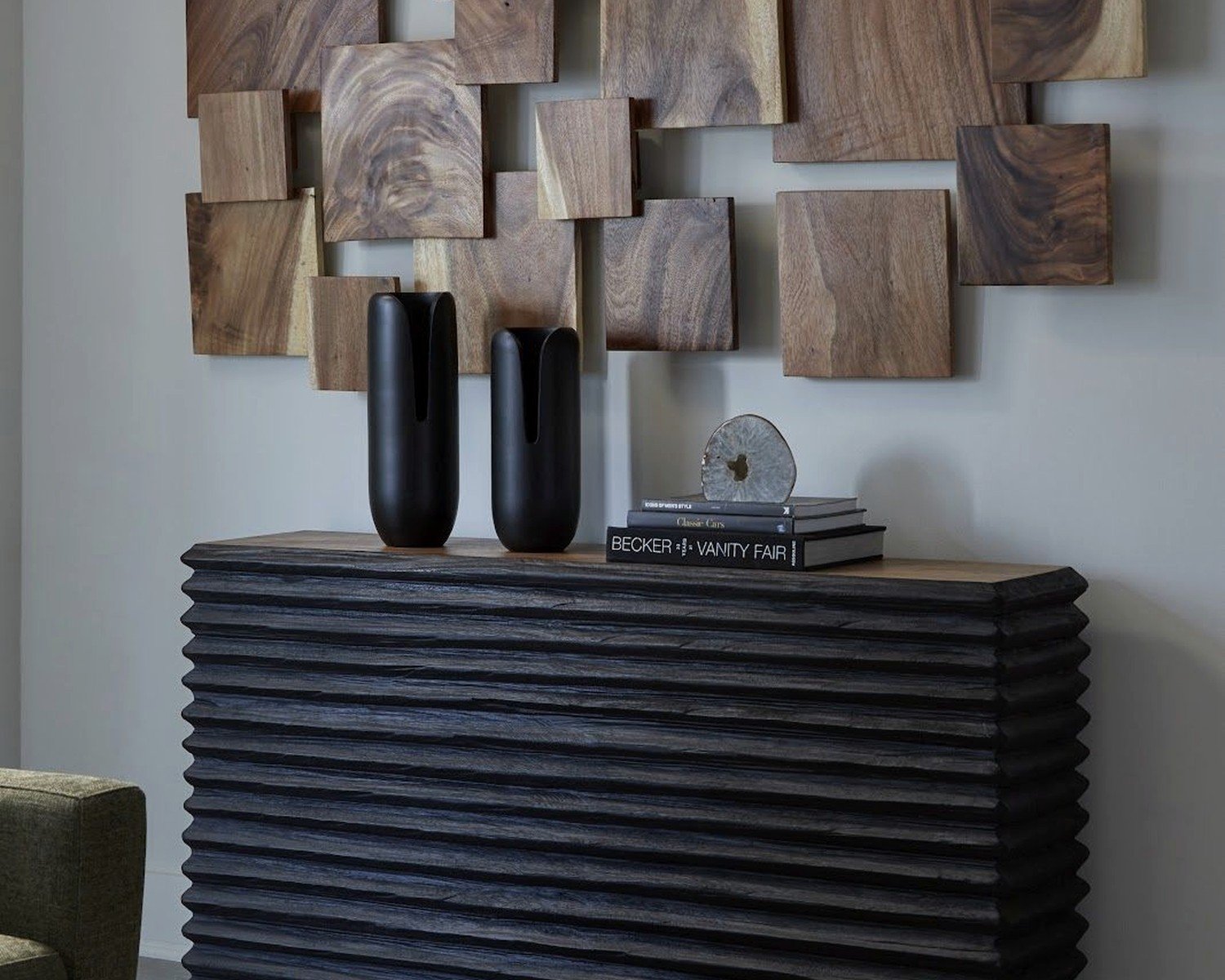
Here’s what I look for:
- Solid wood planks – usually pine, cedar, or oak. Pine is lightest and easiest to hang which matters more than you’d think
- Plywood base with wood veneer – this is actually fine for larger pieces because solid wood gets HEAVY and your wall might not handle it
- Reclaimed wood – make sure it’s sealed and treated, ask specifically about pest treatment
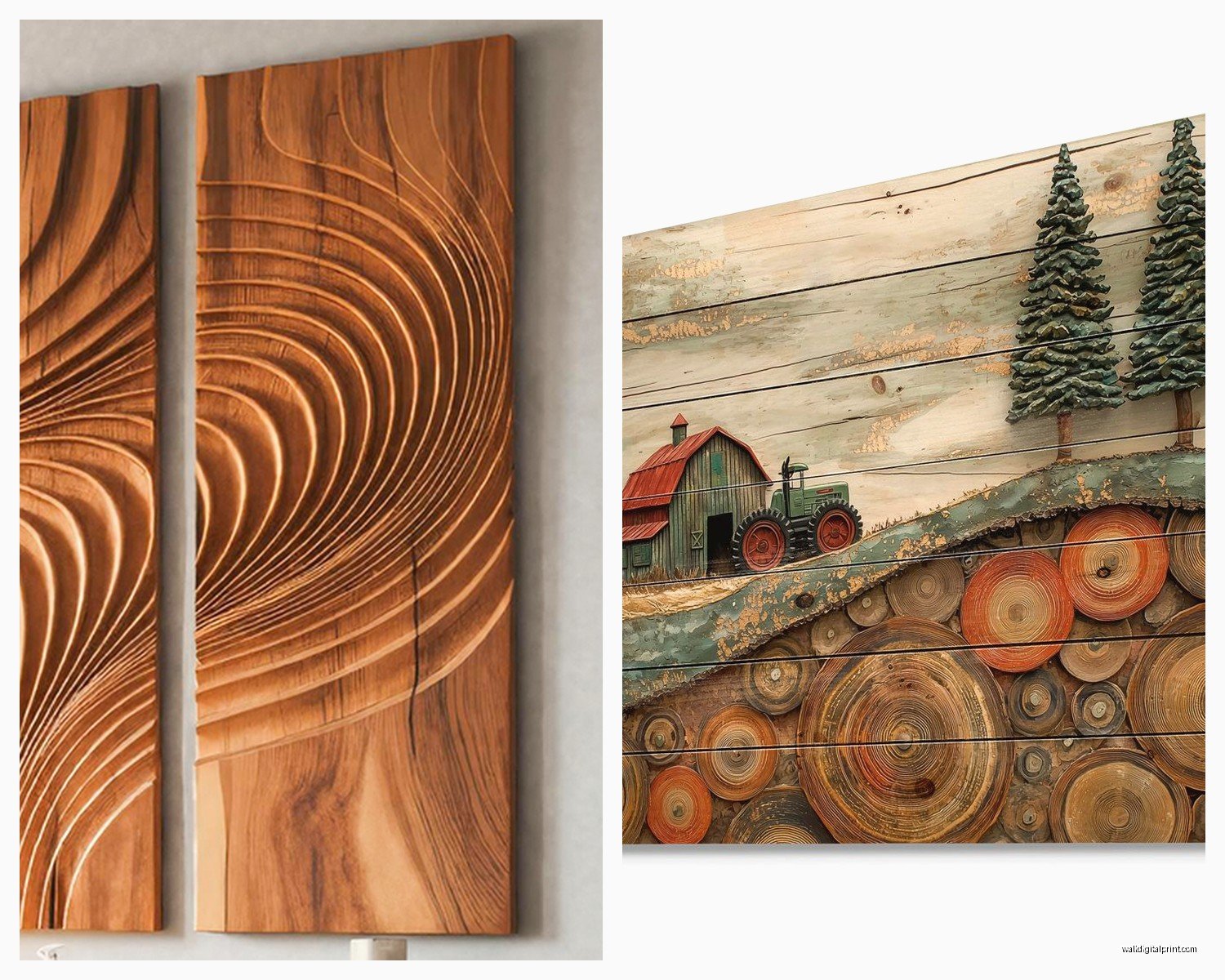
- Carved or routed designs – these add texture but check that the depth is at least 1/4 inch or it won’t cast shadows properly
The finish matters too. I’m currently watching this show about house flippers and they keep using this gray wash finish that’s already dated, so like… think about that. Natural wood tones with clear coat age better. Dark walnut stains are pretty safe. Distressed white paint is hit or miss depending on your other decor.
Weight Issues Nobody Talks About
A 4×6 foot solid wood piece can weigh 40-60 pounds easily. I learned this when I tried to hang one by myself and nearly took out a lamp. You need serious hanging hardware – not those little sawtooth hangers that come with frames. French cleats are your best friend for anything over 20 pounds. They distribute weight across the wall and you can actually adjust positioning which is clutch when you inevitably hang it crooked the first time.
Design Styles That Work
Okay so funny story, I used to think all wood wall art was basically the same rustic vibe but there’s actually a bunch of different directions you can go.
Geometric patterns – think chevrons, hexagons, mountain ranges. These read modern rustic instead of straight farmhouse. They work in contemporary spaces if the rest of your decor isn’t too sleek. I put one in a client’s minimalist living room and it actually grounded the space instead of clashing.
Natural edge pieces – these use the actual edge of the wood slab. Super organic looking. They’re expensive because you need really wide planks but the effect is worth it if you can find affordable ones. Etsy has some makers who do these for reasonable prices.
Layered wood art – different pieces of wood stacked to create depth. Mountains are super popular right now, also trees, waves. The shadows change throughout the day which is actually really cool. My client canceled yesterday so I spent like an hour comparing wave designs and the ones with 3-4 layers of depth photograph way better than flat cutouts.
Carved mantras or quotes – I’m gonna be honest, these can look cheesy fast. If you go this route, pick something meaningful to you personally and make sure the font isn’t that cursive farmhouse style unless that’s truly your aesthetic. Bold block letters age better.
Abstract or mosaic styles – different wood tones arranged in patterns. These work in more formal spaces. I used one in a dining room with mid-century furniture and it tied everything together.
Color and Finish – This Is Where People Mess Up
You want your wood art to either blend with your existing wood tones or deliberately contrast. The mistake I see constantly is people picking something that’s close but not quite matching. Like if you have warm oak floors, don’t get a piece with reddish undertones that almost matches but doesn’t. Either go way lighter, way darker, or match exactly.
Painted wood pieces – white, black, navy, sage green are all having moments right now. White painted wood can look really good in coastal or Scandinavian spaces but it shows dirt and needs cleaning. Black is dramatic but makes the piece feel heavier visually so your wall needs to handle that.
Natural finishes with clear coat are honestly the most versatile. They work with almost everything and won’t feel dated in three years.
The Stain Question
If you’re buying unfinished or making your own – which I’ll get to – stain color matters SO much. Test on scrap wood first because colors look completely different on pine versus oak. Weathered oak stains are really popular and pretty forgiving. Jacobean is almost black and very dramatic. Golden oak is… well it’s very 1990s so maybe skip that unless you’re going full vintage.
Where to Actually Buy These Things
I’ve ordered from basically everywhere at this point so here’s the real breakdown:
Etsy – best selection, you can find custom work, but quality varies wildly. Read reviews carefully and look at customer photos not just the seller’s photos. Message sellers and ask about hanging hardware and finishing. Response time tells you a lot about whether they’re professional.
Wayfair/Overstock – affordable options but they’re usually the plywood base variety. Fine for most situations honestly. Shipping is often free which matters when you’re buying something huge. Return policies are decent.
West Elm/Pottery Barn – overpriced but good quality and you can see them in person. Wait for sales, these go on sale constantly. Their installation services are actually worth it for really large pieces.
Local artisans/craft fairs – you can negotiate pricing sometimes and pick exactly what you want. Plus supporting local artists is cool. Check Instagram for makers in your area.
HomeGoods/TJ Maxx – total luck of the draw but I’ve found amazing pieces for like 30% of retail. You gotta go regularly because inventory changes constantly.
DIY Route If You’re Into That
Making your own is actually not that hard if you have basic tools. You need:
- Wood planks from Home Depot or Lowe’s (select pine is cheap and works fine)
- Wood glue
- Brad nailer or finish nails
- Sandpaper
- Stain or paint
- Clear coat sealer
- Plywood backing board for stability
The geometric designs are easiest – cut your planks at angles and arrange them in patterns. There are templates online. Glue and nail them to your backing board, sand everything smooth, stain, seal. Takes a weekend maybe.
I’m not gonna lie though, getting cuts precise is harder than it looks and if you don’t have a miter saw you’ll need to have the store cut pieces for you. Most places do this free for a certain number of cuts.
Hanging These Monsters Properly
This is super important because I’ve seen pieces fall and it’s not cute. For anything over 30 pounds you need to hit studs. Use a stud finder, mark them, and install your hardware there. If your studs don’t line up with where you want the piece, use toggle bolts rated for the weight – they work in drywall but get heavy duty ones.
French cleats are seriously the way to go for oversized pieces. One cleat attaches to the wall (into studs), one attaches to the back of your art, and they lock together. The piece hangs flush against the wall and it’s super secure. You can make cleats yourself from plywood or buy them.
Wire hanging is okay for lighter pieces under 20 pounds but use braided wire rated for more than your piece weighs. Sawtooth hangers are basically useless for anything large – don’t even bother.
Height Placement
Center of the piece should be at eye level, which is usually 57-60 inches from the floor. But honestly this depends on your ceiling height and furniture. If it’s going above a sofa, leave 6-8 inches between the sofa back and the bottom of the art. Above a console table, same thing – leave some breathing room.
For really tall walls, you can go higher, but don’t put it so high people have to crane their necks. I see this mistake in rooms with vaulted ceilings all the time.
Styling Around Large Wood Art
The piece should be the focal point so don’t crowd it. This isn’t a gallery wall situation – it’s a statement. Keep surrounding walls relatively minimal. You can flank it with sconces or small shelves but don’t compete with it.
Furniture arrangement matters. Your main seating should face the wall with the art or at least have a clear sightline to it. Otherwise what’s the point of a statement piece nobody looks at.
Layering textures helps wood art feel intentional. If you have a wood piece, add metal accents in the room, maybe some woven textiles, plants. This keeps it from feeling one-note rustic.
Maintenance Real Talk
Wood art collects dust like crazy. Microfiber cloth every couple weeks keeps it looking good. If it’s sealed properly you can use barely damp cloth but don’t soak it. Unsealed wood shouldn’t get wet at all.
Direct sunlight will fade stains and paint over time. If your piece is in bright sun, consider UV protective glass or just accept that it’ll age. Sometimes that aged look is part of the charm honestly.
If you notice any splitting or warping, that’s humidity changes. A humidifier in winter and dehumidifier in summer helps, or you can just embrace the rustic character that develops. Most pieces are gonna shift a little bit and that’s normal.
Price Expectations
You can find decent pieces starting around $100-150 for smaller statement sizes (3×4 feet). Really large custom work (5×6 feet or bigger) runs $400-800 easily, sometimes more. Reclaimed wood costs more. Hand-carved details cost more. Local artists usually charge more than mass-produced but you’re getting better quality.
If price is a concern, look for sales or consider the DIY route. Materials for a 4×5 foot piece cost maybe $75-100 if you’re smart about it. Your time investment is probably 8-10 hours total including drying time.
Oh and another thing – shipping costs for large items can be brutal. Factor that in when comparing prices. Sometimes a slightly more expensive piece with free shipping is actually cheaper overall.
Wait I forgot to mention – some sellers offer payment plans which is helpful for pricier custom pieces. Doesn’t hurt to ask.
Honestly the biggest thing is just committing to the scale. Everyone gets nervous and goes too small and then it looks weird. Trust the measurements, go big, make sure your hanging hardware is solid, and you’ll have something that actually transforms the space instead of just filling a blank spot on the wall.
