
Wall Art Guide, Wall Art Tutoriels
Pink Wall Art: Blush to Fuchsia Feminine Designs
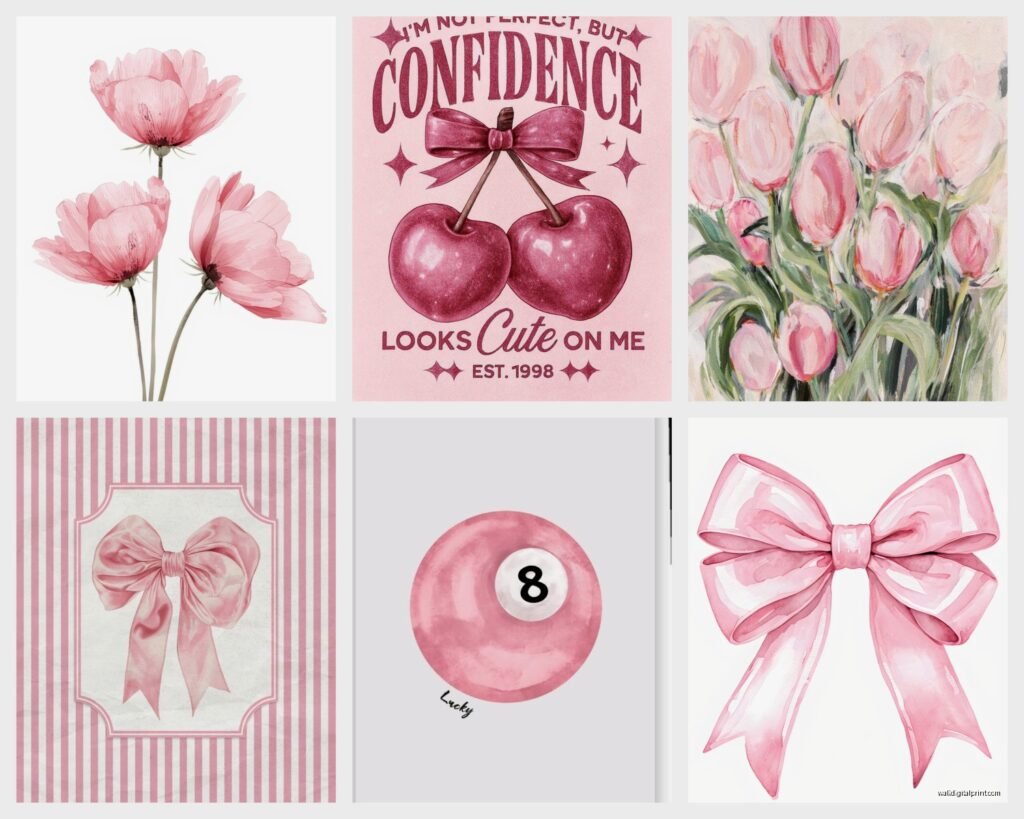
Mar
So I’ve been working with pink wall art for like the past three years now and honestly it’s gotten so much more interesting than just those basic blush prints everyone was hanging in 2019. Let me walk you through what actually works because I’ve made plenty of mistakes with this.
Understanding Your Pink Palette First
Okay so here’s the thing about pink that nobody tells you until you’ve bought the wrong shade three times – it photographs completely differently than it looks in person. I learned this the hard way when I ordered what I thought was a soft blush abstract piece for a client’s bedroom and it showed up looking like…almost peachy orange in certain light? Had to return it.
The pink spectrum basically breaks down like this and you gotta know which category you’re working with:
- Blush/ballet pink – this is your super pale, almost white-pink situation
- Rose/dusty pink – more gray undertones, very 2020s
- Coral pink – leans orange, warmer
- Hot pink/fuchsia – the bold stuff, magenta territory
- Millennial pink – that grayish-pink that was everywhere for a minute
- Bubblegum pink – straight up saturated pink
The reason this matters is because blush pink art will completely disappear against a white wall if the contrast isn’t strong enough. I’ve literally hung pieces where you had to walk right up to them to even see there was art there. Not great.
Choosing Art Based on Your Wall Color
This is gonna sound obvious but I still see people mess it up – your wall color determines like 60% of whether pink art will work. White walls are actually kinda tricky with very pale pink because there’s not enough contrast unless the piece has other colors or strong black lines in it.
Here’s what I’ve found actually works:
White or off-white walls: You want either really bold fuchsia pieces or blush with strong graphic elements. I did this whole gallery wall last month with hot pink abstract prints mixed with black and white photography and it was *chef’s kiss*. The key is having that contrast.
Gray walls: Honestly? Chef’s kiss for pink art. Any shade of pink looks incredible against gray. I have this dusty rose watercolor piece in my own living room against Agreeable Gray (yeah I’m basic) and people always ask about it. The gray makes the pink look more sophisticated somehow.
Navy or dark walls: Oh man, fuchsia and hot pink absolutely POP against navy. Did a client’s home office last year with dark blue walls and these geometric fuchsia prints…it looked like something from Architectural Digest. Blush pink gets kind of lost though, you need the brighter shades.
Beige/tan/warm neutrals: Coral pink and peachy pinks are your friend here. Cool-toned pinks can look weird and clash with warm beiges. Trust me on this one.
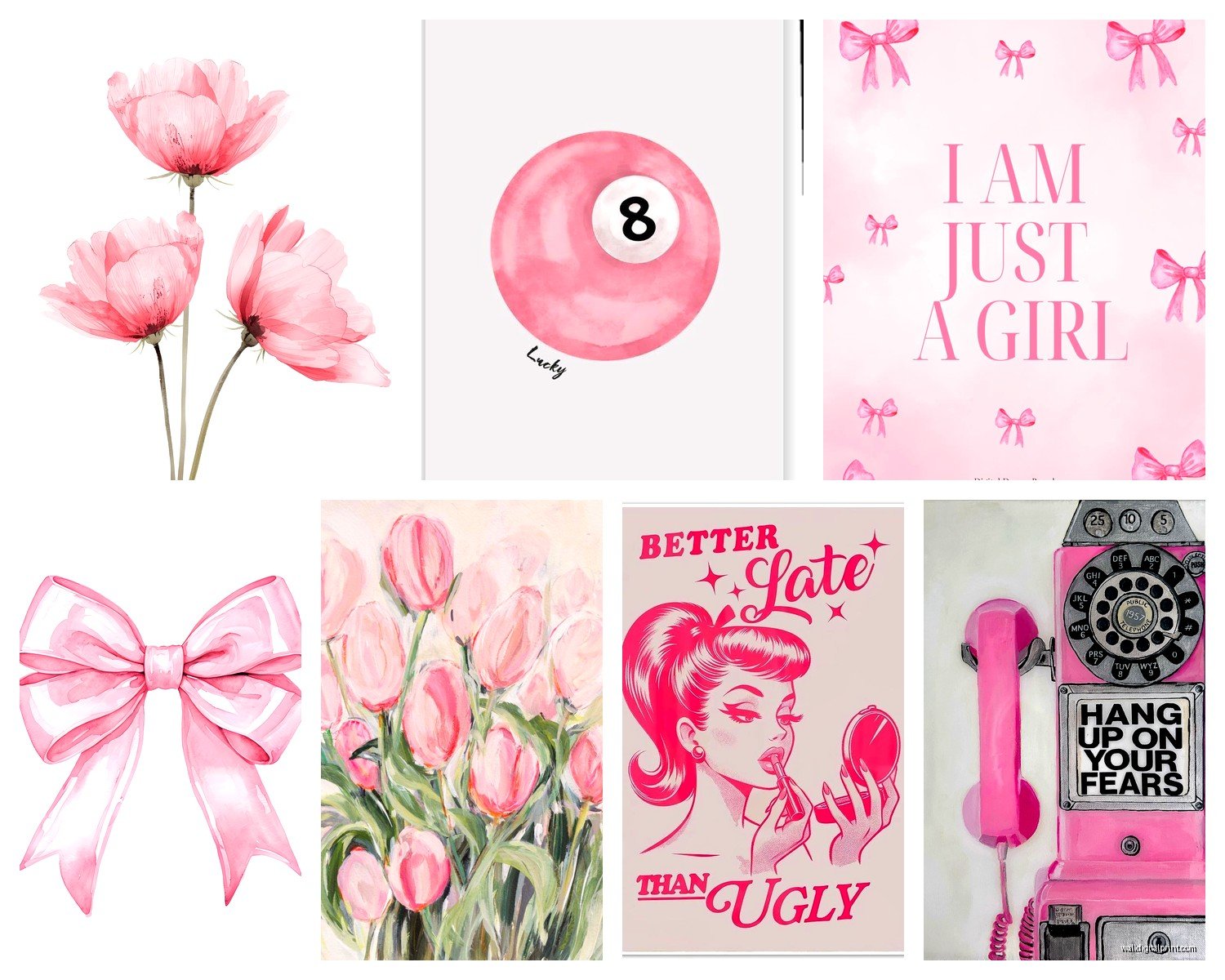
Framing Situations That Actually Matter
Okay so funny story – I used to just throw any frame on pink art and wonder why it looked cheap. Then I spent like three hours one day when my afternoon appointment canceled just comparing different frame options on the same print and WOW what a difference.
Gold frames: These make blush and dusty pink look expensive. Like instantly elevated. But they can make hot pink look kinda tacky if you’re not careful. I use thin gold frames for pale pink pieces, looks very elegant.
Black frames: Work with literally every shade of pink. This is your safe bet. The contrast is always good. Sometimes almost too stark with very pale pink though.
White frames: Good for creating a softer look but here’s the thing – they need to be bright white, not cream or off-white. Off-white frames next to blush pink just looks…dingy? I can’t explain it but it doesn’t work.
Natural wood: Light wood tones are gorgeous with coral and peachy pinks. Dark walnut frames look amazing with fuchsia. Medium oak tones are actually the hardest to work with because they don’t commit either way.
Acrylic/lucite frames: These have become my secret weapon for pink art. They let the color breathe and work in modern spaces. A bit pricey but worth it for statement pieces.
Oh and another thing – mat boards. A white mat around pink art makes SUCH a difference. Like it gives the color room to breathe. I usually do 3-4 inch mats for smaller pieces, 4-6 inches for larger ones.
The Matting Trick Nobody Talks About
Wait I forgot to mention – if you have a pink piece that’s not quite the right shade for your space, you can actually adjust how it reads by using a colored mat. Sounds weird but a gray mat can cool down a too-warm pink, and a cream mat can warm up a too-cool pink. Learned this from an art curator friend and it’s saved me so many times.
Types of Pink Art That Actually Work in Real Homes
Alright so I’m gonna break down what I’ve actually seen work in real spaces, not just what looks good on Pinterest.
Abstract Pink Art
This is probably the easiest to work with because it’s forgiving. Big brushstrokes, watercolor effects, geometric shapes – all good. The key is making sure there are other colors in there too unless you’re going for a very specific monochrome moment.
I love abstract pieces that have pink as the dominant color but bring in white, gold, gray, or even navy. There’s this one artist on Etsy – god I can’t remember the shop name, hold on – okay I can’t find it but anyway they do these gorgeous blush and gold leaf pieces that work in literally any room.
For living rooms I usually go bigger with abstracts. Like 30×40 minimum. In bedrooms you can go smaller and do a grouping. My cat knocked over one of my smaller abstract prints last week which actually made me realize how much the glass matters – the cheap stuff shattered everywhere but the museum glass I use on client pieces would’ve been fine.
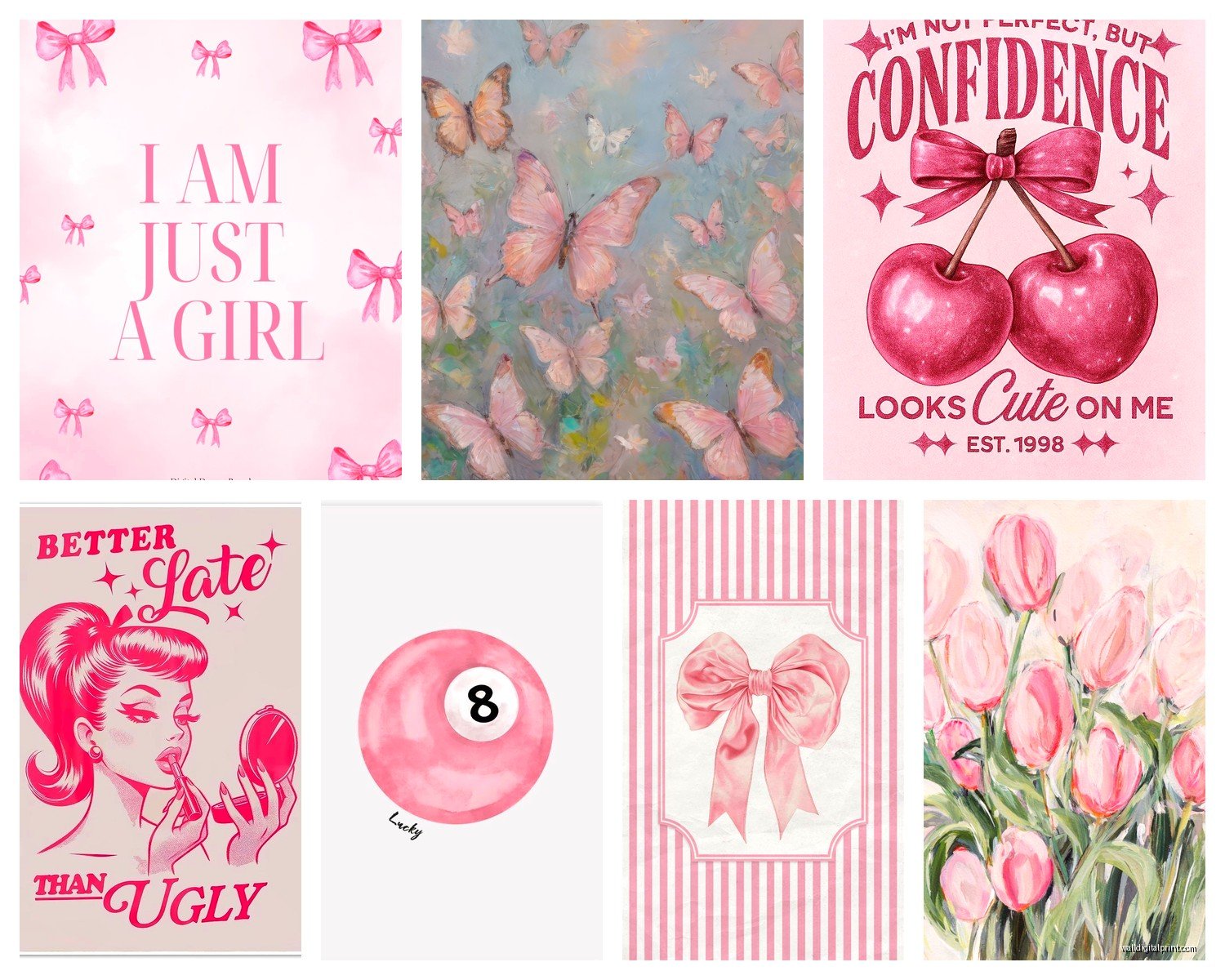
Floral Pink Art
Okay so florals can go really wrong really fast with pink. Like really wrong. The line between elegant and grandma’s house is THIN. Here’s what works:
- Modern botanical prints with clean lines – think single stems, not bouquets
- Watercolor florals that are more abstract than realistic
- Vintage botanical illustrations – these are having a moment and they work
- Large-scale flower photography in hot pink or fuchsia – very dramatic
What doesn’t work: Those Thomas Kinkade-style romantic rose bouquets. Just…no. Unless you’re actually going for cottagecore grandma vibes which is fine but know what you’re doing.
I did a bedroom last spring with these massive peony photographs – like 40×60 – in the palest blush pink against charcoal walls. The client was nervous about going that big but it ended up being the focal point of the whole room. Sometimes you gotta push people out of their comfort zone.
Geometric and Line Art
This is my personal favorite category right now. Clean lines, geometric shapes, minimal compositions in various pinks. It feels current without being trendy if that makes sense.
Think Matisse-style line drawings in hot pink. Or mid-century modern geometric patterns incorporating multiple shades of pink. Grid patterns, circles, abstract faces – all working really well right now.
The thing about geometric pink art is it works in spaces where other pink art might feel too feminine or soft. I put geometric fuchsia prints in a guy’s apartment last year – he was convinced he didn’t like pink anything – and he ended up loving them because they felt graphic and bold rather than pretty.
Typography and Word Art
Okay real talk – most pink typography art is kinda cringe. “Love” and “Dream” and “Blessed” in cursive pink letters…I just can’t. But there are ways to do this well:
Bold sans-serif fonts in hot pink with actually interesting quotes or phrases. French phrases sometimes work if they’re not too cliche. Song lyrics can be good. I did a music room with lyrics in various shades of pink and it actually looked sophisticated.
The key is keeping it graphic and not too sweet. And honestly? Most of the time I’d rather just skip word art altogether with pink unless the client specifically wants it.
Creating Gallery Walls With Pink Art
So I’ve done probably 50+ gallery walls at this point and pink pieces can either make or break them. Let me tell you what I’ve learned through trial and error (and one wall I had to completely redo because it looked like a Valentine’s Day explosion).
The Mix Formula
You cannot – and I cannot stress this enough – do an all-pink gallery wall unless you’re very intentionally going for a maximalist pink moment. And even then it’s tricky. What works better:
- 30% pink art, 40% black and white, 30% other accent colors
- Or all pink pieces but in dramatically different shades – blush, rose, hot pink, fuchsia all together
- Pink abstract mixed with photography and maybe some gold/brass elements
I did learn this cool trick where you can use pink as the “thread” that ties everything together. Like maybe you have black and white photos but they’re in pink frames, or you have various art styles but they all have touches of pink in them. Makes the whole thing feel cohesive without being matchy-matchy.
Spacing and Layout
Okay so spacing matters SO much with pink art specifically because the color draws your eye. If pieces are too close together the pink becomes overwhelming. I usually do 3-4 inches between frames for gallery walls with pink.
This is gonna sound weird but I actually lay everything out on the floor first – yeah I know everyone says this but I mean I literally leave it there for like a day and walk past it multiple times. The arrangement that looks good in the morning might look wrong in afternoon light when the pink reflects differently.
Oh and another thing – odd numbers work better. 3, 5, 7, 9 pieces. Even numbers can work but they’re harder to balance, especially with bold colors like fuchsia.
Lighting Considerations You Can’t Ignore
Alright this is where things get technical for a second but stay with me because this actually matters. Pink art changes DRAMATICALLY based on lighting and I learned this the hard way.
Natural light: Northern light is actually great for pink because it’s cooler and doesn’t distort the color. Southern exposure can make pink look washed out during peak sun. Eastern and western light…it depends on the time of day. I spilled coffee on a blush print once while photographing it in western afternoon light and the photo looked completely different than the morning shots I’d taken – made me realize how much the warm light was changing the pink tones.
Warm artificial light (2700K-3000K): This makes cool pinks look muddy and weird. But it makes coral and peachy pinks look amazing. If you have warm lighting in a room, stick with warm-toned pinks.
Cool artificial light (4000K+): Perfect for hot pink and fuchsia. Makes them really pop. Can make blush pink look a bit cold though.
I always recommend picture lights for statement pink pieces. The direct lighting makes such a difference and you can control the color temperature. Plus it looks fancy.
Room-by-Room Breakdown
Let me just go through where I’ve successfully used different types of pink art because context matters so much.
Living Rooms
Living rooms can handle bold pink but you gotta balance it. I usually go with one large statement piece in fuchsia or hot pink rather than multiple smaller pink pieces. Or I’ll do a gallery wall situation with pink as an accent color.
What’s worked: Large abstract art with pink as the dominant color above the sofa. Geometric prints in hot pink as part of a mixed gallery wall. A pair of matching pink pieces flanking a window or fireplace.
What hasn’t worked: All-pink gallery walls (too much), tiny blush pieces on large walls (get lost), coral pink in rooms with cool gray furniture (clashes).
Oh and if you have a lot of pattern in your living room – like patterned sofa, patterned pillows – keep the pink art more simple and graphic. Too much going on makes everything look chaotic.
Bedrooms
Bedrooms are where pink art really shines honestly. It’s expected enough that it doesn’t feel forced, but you can still make it interesting.
Above the bed is the obvious spot – I usually do either one large piece (40×60 or bigger) or a diptych/triptych situation. Blush and dusty rose work beautifully here for a calming vibe. Hot pink if you want more energy.
I did a main bedroom last fall where we did this huge abstract piece – mostly white and gray with pops of fuchsia – and it completely made the room. The client was gonna do the typical “inspirational quote” thing and I talked her out of it, thank god.
On the wall opposite the bed, you can go smaller and more personal. This is where I like to put pink photography or more delicate pieces.
Funny thing – I was watching The Great British Baking Show while styling a bedroom last month and literally got inspired by the show’s color palette to do this whole blush and navy scheme. Sometimes inspiration comes from weird places.
Bathrooms
Small doses of pink in bathrooms = chef’s kiss. Large amounts = looks like
