Wall Art Guide, Wall Art Tutoriels
Poster Prints Wall Art: Affordable Paper Art Reproductions
Apr
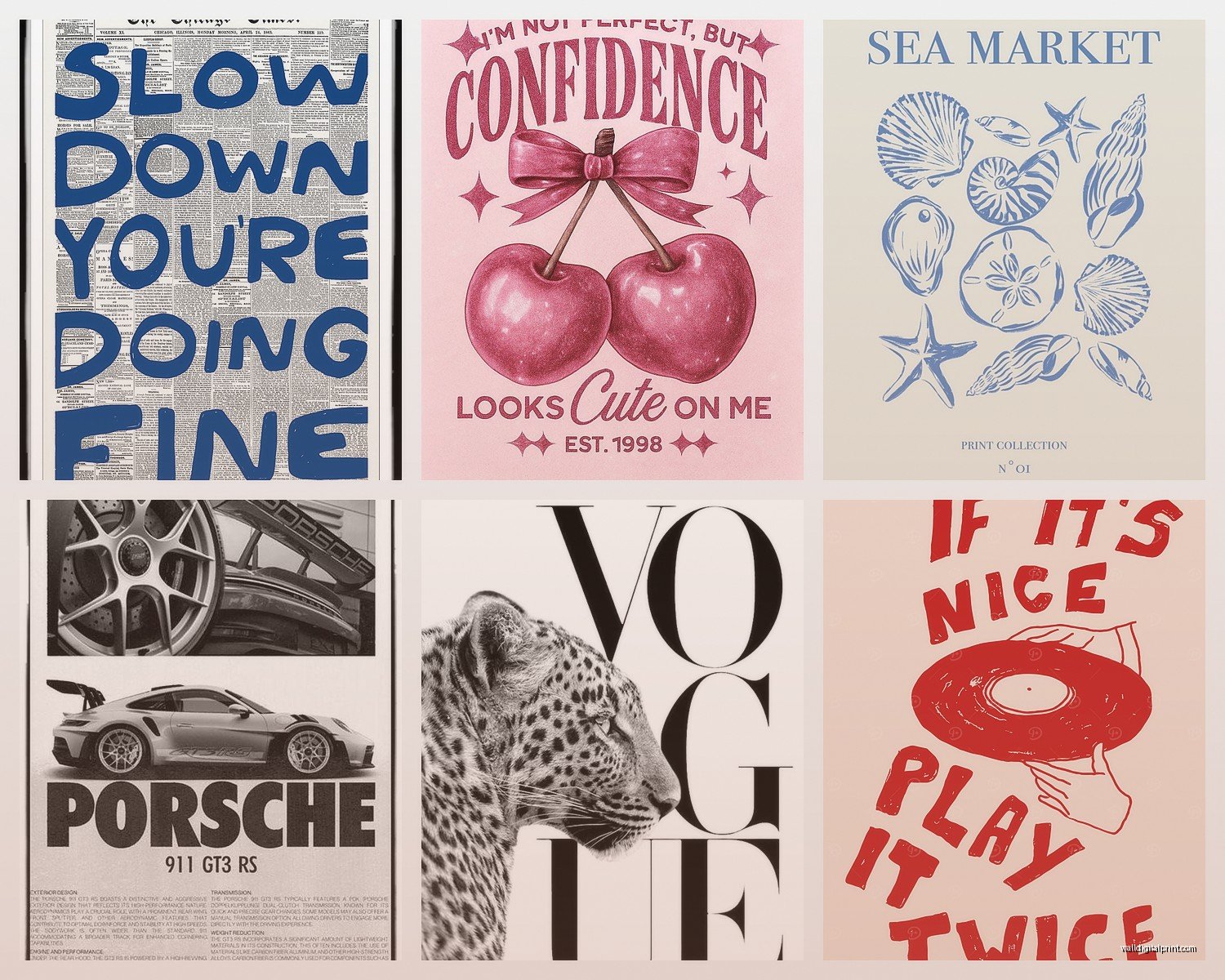
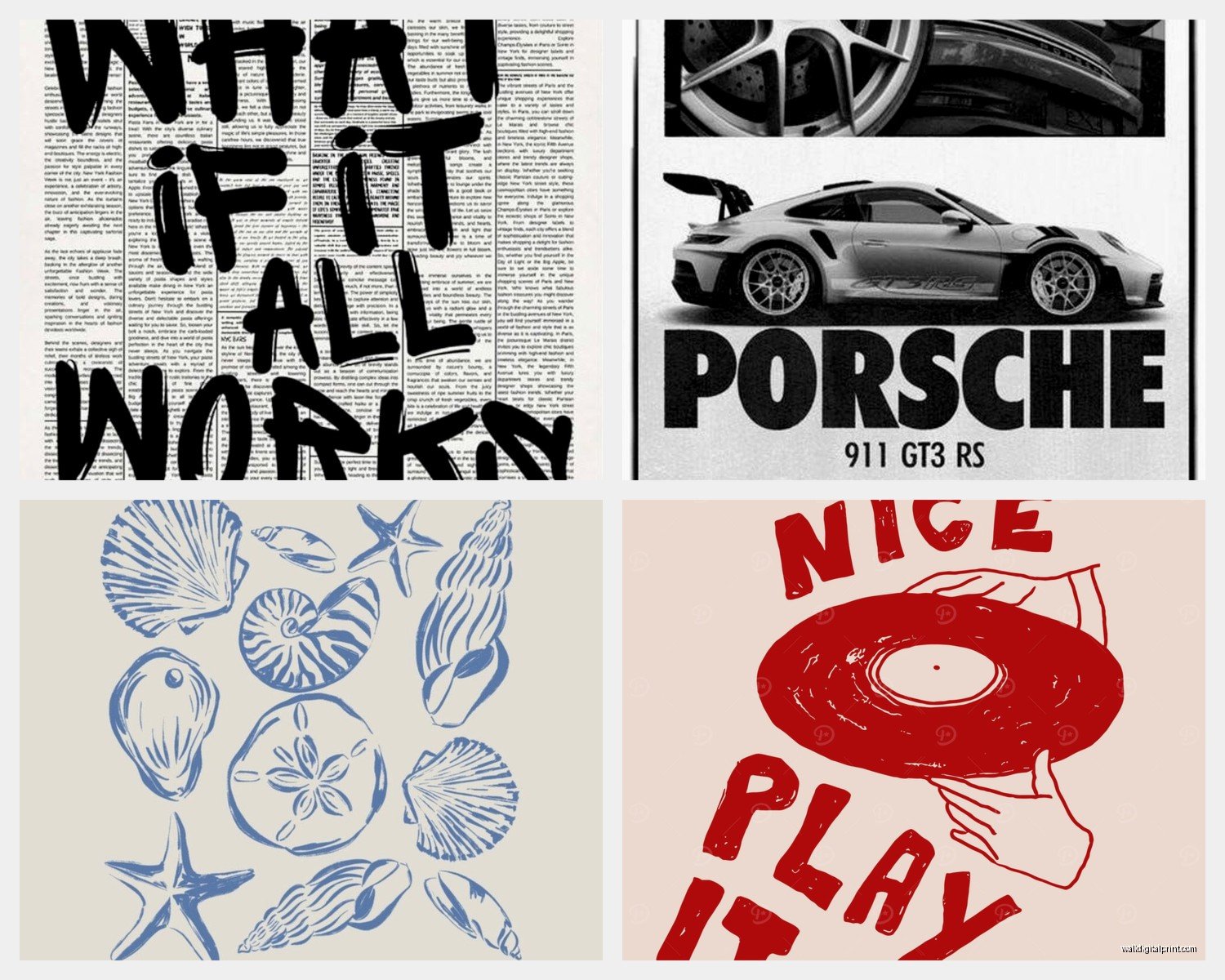
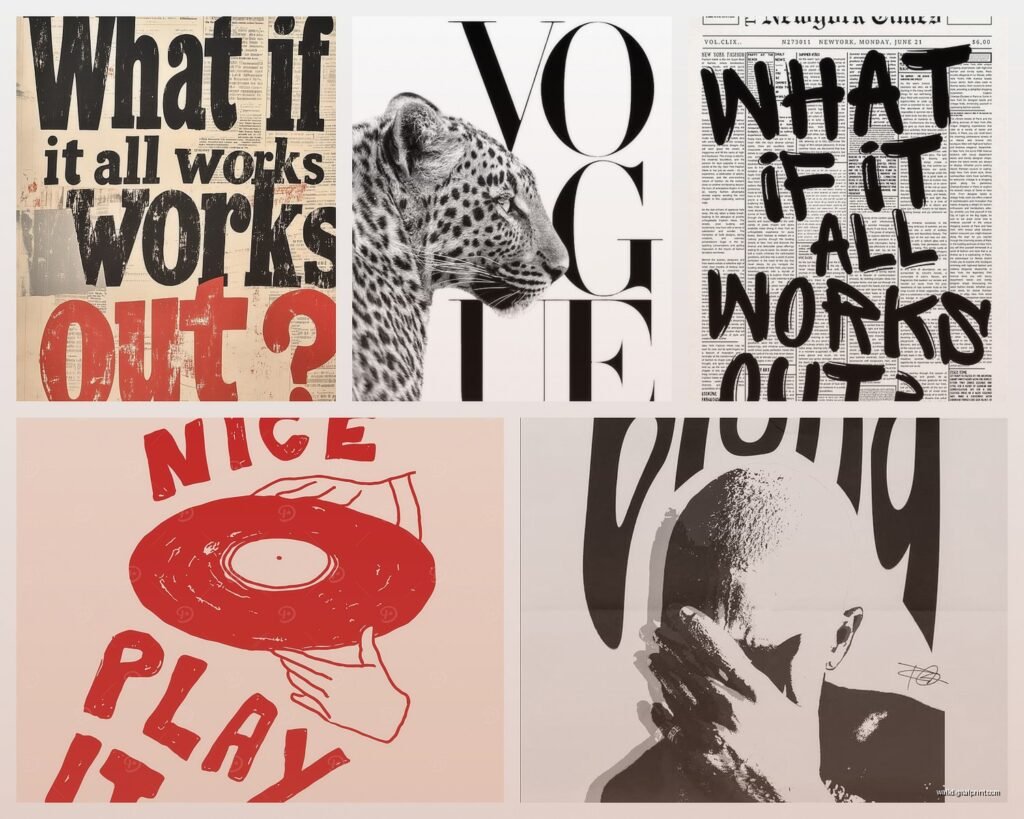
So I’ve been dealing with poster prints for like forever now, and honestly they’re probably the most underrated wall art option out there. Everyone thinks they need to drop $500 on a canvas or framed piece when you can get something that looks genuinely amazing for under $50 if you know what you’re looking for.
The Paper Quality Thing Nobody Talks About
Okay first thing – the paper weight actually matters way more than I thought it would. I used to just buy whatever looked cute on Etsy, but then I’d get these flimsy 170gsm prints that would wrinkle if you looked at them wrong. You want at least 200gsm, ideally 250-300gsm. That’s when it starts feeling substantial, like actual art instead of a fancy printout.
Matte vs glossy is a whole debate but honestly? Matte wins like 95% of the time. Glossy shows every fingerprint and catches light weird, plus it reads as “poster from a college dorm” rather than “curated art piece.” The only time I go glossy is for photography prints where you really want that depth and color pop, but even then I usually regret it when I’m trying to photograph the room and there’s glare everywhere.
Where to Actually Buy These Things
So there’s basically three tiers here. You’ve got your ultra-budget options like Amazon and Society6, then your mid-range Etsy shops and specialized print sites, and then your “affordable but fancy” options like museum shops and independent artists.
Society6 is weirdly hit or miss. I’ve gotten prints from them that look incredible and ones that showed up with this weird pixelation I couldn’t see online. The trick is to only buy from artists who have photos of the actual print, not just the digital file. And read the reviews – if people are complaining about quality, believe them.
The Etsy Rabbit Hole
Etsy is where I probably spend too much time tbh. You can find independent artists selling museum-quality prints for like $20-40, but you gotta do your homework. Look for shops that print themselves rather than dropshipping – you can usually tell because they’ll have photos of their actual workspace or mention their printer model. Epson and Canon printers are what you want to see mentioned.
I found this one shop last year that uses archival pigment inks on heavyweight cotton paper and their prints are honestly better than stuff I’ve seen at galleries. The woman who runs it was watching the same true crime documentary I was obsessed with and we ended up chatting about it which was random but also that’s how you know it’s a real person making your stuff.
Frame or No Frame Situation
This is gonna sound weird but sometimes the unframed look is actually what you want. Like if you’re going for that salon wall vibe or a more casual collected-over-time aesthetic, framing everything can make it look too precious. I’ve been pinning larger prints directly to the wall with these tiny gold pins – sounds chaotic but it works if your print is substantial enough.
That said, framing obviously elevates everything. IKEA frames are fine, I don’t care what design snobs say. Their RIBBA and SILVERHÖJDEN frames are like $15-30 and look completely acceptable. The trick is buying a bunch in the same finish so everything feels cohesive even if the art is all over the place style-wise.
Oh and another thing – standard sizes are your friend. If you’re buying 16×20, 18×24, or 24×36 prints, frames are everywhere and cheap. Custom sizes mean custom framing and that’s when costs explode. I learned this the hard way with a beautiful 17×22 print that cost me $180 to frame.
The Matting Debate
Mats make cheaper prints look expensive, that’s just facts. A $15 print in a $20 frame with a $10 mat suddenly looks like a $200 piece. You can cut your own mats if you’re patient – I did this for like three months until I sliced my finger pretty badly and decided my time was worth more than the $8 I was saving.
Pre-cut mats from craft stores during sales are the move. Michael’s has 40% off coupons basically weekly, and you can get an 8-ply museum-quality mat for under $15 if you time it right.
What Actually Looks Good on Walls
So here’s what I’ve figured out after hanging probably hundreds of poster prints in various spaces. Size matters more than you think. People always go too small – a tiny 8×10 print on a big wall just looks sad and lost. If you have a standard wall above a sofa, you want something at least 24×36 or a gallery wall that takes up roughly 2/3 of the wall width.
The ratio thing is real too. Horizontal prints feel calming and work great in bedrooms or above furniture. Vertical prints have more energy and work well in hallways or narrow wall spaces. Square prints are having a moment and they’re actually super versatile but harder to find good frames for.
Subject Matter That Works
Abstract stuff is the easiest to work with because it doesn’t compete with your furniture or have to “mean” anything. I’ve got this terracotta and cream abstract print in my kitchen that I paid $18 for and everyone asks where I got it.
Vintage botanical prints never go out of style. Museum reproduction shops sell these for reasonable prices and they work in literally every room. Same with architectural drawings and vintage maps – they read as sophisticated without being pretentious.
Photography prints can be tricky because they need to be high enough resolution or they look cheap. Black and white photography is more forgiving than color for this reason. And please, no motivational quote prints unless you’re decorating a WeWork.
The Resolution Thing You Can’t Ignore
Okay so this is technical but important. If you’re downloading digital prints to print yourself, you need at least 300 DPI at the size you’re printing. A file that’s 3000×4000 pixels looks great at 10×13 but will be blurry at 20×26. Math isn’t my strong suit but there are calculators online that’ll tell you the max print size for any file.
When shops say “instant download” that can go either way. Sometimes you get a massive high-res file, sometimes you get something that’ll look pixelated at any size bigger than a postcard. Check the file dimensions before you buy – it should be listed in the description.
Printing Your Own vs Buying Pre-Printed
I’ve gone down both roads extensively. Printing at home sounds economical until you factor in the cost of a good printer, proper paper, and ink that costs more than actual gold apparently. Unless you’re printing a LOT regularly, it’s not worth it.
Print shops are the middle ground. Staples, FedEx, local print shops – they can do decent quality for $10-30 depending on size. The quality won’t be archival gallery-level but for a bedroom or office it’s totally fine. I use a local shop run by this guy who’s really picky about color calibration and his prints come out better than some of the “professional” online services I’ve tried.
The fancy online print services like Printique or Nations Photo Lab are worth it if you’ve got a really special image. They use actual photographic printing rather than inkjet, and the color accuracy is noticeably better. More expensive though – you’re looking at $30-60 for a decent sized print.
DIY Printing Real Talk
If you do want to print at home, you need an actual photo printer, not a regular inkjet. Canon PIXMA Pro series or Epson SureColor are the ones that’ll give you results worth framing. And you gotta use proper paper – Red River Paper, Hahnemühle, Moab are the brands that matter.
My cat knocked over my coffee onto a stack of expensive printing paper last month and I’m still not over it financially.
Longevity and Care
Here’s what nobody tells you – poster prints fade. Regular inkjet prints will start looking washed out in like 2-5 years, especially if they’re in direct sunlight. This is why archival inks and UV-protective glass matter if you’re planning to keep something long-term.
I’ve got prints from college that are basically sepia-toned now even though they started out vibrant. Meanwhile the archival prints I invested in five years ago still look brand new. If you’re spending more than $50 on a print, make sure it says archival or pigment-based inks.
UV glass is expensive but worth it for pieces you really love. Regular glass blocks like 45% of UV, UV glass blocks 99%. That’s the difference between fading in 5 years vs 50 years. Museum glass also eliminates glare which is chef’s kiss for photography.
The Gallery Wall Strategy
Everyone wants to do a gallery wall until they’re standing there with a hammer and 15 frames trying to figure out spacing. Here’s the actual process that works: lay everything out on the floor first, take a photo, then create paper templates and tape them to the wall before you commit to nailing anything.
Spacing should be consistent – I do 2-3 inches between frames usually. Closer feels cluttered, wider feels disconnected. And don’t try to make it perfectly symmetrical unless you’re going for a formal grid look, because slightly off-center symmetry just looks like you failed rather than chose asymmetry.
Start with your largest or favorite piece and build around it. That’s your anchor. Everything else supports it. And it’s totally fine to mix frame colors and styles as long as there’s some unifying element – same mat color, similar wood tones, all black and white photos, whatever.
The Command Strip Revolution
Command picture hanging strips changed my life and I’m not even exaggerating. No holes, removable, and they hold way more weight than you’d think. The large strips can hold up to 16 pounds which is enough for a decent sized framed print.
I use these in rentals and even in my own place because I change my mind about art placement constantly. Just follow the directions exactly – clean the wall with rubbing alcohol, wait for it to dry, press firmly for 30 seconds. People skip these steps and then blame the strips when stuff falls.
Budget Breakdown Real Numbers
So if you wanna do this right but cheap, here’s what you’re actually spending. A good quality 18×24 print from an Etsy artist runs $25-35. An IKEA frame in that size is about $20. Add a mat if you’re feeling fancy for another $10-15. You’re at $55-70 total for something that genuinely looks like you spent $200+.
Compare that to buying a pre-framed print from West Elm or CB2 where you’re dropping $150-300 for something that’s still a reproduction, just with their markup. The quality isn’t necessarily better, you’re paying for the convenience and the brand.
I furnished an entire accent wall in my office – six large prints, all framed and matted – for under $350. The same look from a furniture store would’ve been over $1000 easily.
Where I Actually Shop
My regular rotation is like three Etsy shops I trust, the museum store websites (Met, MoMA, Tate all have affordable print sections), and occasionally Society6 when they’re having a sale. There’s also this site called King & McGaw that does beautiful art prints and they ship internationally which is clutch.
For frames I’m loyal to IKEA and occasionally Target’s Threshold line when they have good sales. I tried the really cheap Amazon frames once and they arrived shattered in terrible packaging, learned that lesson.
Oh wait I forgot to mention – thrift stores sometimes have amazing frames. You’re gonna have to sift through a lot of ugly stuff but I’ve found vintage gold frames and chunky wood frames for like $5 that would cost $60 new. Just spray paint them if the finish is rough.
The whole poster print thing really comes down to being selective and not settling for the first cute thing you see. Take your time, wait for the right piece at the right price, and don’t be afraid to mix $15 prints with more expensive stuff. Nobody can tell the difference when it’s all hung together looking cohesive and intentional.