
Wall Art Guide, Wall Art Tutoriels
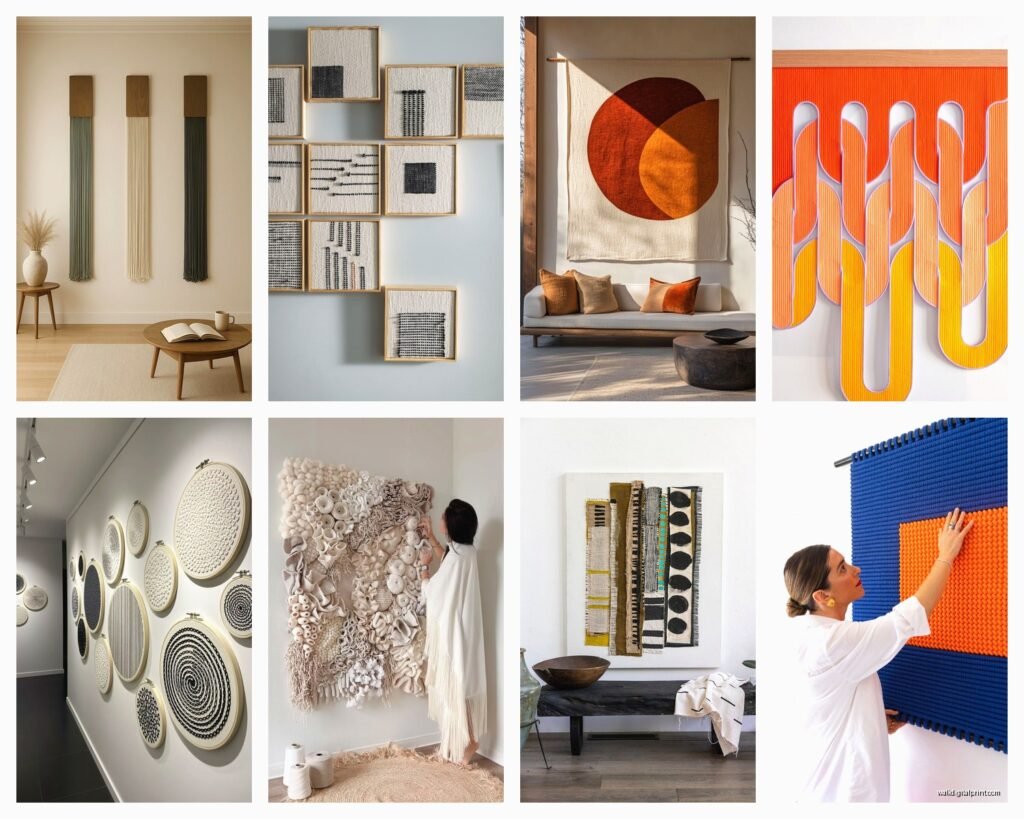
Textile Wall Art: Fabric & Fiber Art Techniques
Mar
So I’ve been diving deep into textile wall art lately because honestly, my living room needed something that wasn’t just another framed print, and let me tell you what actually works versus what looks good on Pinterest but is a total nightmare in reality.
Getting Started With Weaving (The Gateway Drug)
Okay so weaving is probably where most people start, and I did too. You don’t need some fancy floor loom—I started with a basic frame loom from a craft store, like $25, and it’s still what I use for smaller pieces. Here’s the thing though: tension matters SO much more than anyone tells you. I ruined my first three attempts because I didn’t keep the warp threads (those are the vertical ones you string up first) tight enough.
For the actual weaving, you’re gonna want a few different yarn weights. I keep worsted weight as my base, then add in some chunky roving wool for texture and thin cotton thread for detail work. The roving wool is kind of a pain because it can pull apart if you’re not gentle, but the texture it adds is *chef’s kiss*.
My favorite technique that I stumbled onto by accident—I was watching some cooking show and not paying attention—is the rya knot. You cut pieces of yarn about 4-6 inches long, fold them in half, loop them around a warp thread, and pull the ends through. Makes these amazing shaggy sections. Takes forever though, not gonna lie. I did a whole 2×3 foot piece with mostly rya knots and my hands were cramping for days.
Macramé Wall Hangings (Not Your Grandma’s Plant Hanger)
Wait I forgot to mention—before you even start with macramé, measure your space and add like 4x the length you think you need. I consistently underestimate cord length and it’s so annoying to run out halfway through.
The basic knots you actually need are just square knots and half-hitch knots. Everyone makes it seem complicated but those two will get you through 90% of designs. I learned both from YouTube videos while my cat kept attacking the cords, which was super helpful (sarcasm, but also the videos were good).
Square Knot Breakdown
You need four cords. The two middle ones stay still—they’re filler cords. Take the left outer cord, put it over the filler cords and under the right cord. Then the right cord goes under the filler cords and up through the loop on the left. That’s half a square knot. Do it again but starting from the right side this time. Sounds confusing written out but once you do it like three times, your hands just remember.
For wall art specifically, I like doing alternating square knots to create diamond patterns. You offset each row by one cord, so the knots stack in a diagonal way. Creates negative space that’s actually interesting to look at.
Materials That Don’t Suck
Cotton rope in 4mm or 5mm thickness is my go-to. The braided kind, not twisted, because twisted unravels and gets fuzzy. I buy it in bulk from this supplier I found online—way cheaper than craft stores. Also the craft store stuff is sometimes coated with something weird that makes your hands feel gross after a few hours.
Embroidery Hoop Art (Easier Than You Think)
This is gonna sound weird but embroidery hoop pieces are having a moment and they’re actually perfect for beginners. You stretch fabric in the hoop, add stitching or other textile elements, and boom—instant wall art.
I’ve been using a mix of traditional embroidery stitches and then attaching other stuff like felt cutouts, fabric scraps, even dried flowers sealed with mod podge. My favorite base fabric is linen because it has that natural texture but it’s tight enough to hold stitches well.
Stitches You Actually Need
- Back stitch for outlines and text—it’s just a continuous line
- Satin stitch for filling areas with solid color—you basically make parallel straight stitches really close together
- French knots for texture and dimension—wrap thread around your needle a few times then poke it back through near where you came up
- Lazy daisy for quick flower petals—it’s like a loop stitch that you tack down
The thing nobody tells you is that your stitches don’t have to be perfect. I spent years thinking embroidery had to be super precise, but for wall art? The irregular handmade quality is actually what makes it interesting. One of my clients specifically requested “messy stitching” for a piece in her daughter’s room.
Punch Needle Technique (My Current Obsession)
Oh and another thing—punch needle is like speed embroidery and it’s SO satisfying. You use this tool that looks like a chunky pen with a needle on the end, and you literally punch loops through fabric from the back. The front ends up looking like a textured rug.
You need monk’s cloth or another loosely woven fabric stretched super tight in a frame or gripper strips. I use an embroidery hoop for small pieces but anything bigger than 12 inches needs a proper frame. The fabric has to be taut or your loops won’t hold.
The punch needle itself comes in different sizes—I have a small one for detail work and a chunky one for filling large areas. You thread yarn through the hollow needle, adjust the length setting for how tall you want your loops, and just start punching. It’s repetitive in a meditative way, like I’ll do it while watching TV.
Common Punch Needle Mistakes
Not keeping the needle at the right angle—it should be perpendicular to the fabric. If you angle it weird, loops pull out.
Also, work in rows close together. I left too much space on my first project and you could see the backing fabric through the loops. Not cute.
And keep checking the front as you go because sometimes loops don’t catch properly and you’ll have bare spots you need to fill in.
Tufting (If You Wanna Get Fancy)
Tufting is basically industrial punch needle. You use an electric tufting gun that rapidly punches loops or cut pile into fabric. I rented one for a weekend to try it out because they’re like $200+ to buy, and okay so funny story—the noise scared my dog so badly she wouldn’t come in my studio for a week.
But the results are incredible. You can make actual rug-like wall hangings with really dense texture. The process is: stretch tufting cloth on a frame, draw your design on the back, tuft it following your lines, then glue the back to seal all the loops in place, add backing fabric, and trim the front to even out the pile.
It’s messy though. Yarn bits everywhere. I had little fiber pieces in my hair for days. Worth it for the final product but just be prepared.
Fabric Collage and Raw Edge Techniques
This is where I started getting experimental. You take different fabric pieces—I raid thrift stores for interesting textiles—and layer them on a canvas or backing board. You can sew them down, glue them, or use a combination.
Raw edge appliqué is my favorite method. You cut shapes from fabric, arrange them in a composition, then zigzag stitch around the edges with your sewing machine. The edges will fray a bit over time, which adds to the texture. Some people seal the edges with fray check but I like the organic frayed look.
I did a whole abstract landscape piece using this technique with different denim weights from old jeans. The variation in blue tones was perfect and I didn’t have to dye anything.
Composition Tips That Actually Help
Work in odd numbers—three main elements, five color groups, whatever. It’s more visually interesting than even numbers.
Layer light over dark or vice versa to create depth. All medium-value fabrics together look flat.
Add at least one unexpected texture. If everything is cotton, throw in some velvet or burlap or even a piece of plastic canvas.
Felting Techniques for Wall Art
Wet felting is kind of magical but also frustrating. You layer wool roving, add hot soapy water, and agitate it until the fibers lock together. For wall art, I do flat felting where you lay out your design on bubble wrap.
The process: lay down your base color of roving in thin layers perpendicular to each other, add your design elements on top, cover with tulle or a thin fabric, add hot soapy water, and then rub/roll/agitate for like 20-30 minutes until it’s felted. Your hands will get tired.
Needle felting is way less messy. You use a barbed needle to poke wool roving repeatedly, which tangles the fibers. Great for adding details to wet felted pieces or creating dimensional elements. I made these little textured clouds for a kids’ room piece by needle felting white roving into puffy shapes.
Mixed Media Textile Art
Wait I forgot to mention earlier—you can combine all these techniques in one piece and that’s honestly where it gets really interesting. My most popular piece (sold it to a hotel lobby, which was wild) combined weaving, embroidery, and fabric collage with some painted canvas sections.
The key is varying your textures. Smooth sections next to chunky sections. Tight weaving next to loose, open areas. Matte cotton next to shiny silk. Your eye needs places to rest and places to explore.
I also add non-textile elements sometimes. Driftwood as a hanging rod, copper wire woven through sections, beads, buttons, even paper if I seal it properly. There aren’t really rules as long as it’s secure enough to hang on a wall.
Finishing and Hanging Methods
Okay so you’ve made this textile piece, now what? For weavings, I usually attach a dowel rod at the top. You can weave it into the piece or sew a channel in the back. Add some leather cord or rope for hanging.
Embroidery hoops are self-hanging—just use the metal clasp at the top. Though I sometimes add a fabric backing to hide the messy back side, just hand stitch a circle of fabric over it.
For larger pieces or things on canvas, I use sawtooth hangers or D-rings depending on the weight. Anything over like 5 pounds needs two hanging points for stability.
This is gonna sound obvious but make sure everything is secure before you hang it. I’ve had pieces where I didn’t knot thread ends properly and they slowly unraveled on the wall. Super embarrassing when it’s in someone else’s home.
Maintenance and Care
Textile wall art gets dusty. I use a lint roller on flat pieces or a handheld vacuum on the lowest setting for chunky weavings. Some people say to take them outside and shake them but that seems like a lot of effort.
Keep them out of direct sunlight because colors will fade, especially natural dyes. I learned this the hard way with a piece that had this beautiful indigo section that turned kind of grayish after a year in a sunny window.
If something gets actually dirty, spot clean with mild soap and water. Don’t soak the whole piece unless you want it to potentially shrink or warp or do weird things. Natural fibers are unpredictable when wet.
Honestly the best part about textile wall art is that it’s so forgiving. Messed up a section? Call it intentional texture. Colors look weird together? It’s “eclectic.” Your stitches are wonky? “Handmade charm.” I’m being serious though—the imperfections are what make these pieces feel personal and worth looking at instead of just another mass-produced thing.


