Wall Art Guide, Wall Art Tutoriels
Unique Metal Wall Art: One-of-a-Kind Sculpture Designs
Mar
So I’ve been obsessing over metal wall art lately and honestly it started because a client wanted something “unique but not weird” for their living room which is like… the most vague brief ever, right? But anyway, I dove deep into this world and there’s actually SO much to know about choosing the right piece.
Understanding Different Metal Types and What They Actually Mean for Your Wall
Okay so first thing – not all metal is created equal and this matters way more than I thought. Steel is gonna be your most common option and it’s heavy, which sounds like a problem but actually means it stays put and feels substantial. I have this brushed steel piece in my hallway and it’s been there three years, hasn’t budged. The weight is reassuring somehow?
Aluminum is lighter and rust-resistant which is clutch if you’re thinking about outdoor spaces or like a bathroom situation. I learned this the hard way when I put a regular steel piece near my client’s pool house and within six months it had these orange streaks that no amount of scrubbing could fix.
Copper and brass are where things get interesting because they patina over time. Some people LOVE this aged look and actually buy pieces specifically because they’ll change color. Others hate it and want that shiny finish forever. You gotta decide which camp you’re in before dropping money on copper because there’s no going back really. I mean you can seal it but that’s a whole thing.
Finishes That Actually Matter
The finish is almost more important than the metal type tbh. Here’s what I’ve seen work in real spaces:
- Powder-coated pieces resist scratching and weather like nothing else – perfect if you have kids or pets
- Brushed finishes hide fingerprints and dust better than polished
- Raw/natural metal needs maintenance but has this organic quality that’s worth it for some people
- Painted metal can chip so check if they use automotive-grade paint because that stuff is practically indestructible
I spent like two hours last Tuesday comparing powder-coated vs painted finishes on tree sculptures (my dog kept interrupting because apparently that’s his barking-at-nothing hour) and the difference is noticeable when you see them side by side.
Size and Scale Without Making Expensive Mistakes
This is where everyone screws up including me on my first few projects. That gorgeous sculpture that looks perfect online? It might be 8 inches tall and cost $300 which feels ridiculous when it arrives and looks like a refrigerator magnet on your wall.
Rule I follow now: measure your wall space and aim for art that takes up about 60-75% of the available width. So if you have a 6-foot wide wall section, you want something around 4 feet wide. Sounds big but trust me, going smaller almost always looks like an afterthought.
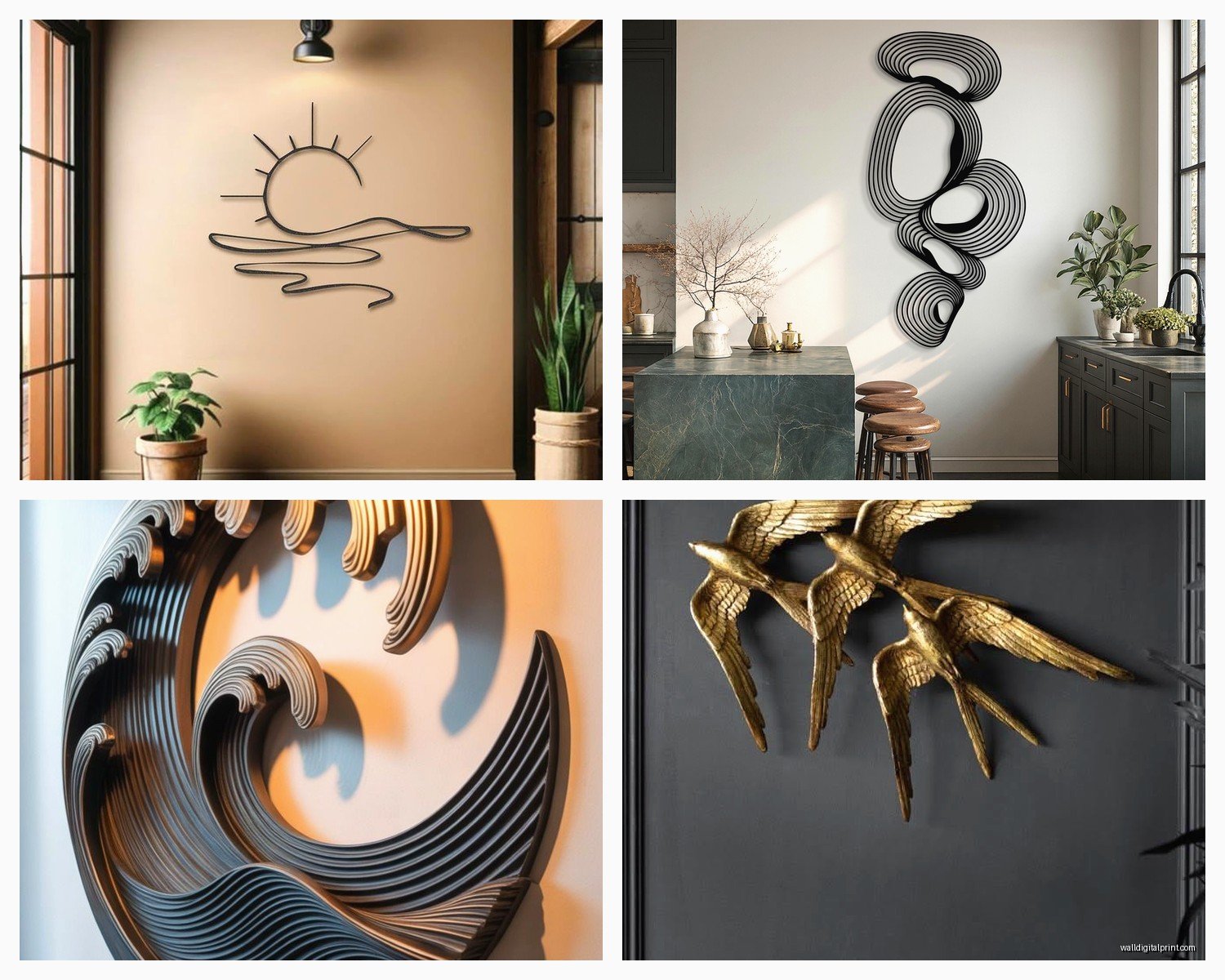
Also consider the depth – metal sculptures aren’t flat like paintings. Some pieces stick out 6-8 inches from the wall which creates amazing shadows and dimension but also means you can’t put furniture too close. I have a client who bought this incredible abstract wave piece and then couldn’t push their console table back where it was supposed to go. We made it work but it was annoying.
The Weight Problem Nobody Warns You About
Large metal pieces are HEAVY. Like shockingly heavy. That beautiful 4-foot steel tree I installed last month? Probably 40 pounds. You absolutely cannot use those little picture hanging strips or even regular drywall anchors.
Here’s what actually works:
- Find studs and use heavy-duty screws directly into them
- Toggle bolts rated for at least double the weight of your piece
- French cleats for really large installations – they distribute weight and make leveling easier
- Professional installation for anything over 50 pounds because insurance and also your walls
I tried to hang a 35-pound piece myself once using what I THOUGHT were good anchors and it fell at 2am and scared me so badly I couldn’t sleep the rest of the night. My cat didn’t come out from under the bed for hours. Not worth it.
Style Categories That Actually Help You Choose
Okay so the variety out there is overwhelming but I’ve started grouping things mentally and it helps:
Abstract Geometric – circles, lines, intersecting shapes. These work in modern spaces obviously but also surprisingly well in traditional rooms as contrast. I put a geometric copper piece in a client’s very traditional dining room and it made the whole space feel current without fighting the antique furniture.
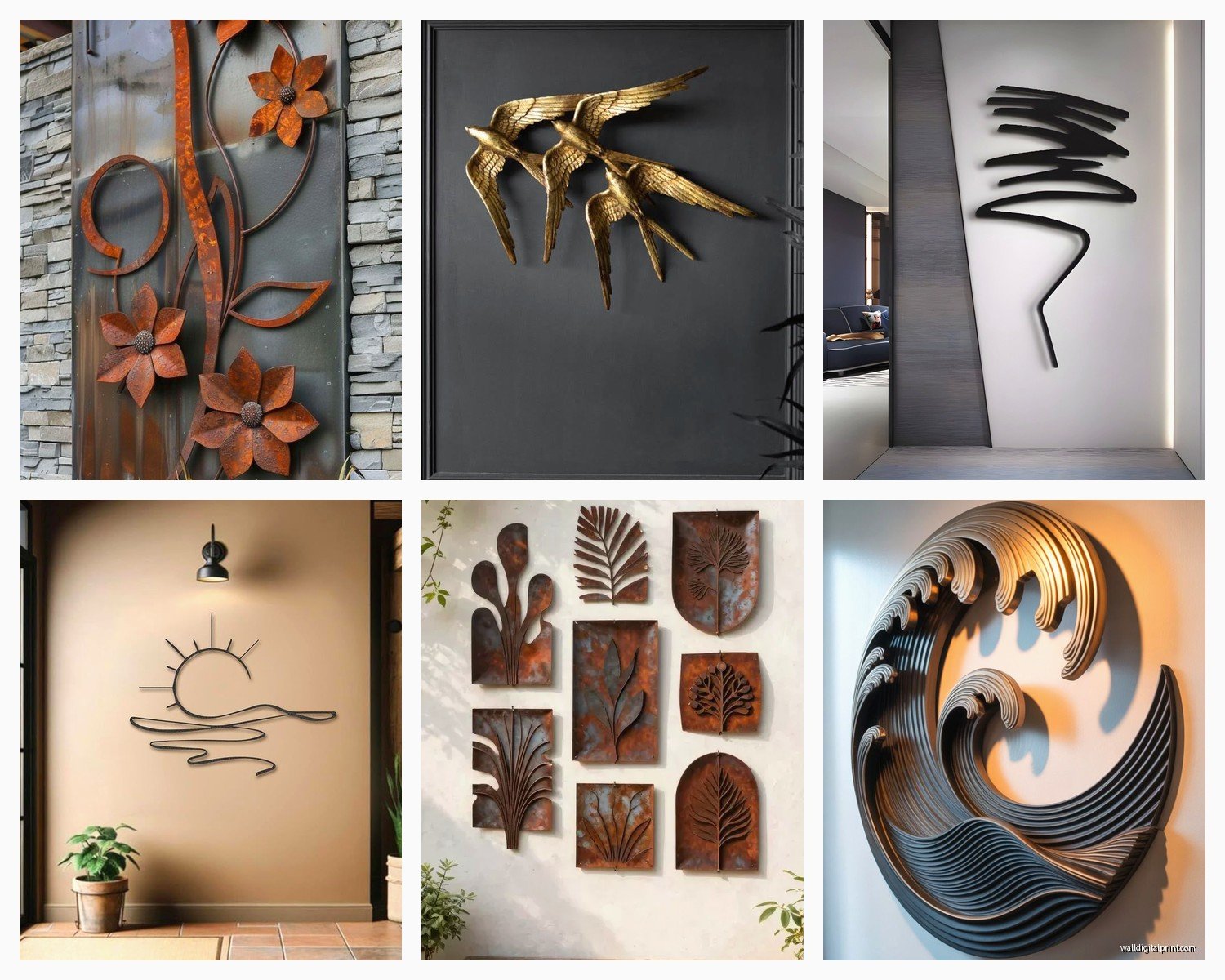
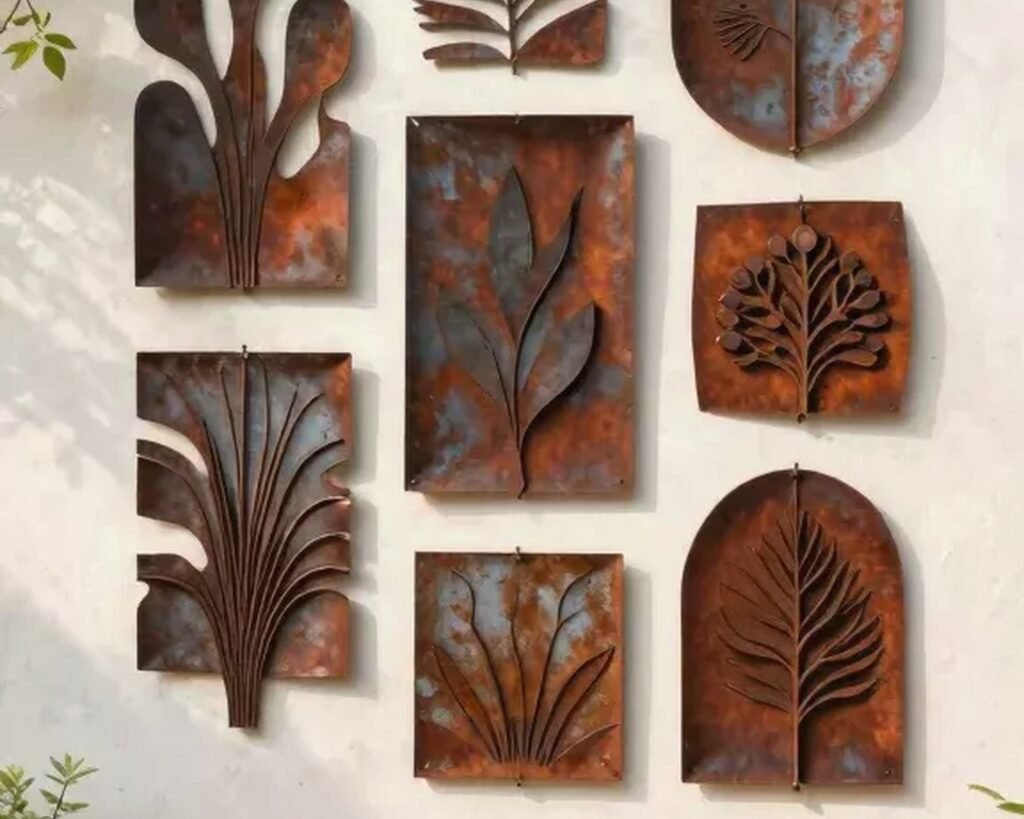
Nature-Inspired – trees, leaves, birds, ocean waves. This is the biggest category and quality varies WILDLY. You’ll find $50 tree silhouettes and $5000 handcrafted trees with individual leaves. The difference is in the detail and how the piece is constructed. Cheaper ones are often laser-cut from single sheets which is fine but they’re flat. Better ones have layered elements, hand-formed details, varying depths.
Industrial/Mechanical – gears, abstract machinery, urban themes. These need the right space. I love them in lofts, offices, man caves, modern basements. They look awkward in soft, feminine spaces usually.
Text and Typography – words, quotes, letters. Can be cheesy or cool depending on execution. Metal actually elevates text art in a way that wood or canvas doesn’t. Something about the material makes even simple words feel more substantial.
Finding Actually Unique Pieces vs Mass-Produced Stuff
So here’s the thing – lots of retailers sell the same pieces from the same overseas manufacturers. You’ll see the identical “modern circles” sculpture on fifteen different websites with different prices. Not necessarily bad but not unique either.
For truly one-of-a-kind work you gotta look at:
Individual Artists on Etsy – yeah it’s obvious but the search filters are your friend. Look for shops that show works-in-progress photos, have longer lead times (means they’re making to order), and have limited quantities. I found this sculptor in Oregon who does these insane layered mountain scenes and each one is slightly different because he hand-cuts everything.
Art Fairs and Craft Shows – especially outdoor shows in artsy towns. You can see the work in person, meet the artist, sometimes commission custom sizes or colors. I bought a piece at a show in Santa Fe that I still get compliments on years later.
Instagram and TikTok Artists – so many metal sculptors are showing their process online now. Search hashtags like metalart, steelart, sculptureartist. You can often DM them about commissions. Just make sure they’re actually the creator and not just a reseller.
Local Welders and Metal Shops – this sounds random but some welding shops do artistic work on the side or know artists who do. The guy who fixed my porch railing turned out to make incredible abstract wall pieces in his spare time and his prices were shockingly reasonable.
Red Flags When Shopping Online
After buying way too many pieces for clients and myself here’s what makes me scroll past:
- Stock photos only – if they don’t show the actual piece in real settings, suspicious
- No dimensions clearly listed – means they’re hiding that it’s tiny
- Shipping times over 8 weeks from US sellers – they’re probably dropshipping from overseas
- Perfect five-star reviews that all sound the same – fake reviews are everywhere
- No information about the artist or maker – mass produced for sure
Installation Tips From Someone Who’s Done This Too Many Times
Wait I forgot to mention earlier – before you even order, photograph your wall space with something for scale. Like hold up a piece of furniture or a yardstick. This helps you visualize size better than just measuring.
When your piece arrives, live with it leaning against the wall for a few days if possible. I know that sounds extra but positioning matters SO much and what looks right in your head might not work in reality. I’ve moved pieces 6 inches to the left and had it go from “meh” to “perfect.”
Lighting is everything – metal reflects and creates shadows. Try to install when you have natural light so you can see how it looks throughout the day. I have a piece that looks completely different in morning vs evening light and I actually love that about it but some people would hate it.
For multi-panel pieces (like those trendy sets of 3 or 5 pieces), use painter’s tape to mark positions before drilling. Measure the spacing between panels at least twice because uneven gaps will haunt you forever. I’m not being dramatic, you’ll notice it every single time you walk by.
Maintenance Real Talk
Metal art is pretty low maintenance compared to other stuff but it’s not zero maintenance. Dust with a microfiber cloth every few weeks. For outdoor pieces, I hose them down seasonally and check for rust spots.
If you have raw steel or iron, it will rust eventually unless you seal it. You can use clear coat spray but reapply yearly. Some people use car wax which sounds weird but works. Copper and brass can be polished if you want to maintain the shine or just let them do their thing.
Painted pieces might need touch-ups over time especially if they’re in high-traffic areas. Get a small paint sample from the artist if possible or at least note the exact color for future matching.
The Custom Commission Route
Okay so funny story – I never thought I’d commission custom art because it seemed intimidating and expensive but I did it last year for my own place and it was honestly the best art decision I’ve made.
Here’s how it actually works: You find an artist whose style you love, reach out with your idea and dimensions, they give you a quote and timeline. Most want 50% upfront. They’ll send progress photos. You give feedback. They finish it, you pay the rest, they ship it.
Cost-wise it’s not as insane as you’d think. I paid $800 for a 3-foot custom piece that’s exactly what I wanted vs spending $400-500 on something mass-produced that’s almost right. The math worked out for me.
The key is being clear about what you want but also trusting their artistic vision. I gave my artist a color palette, general vibe (organic, flowing, not too busy), and size requirements then let her run with it. If you’re too controlling it defeats the purpose of working with an artist.
Mixing Metal Art with Other Decor
You don’t need an all-metal wall or anything. Actually mixing materials looks more collected and intentional. I have metal art next to framed prints, woven textiles, wooden shelves. The contrast makes each piece stand out more.
Temperature matters though – if your space already has lots of metal fixtures, furniture, accessories, adding metal art can feel cold and industrial unless that’s your vibe. Balance it with soft textiles, wood elements, plants. My living room has a huge steel sculpture but also velvet curtains, a jute rug, and like fifteen plants which keeps it from feeling too hard-edged.
Color coordination isn’t as crucial with metal as with other art because metal reads as neutral even when it’s copper or brass. But consider whether you want it to blend or contrast with your wall color. Dark metal on dark walls creates this subtle sophisticated look. Light or colorful metal on dark walls pops dramatically.
Budget Ranges and What to Expect
So this varies a ton obviously but here’s roughly what I see:
Under $100 – small pieces, mass-produced, simple designs. Fine for starter art or spaces where you want something temporary. Quality is hit or miss.
$100-300 – better construction, more interesting designs, some handmade options. This is my sweet spot for most clients honestly because you get decent quality without huge commitment.
$300-800 – larger pieces, artist-made, unique designs. Expect better materials, more intricate work, pieces that feel substantial.
$800-2000+ – custom work, large installations, established artists. Investment pieces that should last decades and might appreciate in value if the artist becomes known.
I’ve bought across all these ranges and honestly some of my favorite pieces were under $200. Price doesn’t always equal impact but it usually equals durability and craftsmanship.
Specific Pieces Worth Considering
I’m gonna mention a few types that I’ve seen work consistently well:
Layered mountain ranges – these have depth and look different from every angle. Work in basically any style home from modern to rustic.
Abstract faces or figures – add personality without being too literal. The metal medium makes them feel contemporary even if the subject is traditional.
Geometric mandalas – circular pieces that work over beds, in dining rooms, anywhere you need a focal point. The symmetry is satisfying.
Tree of life variations – I know these are everywhere but there’s a reason. They’re meaningful to lots of people and the metal versions have this permanence that fits the symbolism.
Honestly I’m running out of specific things to say and my coffee’s gone cold but the main point is just… see the actual piece or at least really detailed photos before buying, consider your wall and lighting situation, don’t cheap out on installation hardware, and buy what you actually love not what you think you should have. Metal art is having such a moment right now that there’s something for literally every taste and budget you just gotta look around a bit.