Wall Art Guide, Wall Art Tutoriels
8×10 Wall Art: Small Standard Frame Size Gallery

May
So I’ve been working with 8×10 frames for like… forever at this point, and honestly they’re probably the most underrated size for wall art. Everyone gets obsessed with these massive statement pieces but 8x10s are where it’s at for actually creating something interesting without committing to drilling a million holes in your wall.
Why 8×10 Actually Works Better Than You Think
Okay so here’s the thing – 8×10 is small enough that you can buy like 6 frames without your partner giving you that look, you know the one. But it’s also big enough that you can actually see what’s in the frame from across the room. I had this client last month who wanted to do a gallery wall in her hallway and we went with all 8x10s, probably 15 of them total, and it looks way more expensive than the $200 she spent on frames.
The standard frame size thing is huge too because you can literally walk into Target or IKEA at 9pm on a Tuesday and grab matching frames. No waiting for custom sizing, no weird measurements. My dog knocked over a frame last week and shattered it, took me 20 minutes to replace it at the drugstore down the street.
Where to Actually Put These Things
Living room gallery walls are the obvious choice but honestly I’m more excited about the weird spaces. That narrow wall between two windows that’s like 24 inches wide? Perfect for a vertical stack of three 8x10s. The space above your light switch that feels too small for real art? Two 8x10s side by side.
Hallways are secretly the best spot – you’ve got this long narrow space that feels awkward with one big piece but becomes this cool gallery moment with 8x10s running down the length. I did my own hallway with 12 frames, all black and white photos, and every single person who comes over comments on it.
Bedrooms work too but here’s what I learned the hard way… don’t put them directly over your bed unless you’re using those 3M strips or really good anchors. Had a frame fall on my head at 3am once and that was not a fun trip to urgent care. Now I do bedroom 8x10s on the wall perpendicular to the bed, creates a nice focal point when you walk in.
The Kitchen Wall Nobody Talks About
That weird space between your kitchen cabinets and the ceiling if you’ve got like 18+ inches? Stack some 8x10s up there. Sounds insane but I saw it on some design account and tried it in my kitchen with vintage food ads and it’s actually really cool. You need a small ladder to hang them which is annoying but once they’re up, they’re up.
Layout Options That Don’t Look Basic
Grid layouts are fine but they’re also what everyone does so let me give you some other options. The organic salon style is where you just kinda arrange them in a loose cluster – some vertical, some horizontal, spacing isn’t perfectly even. This looks really good with all different frame styles and art types mixed together.
I’m currently obsessed with the straight line approach though. Like, 5 frames in a perfect horizontal line. Super simple but it looks intentional and modern. Did this above a console table last week with botanical prints and it took 30 minutes start to finish.
The step pattern is another good one – start with one frame, then two next to it slightly lower, then three, creating this diagonal cascade effect. Works great on staircases or next to tall furniture.
Oh and another thing, the symmetrical pairs approach where you do matching sets on either side of something. Like two 8x10s flanking your TV, or four total (two on each side) of a doorway. Very classic, hard to mess up.
Spacing Rules That Actually Matter
Everyone’s gonna tell you 2-3 inches between frames and yeah, that’s the standard. But I’ve done 1 inch spacing when I want things to feel more connected and cohesive, like they’re one unit. And I’ve done 4-5 inches when I want each piece to breathe on its own.
The more important measurement is the height from the floor. Center of the frame should be around 57-60 inches from the floor, which is average eye level. But in hallways I go slightly lower, like 54 inches, because you’re usually walking past them and looking slightly down.
Measuring Without Losing Your Mind
Here’s my actual process that saves so much time – I cut out 8×10 rectangles from craft paper or newspaper and tape them to the wall first. You can move them around, step back, take photos, live with it for a day. Way better than putting 20 holes in your wall and then hating it.
My cat keeps trying to attack the paper rectangles when I do this which is annoying but also hilarious. Last time she managed to tear down three of them overnight.
For the actual hanging, I use a laser level now. Changed my life. They’re like $25 on Amazon and you just put it on the wall and it shows you a perfectly straight line. No more measuring from the ceiling that turns out to not be level.
Frame Styles and When to Use What
Black frames are my default because they work with literally everything and you can find them everywhere. IKEA’s RIBBA frame in black is like $7 and honestly it’s fine for most applications. Not gonna win design awards but gets the job done.
White frames feel more casual and cottage-y. I use them for lighter, airier spaces or when the art itself is really colorful and needs a neutral border. They also photograph really well which matters if you’re posting this stuff online.
Wood frames in natural finish are having a moment right now and I’m here for it. They add warmth without being too rustic. Mix them with black frames for a collected-over-time look that feels less matchy-matchy.
The thin metal frames in gold or brass are good for a more elevated look but they’re harder to find in 8×10 specifically. West Elm has some but they’re pricey. Target sometimes gets them in though.
What to Actually Put in the Frames
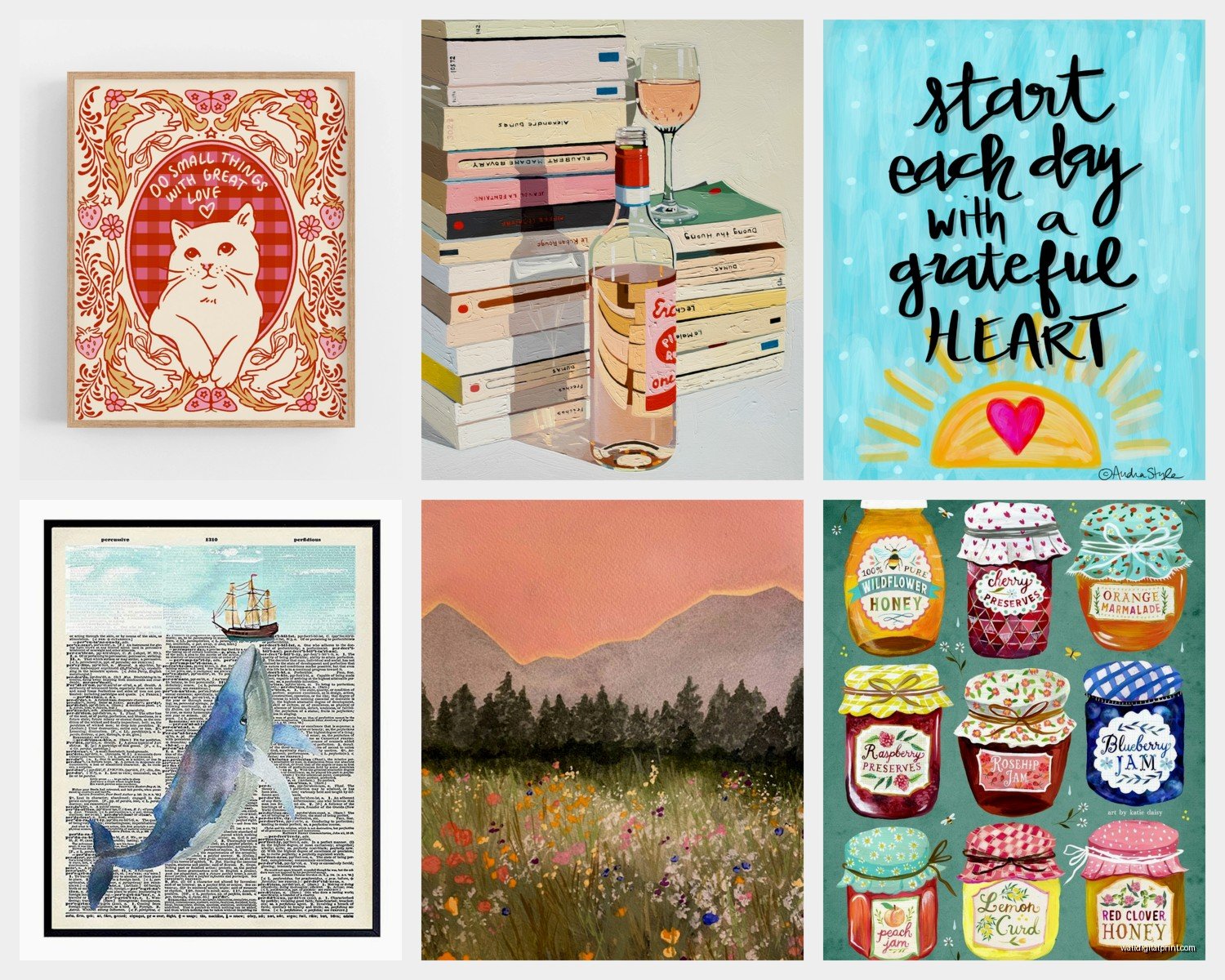
This is where people get stuck and honestly just pick stuff you like, it doesn’t have to be profound. I’ve framed fabric swatches, pages from old books, my kid’s artwork, photos obviously, printable art from Etsy, postcards from trips, pressed flowers.
Free printable art is everywhere online and a lot of it is actually good now. Search “8×10 printable art” and you’ll find thousands of options. I keep a folder on my desktop and just print new stuff when I get bored. Costs like 50 cents at Staples.
Museum websites have free downloadable art too – the Met, Rijksmuseum, Smithsonian. You can get famous paintings and prints in high resolution. I did a whole series of botanical illustrations from the New York Public Library archive for a client’s dining room.
Photos from your phone work great but please get them printed properly, not at the drugstore on regular paper. I use Nations Photo Lab or Mpix and the quality difference is huge. Spend the extra $3 per print.
Mixing Different Types of Art
This is gonna sound weird but some of my favorite gallery walls have completely random stuff – a watercolor next to a black and white photo next to a graphic print next to sheet music. As long as the frames tie it together, the content can be all over the place.
What makes it work is usually having some kind of subtle connection… all the same color palette, or all nature-themed, or all vertical compositions. Something that creates cohesion without being obvious about it.
The Actual Hanging Process
Okay so you’ve got your frames, your art, your layout planned. Here’s how to not mess it up. Start with the middle frame or the center of your arrangement and work outward. That way if your measurements get slightly off, it’s distributed evenly instead of everything sliding to one side.
Use proper wall anchors if you’re not hitting a stud. The little plastic ones that come with frames are garbage for drywall. Get the self-drilling drywall anchors or toggle bolts. Each 8×10 frame weighs maybe a pound but better safe than sorry.
For multiples in a row, I tape a long piece of painter’s tape on the wall at the right height and mark where each nail goes along the tape. Then I can level the tape and know all my marks are straight. Remove tape, hammer nails where the marks are. Done.
Picture hanging strips are actually really good now for lightweight frames. The 3M Command ones hold up to 16 pounds per set and they don’t damage walls. I use them in rentals or anywhere I might want to change things up. They do leave a slight residue sometimes but it wipes off.
Common Mistakes I See All the Time
Hanging everything too high is probably the biggest one. People put frames up near the ceiling for some reason and then you get a sore neck looking at them. Remember that 57-60 inch center height rule.
Using all the same exact art in every frame makes it look like a hotel. Even if you love those matching botanical prints, switch up maybe one or two frames with something different. Or use different mat colors.
Not considering the furniture below is another thing. Your gallery wall should relate to what’s underneath it – couch, console table, bed, whatever. The art should be roughly 2/3 the width of the furniture piece. So above a 60-inch couch, your gallery wall should be around 40 inches wide total.
Mixing too many frame styles gets chaotic fast. I usually stick to 2, maybe 3 different frame types max. Like black and natural wood, or white and gold, or all black but different thicknesses.
Budget Breakdown
You can do a really nice 8×10 gallery wall for pretty cheap if you’re strategic. IKEA RIBBA frames are $7 each, so 8 frames is $56. Print your own art at Staples for like $5 total. You’re at $61 for an 8-frame gallery wall. That’s honestly impressive.
If you wanna upgrade, Target’s frames are around $15-20 and look slightly nicer. Framebridge and Artifact Uprising are beautiful but expensive, like $40-60 per frame. Worth it if you’re framing something really special though.
wait I forgot to mention – thrift stores and estate sales are gold mines for frames. You can find vintage frames for a few bucks, spray paint them all the same color, and have this really cool custom look for cheap. Takes more time but the result is worth it.
Changing Things Out
The beauty of 8x10s is you can swap the art seasonally without it being a huge production. I change mine every few months when I get bored. Keep a bin of extra prints and just rotate them through. Takes like 20 minutes to refresh an entire wall.
Some people do holiday-specific swaps which feels like a lot of work to me personally but if you’re into that, 8×10 makes it doable. Spring florals, fall leaves, winter landscapes, whatever.
Honestly the hardest part is just starting. Once you get a few frames up you’ll realize how easy it is and you’ll start seeing spots everywhere. That weird corner in your office? 8×10. The bathroom wall that’s just… blank? 8×10. The landing on your stairs? You know what I’m gonna say.
Just start with three frames in a row and see how you feel. You can always add more later or rearrange. Nothing’s permanent unless you want it to be, and that’s kinda the whole point.