Wall Art Guide, Wall Art Tutoriels
Cement Wall Art: Concrete Industrial Decor
Mar
So I’ve been messing around with cement wall art for the past like three years and honestly it’s one of those things that sounds way more intimidating than it actually is. Like when my client first asked me to do a concrete feature wall in their loft I was like “um are we sure about this” but now I literally cannot stop making cement pieces for basically everyone.
The Basics You Actually Need
Okay so first thing – you don’t need fancy cement. I know there’s like a million types at Home Depot and it’s overwhelming but here’s what I actually use. Regular Portland cement works fine for most wall art pieces. The gray stuff. But if you want something lighter or more interesting texture-wise, I grab Rapid Set Cement All because it dries faster and I’m impatient. There’s also white cement which is gorgeous but costs more and honestly unless you’re doing something really specific just stick with gray and paint over it if needed.
You’re gonna need:
- Portland cement or quick-set cement
- Mixing bucket (the cheap plastic ones are fine)
- Mixing stick or old drill with paddle attachment
- Molds or forms (more on this in a sec because this is where it gets fun)
- Release agent or cooking spray – yes really
- Sandpaper various grits
- Sealer eventually
The mixing ratio is usually on the bag but I do like 3 parts cement to 1 part water, sometimes less water because runny cement is annoying to work with. You want it like thick brownie batter consistency? That’s what I tell people even though it sounds weird.
Mold Situations That Actually Work
This is gonna sound random but the best molds I’ve found are not from craft stores. Like yes you can buy silicone molds on Amazon and some are great but also I’ve made incredible pieces using:
- Cardboard boxes lined with plastic sheeting
- Foam board cut into geometric shapes
- Old picture frames as borders
- Plastic containers from literally anything
- Silicone baking molds especially the big ones
My favorite cement wall piece in my own apartment came from a rectangular silicone cake pan from Target. Cost like $8. I poured cement about 2 inches thick, let it set for like 24 hours, popped it out and mounted it. Everyone asks where I bought it and I’m like… baking section?
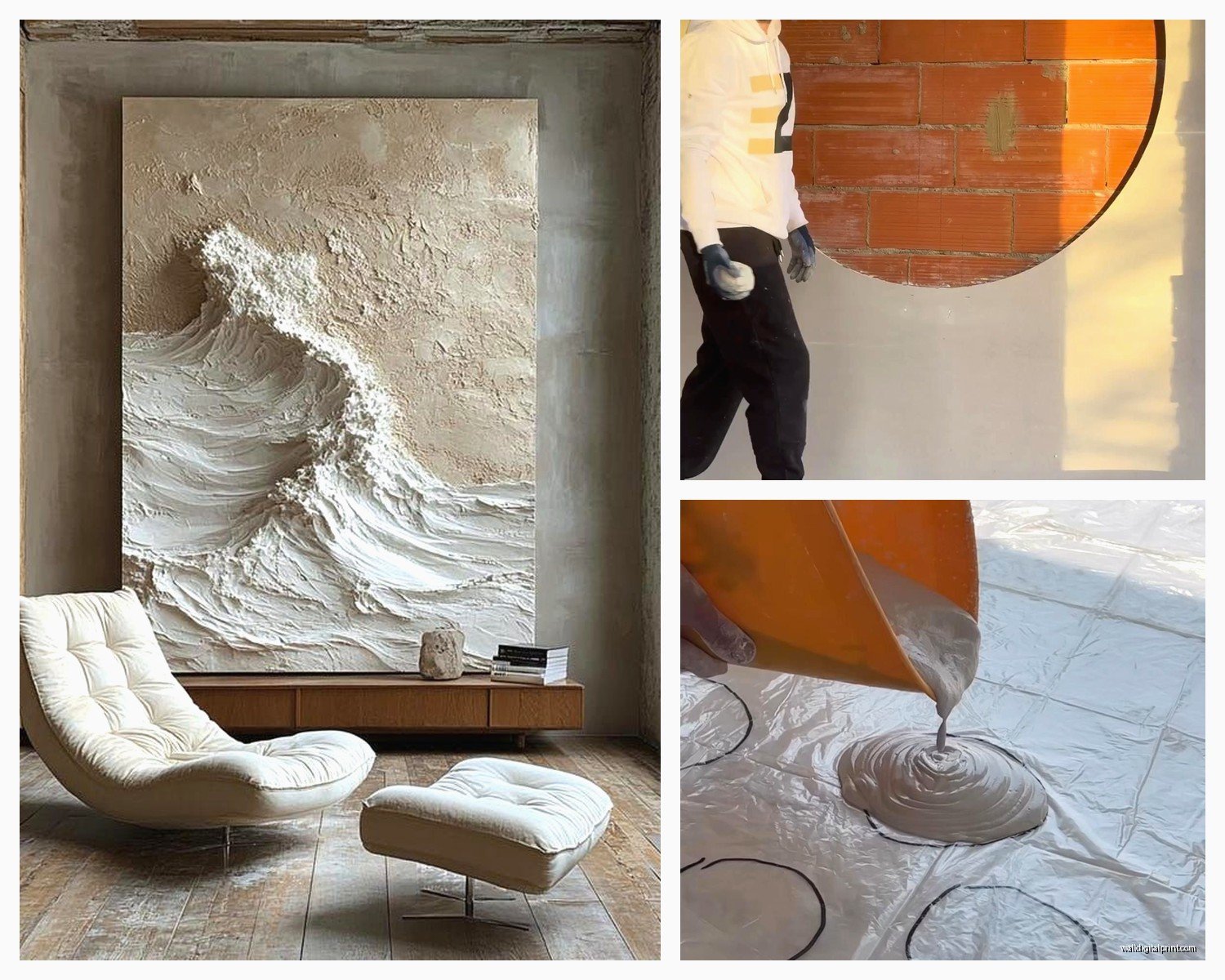
For texture you can press stuff into the wet cement. Leaves work amazing. Lace fabric creates insane patterns. I once used bubble wrap and it looked so cool and industrial. My cat walked through one piece while it was setting and honestly the paw prints added character so I kept them.
Making Panel Art
The easiest cement wall art is just making rectangular or square panels. Build a form using wood strips or foam board – tape it together real good because cement will find any gap and leak everywhere trust me. Line it with plastic sheeting or spray with cooking spray so it releases easier.
Pour your cement mixture, tap the sides to get air bubbles out. This part matters more than you’d think because air pockets look bad unless you’re going for that look which sometimes I am honestly. Let it cure for at least 24-48 hours depending on thickness. Thicker pieces need longer.
Once it’s demolded you’ll probably have rough edges. This is where sandpaper comes in. I usually start with 80 grit to knock down really rough spots then move to 150 or 220 for smoothing. Wear a mask for this part because cement dust is not something you wanna breathe.
Mounting These Things Without Destroying Your Wall
Okay so cement is heavy. Like really heavy. A 12×12 inch panel that’s 1 inch thick weighs several pounds easily. You cannot use command strips I don’t care what the package says.
What actually works:
- Heavy duty picture hanging hardware rated for the weight
- French cleats if you’re doing bigger pieces
- Construction adhesive like Liquid Nails if you’re 100% sure about placement
- Z-bar hangers for really heavy stuff
I usually embed D-rings or wire into the back of the cement while it’s still wet. Like push them in about halfway through the curing process when it’s firm but not totally hard yet. Then you can hang it like a regular heavy picture.
For bigger installation pieces I’ve done French cleats which are those angled mounting systems. One piece screws into the wall studs, the matching piece is attached to the cement art, and they lock together. Super secure and you can remove them if needed.
Design Ideas That Don’t Look Basic
Plain cement rectangles are cool but here’s where you can get interesting without being too extra about it:
Layered pieces: Make several panels in different sizes and mount them with spacers so they float off the wall at different depths. Creates awesome shadows especially with the right lighting.
Embedded objects: While the cement is wet you can push in metal pieces, wood, stones, whatever. I did one with brass hexagons pushed into the surface and it looked so expensive but cost maybe $30 total.
Pigmented cement: Add concrete pigment or even acrylic paint to the mix before pouring. Black cement looks incredible. I’ve also done rust-colored pieces that people assume are metal.
Carved or stamped: Once it’s partially set you can carve designs into it. Or stamp patterns using literally anything – the end of a dowel rod, clay stamps, whatever you have.
Wait I forgot to mention – you can also do the opposite and create raised designs by putting stuff in the bottom of your mold before pouring. Rope, wood strips, whatever. When you demold it those become raised elements on the front.
Finishing and Sealing
Raw cement is porous and will absorb stains and moisture so you gotta seal it. I use either a penetrating concrete sealer or sometimes just matte polyurethane depending on the look I want. The penetrating sealers keep that raw concrete look. Polyurethane adds a slight sheen but protects better.
Some people like to wax cement art pieces. Gives them this subtle sheen that’s really nice. I use paste wax sometimes, just rub it on and buff it out.
If you want color you can paint cement with basically anything but I like using concrete stains because they soak in rather than sitting on top. Or leave it raw gray which honestly is my favorite look for industrial decor.
Three-Dimensional Cement Art
Okay so panels are great but you can also make sculptural pieces. Letters are super popular right now. Make a form by cutting the letter shape from foam board, create sides with more foam board or cardboard, tape it all together and line with plastic. Pour cement.
I made a set of 8-inch tall cement letters that spell SHOP for a retail client and they look amazing mounted on their brick wall. Each letter took like 45 minutes to make not counting curing time.
You can also do:
- Geometric shapes like hexagons or triangles in various sizes
- Abstract sculptural pieces using weird molds
- Planters that also function as wall art if you mount them right
- Cement “tiles” with different textures that you arrange in patterns
Dealing With Problems Because They Happen
Your cement is gonna crack sometimes. Just accept it. Hairline cracks are actually kinda cool and add to the industrial vibe. Big cracks are a problem though and usually mean it dried too fast or the mix was wrong.
If you get air holes you don’t like, you can fill them with more cement mixture while it’s wet or use cement patching compound after. Sometimes I fill holes with colored epoxy resin which looks really cool actually – like concrete with sparkly inclusions.
Edges chipping is common. Either sand them smooth or embrace the distressed look. I’ve started intentionally chipping edges on some pieces because it looks more authentic and less like you’re trying too hard.
The Industrial Styling Part
So you’ve made cement art, now what? The industrial decor vibe works best when you’re not overdoing it. Like one or two cement pieces max per wall situation.
Pair cement with:
- Raw wood – weathered or reclaimed looks best
- Metal accents especially black iron or brass
- Edison bulbs or industrial lighting
- Exposed brick obviously
- Minimal furniture with clean lines
I did this office space last month where we mounted three cement panels in different sizes on a white wall with black metal shelving brackets between them. Added some greenery in simple pots and the whole thing looked like it cost thousands but we made those panels for maybe $40 total in materials.
The trick with industrial decor is balance. Too much concrete and metal and it feels cold. You need warmth somewhere – wood tones, textiles, plants, whatever. I always add at least one soft element to spaces with cement art.
Quick Project Ideas To Try First
If you’re just starting out don’t go crazy. Try these:
Simple coaster set: Small silicone molds, pour cement, add cork backing. You’ll learn the basics without committing to wall mounting anything.
Small panel with texture: Make one 8×8 inch panel, press leaves or lace into it, seal it, mount it. See if you like the process.
Letter or number: Form one character, paint it or leave it raw, lean it on a shelf. No mounting required to test the vibe.
Once you’re comfortable then go for bigger wall installations. I made like 30 coasters before I attempted my first large wall piece and honestly I’m glad I practiced because cement is unforgiving once it’s set.
Oh and another thing – temperature matters. Don’t work with cement when it’s super cold because it won’t cure right. I learned this the hard way when I tried making pieces in my garage in January and they stayed soft for like a week. Room temperature or warmer is best.
The whole cement wall art thing really isn’t as complicated as it seems once you just start doing it. Yeah you’ll mess up some pieces. I still do. But that’s part of the process and honestly half the time the mistakes end up looking better than what you planned anyway.