Wall Art Guide, Wall Art Tutoriels
Coastal Outdoor Wall Art: Weather-Resistant Beach Decor
Apr
So I’ve been testing outdoor coastal wall art for like three years now because my deck faces the ocean and honestly, most of it just… falls apart. Let me tell you what actually survives out there.
Materials That Actually Work
Okay so the biggest thing is you cannot just slap regular art outside and hope for the best. I learned this the hard way with this gorgeous driftwood piece that literally disintegrated after one summer. Now I only mess with specific materials.
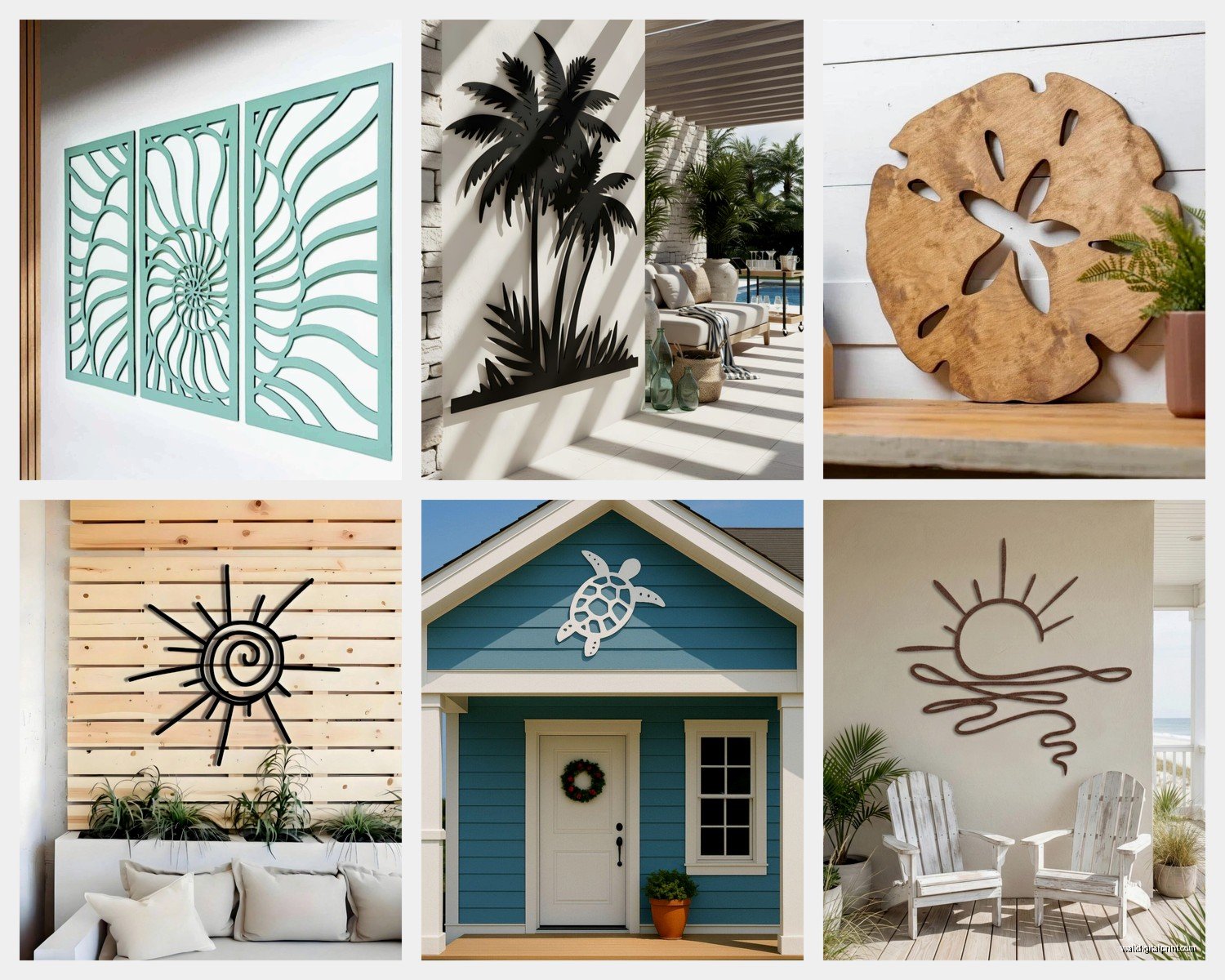
Powder-coated aluminum is like, hands down the winner. It’s this metal that’s been treated with this coating process that makes it practically indestructible. I have this metal sea turtle from a company called Dolphin Bay that’s been on my wall for two years through hurricanes and it still looks new. The powder coating seals everything so salt air can’t corrode it.
Marine-grade stainless steel is your other solid option but it’s gonna cost you more. Think like yacht hardware level stuff. I used some stainless steel wave sculptures for a client in Charleston and they’re still perfect after sitting in 100% humidity and salt spray. Worth it if you’re literally ON the beach though.
Treated teak or ipe wood can work but you gotta maintain it. I seal mine with marine varnish every spring which is annoying but whatever. The cheap pine stuff with beach sayings painted on it? That’ll last maybe six months before it warps and the paint peels. Don’t waste your money.
Stuff That Seems Like It Would Work But Doesn’t
Resin art is tricky. Some of it’s fine, some of it yellows in the sun or cracks when temperatures fluctuate. I had this resin ocean wave thing that looked amazing for like four months then started getting this gross cloudy film. You need UV-resistant resin specifically and even then it’s a gamble.
Ceramic tiles can be beautiful but the grout is your enemy. Water gets in there, freezes if you’re anywhere that gets cold, and the whole thing can crack. I’ve seen it work when people use epoxy grout instead of regular grout but that’s extra work.
What To Look For When Shopping
Oh and another thing, the product description should specifically say “outdoor rated” or “weather-resistant.” If it just says “suitable for covered porch” that means it can’t handle direct rain or sun. I see this mistake constantly.
Check the hanging hardware too. You need stainless steel or coated brackets. Regular screws will rust and leave gross orange streaks down your wall. I use these marine-grade D-rings from West Marine for everything now.
The finish matters SO much. Matte finishes hide salt residue better than glossy ones. My glossy pieces show every single water spot and I’m out there wiping them down constantly like a weirdo. My neighbor probably thinks I’m obsessed.
Size and Placement Strategy
So here’s what I figured out about sizing… your outdoor art needs to be bigger than you think. What looks substantial inside looks tiny outside because you’re competing with like, the actual ocean and sky. I go at least 24 inches wide minimum, usually bigger.
Wind is a thing nobody talks about. Anything with a lot of surface area becomes a sail. I mounted this big metal sailfish once and didn’t secure it properly and it literally ripped out of the wall during a storm. Super fun. Now I use multiple anchor points and toggle bolts rated for way more weight than the piece actually is.
For placement, avoid spots where water pools or drips constantly. Under an overhang is great but not right where rain pours off the gutter, you know? I learned this when my cat knocked over a plant and I noticed how water was just streaming down one section of wall.
Specific Products I Actually Own
Wait I forgot to mention the brand Nautical Waves makes these amazing powder-coated metal compass designs. I have the 36-inch one in navy blue and it’s survived three years of direct sun and salt. It was like $180 which felt like a lot but considering I’ve replaced cheaper stuff multiple times, it’s actually saved me money.
There’s this company called Coastal Crafters that does reclaimed wood pieces but they pre-treat everything with like five coats of spar urethane. Their stuff actually lasts. I have their “Beach Rules” sign which is kinda cheesy but my kids love it and it’s held up for two years.
The Unexpected Winners
Okay this is gonna sound weird but decorative boat oars and paddles make awesome wall art and they’re literally designed to be in water. You can find vintage ones on Etsy or new ones from marine supply stores. I mounted three old paddles in a fan pattern and they look amazing. Just make sure they’re actually wood and not foam replicas.
Metal lobster trap buoys are another thing that works great. They’re designed for ocean submersion so obviously they handle wall mounting fine. You can get authentic old ones or new decorative versions.
Ship cleats and nautical hardware mounted on painted wood boards create this cool dimensional look. I made one for like $40 in materials and it’s one of my favorite pieces. The hardware is all brass or stainless so it doesn’t corrode.
DIY Options That Don’t Suck
If you’re crafty you can make stuff that actually lasts. I use these marine plywood boards from Home Depot, seal them front and back and edges with exterior primer, then do whatever design with outdoor acrylic paint, then seal again with multiple coats of spar urethane. It’s tedious but it works.
For a shortcut, those foam PVC boards like Azek or similar are basically waterproof. You can paint them, cut them into shapes, whatever. They’re what contractors use for exterior trim so they’re made for weather. A bit plasticky looking up close but from a few feet away they’re fine.
The Rope Situation
Natural rope looks beachy and cool but it mildews and falls apart. Synthetic marine rope from a boating store looks almost identical and lasts forever. I use it for hanging stuff or creating rope borders around frames. The 3/8 inch manila-looking poly rope from Ace Hardware is like $12 for 50 feet and works great.
Maintenance Real Talk
Nothing is truly zero maintenance outside. Even the best stuff needs occasional cleaning. I hose everything down once a month during summer, more if we get a storm that kicks up a lot of salt spray. For metal pieces I sometimes wipe them with a damp cloth if they’re looking hazy.
Wood pieces need the most attention. I re-seal mine every spring with Helmsman Spar Urethane. Takes maybe an hour for all my pieces. If you skip this step the wood will eventually crack and weather. Some people like that driftwood look but I think it just looks neglected.
Check your mounting hardware every few months especially if you’re in a hurricane zone. I had a piece that looked totally secure but one of the anchors had worked loose and I only noticed when I was cleaning. Could’ve fallen and hit someone.
Color Choices That Last
So funny story, I painted this whole mural in these beautiful soft pastels and they faded to basically white in one summer. UV rays are brutal. Now I stick with either really saturated colors that can afford to fade a bit, or I just embrace neutrals.
Blues and greens actually hold up pretty well outside. Reds and yellows are the worst for fading. Turquoise is perfect for coastal stuff and it’s one of the more stable colors in sunlight.
If you’re buying painted pieces, ask if they used exterior paint or automotive paint. Regular acrylic craft paint will fade super fast. I’ve had good luck with pieces that used Rustoleum spray paint actually, their colors seem pretty stable.
Where to Actually Buy This Stuff
Okay so West Elm has some outdoor art but it’s overpriced for what you get. Wayfair has tons of options but read the reviews carefully because their quality is all over the place. I’ve gotten great stuff and absolute garbage from them.
Etsy is honestly my favorite because you can message sellers and ask specific questions about materials and finishes. I’ve found some amazing custom pieces there. Just search for “outdoor coastal metal art” or “marine grade wall decor” and you’ll find actual craftspeople who know what they’re doing.
Local marine supply stores sometimes have decorative stuff and it’s all gonna be weather-appropriate by default. I found this gorgeous ship wheel at a West Marine that’s held up perfectly.
Oh and estate sales near coastal areas often have vintage nautical stuff that’s already proven it can survive. I got this old brass porthole for $20 that’s probably 50 years old and still looks amazing.
The Frame Problem
If you want to frame prints or photos for outside, this gets complicated. Regular frames just don’t work. You need either all-metal frames with sealed backs or these specialty outdoor frames that are basically weatherproof boxes.
I’ve had better luck just doing prints on aluminum or dibond. Companies like BayPhoto will print your image directly onto metal with a UV-resistant coating. It’s pricey but it actually works outdoors. I have some family beach photos done this way and they’ve been outside for a year with no issues.
Canvas prints don’t work outside even if they claim to be outdoor rated. The canvas itself might be treated but it still absorbs moisture and eventually mildews. I tried it, it was gross.
Lighting Considerations
This might be obvious but if you’re gonna light your outdoor art, use outdoor-rated fixtures. I see people using regular spotlights and they corrode so fast. Solar lights are hit or miss, the cheap ones barely put out any light.
I use these low-voltage LED outdoor lights from Kichler and they’re been great. They highlight my metal pieces really nicely at night without being too bright.
Hurricane Prep If That’s Your Life
Living on the coast means sometimes you gotta take stuff down before storms. I have some pieces permanently mounted that I trust to survive, and some lighter things I bring inside when there’s a warning. It’s annoying but better than finding your favorite piece in the neighbor’s yard.
The permanently mounted stuff is attached with lag bolts into studs. Everything else uses heavy-duty picture hangers that I can remove quickly. I keep a little diagram on my phone showing which pieces need to come down and where they go in storage.
What’s Actually Worth the Money
Honestly, buy the best quality you can afford because replacing cheap stuff every year costs more in the long run. I spent $300 on this metal octopus sculpture three years ago and it still looks perfect. I’ve replaced probably five cheaper pieces in that same time that cost $50-75 each.
For stuff you might want to change seasonally or if you’re renting, go cheaper and plan to replace it. But if you’re gonna live somewhere long-term, invest in quality pieces that’ll last.
The sweet spot seems to be around $150-250 for a good-sized piece of metal wall art that’ll actually survive. Wood pieces that are properly treated run $100-200. Anything significantly cheaper is probably gonna disappoint you.
Just start with one or two quality pieces rather than filling your whole wall with cheap stuff. You can always add more later but there’s nothing sadder than a wall full of faded, peeling, rusty art that you gotta replace.