Wall Art Guide, Wall Art Tutoriels
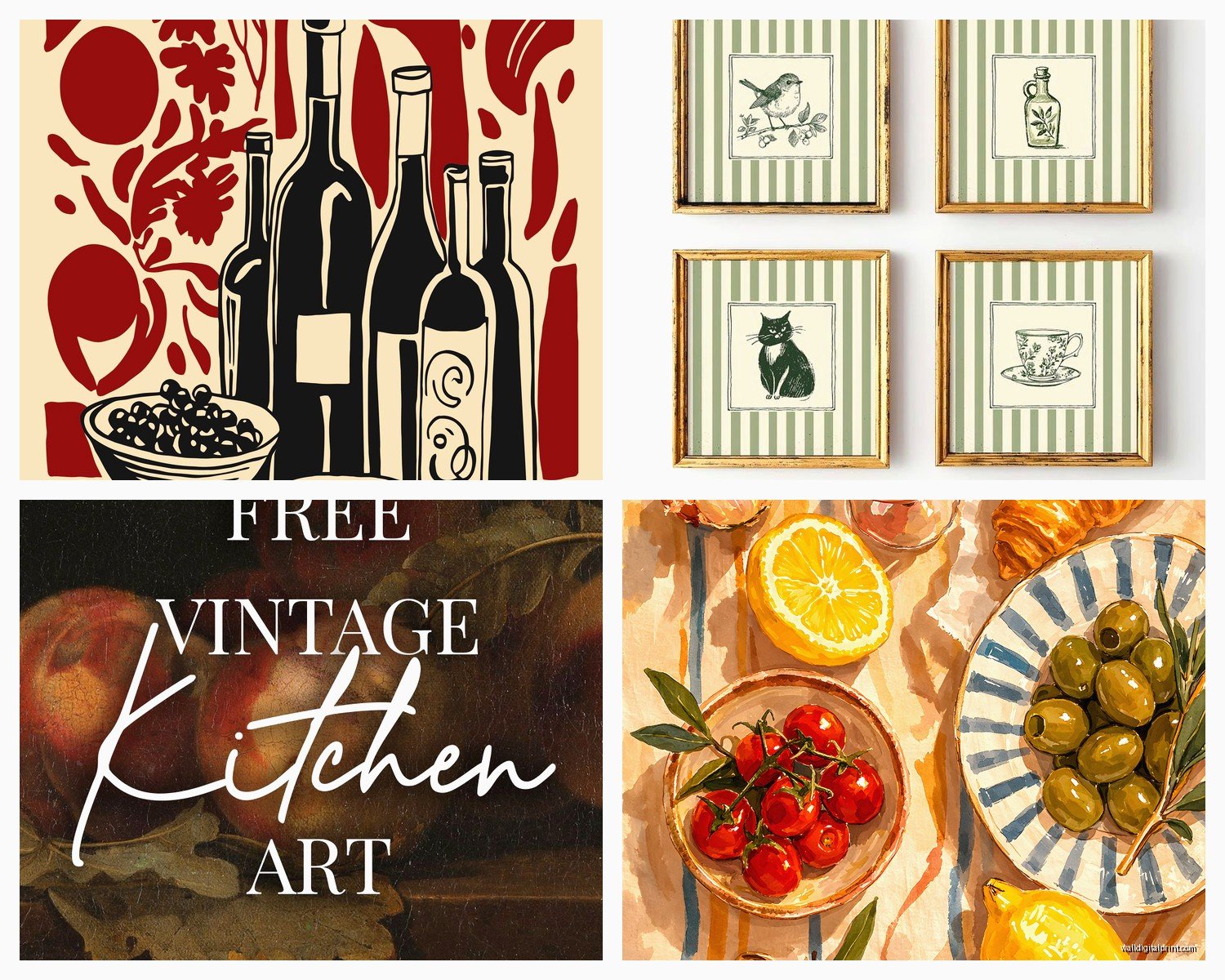
Vintage Kitchen Wall Art: Retro Cooking & Recipe Decor

Apr
So I’ve been completely obsessed with vintage kitchen wall art lately and honestly it started because I was watching this old Julia Child episode while reorganizing my storage room and thought… why does everything look better from that era? Anyway, here’s what I’ve learned from decorating like six different kitchens this year with retro cooking stuff.
The Different Types You’ll Actually Find
Okay so there’s basically a few categories and they’re NOT all created equal. Original vintage prints from the 40s-70s are gorgeous but you’re gonna pay like $80-200 for something decent, and half the time they’re kinda faded or have water damage. I’ve found some amazing ones at estate sales though – my best find was this 1950s French cooking chart for $15 but the lady running the sale had no idea what she had.
Then there’s reproduction prints which is honestly what most people end up with. These are modern prints made to look vintage and the quality varies SO much. Some look cheap and plasticky, others are printed on this really nice matte paper that actually looks aged. The good ones usually cost $25-60 depending on size.
Tin signs are having a moment right now. You’ve seen them – those metal advertisement-style signs that look like old product packaging or diner menus. They’re weather-resistant which is cool if you have humidity issues in your kitchen, but some of them are so shiny they look fake. The matte finish ones are way better.
Canvas vs Paper vs Metal
This matters more than I thought it would. Paper prints under glass give you that authentic vintage vibe – like you actually pulled something from an old cookbook. But you gotta frame them properly or they look unfinished and cheap. I usually spend about $30-50 on a decent frame from Target or HomeGoods.
Canvas prints are easier because they come ready to hang, but they can look too modern sometimes? Like the texture doesn’t match the vintage aesthetic. Though I did find this one shop on Etsy that prints on canvas then does this tea-staining technique and those are *chef’s kiss*.
Metal signs are the most durable but also the trickiest to style. They work best if you’re going for that diner/bistro look rather than farmhouse vintage. I used a bunch of them in a client’s breakfast nook last month and it looked amazing with black and white tile.
What Actually Works on Kitchen Walls
Size is where everyone messes up. Don’t go too small – anything under 11×14 just gets lost on a kitchen wall unless you’re doing a big gallery wall situation. I usually recommend 16×20 or larger for standalone pieces.
The best spots are obviously above your coffee station if you have one, over the dining table, or that weird empty wall next to the fridge that everyone has. Oh and another thing – next to open shelving looks really good because it breaks up all the dish displays.
For content, recipe prints are classic but can read as cluttered if they’re too text-heavy. I love the vintage ones that are like “How to Carve a Turkey” with simple line drawings. Cleaner than the super detailed recipe cards.
Retro advertisement art is probably my favorite category? Like old Coca-Cola ads, vintage coffee posters, those amazing mid-century illustrations of perfectly coiffed housewives holding casseroles. They’re colorful without being overwhelming and they add personality immediately.
Botanical kitchen prints – think vintage herb charts or vegetable illustrations – these are perfect if your kitchen is already pretty busy with patterns and colors. They’re interesting but neutral enough not to compete.
Color Schemes That Don’t Fight Your Kitchen
This is gonna sound weird but I actually keep a little folder on my phone with pictures of my clients’ kitchens organized by cabinet color because matching vintage art to existing kitchens is like 60% of the challenge.
White kitchens can handle literally anything. Go bold with those bright 1950s colors – turquoise, coral, sunny yellow, mint green. You want the art to pop and add that retro personality.
Wood-toned or natural kitchens need warmer vintage pieces. Think sepia-toned prints, those old brown and cream French culinary charts, vintage olive oil ads with lots of green and gold. I steer clients away from cool-toned pieces here because they just clash.
Gray kitchens (which everyone has now) look best with black and white vintage prints or things with muted reds and blues. Those 1960s Scandinavian-style cooking illustrations work really well. Stay away from the super saturated colors – they’ll look out of place.
If you’ve got colored cabinets like navy or green, you gotta be careful. Pull colors from the art that complement but don’t match exactly. So navy cabinets might pair with vintage prints that have cream backgrounds and pops of red or yellow, not more navy.
Mixing Eras Without Looking Confused
Wait I forgot to mention – you don’t have to stick to one decade. I mix 1940s, 50s, and 60s stuff all the time. The trick is keeping a consistent color palette or style of illustration. Like all line drawings from different eras, or all colorful ads but in a similar color family.
What doesn’t work is mixing vintage kitchen art with modern photography or contemporary abstract stuff. Pick a lane. Either you’re doing vintage character or you’re not.
Where to Actually Buy This Stuff
Etsy is my go-to for reproduction prints because you can find literally thousands of options and filter by size, color, era, all of it. Shop around though because prices vary wildly for the exact same quality. I’ve bought from shops like ThePoloDesignStudio and GildedBloomPrints with good results.
Amazon has a surprising amount of tin signs and ready-to-hang canvas pieces but the quality is hit or miss. Read the reviews carefully and look at customer photos not just the listing photos.
Estate sales and antique malls for original vintage pieces but you gotta have patience. I probably visit twenty sales before finding one good piece. My dog hates estate sale Saturdays because I drag him along and he has to wait in the car.
Flea markets can be good but they’re usually overpriced now because everyone knows vintage is trendy. Still worth checking though.
Target and HomeGoods sometimes have cute retro-inspired kitchen art in their home decor sections. It’s not authentic vintage but if you’re on a budget, you can find decent stuff for $20-30.
Framing and Hanging Tips
Okay so if you’re framing paper prints yourself, use acid-free matting if you want them to last. Regular cardboard mats will yellow over time and ruin the whole vintage aesthetic you’re going for.
Black frames work with almost everything and give a clean gallery feel. Wood frames in medium to dark tones work great for farmhouse or rustic kitchens. White frames can work but they sometimes make vintage prints look washed out – gotta see them together first.
For hanging, I use regular picture hanging strips for anything under 5 pounds because I hate putting holes in walls. The 3M Command ones actually work despite what skeptics say. For heavier frames or metal signs, you gotta use proper anchors.
Gallery walls are awesome in kitchens if you have the space. Mix sizes but keep at least one consistent element – same frame color, similar color palette in the art, or all the same era. I usually do odd numbers because it looks more natural. Like five or seven pieces instead of six.
Space them about 2-3 inches apart. Too close looks cluttered, too far apart looks disconnected. And please center the whole arrangement at eye level, not each individual piece at eye level. I see this mistake constantly.
The Stuff Nobody Tells You
Kitchens get greasy. Even with a good hood vent, there’s oil and moisture in the air. Don’t hang paper prints directly above your stove unless they’re behind glass. I learned this the hard way in my own kitchen and had to replace a $45 print after six months because it got this gross film on it.
Metal signs can rust in super humid kitchens. If you live somewhere humid, look for powder-coated or sealed metal rather than just printed tin.
Sunlight will fade prints over time, especially if you have a big window. UV-protective glass helps but it’s expensive. Easier to just rotate art every couple years or accept the fading as part of the vintage charm honestly.
Some vintage reproduction prints have typos or incorrect information because they’re copying old sources that had mistakes. I think it’s charming but some people get really bothered by it. Just something to know.
Creating Themes Without Going Overboard
Coffee-themed kitchens are super popular right now. Vintage coffee ads, old grinder illustrations, retro coffee shop signs. Works great if you actually have a coffee station to decorate around.
Baking themes with old mixer ads, vintage cake illustrations, retro baking ingredient packaging. This is my client canceled so I spent an hour comparing these yesterday for someone’s bakery-style kitchen and there are SO many options.
Herb and garden themes using vintage botanical prints of kitchen herbs, old seed packet designs, vegetable charts. More subtle than the advertising stuff but still interesting.
International cuisine themes – like all French vintage posters, or Italian wine and pasta art, or retro American diner stuff. Just commit to one region or it gets confusing visually.
The trick is not making your kitchen look like a themed restaurant. Use restraint. Like three to five pieces max unless you’re doing a full gallery wall. And break it up with other decor elements so it’s not overwhelming.
DIY Options If You’re Crafty
You can download vintage public domain images from the Library of Congress or old cookbook scans and print them yourself at home or a print shop. This is super cheap but time-consuming to find good resolution images.
Transferring images onto wood or canvas using Mod Podge is a thing people do. I’ve tried it and honestly it’s harder than it looks to get good results. But if you’re crafty it can look really cool and custom.
Decoupage actual vintage cookbook pages or old recipe cards onto canvas or wood panels. This works better than you’d think and looks super authentic because it IS authentic. Just seal it well so it doesn’t get damaged.
Maintenance and Care
Dust your art regularly with a microfiber cloth. Sounds obvious but kitchen art gets dusty fast and then the dust combines with grease and becomes this sticky situation.
For glass-covered prints, use regular glass cleaner but spray it on the cloth not directly on the frame. Moisture can seep behind the glass and damage the print.
Metal signs can be wiped down with a slightly damp cloth. Don’t use harsh cleaners because they can strip the finish.
If you’ve got a print that’s starting to fade or yellow, there’s not much you can do. That’s just gonna happen with paper over time. Consider it vintage patina or replace it – those are your options.
Honestly the whole vintage kitchen art thing is pretty forgiving once you understand the basics. Start with one or two pieces you really love, see how they work in your space, then build from there. Don’t overthink it too much or you’ll end up like me with seventeen prints leaning against my office wall waiting for the “perfect spot” that I’ll probably never find.