
Wall Art Guide, Wall Art Tutoriels
Huge Wall Art: Extra Oversized Enormous Statement Pieces
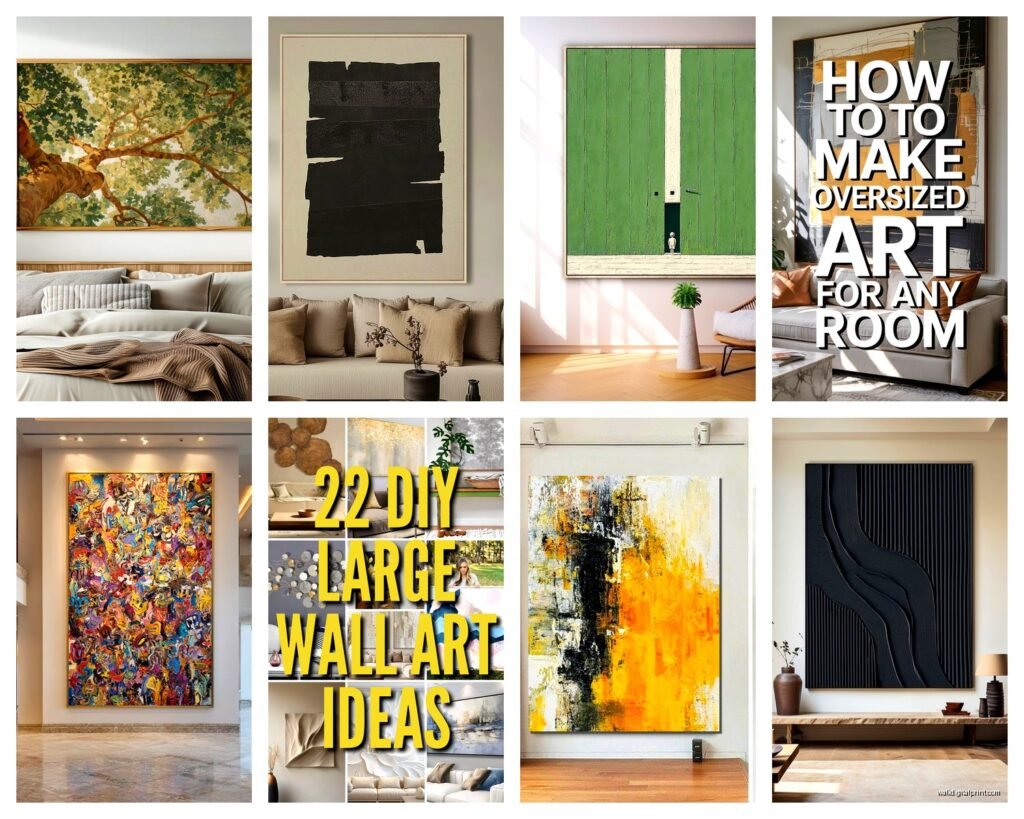
May
So I’ve been installing these absolutely massive wall pieces for clients lately and honestly, the whole thing is way more complicated than just buying big art and slapping it up there. Like, I made so many mistakes with my first oversized canvas that I had to patch three different holes in the wall.
The Size Thing Everyone Gets Wrong
Okay so here’s what nobody tells you about huge wall art – what looks massive in the store or online photographs looks completely different once you get it home. I’m talking about pieces that are genuinely 60 inches wide or bigger, like the stuff that makes people walk into your living room and go “whoa.” You need to measure everything twice because I’ve had clients order 72-inch pieces for walls that were only 80 inches wide and then they’re shocked when it looks cramped.
The rule I actually use is that your art should take up about 60-75% of your wall width, but with these enormous statement pieces you can push it to 80% if the room has high ceilings. Anything bigger and it starts feeling like the wall is wearing clothes that don’t fit. I learned this the hard way in my own dining room where I went too big and had to return this beautiful abstract piece because it literally touched both corners.
What Actually Counts as Huge
- 60-72 inches wide – this is your entry point for “huge” territory
- 72-96 inches – seriously oversized, needs serious wall space
- 96+ inches – you’re basically covering an entire wall, better have the height to match
- Anything over 100 inches and you’re getting into custom installation territory
The Weight Problem Nobody Warns You About
Here’s where it gets real – a 6-foot canvas can weigh anywhere from 15 to 50+ pounds depending on the frame and materials. My cat knocked over a framed print sample I had leaning against the wall last week and I swear the whole apartment shook. These things are heavy and you absolutely cannot use those little picture hanging strips or regular nails.
I use heavy-duty wall anchors rated for at least double the weight of the piece. For anything over 30 pounds, you’re looking at finding studs with a stud finder or using toggle bolts. Had a piece fall at 2am once in a client’s home because they insisted on hanging it themselves with inadequate hardware and that was a fun insurance claim.
Hardware You Actually Need
French cleats are gonna be your best friend for pieces over 40 pounds. They distribute weight evenly and you can adjust the piece side to side after it’s up. The cleat mounts to the wall studs and the corresponding piece attaches to the back of your art. It’s like $15 for the hardware versus $500 to repair your wall and broken artwork.
For lighter pieces between 20-40 pounds, heavy duty D-rings with wall anchors work fine. Just make sure you’re using anchors rated for drywall – those plastic ones that come with frames are basically useless.
Where to Actually Find These Pieces
So I spend way too much time sourcing oversized art and there’s basically a few routes you can go. Etsy has a surprising amount of large-scale prints but you gotta filter carefully because not everyone ships internationally and the shipping costs can be absolutely insane – I’m talking $300+ for a 80-inch piece from Europe.
Saatchi Art and Artfinder are good for original oversized work but you’re paying gallery prices. I’ve found some incredible 72-inch abstracts there for clients with bigger budgets. The nice thing is artists will often do custom sizes.
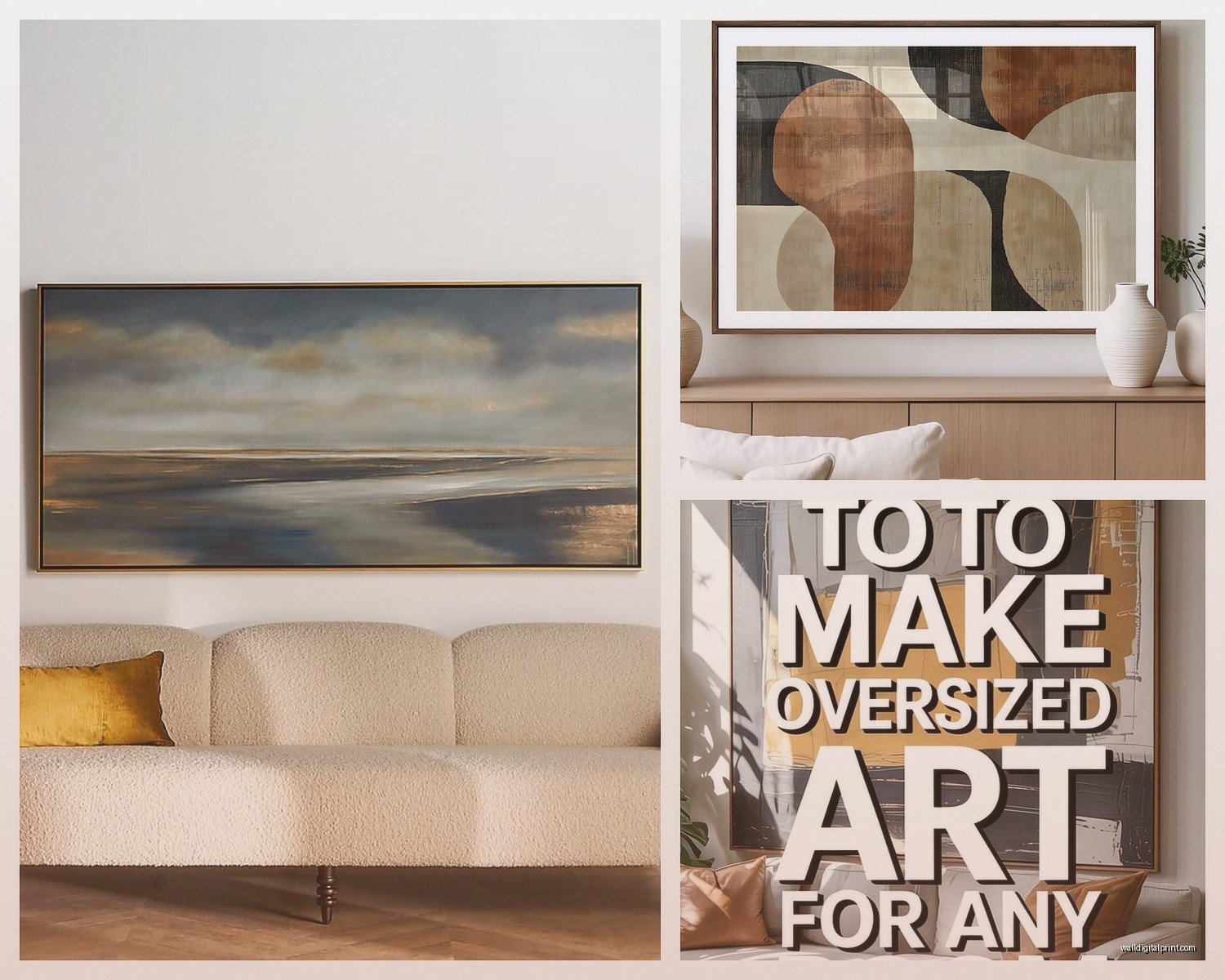
Oh and another thing – Society6 and similar print-on-demand sites go up to about 88 inches on some prints now. The quality isn’t always gallery-level but for a bedroom or casual space it works and you’re looking at maybe $400-600 instead of thousands.
Budget Breakdown From My Experience
- Under $500: Print-on-demand sites, IKEA’s large format pieces, Amazon’s oversized canvas options
- $500-$1500: Better quality prints, smaller galleries, West Elm and CB2 statement pieces
- $1500-$5000: Original work from emerging artists, high-end prints, custom photography
- $5000+: Established artists, custom commissions, gallery pieces
The DIY Route That Actually Works
Wait I forgot to mention – you can totally make your own huge wall art and it’s not as hard as it sounds. I did a 8-foot wide piece for my own apartment using four 2×4 foot canvases arranged together and it cost maybe $200 in materials. Just bought pre-stretched canvases, some acrylic paint, and went abstract expressionist on it during a weekend when I had nothing else going on.
The trick is committing to it. Those tentative brush strokes look amateur but if you go bold with a limited color palette it reads as intentional. I used only navy, cream, and gold metallic and people assume I paid thousands for it.
Canvas rolls from art supply stores let you stretch your own if you’re really committed. You need a staple gun and stretcher bars but for a 72-inch piece you’re looking at maybe $150-200 in materials versus $800+ for a pre-made one. Though honestly it’s kind of a pain and takes up your entire living room floor for a day.
Styles That Work at This Scale
Not everything translates well to huge sizes. I’ve noticed that busy patterns or detailed illustrations can actually be overwhelming when they’re 6 feet wide. What works best:
Abstract – literally perfect for oversized work. Bold shapes and colors make sense at large scale and you don’t need to worry about resolution or detail.
Photography – but only if it’s high enough resolution. You need at least 150 DPI at the final print size or it’ll look pixelated. Landscape photography works great, also love oversized architectural shots.
Minimalist line drawings – these scale up beautifully because there’s no detail to lose. A simple continuous line portrait at 60 inches looks incredibly sophisticated.
Typography – oversized word art can be cool if it’s not cheesy. Single words or short phrases in interesting fonts work.
This is gonna sound weird but I actually don’t love oversized florals? They can work but often feel like hotel lobby art when they get too big. Unless they’re abstracted or really graphic.
Installation Day Reality Check
Okay so funny story – the first time I hung a 84-inch canvas I recruited my neighbor and we still almost dropped it twice. You need two people minimum, three is better for anything over 6 feet. These pieces are awkward and heavy and you’re working above your head which is exhausting.
I always do a practice run now. We hold the piece up against the wall, step back, take photos, adjust the height. Seems excessive but I’ve moved pieces six inches down after living with them for a day because the initial placement felt wrong.
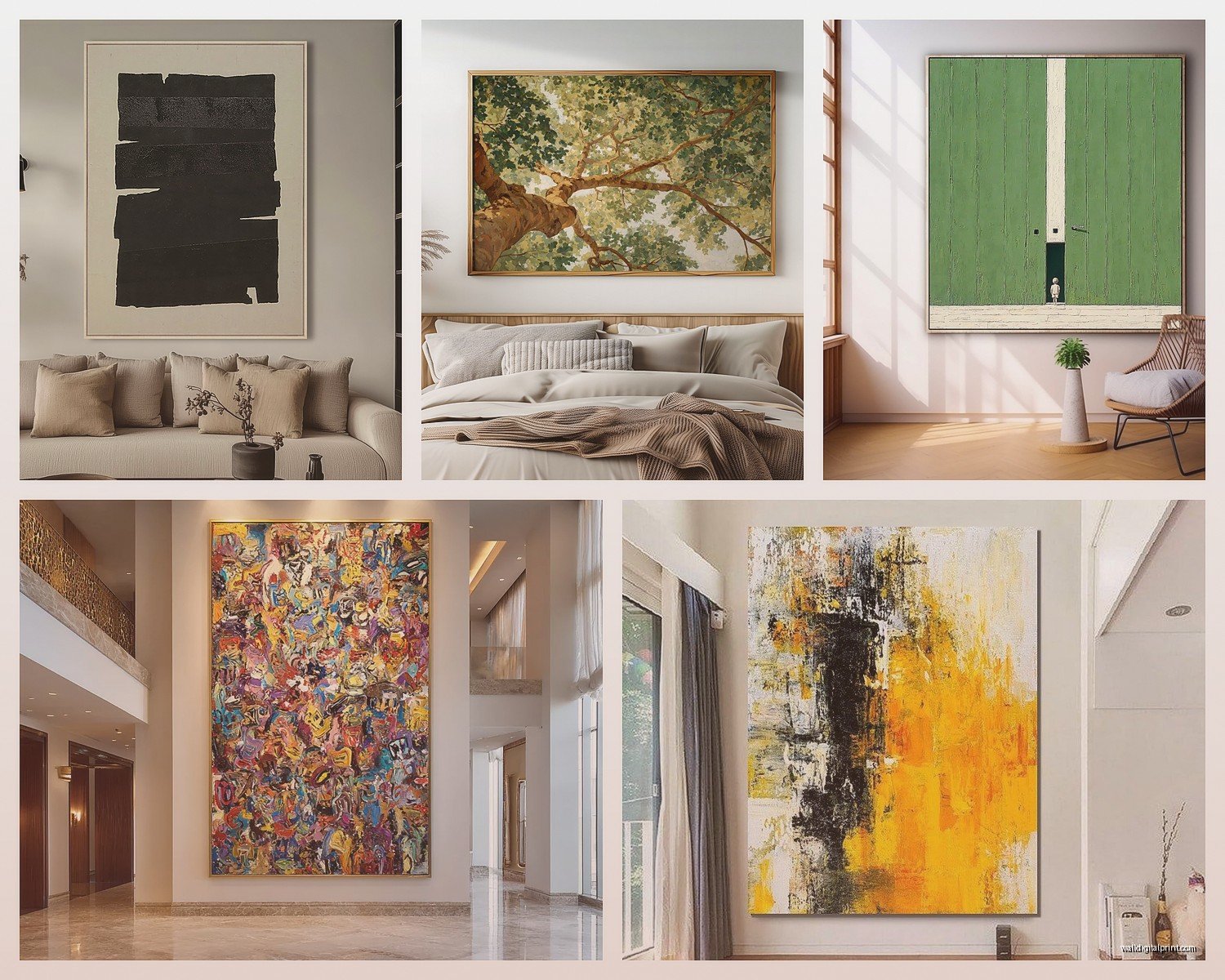
The general rule is center the piece at 57-60 inches from the floor to the center of the artwork. But with huge pieces that go floor to ceiling basically, you might need to adjust. In rooms with 8-foot ceilings, I sometimes go lower so it doesn’t feel top-heavy.
Tools You’ll Regret Not Having
- Laser level – trying to hang a 6-foot piece straight with a regular level is basically impossible
- Stud finder that actually works – spend the $40 on a good one
- Cordless drill – hand screwing hardware for these pieces will destroy your wrist
- Painter’s tape for marking – I use this to outline where the piece will go before making any holes
- Step ladder that’s actually tall enough
Rooms That Can Handle Huge Art
Not every space works for enormous art and I’ve talked clients out of oversized pieces plenty of times. You need room to step back and actually see the piece. In a narrow hallway, a 72-inch wide piece just creates a tunnel effect.
Living rooms with at least 12 feet of viewing distance are ideal. That sounds like a lot but you want people to be able to sit on your sofa and see the whole piece without their eyes darting around trying to take it in.
Behind the sofa is classic placement but make sure you have at least 6-8 inches on each side of the sofa width. The art should relate to the furniture below it. I see people put tiny sofas under massive art and it looks unbalanced.
Dining rooms are actually perfect for huge statement pieces because you’re usually sitting at a table with good viewing distance. I did a 90-inch abstract behind a client’s dining table and it completely transformed the space.
Bedrooms can handle oversized art over the bed but keep it to about 6 feet wide max unless you have a huge master. You don’t want it extending way beyond the bed width.
The Framing Question
So framing something this big gets expensive fast – like $500-1500 expensive. Gallery wrapping where the canvas wraps around the stretcher bars is way more affordable and looks clean and modern. The edges become part of the piece.
If you do want framing, floating frames are popular right now and they’re less expensive than traditional frames because there’s less material. The art sits inside the frame with a gap all around.
For prints on paper at this size, you’re probably looking at plexiglass instead of regular glass because glass gets too heavy and fragile. Plexi is lighter but scratches easier, just so you know.
Matting Large Pieces
Generally I skip matting on huge pieces because it adds so much to the overall size. A 60-inch print with a 4-inch mat all around becomes a 68-inch framed piece and that’s getting into custom territory for everything.
Mistakes I See All The Time
People buy huge art without considering their other walls. You can’t really have massive statement pieces on every wall – it’s too much visual competition. One big piece per room, maybe two if they’re on opposite walls.
Hanging huge art too high. I know I mentioned the 57-inch rule but people still do this thing where they hang art way up near the ceiling and it floats awkwardly. Unless you have 12-foot ceilings, keep it reasonable.
Not considering the room’s color palette. A 6-foot painting will dominate your space so it needs to work with what you’ve already got going on. I mean you can redecorate around the art but that’s a bigger commitment.
Ordering online without checking the return policy. Shipping a 80-inch canvas back costs a fortune and some sellers don’t accept returns on oversized items. Always check this before buying.
Lighting These Beasts
Huge art needs proper lighting or it just looks like a dark blob on your wall, especially at night. Picture lights that mount above the frame work but for really big pieces you might need track lighting or adjustable ceiling spots.
I usually position two adjustable spots at 30-degree angles to avoid glare. The light should wash across the surface evenly. You’re looking at maybe $100-200 for decent adjustable lighting.
Natural light is great but watch for direct sunlight because it’ll fade your art over time. UV-protective glass or plexi helps but it’s expensive. I usually just recommend closing curtains during peak sun hours if it’s hitting the art directly.
The living room piece I mentioned earlier gets perfect indirect light in the afternoon and it’s honestly the best time to look at it, the colors just glow.
