Wall Art Guide, Wall Art Tutoriels
Labrador Wall Art: Dog Breed Portrait & Pet Decor
Jun
So I’ve been down this rabbit hole for like three weeks now because my friend Sarah got a chocolate lab puppy and suddenly EVERYONE in my client circle wants lab art for their walls, and honestly I didn’t realize how specific this niche gets until I started actually sourcing pieces.
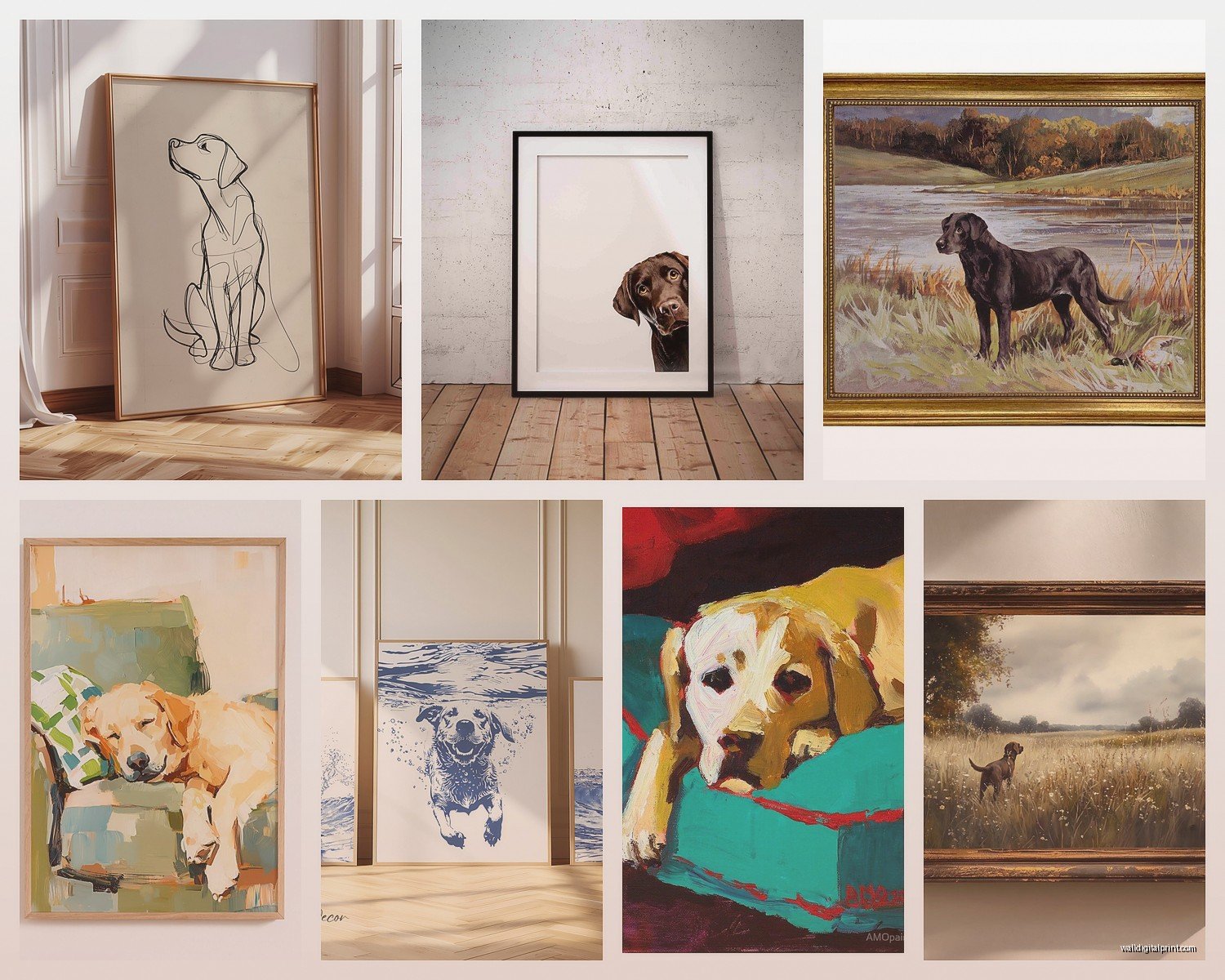
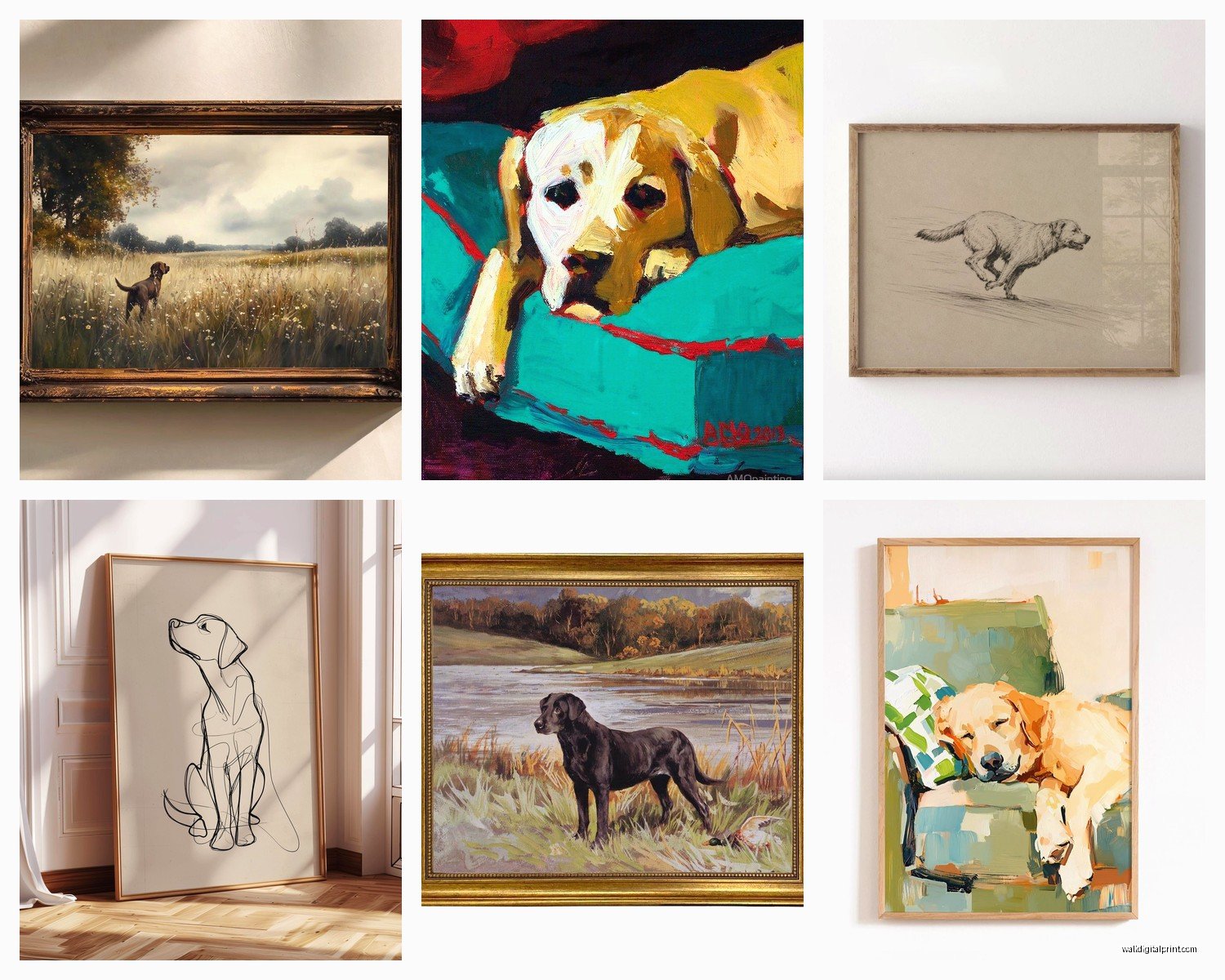
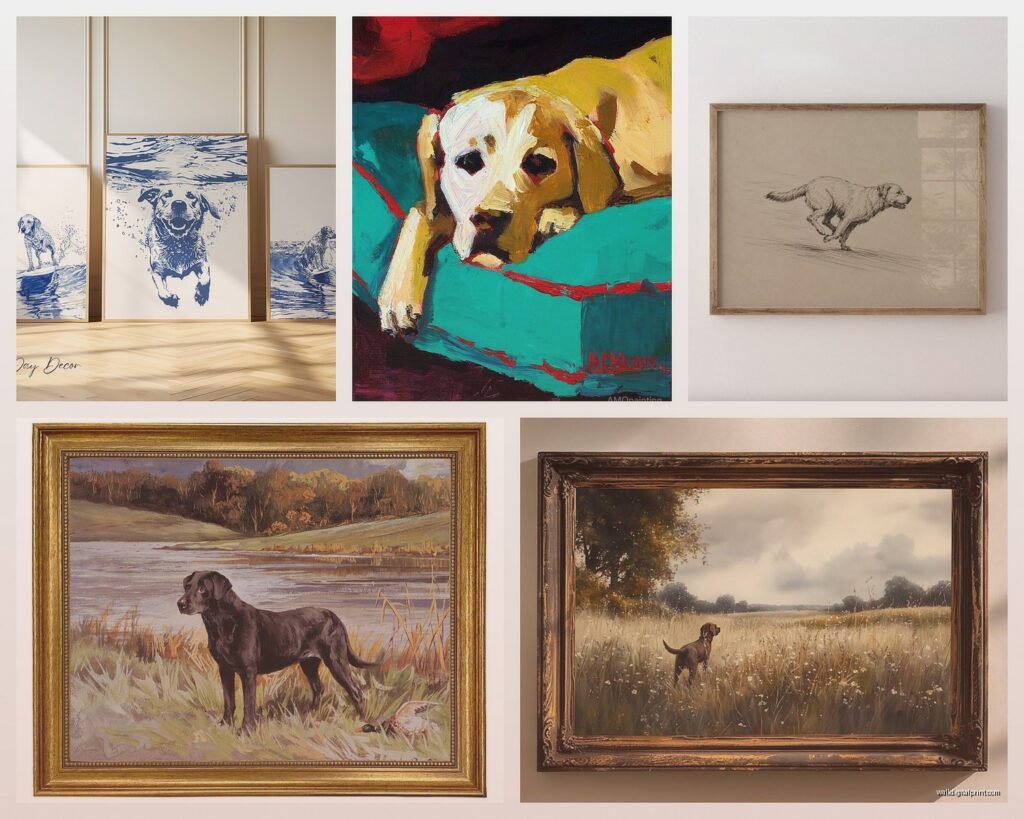
First thing you gotta know is that labrador wall art basically falls into three camps: the hyper-realistic portraits that look like photographs, the illustrated/graphic design style ones, and then the weird abstract interpretations that sometimes work and sometimes look like someone sneezed paint on a canvas. I’m gonna be real with you, stick to the first two unless you’re already committed to a really bold modern aesthetic.
Size Actually Matters More Than You Think
Okay so here’s where I messed up initially. I ordered this gorgeous black lab portrait for a client’s mudroom – it was 12×16 inches and when it arrived I was like…oh no. It looked like a postage stamp on their wall. Lab art specifically needs to be bigger because the breed has such distinctive features – those eyes, the face shape – and if you go too small it loses all impact.
For a standard wall where it’s gonna be the focal point, you want minimum 20×24 inches. I’ve found 24×36 works perfectly above a console table or in a hallway. If you’re doing a gallery wall situation you can mix smaller pieces but even then nothing under 11×14 or it just gets lost.
Living rooms can handle 30×40 or even bigger if you’ve got the wall space. My client with the golden retriever (I know different breed but same principle) went with a 40×60 canvas and it’s literally the first thing you see when you walk in and it WORKS because the scale matches the energy of the dog.
Material Choices That Don’t Suck
Canvas prints are everywhere and they’re fine but here’s the thing – they start sagging after like two years if you don’t get a decent thickness. You want minimum 1.5 inch depth gallery wrap. The thin ones that are barely half an inch? They warp, especially in humid climates or if you’re hanging them anywhere near a bathroom or kitchen.
I’ve been really into framed prints lately though. Like actual archival paper prints in a frame. They feel more intentional? Canvas can read a bit…2015 Pinterest if that makes sense. A nice matte print in a simple black or natural wood frame feels more curated.
Metal prints are having a moment and I actually love them for lab portraits – the colors pop differently and there’s this depth to them. They work especially well for more contemporary spaces. Just got one for my own apartment actually (my cat Miso knocked over a plant directly onto my old artwork so I needed a replacement anyway) and the yellow lab on brushed aluminum looks incredible.
Oh and another thing – acrylic prints. These are pricey but if you want something that looks gallery-quality, this is it. The image gets printed on the back of thick acrylic and it has this luminous quality. I used one in a client’s home office and every single person who visits comments on it.
Finding Art That Actually Looks Like YOUR Dog
This is where it gets tricky because everyone thinks their lab is unique (they are but also…they’re not visually). If you want custom portrait work, you’re looking at anywhere from $150 to $800 depending on the artist and size.
I’ve used three artists I trust:
For realistic digital portraits, there’s this artist on Etsy – can’t remember the exact shop name but it’s something like LabsAndPortraits or PawsomePortraits – who works from photos and does incredible work. Turnaround is like 3-4 weeks. You send multiple photos of your dog and they composite the best features. Cost me about $200 for a 24×30 digital file that I printed myself.
Wait I forgot to mention – if you’re getting a custom piece, ALWAYS get the high-resolution digital file even if you’re also ordering a print from them. You’ll want to reprint it at different sizes later, trust me.
There’s also an illustrator I found through Instagram who does this minimalist line art style that’s really popular right now. Single continuous line drawings of dog profiles. Super modern, works great in contemporary spaces. Those run cheaper, like $75-$150 for the digital file.
For traditional paintings, you’re spending more but the quality difference is real. Oil on canvas custom portraits start around $400 and go up from there. I have a client who commissioned one of her two labs together and spent $1200 but it’s a family heirloom type piece now.
The Color Palette Problem Nobody Talks About
Here’s something that’s gonna sound weird but I’ve learned this the hard way – yellow labs are the easiest to decorate around, chocolate labs are medium difficulty, and black labs are actually the trickiest for wall art.
Black lab portraits can disappear into dark walls or create too much contrast on light walls. You need to think about the background color in the artwork itself. I always look for black lab art that has a lighter background – cream, soft gray, even a muted blue or green. Creates separation and makes the dog’s features visible from across the room.
Yellow labs give you the most flexibility because they photograph well against pretty much any background. Chocolate labs look amazing with warm-toned backgrounds – think burnt orange, terra cotta, warm grays.
If you’re doing multiple pieces or a gallery wall, keep the background palettes consistent even if you’re mixing art styles. I did a setup with three different labrador prints – one realistic, one geometric, one watercolor – but kept all the backgrounds in the cream to light gray family and it looked cohesive instead of chaotic.
Placement Tips From Someone Who’s Hung Way Too Many Dog Portraits
Mudrooms and entryways are obvious choices but they’re popular for a reason. This is where your dog greets you, where the leashes hang, where the energy of “dog household” is strongest.
I’m obsessed with putting lab art in home offices actually. There’s something about having your dog’s face nearby while you work that clients really respond to. Plus it’s a great video call background element – shows personality without being distracting.
Bedrooms work if it’s your own bedroom and you’re not trying to impress anyone. Guest bedrooms? Skip it unless you’re really committed to the theme.
The spot above the dog’s bed or feeding station is cute in theory but tends to get dirty quickly. Food splatter, dust from the bed, you know. Not practical for anything you actually spent money on.
Gallery walls in hallways are my favorite application right now. Mix different sizes of lab portraits with maybe some paw print art or breed characteristic prints. I did one that included vintage labrador retriever breed standard diagrams from like the 1950s mixed with modern portraits and it looked so good.
Height Matters
Standard rule is center of the artwork at 57-60 inches from the floor but with dog portraits I actually go slightly lower, especially in hallways. Like 54-56 inches. Makes it feel more intimate and accessible. You’re looking at your dog’s face, not straining up at it.
Where to Actually Buy This Stuff
Etsy is gonna be your main source for variety. You can filter by custom work, print-on-demand, original art. Just read the reviews carefully because quality varies wildly.
Society6 and Redbubble have tons of lab art from independent artists. The nice thing is you can get the same design on different products – canvas, framed print, metal, whatever. Quality is consistent because it’s all through their printing system.
For higher-end stuff I’ve been using Minted lately. They have curated artists and the printing quality is excellent. More expensive but worth it for main living spaces.
Local art fairs and markets if you want original work – I found an amazing oil painter at a farmers market of all places who does dog portraits on commission. Sometimes the best stuff isn’t online.
Print-on-Demand vs Original
Look, original art is special but for most people a high-quality print makes way more sense. You can get exactly the size you need, it’s affordable, and honestly unless someone’s standing three inches from your wall they can’t tell the difference.
Save original art purchases for when you find something that truly speaks to you or if you want to support a specific artist whose work you love.
Framing Without Losing Your Mind
If you buy unframed prints you have options. Michael’s and Hobby Lobby have frames that work fine – wait for the 50% off sales that happen basically weekly. For standard sizes (16×20, 24×36, etc.) they stock frames that’ll work.
Custom framing is expensive but sometimes necessary for odd sizes. I’ve had good luck with Framebridge for online custom framing – you send them the print and they frame and ship it back. Easier than dealing with a local frame shop and usually cheaper.
My go-to frame style for lab portraits is simple black wood or natural oak. Nothing ornate unless you’re going for a really traditional look. The dog should be the focus, not the frame.
Matting adds cost but also adds impact. A white or cream mat creates breathing room around the image. For a 16×20 print I’ll do a 20×24 frame with matting. Makes it look more expensive and considered.
Mixing Lab Art With Other Decor
This is gonna sound random but I was watching this HGTV show last night and they did a whole room around the family’s dog and it was…too much. Don’t theme an entire room around your lab unless you’re okay with it looking like a breed-specific shrine.
Instead, let the lab art be one element. Mix it with landscape art, abstract pieces, family photos. Creates a collected look instead of a themed look.
I do like pairing lab portraits with nature photography – forests, lakes, fields. Connects to the breed’s hunting heritage without being heavy-handed about it.
Vintage hunting or outdoor gear as decor elements works too. Old duck decoys, vintage fishing equipment, that kind of thing creates a subtle theme without screaming “DOG PERSON.”
Seasonal Considerations You Might Not Think About
Okay so this might just be me but I’ve noticed black lab art reads heavier in winter and yellow lab art feels more summery. If you’re someone who likes switching out decor seasonally, consider having two different pieces you rotate.
Or go with a chocolate lab which somehow works year-round? I can’t explain the logic but it’s true in my experience.
Lighting Makes or Breaks It
If you’re putting lab art anywhere with direct sunlight, get UV-protective glass or acrylic. Prints will fade, canvas colors will shift. I learned this the expensive way.
Picture lights are worth it for larger pieces. Those little LED strips that mount above the frame add drama and make the piece feel important. Especially good in hallways or dining rooms where you might not have great overhead lighting.
Avoid placing directly across from windows where glare will be an issue. Slightly off to the side works better.
The Custom vs Ready-Made Decision
Custom makes sense if you want YOUR specific dog, obviously. But it also makes sense if you have weird color requirements for your space or need a specific size.
Ready-made is faster, usually cheaper, and there’s so much variety out there that you can probably find something close enough to your dog’s coloring and personality.
I usually recommend starting with ready-made unless you have money to spend or very specific requirements. You can always upgrade to custom later if you decide you want something more personal.
Just remember turnaround times for custom work – if you need something for a specific occasion, order at least 6-8 weeks ahead. Artists get backed up, especially around holidays.