Wall Art Guide, Wall Art Tutoriels
Arabic Calligraphy Wall Art: Islamic Script Middle Eastern
Aug
So I’ve been obsessing over Arabic calligraphy wall art lately and honestly it started because a client wanted to add some cultural depth to their minimalist living room without making it feel like a museum, and I went down this whole rabbit hole. Now I’m gonna dump everything I learned on you because there’s SO much more to this than just picking something that looks pretty.
Understanding What You’re Actually Looking At
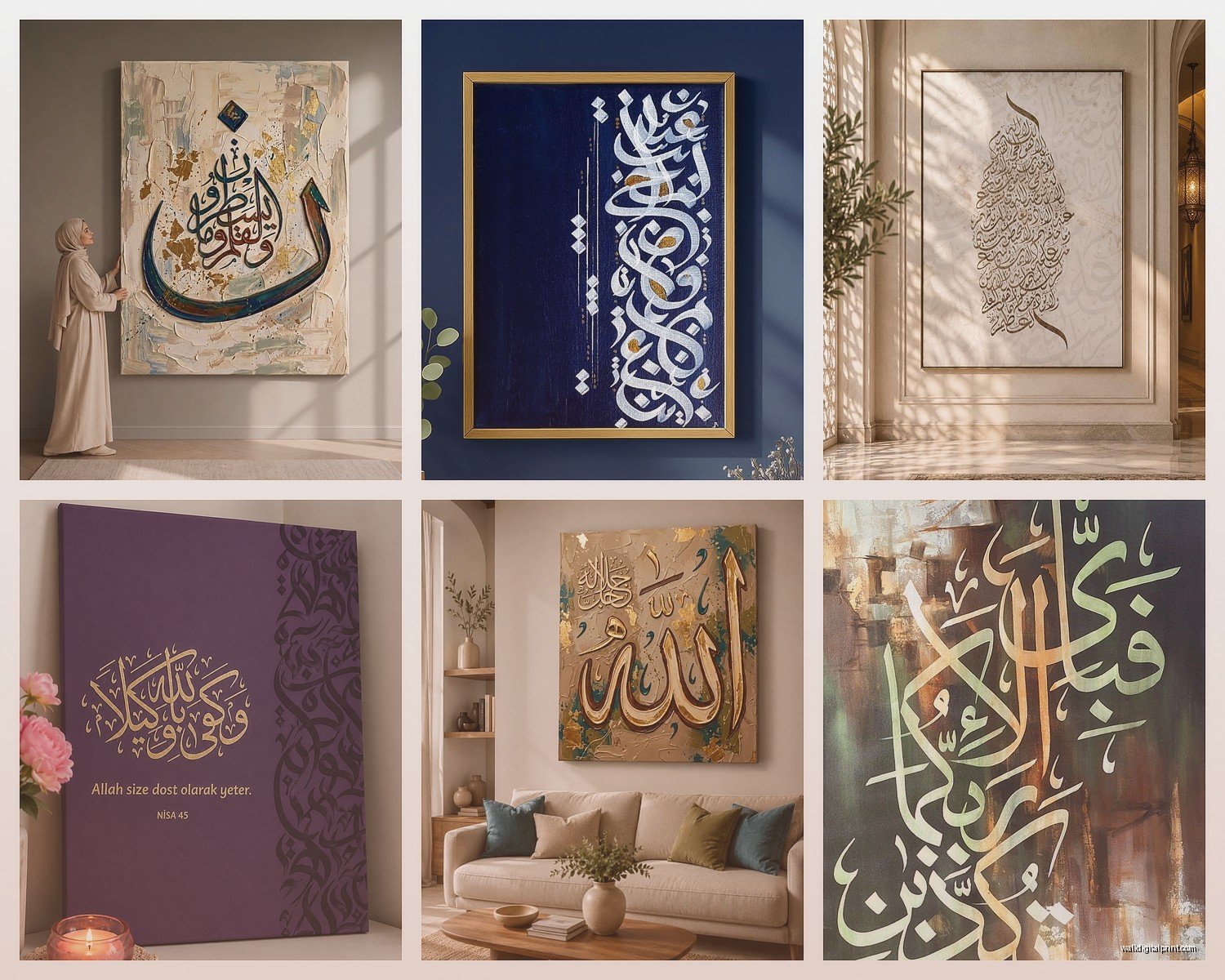
Okay first thing, Arabic calligraphy isn’t just decorative writing. There are like six major styles and they each have completely different vibes. Kufic is the angular geometric one, super bold, works amazing in modern spaces. Thuluth is more flowing and elegant, kinda what most people picture when they think Islamic art. Naskh is cleaner, more readable. Diwani is crazy ornate and swirly, almost looks like it’s dancing.
I made the mistake early on of just buying a piece because it looked cool and then found out it said something about patience and perseverance when I wanted something about home and family. So yeah, always ask what the script actually says. Most reputable sellers will tell you, but I’ve seen some sketchy Etsy shops that just slap random words together.
Where to Actually Buy This Stuff
Amazon has options but honestly the quality is hit or miss. I ordered three pieces last month and one arrived with the most pixelated print I’ve ever seen, looked like someone screenshot a jpeg and called it art. The other two were fine though, so.
Etsy is better for finding actual artists. Search for “Arabic calligraphy original” or “Islamic wall art handwritten” and filter by shops that have tons of reviews. I found this one seller in Turkey who does custom work and the difference between her hand-painted pieces and the mass-produced prints is night and day. She charged like $180 for a medium canvas but it’s actual gold leaf accents and you can see the brush strokes.
Wayfair and Overstock have decent options if you want something ready to hang and don’t wanna wait. Their framing is usually pretty solid. Just read the dimensions carefully because I once ordered what I thought was a 24×36 and it was 24×36 centimeters. My cat could barely fit behind it.
The Etsy Thing I Gotta Mention
When you’re browsing Etsy, check if they’re doing instant downloads versus physical prints. The instant downloads are cheaper obviously but then you gotta deal with printing it yourself. I tried this once at FedEx Office and the color calibration was completely off, everything looked washed out. If you go this route, find a local print shop that specializes in art reproduction, they’ll know how to handle it.
Choosing the Right Style for Your Space
Modern minimalist spaces need geometric Kufic or really clean Thuluth. I paired a black and white Kufic piece with some Scandinavian furniture in my friend’s apartment and it looked insane, like it belonged in Architectural Digest or whatever.
Traditional or maximalist rooms can handle the ornate Diwani or Thuluth with gold accents. These pieces have so much detail that they hold their own against patterned rugs and heavy furniture.
For contemporary eclectic spaces, you can honestly mix styles. I did this thing where I hung three different calligraphy styles in matching frames, different scripts but same color palette, and it created this gallery wall that became the whole room’s focal point.
The Color Situation
Most traditional Islamic calligraphy is black on white or gold on dark backgrounds. This is classic and works everywhere. But I’ve been seeing more contemporary artists playing with navy blues, deep emeralds, burgundy. There’s this one artist on Instagram who does calligraphy in dusty rose and sage green and it’s gorgeous for bedrooms.
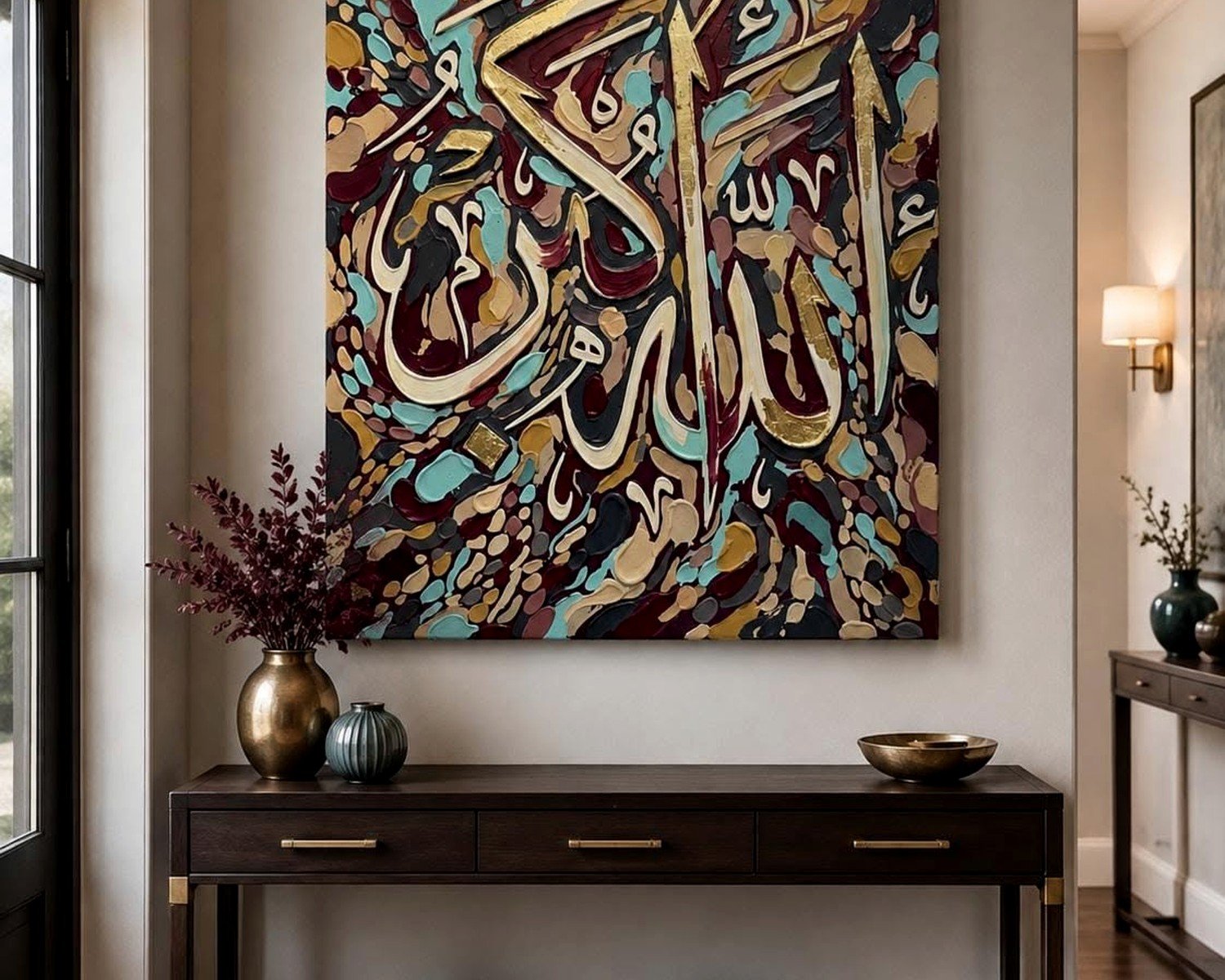
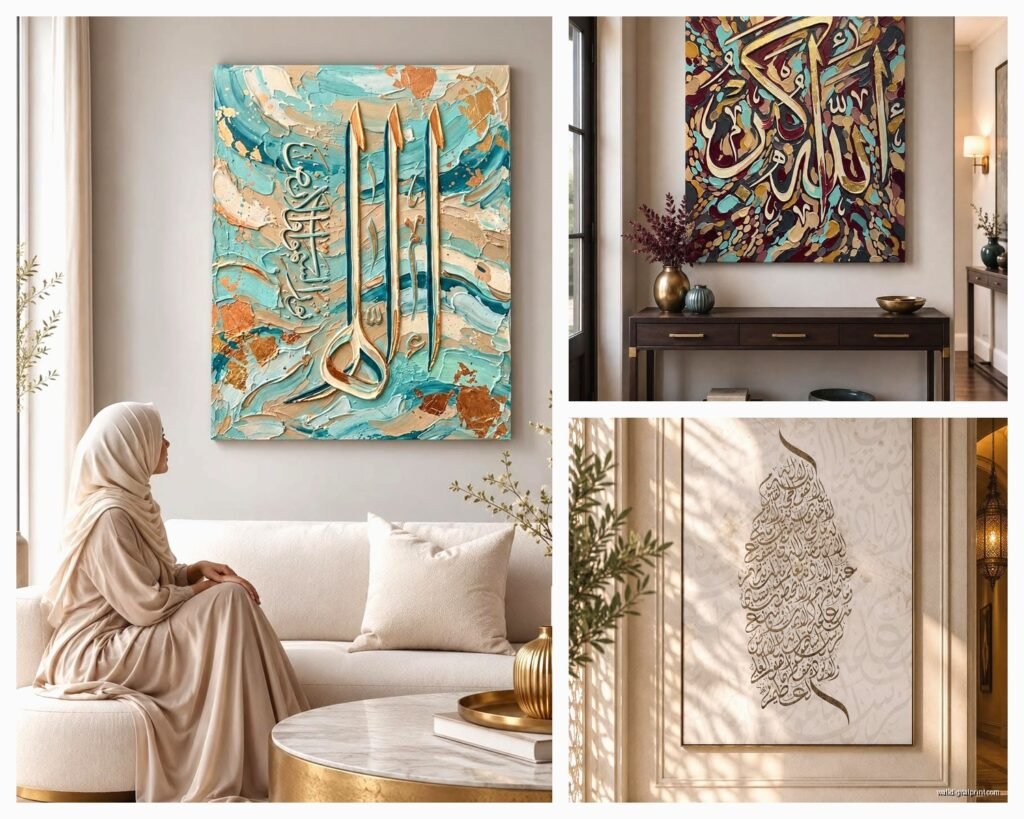
Metallic accents are huge right now. Gold leaf, copper, silver. They catch light differently throughout the day which adds this whole other dimension. Just make sure if you’re getting metallic that it’s actual metal leaf or metallic ink, not just printed gold color. The printed stuff looks cheap in person even if it photographs okay.
Size Matters More Than You Think
I see people buying these tiny 8×10 pieces for big empty walls and it just floats there looking sad. For a standard living room wall, you want at least 24×36, probably bigger. Over a sofa, go 40×60 or do a multi-panel setup.
Multi-panel pieces (diptych or triptych) are actually easier to work with than one huge canvas sometimes. You can space them out to fill more wall space and they’re easier to transport and hang. I just installed a three-panel set in a client’s office and we could adjust the spacing to avoid the thermostat, which you can’t do with one solid piece.
What the Script Should Actually Say
Popular phrases you’ll see everywhere:
- Bismillah (In the name of God) – super common, appropriate for any room
- Ayat al-Kursi – a Quranic verse about protection, people love this for entryways
- Alhamdulillah (Praise be to God) – gratitude theme
- Subhanallah (Glory be to God) – appreciation of beauty
- Various prayers and blessings
If you’re not Muslim but just appreciate the art form (totally valid), maybe stick with pieces that say universal things like words about peace, love, family, home. There are Arabic calligraphy pieces of poetry, proverbs, even just single words like “breathe” or “dream” that don’t have religious significance.
One thing though, don’t hang Quranic verses in bathrooms or bedrooms. I learned this from a Muslim colleague who gently pointed out that it’s considered disrespectful. So if you’re getting religious script, living room, dining room, office, entryway are your safe zones.
Framing and Hanging Tips I Wish Someone Told Me
Okay so funny story, I bought this beautiful canvas print and it arrived unframed which I knew, but I didn’t realize how hard it would be to find a frame that didn’t compete with all the ornate details in the calligraphy. Ended up at five different frame shops.
Simple frames work best. Black, white, natural wood, or gold. Don’t get a frame with a busy pattern or texture because the calligraphy itself is already detailed enough. Let the art be the star.
Floating frames are really popular right now for canvas pieces. They create this shadow gap around the art that makes it look more expensive and gallery-like. You can find them on Amazon for like $40-80 depending on size.
For paper prints, definitely use matting. It adds that professional look and protects the art from touching the glass. I usually do white or cream matting for traditional pieces, black for more contemporary ones.
The Hanging Height Thing
Center of the artwork should be at eye level, which is roughly 57-60 inches from the floor. But if you’re hanging above furniture, the bottom of the frame should be 6-8 inches above the furniture top. I use painter’s tape to map out where the frame will go before I start drilling holes because I’ve definitely hung things wonky before and had to redo it.
Oh and another thing, if you’re hanging multiple pieces, lay them out on the floor first. Take a picture from above so you can reference it when you’re actually hanging. This saved me so much time and frustration.
Mixing Arabic Calligraphy with Other Art
This is where it gets fun. Arabic calligraphy pairs really well with:
- Abstract art in complementary colors
- Black and white photography
- Geometric prints
- Botanical prints if you keep the color palette cohesive
- Other cultural art pieces for an eclectic gallery wall
I created this gallery wall last month that mixed Arabic calligraphy with some Japanese ink paintings and modern abstract pieces, all in black, white, and gold. Sounds weird but the common color palette tied everything together and each piece had this hand-drawn quality that made them feel related.
What doesn’t work as well is mixing it with very literal or photorealistic art. The calligraphy is so stylized that it clashes with like, a photorealistic portrait or landscape. Keep things somewhat abstract or graphic.
DIY Options If You’re Crafty
If you wanna save money or make something custom, you can buy printable files on Etsy for like $5-15 and print them yourself. Get them printed on high-quality paper or canvas at a professional print shop, not your home printer.
There are also these vinyl wall decals of Arabic calligraphy that you can stick directly on the wall. I was skeptical but used one in a rental apartment and it actually looked good, came off clean when we moved. They’re like $20-40 on Amazon.
For the really ambitious, you can learn basic calligraphy and do your own. There are online courses and tons of YouTube tutorials. You’d need to invest in proper calligraphy pens and practice paper but if you’re into that kinda thing, could be cool. I’m not patient enough honestly, I tried and my letters looked drunk.
Lighting Makes or Breaks It
This is something I didn’t think about initially but lighting is crucial with calligraphy art. The intricate details get lost in dim lighting. I always recommend either:
- Hanging it on a wall with good natural light
- Adding picture lights above the frame
- Using adjustable track lighting or spotlights
The metallic and gold leaf pieces especially need good lighting to show off their dimension. I installed these small LED picture lights on a client’s calligraphy piece and it completely transformed it, you could suddenly see all the texture and shimmer.
Avoiding Cultural Appropriation Concerns
Real talk, this comes up. If you’re not from an Arab or Muslim background, some people might question why you’re displaying Islamic art. My take: appreciation versus appropriation is about respect and understanding.
Do learn what your art says and means. Don’t just treat it as exotic decoration. Be able to talk about why you chose it, what it represents. Support actual Arab and Muslim artists when possible rather than mass-produced knockoffs. And maybe don’t make it your whole personality if it’s not your culture, just let it be one element of your decor.
I’ve had this conversation with several clients and most Muslim friends I’ve asked say they’re happy to see their art form appreciated as long as it’s done respectfully. But everyone’s different so use your judgment.
Budget Breakdown Reality Check
Prints on paper: $15-50 unframed, $40-150 framed
Canvas prints: $30-100 for standard sizes
Hand-painted pieces: $150-500+ depending on artist and size
Custom work: $200-1000+
Vinyl decals: $15-50
Frames if bought separately: $30-150
I usually tell people to spend more on the actual art than the frame if you’re on a budget. You can always upgrade the frame later but if the print itself is low quality, expensive framing won’t fix it.
Maintenance and Care
Keep it out of direct sunlight to prevent fading. Dust the frame regularly with a microfiber cloth. If it’s behind glass, clean the glass with regular glass cleaner but don’t let it seep under the frame. For canvas pieces, very gently dust with a soft brush if needed.
That’s pretty much everything I’ve figured out through trial and error and watching way too many YouTube videos while my dog judged me from the couch. The main thing is just pick something that speaks to you personally and don’t overthink it too much. Art is supposed to make you feel something, not stress you out.