Wall Art Guide, Wall Art Tutoriels
Metal Mermaid Wall Art: Ocean Fantasy Sculpture Decor
Jul
So I’ve been down this metal mermaid wall art rabbit hole for like three months now and honestly it started because a client wanted “coastal but not basic” and I maybe went a little overboard researching everything. But now I actually know what works and what’s just gonna collect dust and look cheap.
The Different Types You’ll Actually See
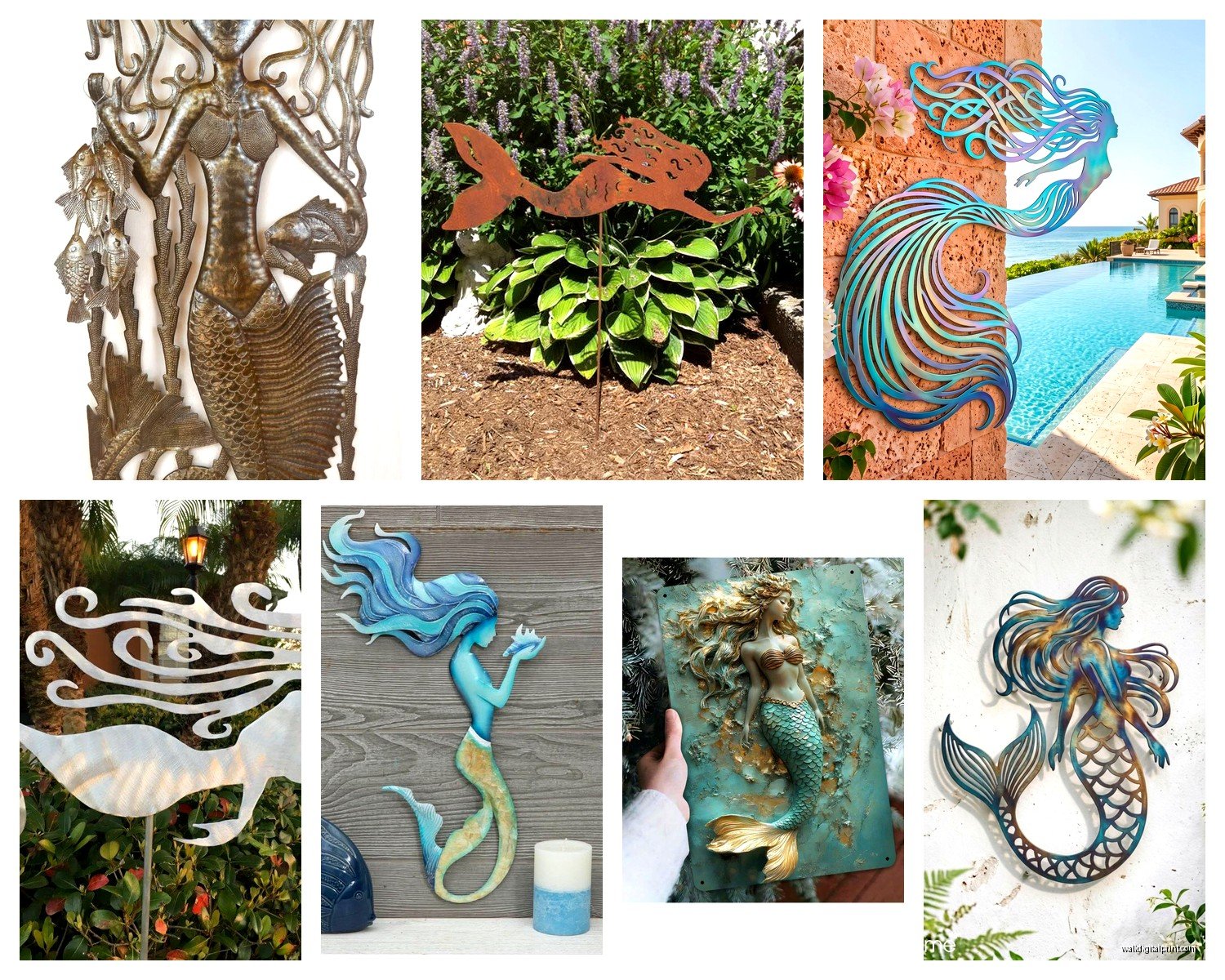
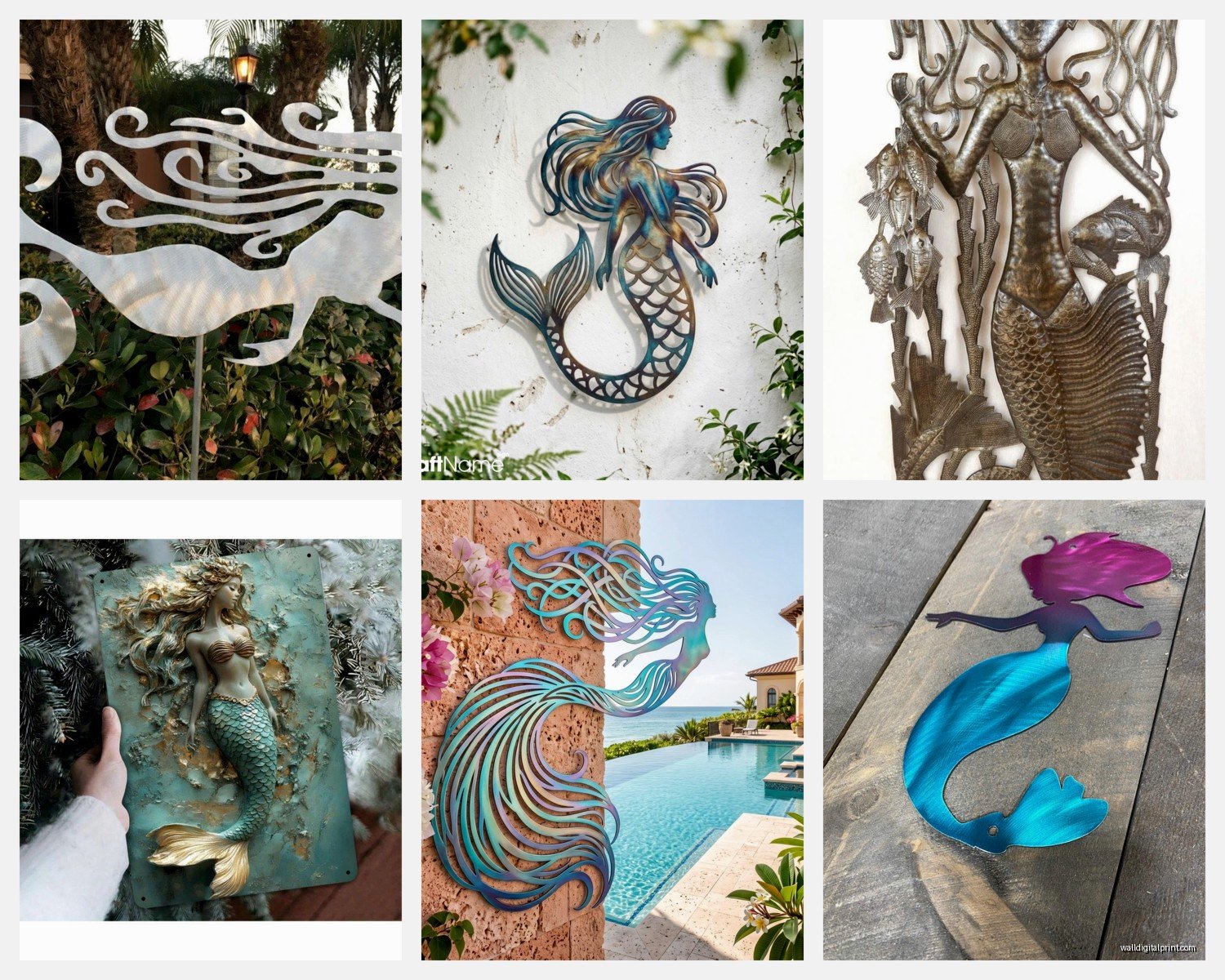
Okay so there’s basically three categories of metal mermaid art and they’re wildly different in terms of where they work. First you’ve got your flat cutout style – think silhouette shapes, usually powder-coated steel or iron. These are the most affordable, usually $40-150 range, and they work great for outdoor spaces or covered patios because they’re literally just the shape cut from sheet metal. No fancy details that’ll rust weird.
Then there’s the dimensional sculptural ones, which is what most people picture when they think “metal mermaid sculpture.” These have depth, layers, maybe copper accents or hand-hammered details. Price jumps to like $150-400 depending on size. These are what I use for indoor feature walls because they catch light differently throughout the day and actually look like art pieces.
Third category is the mixed media stuff – metal combined with capiz shell, driftwood, glass beads, whatever. These can be stunning but also… they can look like a Hobby Lobby exploded. You gotta be careful with these because the execution matters SO much. I’ve seen $300 pieces that look incredible and $300 pieces that look like crafts fair rejects.
Size Actually Matters More Than You Think
This is where everyone messes up. You cannot just eyeball this. I learned this the hard way when I ordered what looked like a decent-sized mermaid online and it showed up the size of my cat. Who was not impressed, by the way – she knocked it off the console table twice.
For a statement piece above a couch or bed, you’re looking at minimum 30 inches. Ideally 36-48 inches for the main body. Anything smaller reads as decorative accent, not focal point. I usually tell people to measure their wall space and aim for the art to take up about 2/3 to 3/4 of the width of whatever furniture is below it.
If you’re doing a gallery wall situation with multiple pieces, you can go smaller – like 18-24 inch pieces mixed with other coastal elements. But a single small mermaid on a big wall just looks… sad? Like you ran out of money halfway through decorating.
The Vertical vs Horizontal Thing
Most mermaids are vertical because duh, they’re swimming upward or sitting on rocks or whatever. But I’ve found horizontal swimming poses work better over long furniture like credenzas or in narrow hallway spaces. The vertical ones need wall height to breathe – minimum 8 foot ceilings, and even then you gotta position them right.
Finish and Color Choices That Don’t Look Ridiculous
Okay so the metallic finishes… there’s a lot of options and some are very bad. Natural metal patinas – like aged copper, bronze, or raw steel – these almost always look classy. They work with modern, traditional, coastal, industrial, whatever. The verdigris copper finish especially, where it’s got that blue-green oxidation, is *chef’s kiss* for ocean themes.
Then you’ve got painted finishes and this is where it gets tricky. Matte black can be stunning in the right space – very modern, very dramatic. I used a matte black mermaid in a bathroom with white subway tile and brass fixtures and it was perfect. But shiny metallic paint colors like bright silver or chrome? Unless your whole house is ultra-modern, it’s gonna clash.
The antiqued or distressed finishes usually photograph better than they look in person, just FYI. They can read as trying too hard to look vintage. But if your whole space has that reclaimed, weathered vibe going on, they fit right in.
And please, PLEASE avoid the ones with like… rainbow iridescent finishes or glitter incorporated into the metal. I know they look fun online but they’re impossible to style around and you’ll hate them in six months. Unless you’re doing a kids’ room, then honestly go wild.
Where to Actually Hang These Things
Bathrooms are the obvious choice but they’re also the trickiest because of humidity. If you’re doing a bathroom, make sure it’s either powder-coated metal or sealed properly, and you need decent ventilation. I’ve seen beautiful pieces get weird rust spots within a year in steamy bathrooms.
Living rooms work great if you’ve got a coastal or eclectic vibe. I would not put a mermaid in a traditional formal living room – it’s just gonna look out of place no matter how expensive it is. But in a casual family room with blues, whites, natural textures? Perfect.
Bedrooms are underrated for this. A mermaid above the bed in a guest room or kid’s room creates such a fun focal point. My niece has one in her room and she’s obsessed with it, like tells everyone who visits about “her mermaid.”
Outdoor spaces – covered patios, pool houses, three-season rooms – these are actually ideal if you get the right weather-resistant piece. The cutout silhouette styles I mentioned earlier are made for this. Just make sure it’s mounted securely because wind is a thing.
The Mounting Situation
Most of these come with D-rings or keyhole slots on the back. The lightweight ones (under 5 pounds) you can hang with regular picture hangers. But the bigger sculptural pieces, you’re gonna need wall anchors or ideally, studs. I always use a stud finder for anything over 3 pounds because drywall anchors can fail and there’s nothing worse than a metal mermaid crashing down at 2am.
Some of the really large pieces come in multiple parts that you assemble on the wall – this is actually easier to handle but takes more planning with your layout.
Styling Around It Without Going Full Nautical Explosion
This is the thing that separates “I love beach stuff” from “this actually looks good.” You don’t need to add shells and anchors and rope and driftwood everywhere just because you have a mermaid. In fact, please don’t.
I usually style mermaid art with minimal additional coastal references. Maybe one piece of coral, maybe some blue glass. The mermaid IS your statement piece – everything else should support it, not compete with it.
Colors that work: whites, creams, all the blues obviously, sandy beiges, weathered wood tones, touches of brass or copper. What doesn’t work: trying to match the exact metal finish in all your other decor. It looks too coordinated and weirdly sterile.
Textures matter more than matching colors. If you’ve got a metal mermaid, bring in soft textiles – linen, cotton, maybe a chunky knit throw. The contrast between the hard sculptural metal and soft fabrics makes both look better.
Quality Markers When Shopping Online
Since you’re probably buying this online and can’t touch it first, here’s what I look for in product descriptions and photos:
Weight is actually listed (heavier usually means thicker metal and better quality). Hand-finished or hand-painted (mass production shows). Multiple photos showing the piece from different angles and close-ups of details. Reviews with actual customer photos, not just the stock images. Information about the metal type and thickness.
Red flags: only one photo, no weight listed, “resin” mentioned anywhere unless it’s specifically a mixed media piece where that makes sense, prices that seem too good to be true (a 40-inch metal sculpture shouldn’t be $35), sellers with no return policy.
I’ve had good luck with Etsy artisans who do custom metalwork – you pay more but you get exactly what you want in terms of size and finish. HomeGoods and TJ Maxx sometimes have decent ones but it’s hit or miss and you can’t exactly order online there, gotta hunt in store.
The Maintenance Nobody Tells You About
Metal art gets dusty. Like, really dusty. Especially the dimensional pieces with all their nooks and crannies. I dust mine maybe once a month with a microfiber cloth or a soft paintbrush for the detailed areas. If it’s powder-coated, you can use a slightly damp cloth but don’t scrub aggressively.
For outdoor pieces or anything in a bathroom, check every few months for rust spots. Catch them early and you can usually sand lightly and touch up with clear sealant or matching paint. Wait too long and you’re looking at major restoration or replacement.
The mixed media ones with shells or beads or whatever… those are more delicate. No harsh cleaners, no soaking wet cloths, basically just gentle dusting and maybe a barely damp cloth if something gets actually dirty.
Oh and Another Thing About Placement
Direct sunlight can fade painted finishes over time, so if you’re hanging near a window, consider that. Natural patinas actually look better with age and sun exposure though – that verdigris copper I mentioned earlier will continue to develop character.
Also think about what’s across from it. If you hang a shiny metallic finish mermaid across from a TV or window, you might get weird glare situations. Matte finishes are more forgiving.
Price Ranges and What You Actually Get
Under $50: mostly small pieces (under 18 inches), simple cutout designs, probably imported mass production. Fine for accent pieces or outdoor use where you’re not expecting heirloom quality.
$50-$150: sweet spot for decent quality pieces in the 24-30 inch range. Enough detail to look intentional, usually better finishes, might be handmade or small batch production.
$150-$300: this is where you get really nice sculptural work, larger sizes, hand-finished details, better metals. What I’d consider investment pieces.
Over $300: custom work, really large installations, or high-end artist pieces. Worth it if you’re designing around it as a major focal point, probably overkill if it’s just one element in a room.
I’ve honestly seen $80 pieces that looked better than $250 pieces because the design was cleaner and the finish was well-executed. Price isn’t everything but it’s usually a decent indicator once you’re shopping from reputable sellers.
Mixing Metals and Other Art
Wait I forgot to mention earlier – you can absolutely mix your mermaid with other wall art but you gotta be strategic. I did a client’s living room where we had a large copper mermaid as the center piece, flanked by two framed vintage ocean maps. Worked because the frames had copper corners that tied it together, and the maps added context without being too literal.
What doesn’t work is putting a metal mermaid next to like… a canvas painting of a mermaid. It’s too much. Or surrounding it with a bunch of other metal sea creatures – suddenly it looks like an aquarium gift shop.
If you’re doing a gallery wall, the mermaid should be the only sculptural element. Everything else should be flat – prints, paintings, photographs. And leave breathing room around it so it doesn’t feel crowded.
Anyway that’s basically everything I’ve figured out through trial and error and probably spending too much time thinking about metal mermaids. The main thing is just make sure it actually fits your space and your style, not just “I like mermaids” because that’s how you end up with something expensive that doesn’t work anywhere in your house.