Wall Art Guide, Wall Art Tutoriels
Metal Cross Wall Art: Religious Christian Sculpture
Jul
So I’ve been working with metal cross wall art for years now, both in my own staging projects and for clients who want that religious touch without going full church-sanctuary vibes, and honestly there’s SO much more to think about than just picking something that looks nice on Amazon.
First thing – and I learned this the hard way after hanging a gorgeous wrought iron cross in a beach house that literally started rusting within three months – you gotta know where this thing is going. Indoor vs outdoor makes a massive difference. For outdoor pieces, you’re looking at powder-coated steel or aluminum, maybe even stainless steel if you’re near the coast. I had this client in Charleston and we specifically went with marine-grade stainless because the salt air just destroys everything else. Indoor? You have way more flexibility with finishes and materials.
The size thing is where everyone messes up. I cannot tell you how many times I’ve walked into someone’s house and they’ve got this tiny 12-inch cross on a massive wall and it just looks… lost? Or the opposite – huge 4-foot cross in a small bedroom that feels overwhelming. My general rule is measure your wall space and aim for the cross to take up about one-third to half of that visual area. So if you’ve got like a 6-foot wide wall section, you’re looking at 24-36 inch crosses. But also consider the room’s purpose, right? A prayer room or home chapel can handle something more substantial than a guest bedroom.
Oh and another thing about sizing – think about the viewing distance. Hallways where you’re passing by? Go bold and simple. A meditation space where you’ll be sitting and looking at it? You can go more intricate because you’ll actually see those details.
Material-wise, here’s what I’ve worked with:
Wrought iron is classic, has that traditional feel, can be really beautiful with scrollwork. But it’s HEAVY. Like you need proper wall anchors, not just nails. I’m talking toggle bolts or hitting studs. My dog actually knocked over one that was leaning against the wall before installation and it left a dent in the hardwood floor.
Steel with various finishes – this is probably what you’ll find most often. Brushed steel looks modern, antiqued bronze reads more traditional. Black powder coat is super versatile and doesn’t show dust as much (learned that one from having to dust a client’s collection monthly).
Aluminum is great if you need something lighter weight or it’s going outside. Doesn’t rust the same way. Can look a bit cheaper though depending on the finish quality.
Copper develops that patina over time which some people love for the aged look. I’ve used copper crosses in southwestern style homes and they’re perfect, but in a contemporary space they can feel out of place.
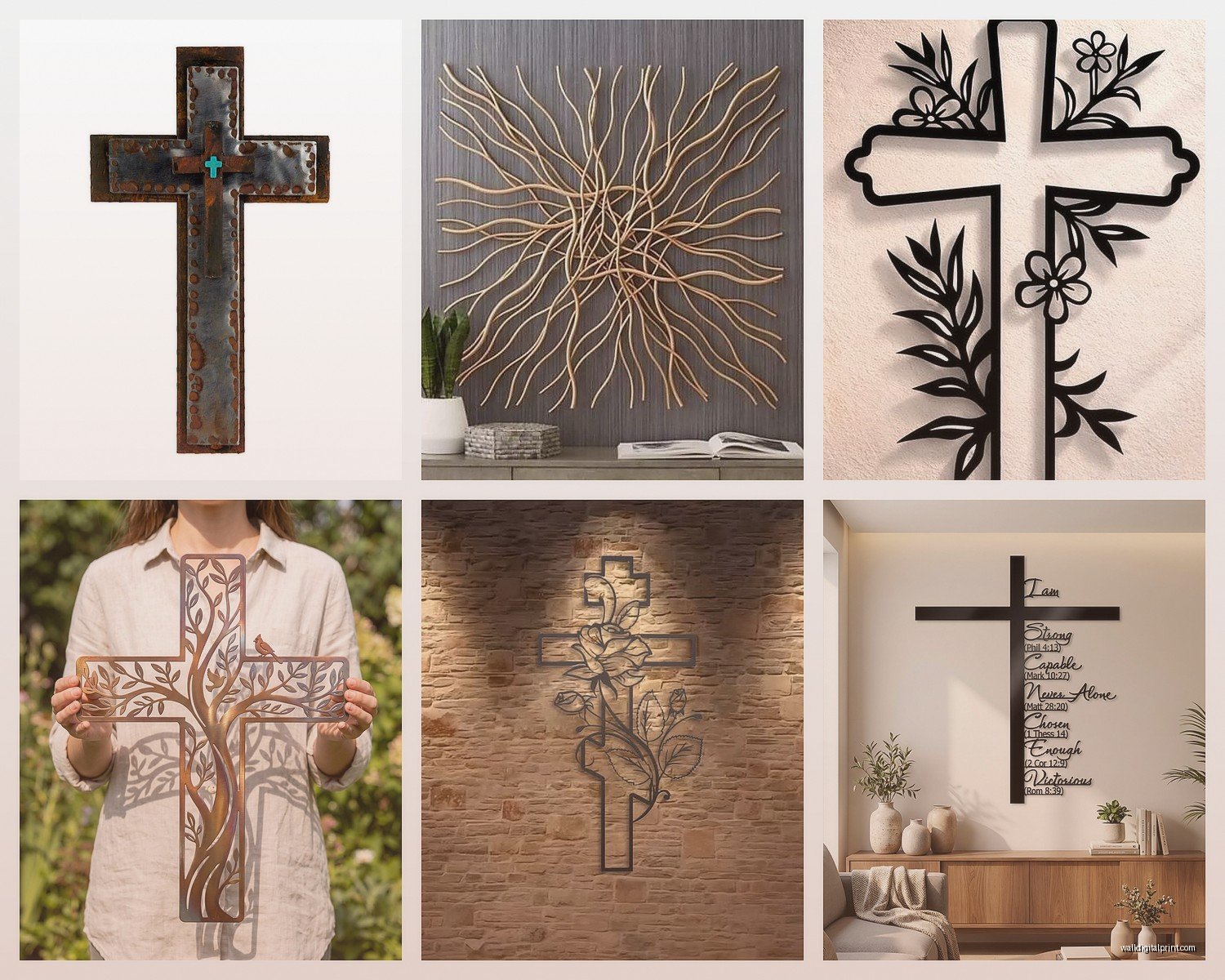
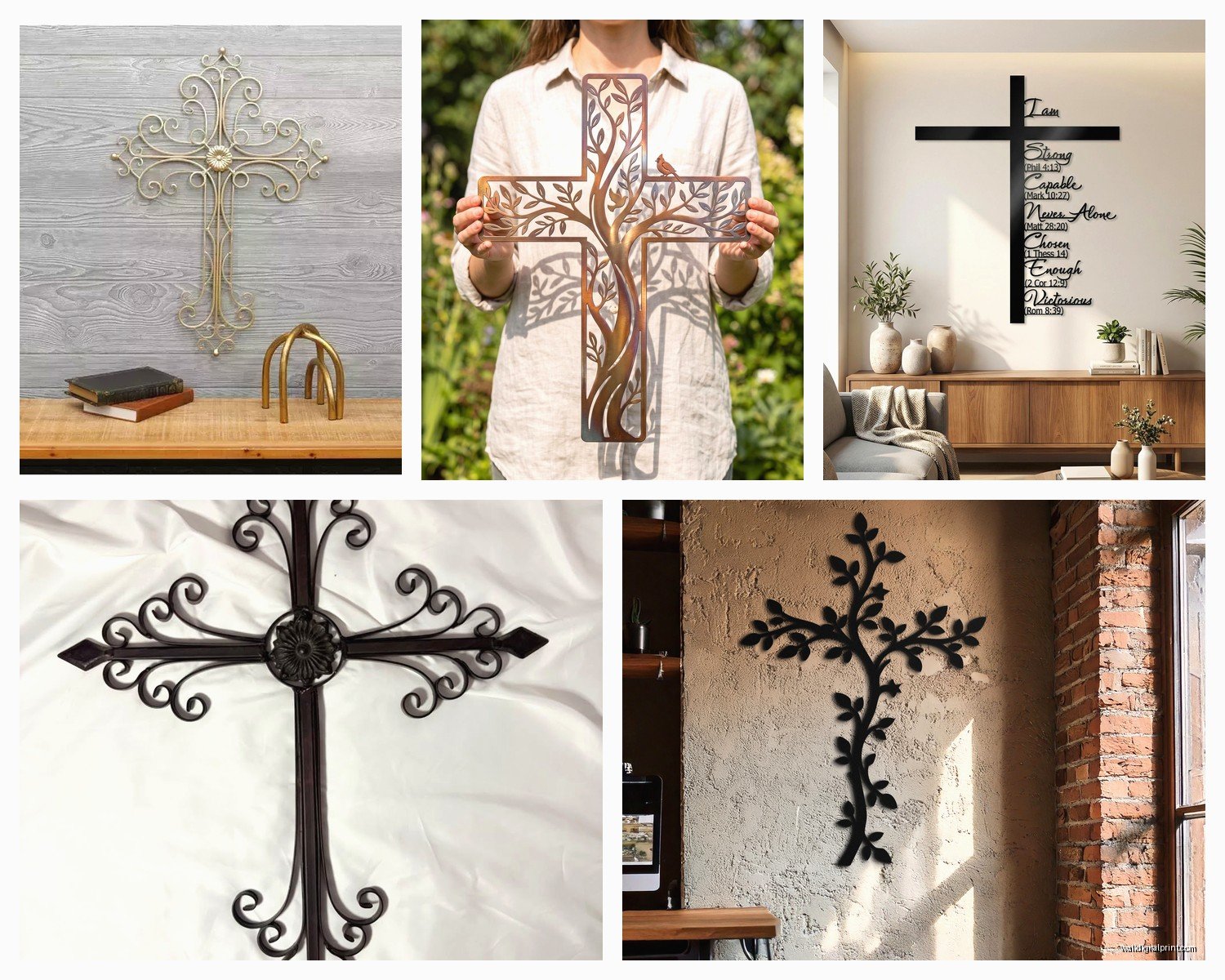
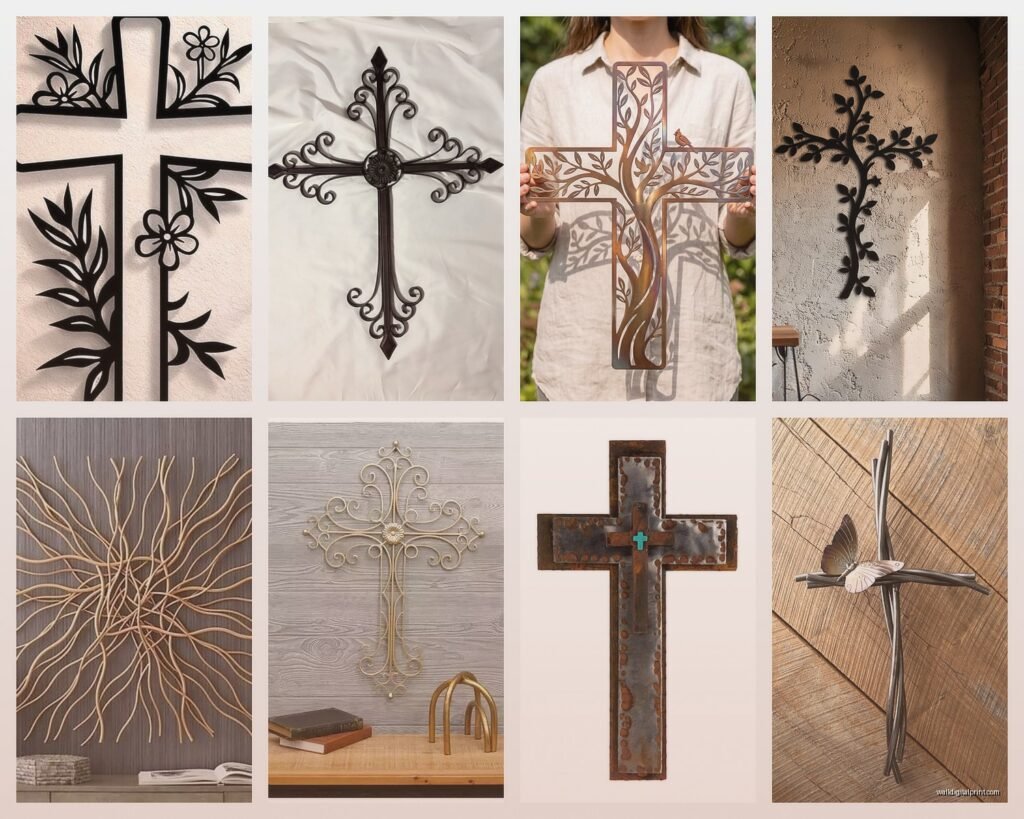
The style spectrum is wild. You’ve got your ultra-traditional Catholic crucifix with corpus, then plain Latin crosses, Celtic crosses with the circle, modern geometric interpretations, crosses made from nails (very popular right now, that whole “rugged sacrifice” aesthetic), layered dimensional pieces, crosses with scripture cutouts…
For a traditional home or someone who’s more conservative in their faith expression, I usually steer toward classic proportions and finishes. Think ornate wrought iron, maybe with some fleur-de-lis details, bronze or black finishes. These work in entryways, above mantels, in formal dining rooms.
Modern spaces can totally handle metal cross art but you gotta go cleaner lines. I just finished a condo where we used this amazing brushed steel cross that was basically two intersecting rectangles – super minimal but still clearly a cross. Looked incredible against the white shiplap wall.
Wait I forgot to mention – the whole crucifix vs cross thing. If you’re Catholic or more high-church, a crucifix (with Jesus on it) might be more meaningful. Protestant traditions typically prefer the empty cross symbolizing resurrection. This matters for your household and also if you’re staging or decorating for resale. An empty cross reads more universally.
Hanging these properly is crucial and everyone underestimates it. Most metal crosses come with either:
D-rings on the back – you’ll need picture hanging wire typically
Keyhole slots – these need specific keyhole hangers or screws
Sawtooth hangers – easier for smaller pieces
No hardware at all – gonna need to add your own
For anything over 15 pounds, I’m finding the studs and using wood screws. For drywall-only situations, those heavy duty toggle bolts that spread out behind the wall are your friend. I’ve seen too many crosses crash down in the middle of the night (scared the hell out of my client’s cat, now he won’t go in that room).
This is gonna sound weird but consider the shadow it casts. Metal pieces create these beautiful shadows, especially if you have any directional lighting. I’ve positioned crosses to intentionally catch afternoon light coming through windows and the shadow effect on the wall becomes like a second piece of art. Sounds pretentious but it actually works.
Placement ideas beyond just “on a wall”:
Above the bed as a headboard focal point – I’ve done this in master bedrooms and guest rooms, usually going 18-24 inches centered above the bed
Gallery wall integration – mix your cross with family photos, scripture art, other meaningful pieces. The cross doesn’t have to be alone and isolated
Mantel area – either hanging above or even leaning a substantial piece on the mantel itself (just secure it so it can’t tip)
Entryway or foyer – makes a statement about your household right when people walk in
Home office – I’ve had several clients who wanted that reminder in their workspace
Outdoor spaces – patios, garden walls, even mounted on fences. There’s something really beautiful about a metal cross in a garden setting
Okay so funny story – I was watching that home improvement show last week while cataloging pieces for an estate sale, and they hung this massive cross with just two nails and I literally yelled at the TV because that’s absolutely not secure enough. Use the proper amount of hanging points. If your cross has four hanging spots, use all four.
Style mixing is actually easier than you’d think. I’ve put rustic metal crosses in modern farmhouse spaces, sleek designs in traditional homes, ornate pieces in eclectic rooms. The key is finding one other element that ties it in – maybe the metal finish matches your light fixtures, or the scale works with your other wall art, or the color coordinates with your textiles.
For families with kids, think about placement height. I generally keep sharp or pointy crosses higher up, especially those nail crosses or ones with pronounced edges. No judgment on decorating choices but also nobody wants a trip to urgent care.
Maintenance is pretty minimal but worth mentioning. Dust regularly with a microfiber cloth – those crevices collect dust like crazy. For outdoor pieces, check annually for any finish deterioration and touch up if needed. If you’ve got an antiqued or distressed finish, don’t use harsh cleaners that’ll strip that intentional aging. Just wipe down with a barely damp cloth.
Price ranges are all over the place. You can find mass-produced metal crosses for $20-40 at places like Hobby Lobby or Kirkland’s. Mid-range artisan pieces run $75-200. High-end custom or gallery work can go $300-1000+. I’ve worked with all price points and honestly, for most residential applications, the $75-150 range gets you really nice quality that’ll last.
Where to buy – beyond the obvious Amazon and Wayfair (which honestly have decent selections), check:
Local metal artists and craftspeople – often do custom sizing
Etsy for unique handmade options
Church supply stores sometimes have better quality than general retailers
Estate sales and antique shops for vintage pieces with actual patina
Architectural salvage places for really unique finds
The custom route is worth considering if you have specific sizing needs or want something truly unique. I worked with a metalworker who created a cross incorporating the family’s initial into the design and it was stunning. Cost about $250 but it was a meaningful investment piece.
Color coordination matters more than people think. Black metal crosses work with basically everything. Bronze tones look gorgeous with warm color palettes – think creams, taupes, warm grays. Silver and brushed steel read cooler and pair well with blues, cool grays, whites. Copper obviously brings warmth. Painted finishes like distressed white or turquoise can work in cottage or coastal styles.
Multi-piece sets are having a moment too – like three crosses in graduating sizes, or a cross with coordinating metal scripture signs. These work well for larger wall spaces or when you’re creating a dedicated spiritual corner in your home.
The whole “too much” question comes up a lot. How many crosses are too many? Honestly it’s personal preference and your comfort level. I’ve decorated homes with one statement cross and homes with crosses in multiple rooms. If it feels right for your household and doesn’t overwhelm the space visually, you’re fine.
Lighting these pieces can really elevate them. Picture lights, directional can lights, even LED strips behind for a halo effect. I did a home chapel space with uplighting on a large copper cross and it was gorgeous during evening prayer times.
For renters or people who don’t wanna put holes in walls, there are options. Command strips work for lightweight pieces (under 5 pounds). Lean larger pieces on mantels or shelves. Use easel stands for tabletop display. I’ve even seen people incorporate metal crosses into bookshelf styling.
One mistake I see constantly – buying online without checking dimensions carefully. That cross that looks huge in the product photo? Might be 10 inches. Always check actual measurements and if possible, tape out the dimensions on your wall before ordering.
The meaningful aspect matters too obviously. This isn’t just decor, it’s expressing faith. Take time to find something that resonates spiritually, not just aesthetically. I always tell clients that your home should reflect what matters to you, and if your faith is central, your space should show that in ways that feel authentic.