Wall Art Guide, Wall Art Tutoriels
Arabic Wall Art: Islamic Calligraphy Middle Eastern Decor
Jul
So I’ve been obsessing over Arabic wall art lately and honestly it started because a client asked me to source some Islamic calligraphy pieces and I went down this total rabbit hole. Like I thought I knew Middle Eastern decor but there’s SO much more to it than those generic “live laugh love” equivalents you see everywhere.
Understanding What You’re Actually Looking At
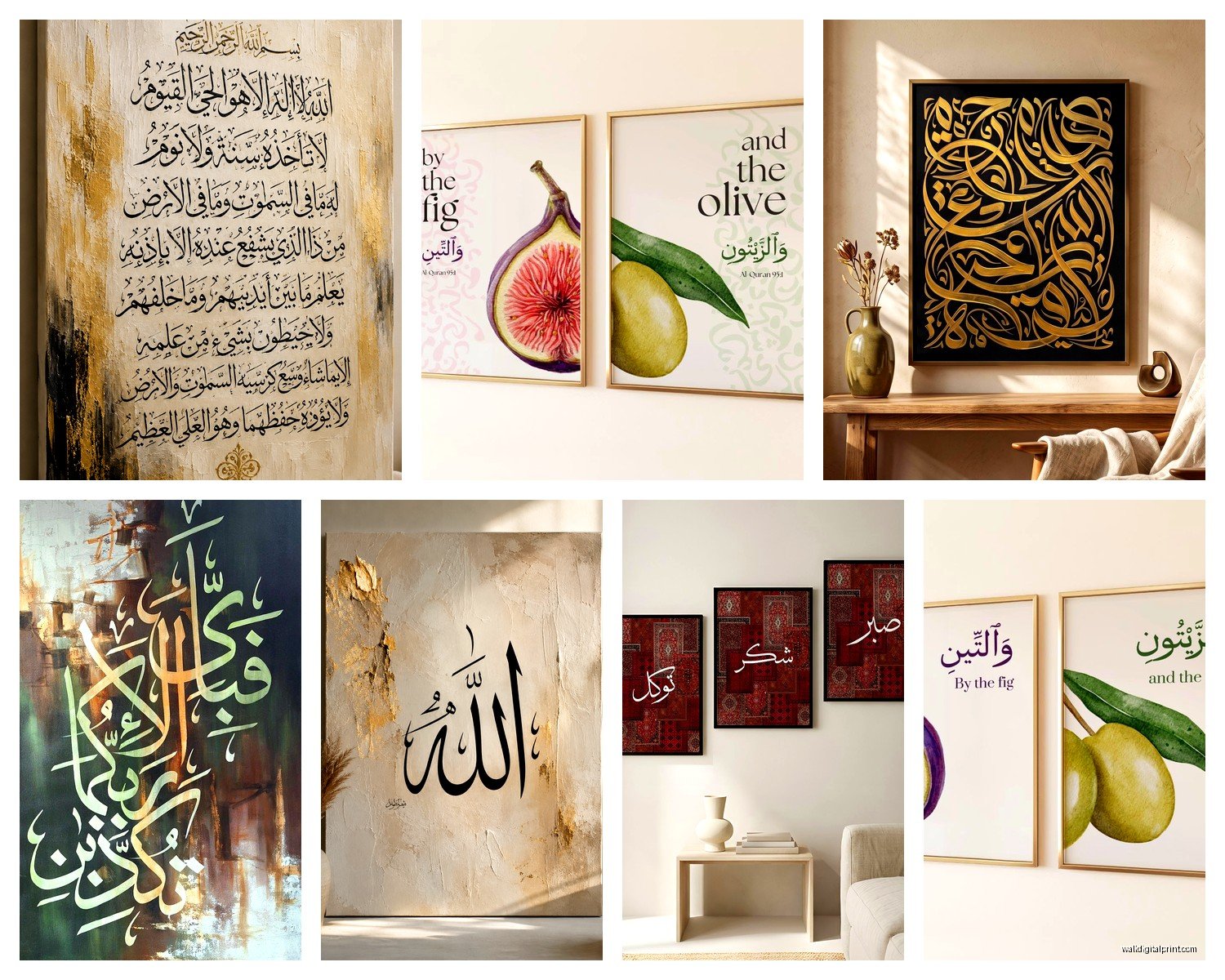
Okay first thing – Islamic calligraphy isn’t just pretty letters. The main styles you’ll see are Thuluth (the really elegant curved one), Kufic (geometric and angular), Naskh (more readable, like regular handwriting but fancy), and Diwani (super ornate, almost looks like decoration more than words). I spent like three hours one night while watching that baking show trying to identify which style was which on Etsy and honestly it’s hard at first.
The thing is, most pieces feature Quranic verses, the names of Allah, or phrases like “Bismillah” (in the name of God) or “Alhamdulillah” (praise be to God). Even if you’re not Muslim, these pieces carry serious meaning for a lot of people, so maybe don’t just stick them in your bathroom? I learned this the hard way when I suggested a beautiful piece for a powder room and my client very gently explained why that wasn’t appropriate.
What Actually Works in Modern Spaces
The black and gold combo is like… everywhere right now and for good reason. I found this amazing set on Etsy – three panels with geometric Kufic script in matte black with gold leaf accents. Hung them in my own living room above a grey sectional and the contrast is *chef’s kiss*. Cost me about $180 for the set but they look way more expensive.
Metallic finishes are huge too. Copper and brass work surprisingly well with both warm and cool color schemes. I’ve got this copper geometric piece that’s technically Arabic-inspired rather than actual calligraphy – it’s got that tessellated pattern you see in mosques but abstracted. Picked it up from a small business in Morocco through Instagram (took forever to ship but worth it).
Size and Placement Because Everyone Gets This Wrong
Don’t go too small. Like seriously, I see people buying these 8×10 pieces and hanging them on a massive wall and it just looks lost. For a standard living room wall, you want at least 24×36 inches or a multi-panel setup. I usually do three 16×20 panels or one large statement piece that’s minimum 30×40.
The entryway thing is interesting – in many Middle Eastern homes, you’ll see calligraphy right when you enter, often a welcoming phrase or blessing. I did this in my hallway with a “Marhaba” (welcome) piece and people always comment on it. It’s that first impression moment.
Above the bed is tricky. Some phrases are totally fine, others are considered disrespectful to have in a bedroom. If you’re going for authenticity and respect, maybe stick with nature-inspired geometric patterns or the word “peace” in Arabic (سلام) for bedroom spaces.
Color Schemes That Don’t Look Like a Theme Restaurant
Okay so funny story, my first attempt at incorporating Arabic wall art made my dining room look like a hookah lounge. Too much going on. Here’s what actually works:
Monochromatic is your friend. All black calligraphy on white or cream backgrounds feels clean and modern. I found this incredible piece on Wayfair (I know, I know, but sometimes they have good stuff) that’s just black Thuluth script on natural linen and it’s stunning.
Navy and gold – this combo feels more sophisticated than black and gold somehow? Less stark. Works really well in spaces with warm wood tones.
Earth tones if you’re going for that organic modern vibe. Terracotta, sage, cream, with bronze or copper metallics. This is my current obsession and I’m slowly converting my whole aesthetic.
The all-white thing can work but you need texture. White calligraphy on white with like carved or embossed elements. Very subtle but gorgeous when the light hits it right.
Materials Matter More Than You Think
Canvas prints are the most common and affordable. They’re fine, but they can look kinda flat. If you go this route, get something with texture or a hand-painted finish. I bought one from Society6 that was just a regular print and returned it because it looked too… digital? Like a poster.
Metal art is where it’s at honestly. Especially laser-cut steel or aluminum with powder coating. The shadows they create on the wall add this whole other dimension. I have a copper-finished metal piece of the word “sabr” (patience) that catches afternoon light and creates these beautiful patterns. Cost about $120 from a seller on Etsy called something like MiddleEasternMetalArt or similar.
Wood – either carved or with inlay work. These feel more traditional but can still work in modern spaces if the design is clean. I saw this walnut piece with mother-of-pearl inlay at a gallery and almost bought it but it was like $800 and I couldn’t justify it. Still think about it though.
Acrylic with LED backlighting is very extra but can be cool in the right space. My friend has one in her home office and it’s actually not as tacky as it sounds. The glow effect makes the calligraphy look like it’s floating.
Where to Actually Buy This Stuff
Etsy is honestly my go-to. Search for “Islamic wall art” or “Arabic calligraphy art” and you’ll find tons of sellers. Look for shops that show the actual product in real homes, not just mockups. I’ve been burned by mockups that looked amazing and then the actual piece was tiny or cheap-looking.
There’s this one seller – IslamicArtStudio or something similar – that does custom work. You can choose your phrase, style, colors, size. Takes about 3-4 weeks but the quality is solid. Used them for a client project and they were happy to explain the meaning of different phrases which was super helpful.
Instagram has a bunch of Middle Eastern artists selling directly. I found this amazing Syrian artist who does contemporary takes on traditional calligraphy. Her pieces are pricier (starting around $300) but they’re actual art, not mass-produced stuff.
For budget options, Amazon surprisingly has some decent choices but you gotta dig. Read reviews carefully because quality varies wildly. I bought a three-piece set for like $45 that was actually pretty good for a guest room.
Local Islamic bookstores or cultural centers sometimes sell art too. The pieces tend to be more traditional but often support local artists or charities.
Mixing Styles Without Looking Confused
This is where people get nervous but it’s actually not that hard. Arabic wall art works with:
Minimalist Scandinavian – the clean lines of geometric Kufic script fit perfectly with this aesthetic. Keep it monochrome and let the calligraphy be your main statement piece.
Boho eclectic – obviously. Mix with macrame, rattan, plants, global textiles. Just don’t go overboard with the “exotic” vibe. Like one or two calligraphy pieces max in a boho space.
Industrial modern – metal calligraphy art looks sick against exposed brick or concrete. The contrast between rough industrial elements and elegant script is really striking.
Contemporary glam – gold or silver metallic pieces with mirrors, velvet, marble. This can veer into too much pretty quickly though so keep the rest of the decor relatively simple.
Traditional/transitional – carved wood pieces, ornate frames, rich colors. This is probably the most natural pairing but can feel heavy if you’re not careful.
The Respect Factor We Gotta Talk About
Look, I’m not Muslim but I’ve learned a lot working with clients who are and just doing basic research. If you’re buying Islamic calligraphy as a non-Muslim person for purely aesthetic reasons, that’s… okay I think? But be thoughtful about it.
Don’t put religious verses in bathrooms or anywhere they might be disrespected. Don’t hang them in places where they’d be below people (like if you have a loft situation, maybe don’t put them where people walk above them).
If you don’t know what a piece says, find out before you buy it. I almost bought this gorgeous piece that turned out to be a very specific prayer and it felt weird to just use it as decoration without understanding the meaning.
Consider buying from Muslim artists when possible. They’ll often provide context and can guide you toward pieces that are appropriate for your space and intention.
Oh and another thing – if you have guests who are practicing Muslims, they might do a double-take at your decor choices. Just be prepared to explain why you chose these pieces and show that you’ve been respectful about it.
DIY Options If You’re Into That
I tried making my own using those vinyl decals and honestly it turned out okay? Not amazing, but okay. You can buy Arabic calligraphy decals on Amazon or Etsy and apply them to canvas or directly on walls. The key is using transfer tape properly – I messed up my first attempt because I rushed this part.
Stencils are another option. More time-consuming but you get that hand-painted look. I used acrylic paint on a large canvas, gold on navy blue, and it’s hanging in my bedroom now. Took me like three episodes of that true crime show to finish but I’m pretty proud of it.
Print and frame is the easiest DIY route. Download high-resolution Islamic art prints (make sure they’re legal to use – lots of artists offer free downloads or cheap digital files), print at a local print shop, and frame. I did this for a client on a tight budget and spent maybe $60 total for three large frames pieces.
Lighting Makes or Breaks These Pieces
Picture lights are worth it for calligraphy art. The way light hits the curves and angles of the script completely changes how it looks. I installed small LED picture lights above my main piece and wow, the difference.
Natural light is beautiful but watch for fading, especially with prints. UV-protective glass or acrylic is worth the extra cost if the piece is in direct sunlight.
Backlighting for certain materials (like acrylic or thin metal) creates this ethereal effect. You can get LED strips for like $15 on Amazon and mount them behind the piece. Very modern mosque vibes.
Avoid overhead lighting that creates shadows in weird places. You want the light to enhance the calligraphy, not create confusing shadow patterns.
Combining Multiple Pieces
Gallery walls with Arabic calligraphy can work but need balance. I usually mix calligraphy pieces with geometric patterns, photography from Middle Eastern locations, or abstract art in complementary colors. All calligraphy can feel overwhelming.
The rule of odds applies – three pieces or five pieces usually look better than two or four. I did a five-piece arrangement in my client’s dining room with three calligraphy pieces and two geometric patterns and it flows really nicely.
Symmetry vs asymmetry is personal preference but I lean toward asymmetrical arrangements for a more collected, organic feel. Perfect symmetry can feel too formal unless that’s your whole vibe.
Spacing matters – give each piece room to breathe. I usually do 3-4 inches between frames minimum. Closer than that and they start competing for attention.
My cat just knocked over my coffee which is apparently her way of telling me I’ve been typing too long but anyway –
The frames you choose matter way more than you’d think. Ornate gold frames can work for traditional pieces but might be too much for modern calligraphy. I usually go with simple black, walnut, or natural wood frames. Or no frame at all for canvas or metal pieces.
Arabic wall art and Islamic calligraphy can completely transform a space if you approach it thoughtfully. It’s not just about jumping on a trend – these pieces have deep cultural and religious significance that deserves respect. But when done right, the combination of artistic beauty and meaningful content creates something really special in your home.