Wall Art Guide, Wall Art Tutoriels
Bee Wall Art: Honeybee Pollinator Garden Insect Decor
Jul
So I’ve been obsessing over bee wall art lately because honestly, it started when this client wanted to do a whole pollinator garden theme in her breakfast nook and I went down this massive rabbit hole of honeybee decor and now my office is basically covered in samples.
The thing with bee art is it can go super kitschy real fast or like, weirdly scientific in a way that doesn’t work for most spaces. You gotta find that balance between charming and sophisticated, which sounds impossible but I’ve tested enough pieces now to know what actually works.
Understanding the Different Bee Art Styles
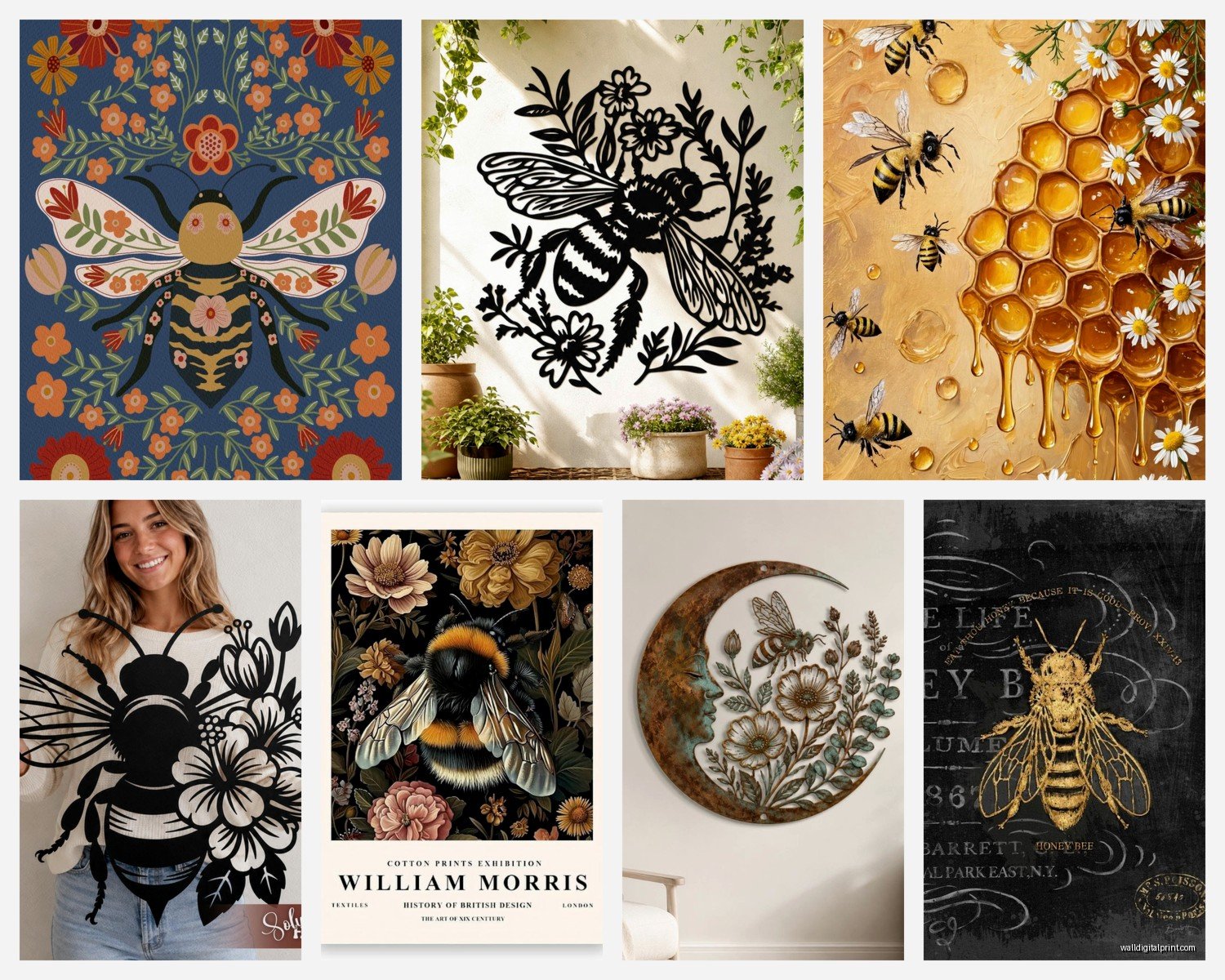
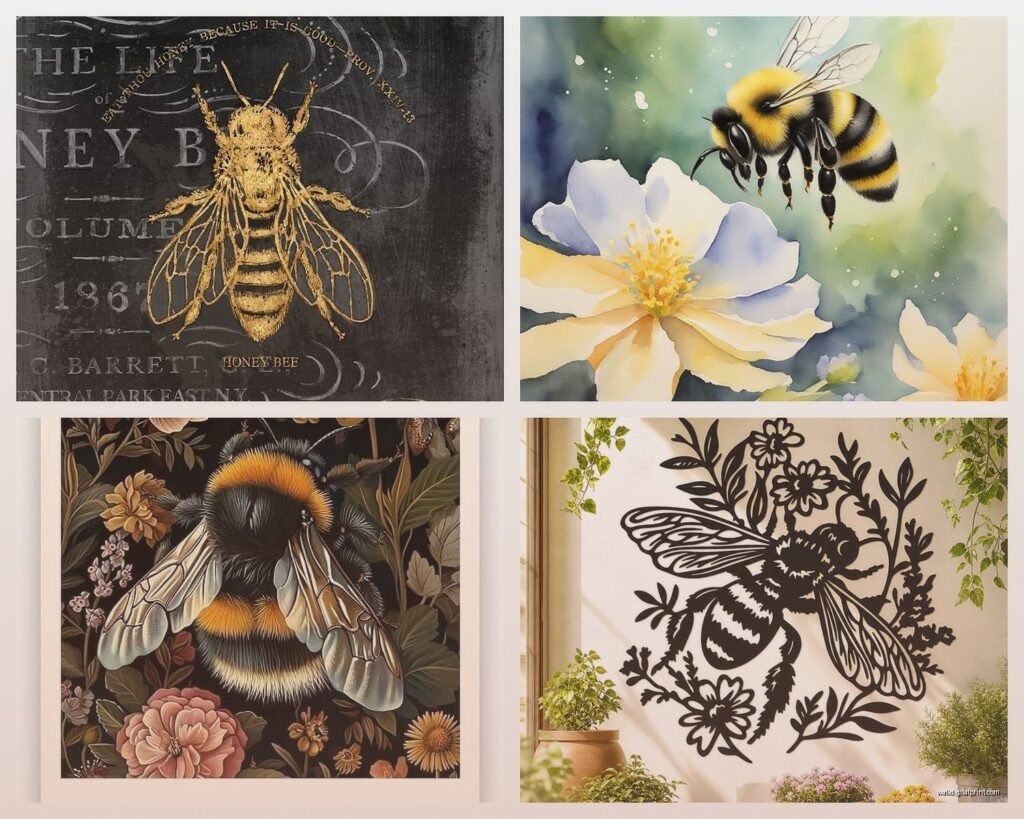
Okay so there are basically four main categories I’ve noticed. You’ve got your vintage botanical illustration style – these are the ones that look like they came from old science textbooks, usually featuring really detailed anatomical drawings of bees with Latin names underneath. Super popular right now and they work in literally any room that’s not like, ultra modern.
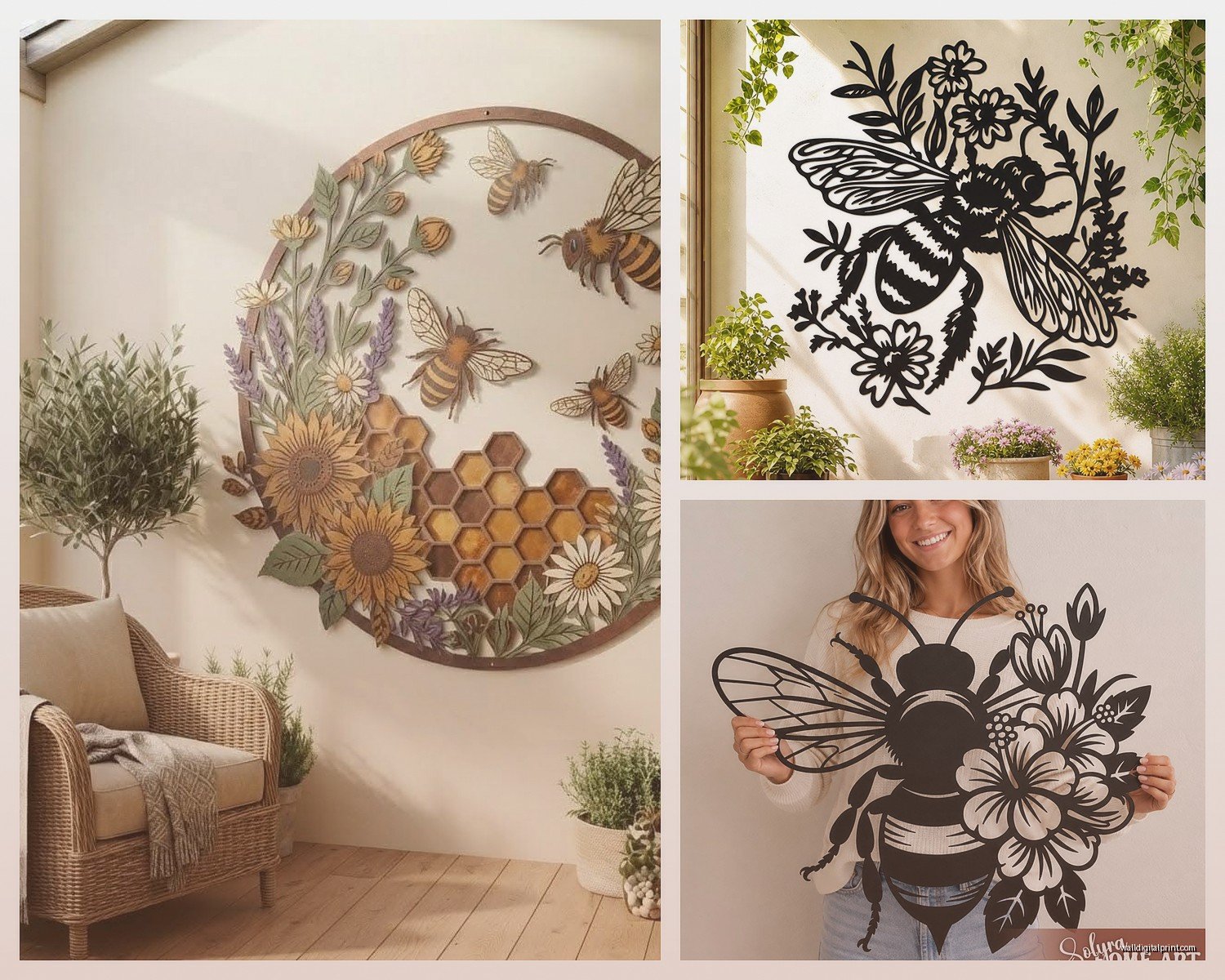
Then there’s the folk art/primitive style which is more whimsical, often featuring bees with stripes that are too chunky, flowers that look hand-painted in that intentional naive way. These are great for farmhouse or cottage core vibes but they can read too cutesy if you’re not careful.
The modern geometric style is where you get abstract honeycomb patterns, hexagonal designs, sometimes the bees are just simplified shapes. This works better in contemporary spaces obviously, and it’s easier to mix with existing decor because it’s less literal.
And then there’s the realistic photography or hyperrealistic painting style. I’m gonna be honest, I rarely recommend these unless someone is like, an actual beekeeper or entomologist because they can be intense? Like beautiful but intense.
What Actually Looks Good on Walls
I spent probably too much time testing different arrangements and here’s what I learned. The vintage botanical prints work best in a grid or symmetrical arrangement. Get like three or four prints, same frame style, hung in a perfect grid – this looks insanely expensive even if you printed them yourself. I did this in my dining room and people always ask where I got them.
For folk art pieces, you want to go bigger and do a single statement piece rather than multiple small ones. The style is already busy enough that clustering them makes it look cluttered. I made this mistake in a client’s mudroom and we had to redo it.
The geometric honeycomb stuff is actually the most versatile? You can mix it with other nature prints, other abstract pieces, even family photos. It reads as pattern rather than theme so it doesn’t overwhelm the space.
Frame Selection Matters More Than You Think
Natural wood frames are the obvious choice but they can make bee art look too country. What I’ve been doing lately is mixing brass or gold frames with bee imagery because there’s this nice connection to honey and it elevates the whole thing. Black frames work great for the vintage botanical style, especially if you’re going for that apothecary cabinet vibe.
White frames are tricky – they can wash out lighter colored bee prints. I learned this the hard way when I ordered five white frames for these beautiful cream and gold prints and they just disappeared on the wall.
Color Coordination and Room Placement
Bee art naturally brings in yellows, golds, blacks, and usually some natural browns and greens from flowers or honeycomb. You gotta think about whether these colors work with your existing palette.
In kitchens, bee art is almost too perfect? Like it makes sense thematically with honey and food and nature but that’s also why it can feel expected. I actually prefer putting bee art in unexpected places – home offices work great, bedrooms can be really charming, even bathrooms if you’ve got a garden or nature theme going.
My living room has this huge three-panel bee print and my dog always barks at it when the light hits it a certain way which is annoying but also kinda funny.
Mixing Bee Art with Other Decor
This is where people get nervous but honestly it’s not that hard. Bee prints mix well with:
- Other botanical prints obviously
- Herb garden artwork
- Vintage seed packet prints
- Landscape paintings with meadows or gardens
- Abstract art in complementary colors
- Black and white photography if your bee prints are colorful
What doesn’t work as well – animal prints that are too different in style, like if you have realistic bee photos don’t mix them with cartoonish bird drawings. Beach themes and bee art don’t really mesh unless you’re doing something really specific. And I’d avoid mixing bee art with other insect art unless you’re intentionally creating a natural history collection look.
Size and Scale Guidelines
For a standard wall like above a sofa or bed, you want your bee art to take up about two-thirds to three-quarters of the furniture width. So if your couch is 84 inches, your art arrangement should be roughly 56-63 inches wide.
Single large prints should be at least 24×36 inches to make an impact. Anything smaller reads as an afterthought unless you’re doing a gallery wall situation.
Gallery walls with bee themes work best when you have 5-9 pieces. Less than that looks incomplete, more than that gets chaotic. I’ve done probably fifteen gallery walls this year and that range is the sweet spot.
Height Placement
Standard rule is center of the artwork at 57-60 inches from the floor, which is average eye level. But in dining rooms I go slightly lower, maybe 54-56 inches, because people are sitting. In hallways you can go higher if the ceilings are tall.
Oh and another thing – in kids’ rooms, lower that art down so they can actually see it. I did a bee-themed nursery last spring and hung everything at adult height initially and the mom was like “the baby can’t even see these” and she was right, we had to adjust.
DIY vs. Purchased Options
Okay so funny story, I used to think you had to buy expensive art prints but then I discovered you can get incredible vintage bee illustrations from library archives and museum databases for free. The Biodiversity Heritage Library has thousands of pollinator illustrations you can download in high resolution.
I’ve printed probably thirty different images through a local print shop for like $15-30 each depending on size. Compare that to buying “art prints” online that are often the same public domain images marked up to $80-150.
For actual paintings or original art, Etsy is honestly great but you gotta search smart. Look for “original bee painting” or “bee illustration watercolor” rather than just “bee art” which pulls up mostly mass-produced prints.
Local art fairs are where I’ve found my favorite bee pieces though. There’s something about supporting actual artists and getting one-of-a-kind work that makes the space feel more personal.
Materials That Work
Canvas prints are durable and don’t need glass which is great for high-traffic areas or homes with kids. But they can look cheap if the print quality isn’t good – you want at least 300 dpi resolution.
Framed paper prints under glass look more sophisticated but they’re more delicate and expensive to frame. Worth it for formal spaces like dining rooms or home offices.
Metal prints have this cool modern look and the colors pop like crazy. I did a bee macro photo on metal for a client’s kitchen and it’s stunning, really durable too.
Wood prints where the image is printed directly on wood planks give you that rustic vibe. These work great for the folk art style bees but less so for detailed botanical illustrations.
Creating a Cohesive Pollinator Theme
If you’re going full pollinator garden theme beyond just bees, you can incorporate butterfly art, hummingbird prints, and flower paintings. The key is keeping the style consistent – all vintage botanical, all watercolor, all photography, whatever.
I did a whole sunroom last month with a pollinator theme and we mixed bee prints with lavender botanical illustrations and butterfly specimens under glass. It felt collected rather than themed because everything was in that natural history style.
Color palette for pollinator themes should stay earthy – think sage greens, warm golds, terracotta, cream, soft yellows. If you introduce too many bright colors it starts feeling like a kindergarten classroom.
Complementary Decor Elements
To support your bee wall art without overdoing it:
- Honeycomb patterned throw pillows but like, one or two max
- Brass or copper accessories since they echo honey tones
- Real or faux plants especially herbs and flowers
- Natural fiber textiles – linen, cotton, jute
- Wooden furniture pieces with visible grain
- Vintage glass bottles or apothecary jars
What you don’t need – bee figurines, bee-shaped everything, anything with the word “bee happy” or “bee kind” on it. I know that sounds harsh but that stuff makes it feel like a Hobby Lobby threw up on your wall.
Lighting Considerations
This is something I forgot to mention but it’s actually really important. Bee art with a lot of yellow and gold needs the right lighting or it can look dingy. Natural light is obviously ideal but if you’re working with artificial light, use warm white bulbs not cool white.
Picture lights are worth the investment if you’re hanging bee art in a hallway or darker space. Those little brass picture lights add ambiance and make the art look intentional and curated.
Avoid hanging bee prints in direct harsh sunlight because the colors will fade, especially if they’re paper prints. I learned this when my client’s beautiful vintage bee print got completely washed out after one summer in a south-facing window.
Seasonal Rotation Ideas
One thing I’ve started doing is treating bee art as part of spring/summer decor and rotating it out in fall. Not necessary if you really love it year-round, but it keeps things feeling fresh.
I swap my bee prints for autumn botanical prints in October, then bring them back out in March. Takes like twenty minutes and makes my space feel updated without buying new stuff.
Storage for Rotated Art
If you’re gonna do seasonal rotations, invest in proper art storage. I use those flat boxes from the Container Store, they’re like $15 each and protect frames from getting scratched. Store them standing up not flat stacked because the weight can damage frames over time.
Budget Breakdown
Since you’re probably wondering what this actually costs:
Low budget (under $100): Print your own vintage illustrations, use simple frames from Target or Ikea, do a gallery wall of 4-6 smaller prints. Totally doable and can look expensive if you’re thoughtful about arrangement.
Mid budget ($100-300): Mix some DIY prints with a few purchased pieces from Etsy, invest in better frames like from Framebridge or even custom framing one statement piece. This is where most people land.
High budget ($300+): Original artwork, custom framing throughout, maybe a large commissioned piece. I’ve had clients spend $800 on a single bee painting and it’s gorgeous but definitely not necessary.
The sweet spot in my experience is around $150-200 for a full wall arrangement that looks polished and intentional.
Common Mistakes to Avoid
Hanging everything too high – I see this constantly and it makes rooms feel disconnected.
Mixing too many styles of bee art – pick vintage botanical OR folk art OR modern, don’t try to combine all three.
Going too literal with the theme – you don’t need bee everything, the wall art can stand alone.
Ignoring the rest of your color palette – if your room is all cool grays and blues, warm golden bee art might clash.
Buying prints that are too small for the space – scale matters so much and people always underestimate how big art should be.
Using cheap frames on nice prints – the frame quality makes or breaks the final look, it’s worth spending a bit more here.
Wait I forgot to mention – if you’re hanging multiple pieces, lay them out on the floor first and take a photo. This saves so much time and wall damage from repositioning. I literally do this every single time now and it’s changed my life, or at least my walls.
Anyway that’s basically everything I’ve learned from way too much time thinking about bee art. It’s one of those themes that can work in so many spaces if you approach it thoughtfully rather than just buying everything bee-related you see.