Wall Art Guide, Wall Art Tutoriels
Lotus Flower Wall Art: Buddhist Spiritual Purity Symbol
Aug
So I’ve been working with lotus flower wall art for like three years now and honestly it’s one of those things where clients either get it immediately or they’re totally confused about where to even start. Let me just dump everything I know because I literally just finished staging a meditation room yesterday with this exact theme.
The Whole Purity Symbol Thing Actually Matters
Okay so here’s what you gotta understand about lotus art – it’s not just a pretty flower. In Buddhist symbolism the lotus grows out of muddy water but blooms totally clean and that whole journey from mud to bloom represents spiritual enlightenment and purity. Which sounds super philosophical but it actually affects how you should pick your pieces because context matters.
I had this client last month who bought this gorgeous metallic lotus piece and stuck it in her kitchen and it just felt… wrong? Like we moved it to her bedroom meditation corner and suddenly it made sense. The energy was different. My cat keeps knocking over my coffee while I’m typing this but anyway – placement is everything with spiritual symbols.
Materials and What Actually Works
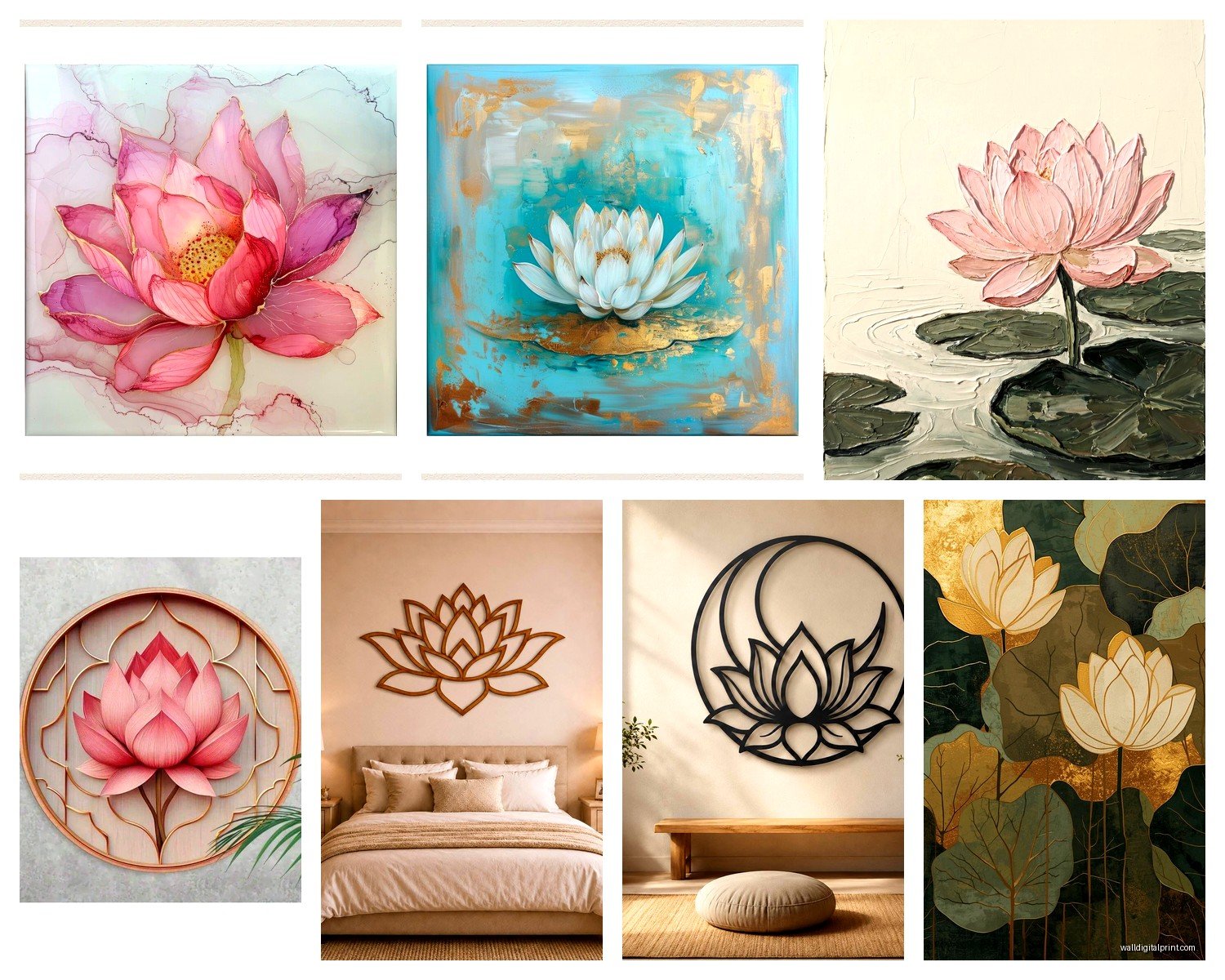
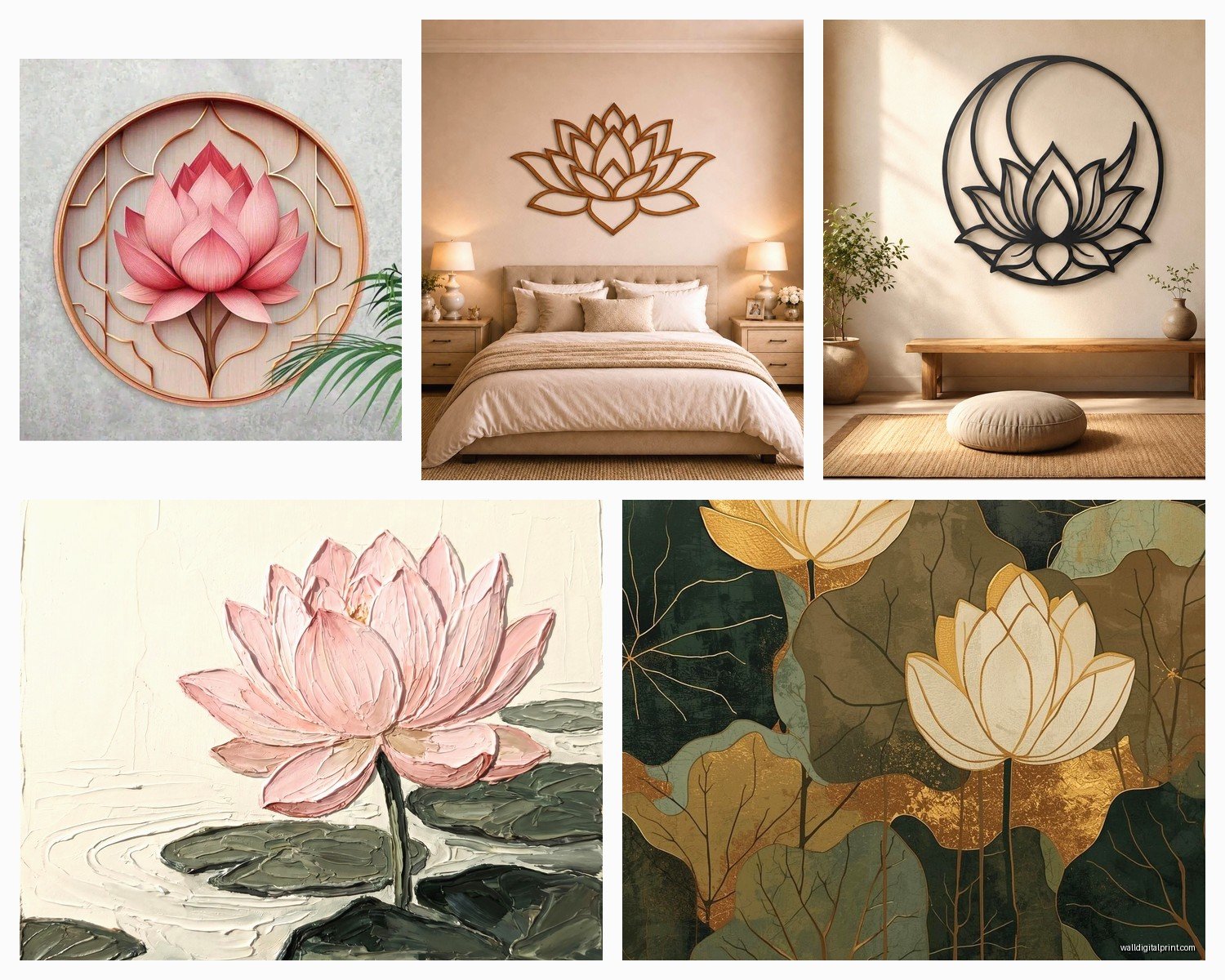
Metal wall art is probably my go-to for lotus designs. The three-dimensional aspect really captures that upward growth element. I’ve used pieces from like $40 up to $600 and honestly the mid-range stuff around $120-180 holds up better than you’d think. Look for powder-coated finishes because they don’t show fingerprints as much when you’re hanging them.
Canvas prints are easier if you’re renting or don’t wanna deal with heavy mounting. But here’s the thing – go for gallery wrapped edges so you don’t need a frame. Frames can make lotus art look too formal and kinda kill the organic spiritual vibe. I learned this the hard way after framing like five pieces for a yoga studio and the owner hated them all.
Wood carved lotus art is beautiful but SO specific. It only works in certain spaces – think natural materials, lots of plants, that whole earthy aesthetic. I found this amazing carved teak piece at a estate sale for $30 and it’s still one of my favorite finds but it took me six months to figure out where to use it.
The Color Situation
White or pale pink lotus = purity and spiritual perfection (very traditional Buddhist symbolism)
Blue lotus = wisdom and knowledge
Red lotus = the original nature of the heart, love and compassion
Purple lotus = mysticism, usually shown as a closed bud
I know that sounds like those generic “color meaning” charts but with lotus art it genuinely affects the room energy. I did a comparison in my own space – had a red lotus in my office for two weeks then switched to white and the whole vibe shifted. Could be placebo but clients notice it too.
Size and Scale Nobody Talks About
This is gonna sound weird but lotus art almost always looks better bigger than you think. Like that piece you’re looking at thinking “hmm maybe too large” is probably perfect. The symbolism of the lotus is about expansion and growth so tiny pieces feel contradictory.
For over a bed or meditation cushion – aim for at least 30-40 inches wide. Above a console table or in a hallway – 24 inches minimum. I see people buying these 12×12 inch lotus prints and they just disappear on the wall.
Oh and another thing – if you’re doing a gallery wall with multiple lotus pieces (which can look amazing btw), use odd numbers. Three or five pieces. The asymmetry feels more organic and less corporate hotel lobby.
Actual Placement That Makes Sense
Meditation spaces are obvious but not everyone has a dedicated meditation room. Here’s where I’ve used lotus art successfully:
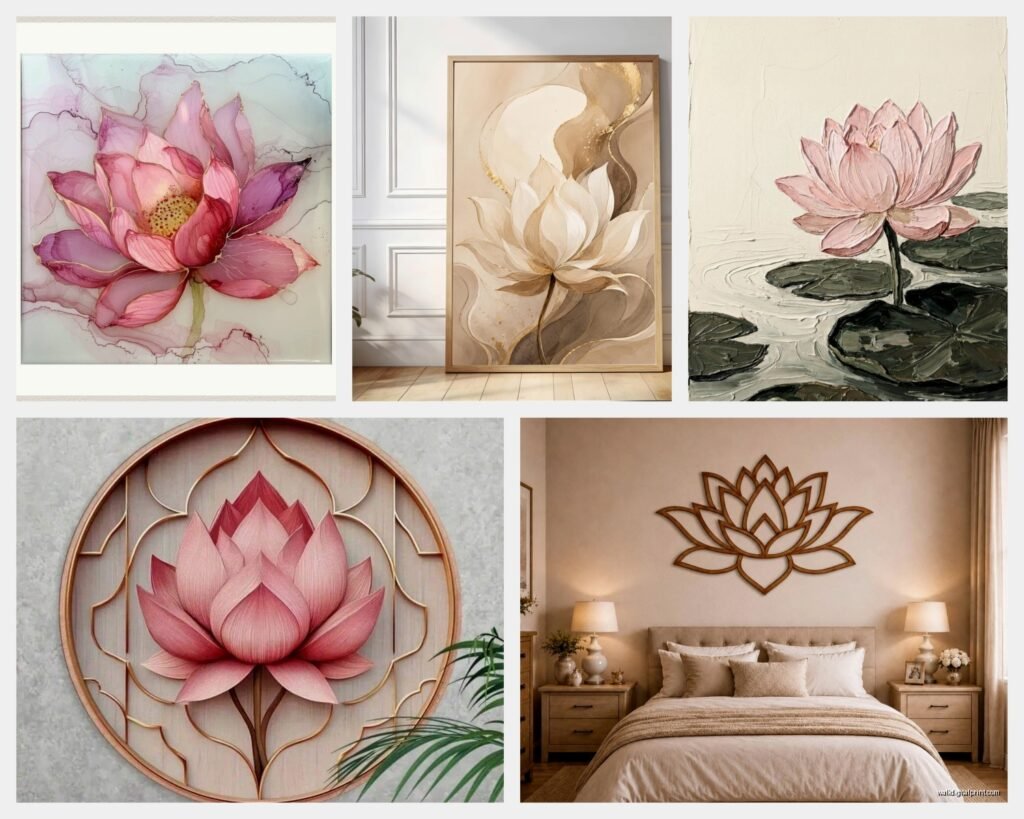
Behind the bed as a focal point – creates this peaceful energy when you wake up. I did this in my own bedroom with a large bronze metal lotus and it’s the first thing I see every morning. Though my dog usually blocks the view because he insists on sleeping on my pillow but whatever.
Bathroom – wait hear me out. The water element connection makes bathrooms actually perfect for lotus symbolism. Just make sure it’s moisture-resistant. I’ve seen canvas pieces warp in humid bathrooms so metal or sealed wood only.
Home office if you want calming energy. I have a client who’s a lawyer and she has lotus art behind her desk for video calls. Says it helps her stay centered when dealing with difficult cases.
Living room as a conversation piece – but this only works if your decor already has some Asian influence or natural elements. Otherwise it can feel random.
Mixing Styles Without Looking Confused
Modern minimalist spaces – go for line drawings or abstract geometric lotus designs in black and white. There’s this trend of single-line lotus art that’s super clean and works in contemporary spaces.
Bohemian eclectic – you can do literally anything. Colorful, textured, mixed media. This is where those weird macrame lotus wall hangings actually make sense.
Traditional or transitional – watercolor style lotus prints or classic Buddhist art reproductions. More detail, softer colors, often includes stems and leaves not just the bloom.
I mixed a modern gold metal lotus with very traditional furniture for a client recently and it totally worked because we kept everything else neutral. The lotus became the bridge between old and new.
The Lighting Thing I Wish Someone Told Me Earlier
Backlit lotus art is STUNNING but hard to do right. If you’re handy you can put LED strips behind metal cutout lotus pieces. Creates this whole ethereal glow situation. But it needs to be on a dimmer because full brightness looks like a neon sign.
Natural light changes how colors appear throughout the day. I had a pink lotus canvas that looked perfect in morning light but weirdly orange at sunset. Ended up moving it to a north-facing wall where the light stays consistent.
Picture lights or small spotlights work great for dimensional metal pieces – creates shadows that emphasize the 3D petals. Just angle them from above not straight on.
What to Avoid Because I’ve Made These Mistakes
Don’t put lotus art in the kitchen or dining room unless you’re really committed to a pan-Asian theme throughout your home. It usually feels forced.
Skip the super literal Buddhist temple reproductions unless you’re actually Buddhist or deeply connected to the practice. There’s something about using religious art as decoration that can feel appropriative. The lotus symbol itself is fine – it’s used across cultures – but full temple scenes or Buddha imagery requires more intention.
Avoid cluttering around lotus art. The whole point is purity and simplicity so give it breathing room. I see people surround a beautiful lotus piece with fifteen other decorative objects and it loses all impact.
Don’t match your wall color too closely to the art. A white lotus on a white wall disappears. You need some contrast even if it’s subtle – like cream walls with pure white art.
Budget Real Talk
You can find decent lotus canvas prints for $30-60 on sites like Society6 or even Amazon. Quality varies wildly so read reviews about the actual canvas weight and print clarity.
Mid-range metal art $100-200 is where I shop most. Brands like Stratton Home or stuff from HomeGoods/TJ Maxx. Sometimes you luck out at Marshall’s with imported pieces.
High-end handcrafted pieces $300+ are worth it if you’re designing a primary meditation space or want an heirloom quality piece. I’ve sourced from Etsy artists doing custom metalwork and the quality difference is real.
My client budget hack – buy a simple canvas print then have it mounted on a floating frame or add a gold leaf border yourself. Instantly looks more expensive.
The Textures and Layers Approach
This works really well – use your lotus art as the anchor then layer in actual organic elements. I’ll do a metal lotus on the wall then style the surface below with river rocks, a small water fountain, real lotus pods in a bowl. It reinforces the symbolism without being heavy-handed.
Textiles matter too. If you have lotus wall art, echo the shape in your throw pillows or area rug pattern. Not exact matches – that’s too matchy – but complementary organic curves.
Oh wait I forgot to mention – three-dimensional lotus sculptures that mount to the wall are having a moment right now. They’re like halfway between wall art and sculpture. Really beautiful in person but photograph terribly so they’re hard to judge online.
Seasonal Switching Maybe
Some people rotate their lotus art seasonally which sounds extra but kinda makes sense. Pink/white lotus in spring, blue in summer, deeper colors in fall. I don’t personally do this because I’m lazy but I have a client who swears it keeps her space feeling fresh.
DIY Options If You’re Crafty
Pressed lotus petals under glass – you can buy dried lotus petals online and create your own botanical art. Takes like an hour and looks custom.
Paint your own – there are tons of tutorials for abstract lotus paintings. Even if you “can’t paint” the lotus shape is forgiving. Lots of blending and imperfection actually adds to the aesthetic.
Photo printing – if you’ve traveled to Asia and took lotus photos, print them large format. Your own photography always feels more meaningful than generic prints.
Look I could keep going but you probably have enough to work with. The main thing is just make sure the piece actually speaks to you beyond just looking pretty. Lotus symbolism is powerful and if you’re bringing that energy into your home it should mean something. Or maybe that’s too woo-woo and you just think lotus flowers are gorgeous which is also totally valid.
Just don’t overthink it as much as I clearly have.