
Wall Art Guide, Wall Art Tutoriels
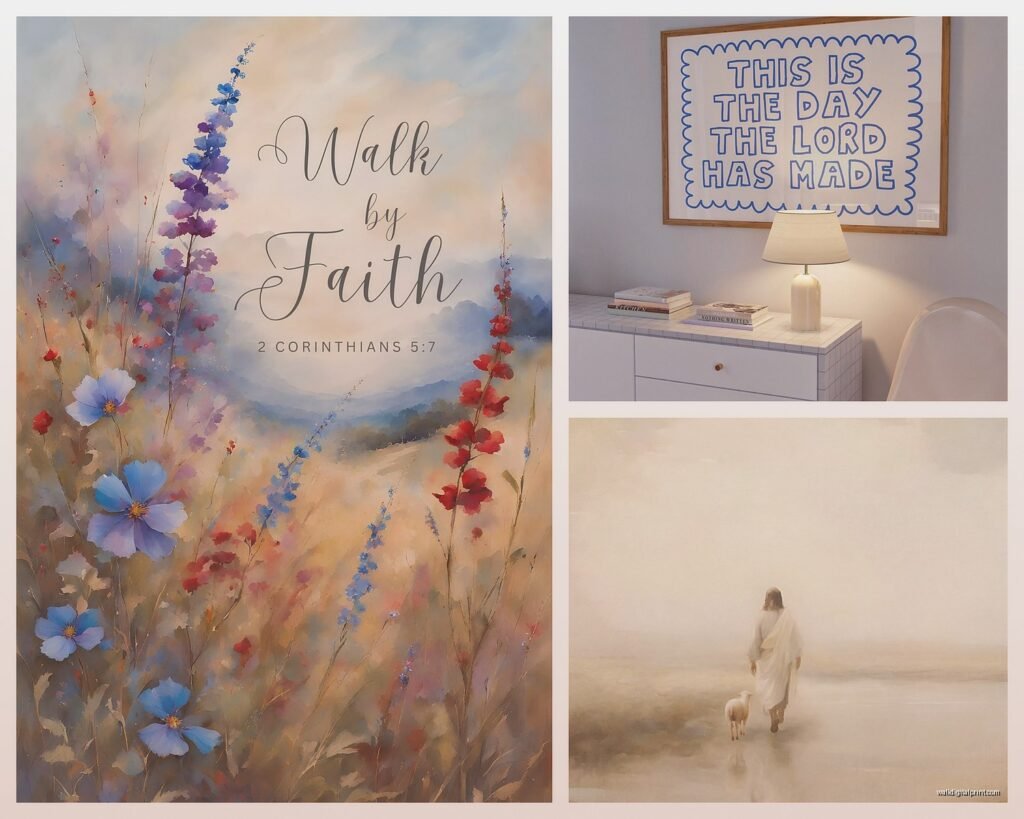
Christian Wall Art: Faith Religious Scripture Cross Decor
Aug
So I’ve been setting up Christian wall art in homes for like seven years now and honestly, the biggest mistake people make is just slapping a cross on the wall and calling it done. Let me walk you through what actually works because I just finished three different projects last month and learned some stuff the hard way.
First Thing – Figure Out What You Actually Want to Say
Okay so this sounds obvious but like, are you trying to create a prayer corner, a family gathering spot, or just add some faith elements to your everyday spaces? Because that changes everything. I had this client who bought this massive scripture canvas – gorgeous thing, Psalm 23 in beautiful script – but she hung it in her dining room where they mostly argued about homework and it just felt…off. We moved it to her bedroom and suddenly it made sense.
You gotta think about the room’s purpose. Kitchen? Maybe something about gratitude or daily bread. Bedroom? Peace scriptures work great. Living room is trickier because it’s high traffic but also where you want guests to feel welcome, so I usually go with something universally comforting rather than super specific.
Size Actually Matters Way More Than You Think
This is gonna sound weird but I measure everything with my phone now. Like I hold it up at different distances to visualize scale before buying anything. A 16×20 canvas sounds big until you put it on a 12-foot wall and it just disappears.
Here’s my rough guide that I literally keep in my notes app:
- Small walls (under 6 feet wide): 16×20 or 18×24 max
- Medium walls: 24×36 works perfectly, or do a set of three smaller pieces
- Large walls: Go 30×40 minimum or you’ll regret it
- Above furniture: Should be about 2/3 the width of whatever’s underneath
I messed this up SO bad in my own house. Bought this beautiful wooden cross that was 12 inches tall for above my couch and it looked like a toy. Had to return it and get the 24-inch version.
The Canvas vs. Wood vs. Metal Debate
Okay so canvas prints are everywhere right now and they’re fine – they’re lightweight, easy to hang, usually affordable. But they can look kinda cheap if you get the wrong ones. Look for gallery-wrapped edges (where the image wraps around the sides) and at least 1.5-inch thick frames. The thin ones that are like half an inch just scream “I bought this on sale at HomeGoods” which, no judgment, I do that too, but you want it to look intentional.
Wood signs are having this massive moment and I actually love them for farmhouse or rustic spaces. The distressed ones with scripture verses in that chalky paint? They work great in kitchens and entryways. But – and this is important – they collect dust like crazy. You gotta actually dust them or they get grimy. My cat knocked one down last month and I realized it had like a quarter inch of dust on top.
Metal crosses and wall art are my secret weapon for modern spaces. People think Christian decor has to be traditional but a sleek black metal cross on a white wall is stunning. They’re also basically indestructible which matters if you have kids.
Scripture Selection Is Where People Get Paralyzed
I cannot tell you how many times someone asks me “which verse should I use” and then spends three weeks deciding. Here’s what I do – pick verses that actually mean something to YOUR life, not just the popular ones everyone uses.
That said, these are the ones I use most in client projects because they’re versatile:
- Psalm 46:5 – “God is within her, she will not fall” (super popular for girls’ rooms)
- Joshua 24:15 – “As for me and my house, we will serve the Lord” (classic family room choice)
- Philippians 4:13 – works literally anywhere
- Jeremiah 29:11 – I’m honestly kinda tired of this one but clients request it constantly
- Proverbs 3:5-6 – great for offices or study spaces
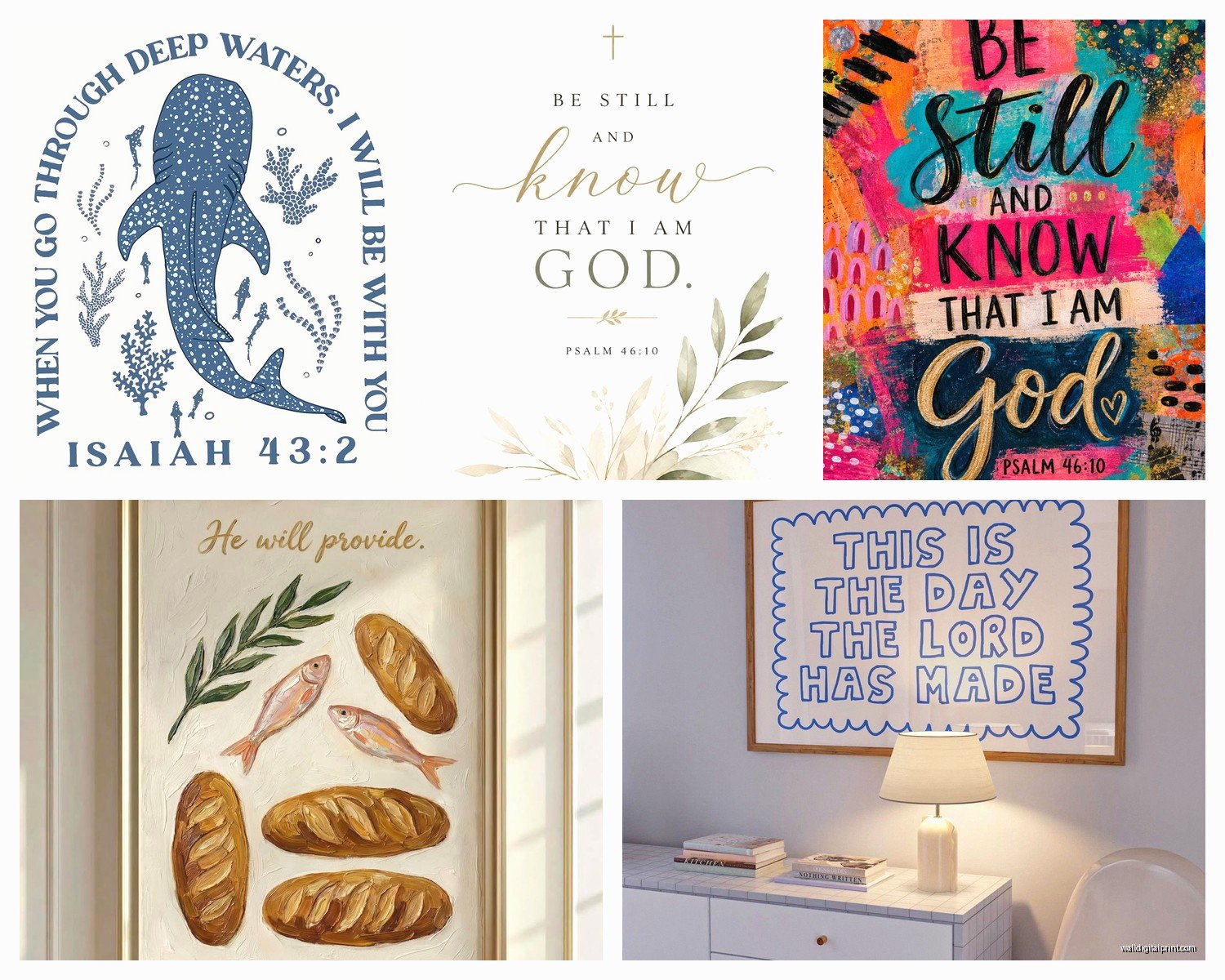
But honestly? Sometimes just the word “Faith” or “Blessed” or a simple cross is enough. You don’t always need the full verse printed out. I did a whole gallery wall once with just single words – Grace, Faith, Hope, Love – in different frames and it was way more impactful than a paragraph of text.
Gallery Walls Are Intimidating But Actually Easier
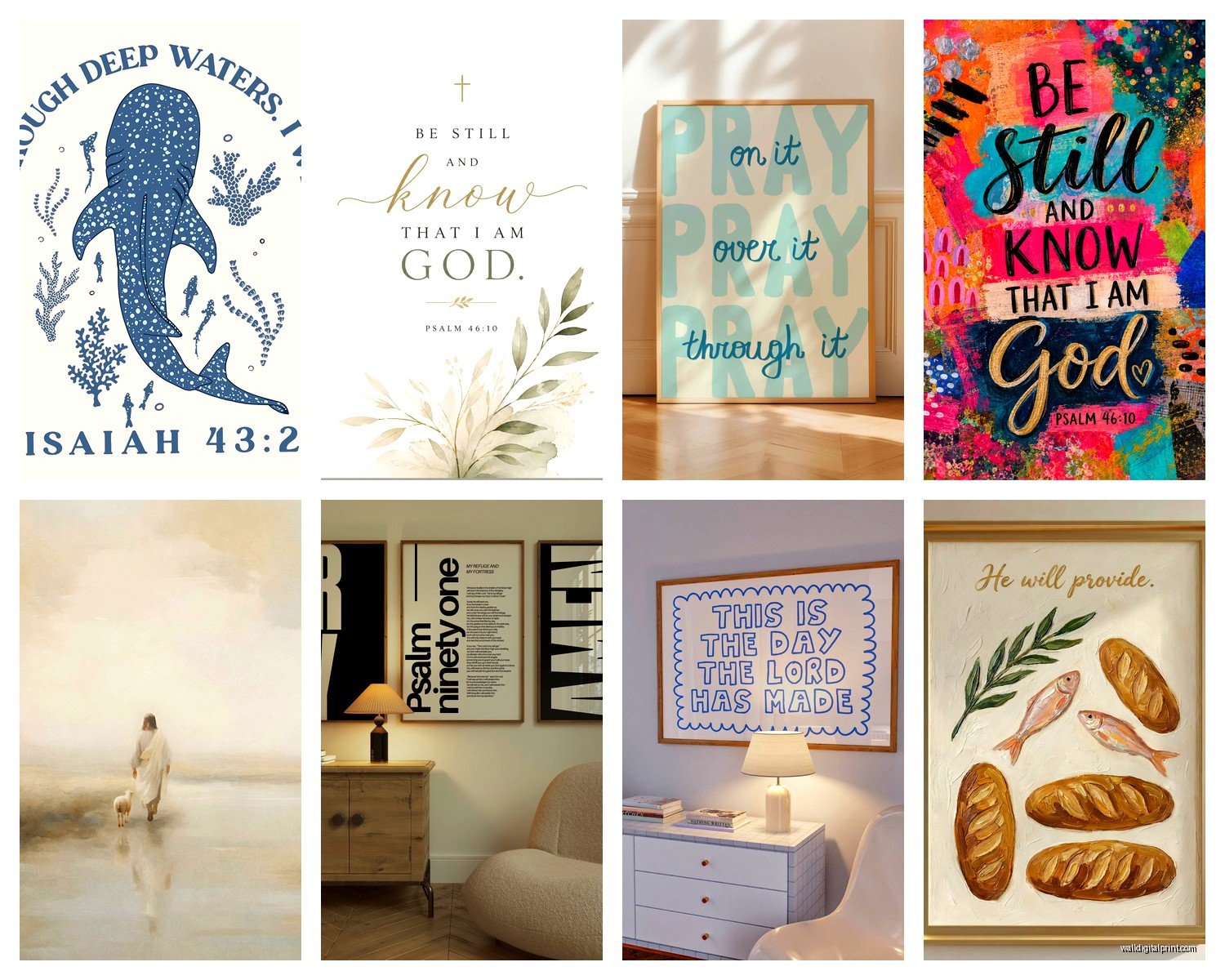
Wait I forgot to mention – if you’re scared of commitment to one big piece, gallery walls are your friend. You can mix crosses, scripture prints, family photos, and even some neutral art. The key is having some kind of unifying element.
My formula that actually works:
- Pick a color scheme – usually 2-3 colors max
- Mix frame styles but keep finishes similar (all black, all wood, all white)
- Include different sizes but make sure you have at least one anchor piece that’s bigger
- Lay it out on the floor first – I’m serious, take a photo of your arrangement before you start hammering
I use painter’s tape to mark where frames will go on the wall. Sounds tedious but I’ve patched too many wrong holes to skip this step now. My husband thinks I’m crazy but whatever, it works.
The Hanging Height Thing Everyone Gets Wrong
Standard rule is 57 inches from the floor to the center of your artwork – that’s museum standard or whatever. But in real life, you gotta adjust for your space. If you’re hanging above furniture, go 6-8 inches above the top of the furniture piece. If it’s a standalone wall, the 57-inch rule works pretty well.
I always account for ceiling height too. In rooms with high ceilings, you can go a bit higher. Low ceilings, keep it closer to that 57-inch mark or it’ll feel like it’s falling on you.
Where to Actually Buy This Stuff
Okay so funny story, I used to only recommend high-end Christian bookstores and specialty shops, but honestly? Etsy has completely changed the game. You can find custom pieces, support small artists, and get exactly what you want.
My go-to sources:
- Etsy – for custom wood signs, printable scripture art (you print and frame yourself, super affordable), and unique handmade crosses
- Hobby Lobby – yeah I know, but their sales are insane and they have a huge Christian section
- Dayspring – if you want quality and don’t mind spending a bit more
- Amazon – hit or miss but good for metal wall crosses and basic canvas prints
- Local Christian bookstores – usually overpriced but great for supporting local
Pro tip I learned last year – buy printable files on Etsy for like $5, print them at Costco or your local print shop for cheap, then frame them yourself. You can get a custom look for maybe $30 total versus $150 for a pre-made piece.
Mixing Styles Without Looking Chaotic
This is where people get nervous. Like, can you mix a rustic wood sign with a modern canvas print? Yeah, actually you can, but you need a strategy.
The easiest way is to keep your color palette consistent. If you’ve got farmhouse and modern pieces, make sure they’re all using similar colors – maybe everything is black, white, and natural wood tones. Or all grays and blues. That visual connection makes different styles work together.
I also mix traditional crosses with contemporary scripture art all the time. A classic wooden cross next to a minimalist line-art print of praying hands? Works great if the frames coordinate.
Don’t Forget About Lighting
Oh and another thing – lighting makes such a difference and nobody thinks about it. If you’ve got a really beautiful piece, consider adding a picture light or positioning it where natural light hits it during the day. I added a small LED picture light above a metal cross in a hallway with no windows and it completely transformed the space.
Opposite problem – don’t hang canvas prints in direct sunlight unless you want them to fade. Learned that one the hard way with a client’s south-facing living room. The beautiful blue background turned basically white after a year.
The Practical Stuff About Actually Hanging Things
Okay so you need the right hardware. Please don’t just use a random nail for everything. Here’s what’s in my hanging kit:
- Command strips – for renters or if you hate making holes, these work for lighter pieces
- Picture hanging hooks – the ones rated for specific weights, just match it to your piece
- Anchors for drywall – if you’re hanging anything over 10 pounds and there’s no stud
- Level – use your phone app if you don’t have one, but please level your art
- Stud finder – worth buying a cheap one if you’re hanging heavy stuff
For heavy wooden crosses or large canvases, find a stud if possible. If you can’t, use proper drywall anchors rated for the weight. I’ve seen too many beautiful pieces crash down because someone used inadequate hardware.
Making It Personal Rather Than Generic
The difference between Christian decor that feels authentic versus decor that feels like you bought a Pinterest board is personalization. Mix in family elements – wedding photos, kids’ artwork, handwritten prayers in frames.
I did this project where we created a prayer wall with a large “Give Thanks” sign surrounded by small frames where the family wrote things they were grateful for each month. They’d swap out the papers and it became this living, changing display. Way more meaningful than just static decoration.
Or combine scripture with personal photos – like a family beach photo with “Be Still and Know” overlaid or printed alongside. Those custom pieces feel so much more connected to your actual life.
Seasonal Rotation Is Totally Allowed
You don’t have to keep the same stuff up year-round. I swap things out seasonally sometimes – more nativity focused pieces during Christmas, resurrection themed art for Easter, gratitude focused stuff for fall. It keeps your space feeling fresh and connects your decor to the church calendar if that matters to you.
Budget Real Talk
Look, you can spend $15 or $500 on a single piece. I’ve done both. The expensive stuff often has better quality printing, real wood frames, hand-painted elements. But I’ve found gorgeous pieces at Target for $25 that look high-end when styled right.
If you’re on a tight budget, focus on one really good anchor piece and fill in with DIY or printable options. One beautiful $100 wooden cross surrounded by $5 Etsy printables in thrift store frames can look absolutely stunning.
Also gonna mention – check Facebook Marketplace and thrift stores. People donate Christian decor all the time and you can find solid wood pieces for nothing. I found a hand-carved cross at Goodwill for $8 that would’ve cost $200 retail.
Common Mistakes I See Constantly
Hanging things too high – seriously, if you have to look up at it, it’s probably too high. Eye level is your friend.
Overcrowding – you don’t need scripture on every single wall. Sometimes less is more and one impactful piece beats five mediocre ones.
Ignoring the room’s existing style – if your whole house is sleek and modern, a distressed wooden sign with eight different fonts is gonna look out of place. Match the vibe of your existing decor.
Buying everything at once – I always tell clients to start with one or two pieces and live with them before filling every wall. You might realize you want something different once you see how the first pieces feel in the space.
So yeah, that’s basically everything I’ve learned through way too many hours comparing options online and fixing mistakes in real homes. Start with one room, pick pieces that actually resonate with you, and don’t stress about making it perfect. It’s your home and your faith – there’s no wrong way to display that.
