Wall Art Guide, Wall Art Tutoriels
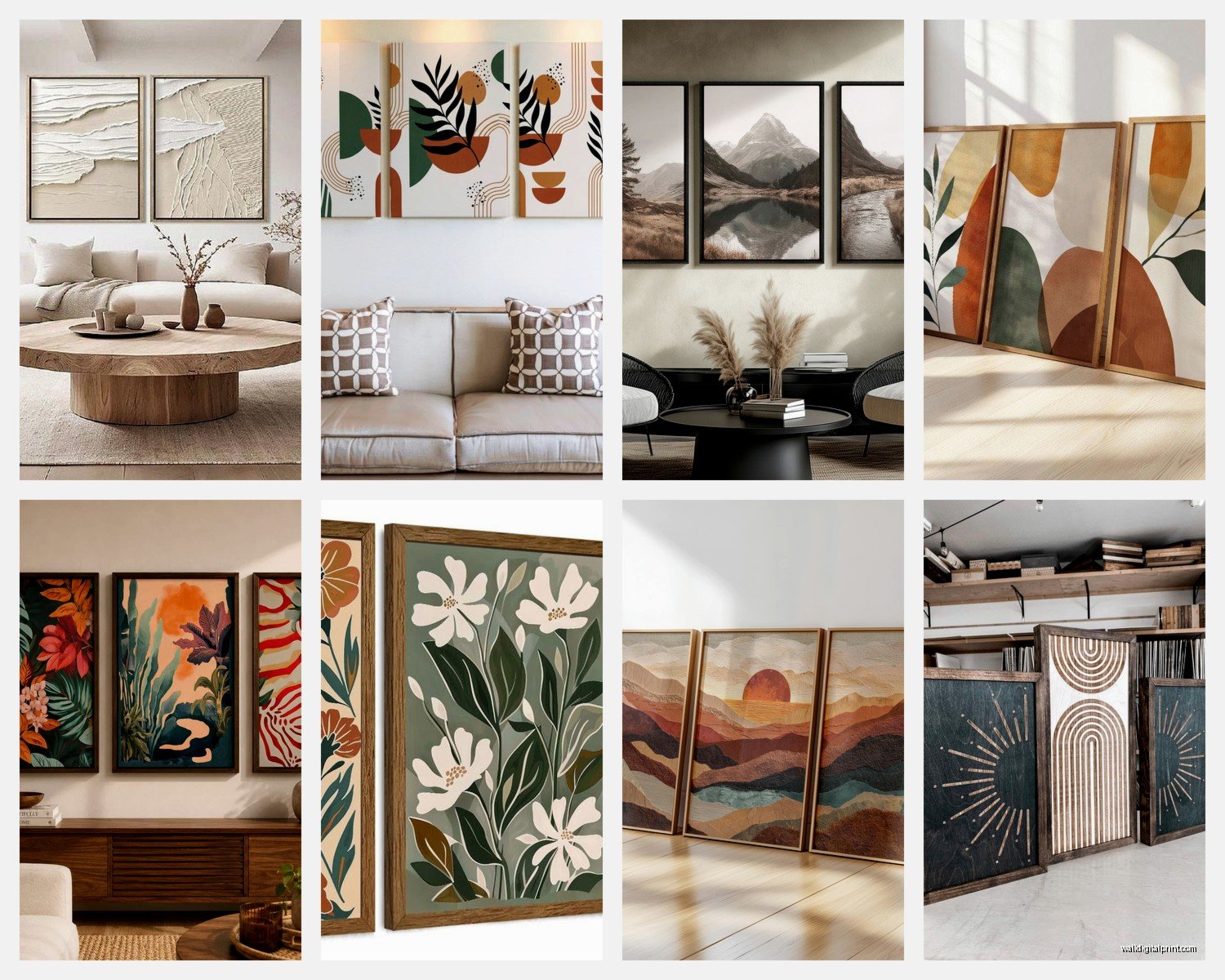
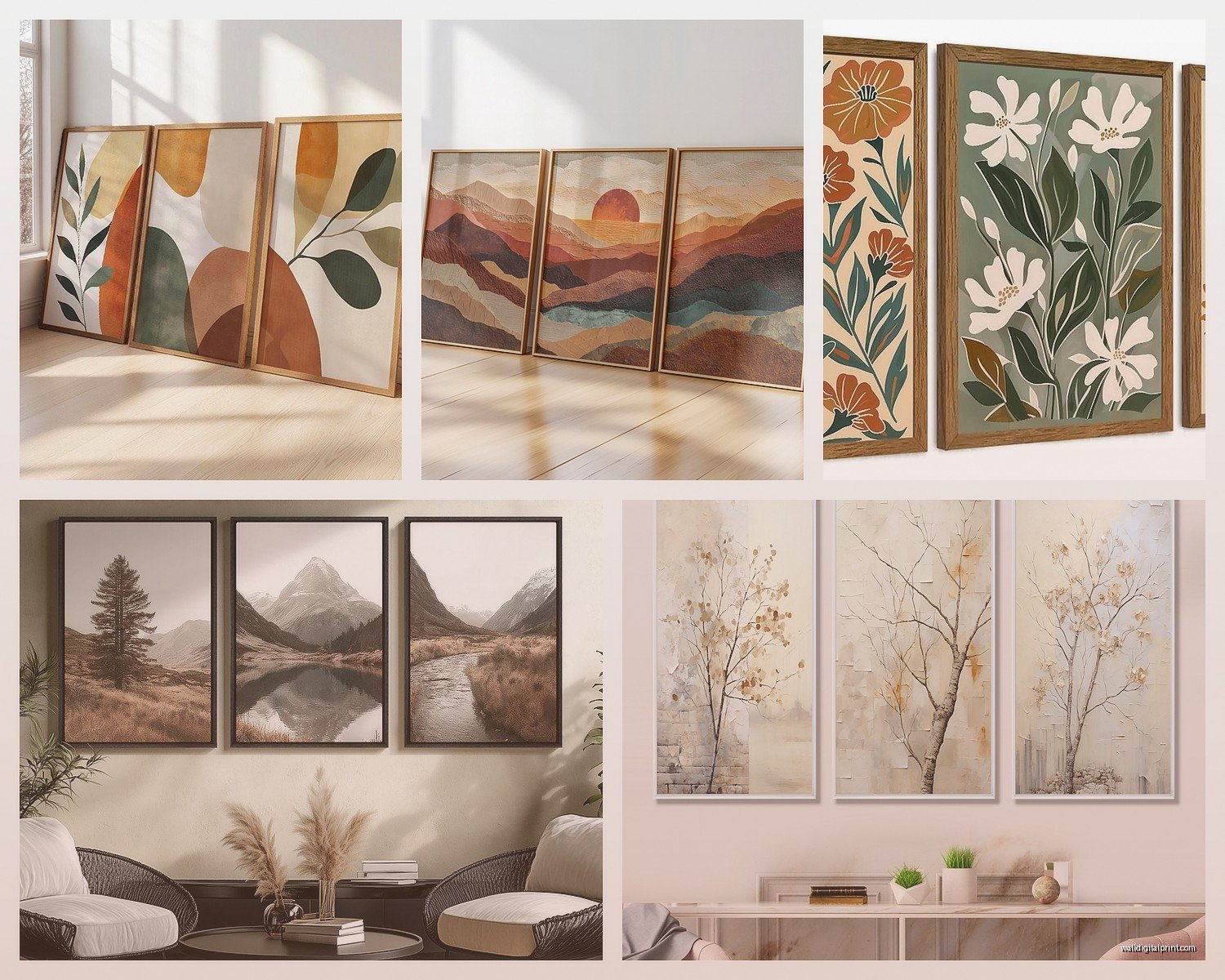
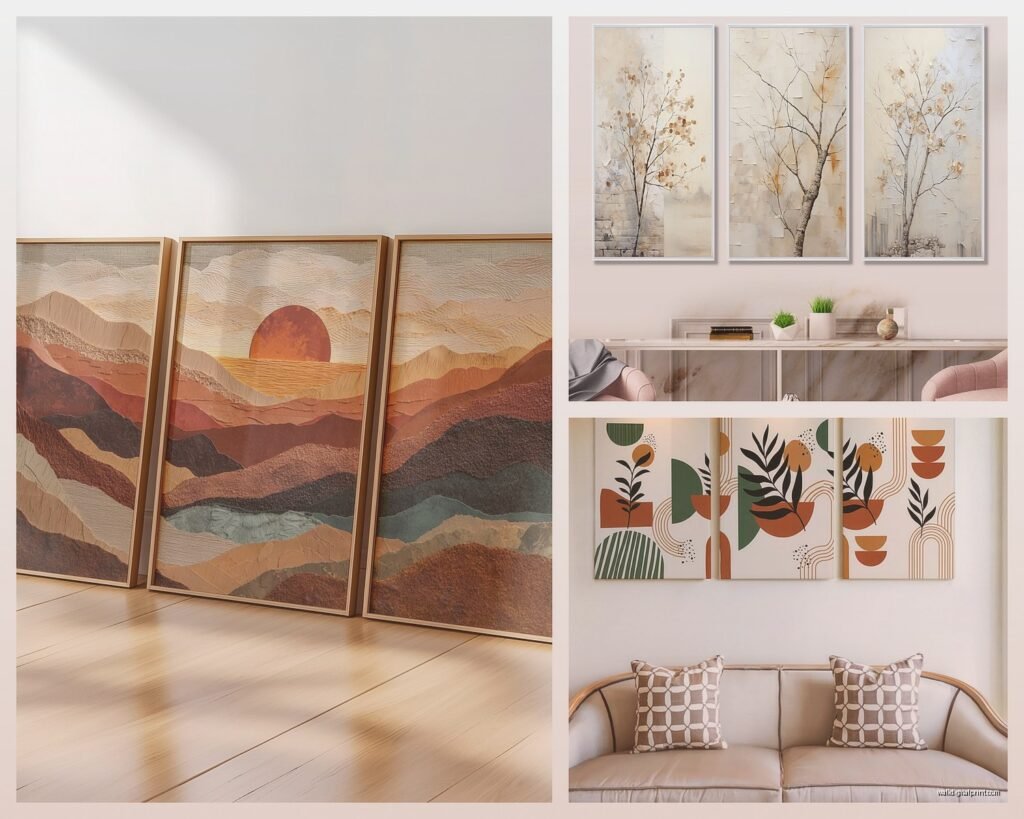
3 Piece Wall Art: Triptych Multi-Panel Display Sets
Aug
So I’ve been messing around with triptych wall art for like three years now, ever since I tried to fill this massive blank wall in a client’s living room and one single piece just looked… sad? And honestly the whole three-panel thing has become my go-to because it’s weirdly easier than finding one perfect giant piece.
Sizing This Thing Out Without Losing Your Mind
Okay so here’s what nobody tells you about the sizing. You need to measure your wall space obviously, but then you gotta subtract like 6-8 inches on each side as breathing room. So if you have an 8-foot wide wall, you’re actually looking at filling maybe 6-6.5 feet max. I learned this the hard way when I ordered these gorgeous ocean panels that were technically the right total width but looked like they were gonna fall off the edges.
Each panel in a triptych is usually the same size, which makes the math easier. Common sizes I see working well:
- 12×16 inches per panel – good for smaller walls, above a desk or console table
- 16×24 inches – this is like the sweet spot for most living rooms
- 20×30 inches – when you want drama, my client with the vaulted ceilings went this route
- 24×36 inches – only if you have a seriously big wall situation
The spacing between panels matters SO much and I always do 2-4 inches. Three inches is my default. Less than 2 inches and it starts looking like one piece that got cut weird, more than 4 inches and they look unrelated to each other.
What Actually Works Subject-Wise
This is gonna sound weird but not every image works as a triptych. I’ve seen people try to split up like, a portrait of their dog across three panels and it just… why would you do that to your dog’s face?
Images that actually make sense split three ways:
- Landscapes – horizons naturally extend, beaches, mountains, forests
- Abstract art – honestly anything goes here, the breaks between panels can add to it
- Cityscapes – skylines are MADE for this format
- Macro photography – like close-ups of flowers or textures
- Geometric patterns – they can wrap around or repeat
What doesn’t work: faces (unless it’s intentionally artistic and even then iffy), anything with important text that gets cut off, busy scenes where you need to see everything connected.
I had this phase last year where I was obsessed with splitting botanical prints into triptychs and it was hit or miss. Single stems worked great, dense floral arrangements got confusing.
The Hanging Part That Everyone Overthinks
Okay so you’ve got your three panels. Now what.
First thing – and I cannot stress this enough – use a level. I know, I know, but my cat knocked over my level last month and I tried to eyeball a set and one panel was like half an inch higher and you could TELL. Got a new level same day.
Here’s my actual process that works:
Find your center point on the wall. This is where the middle of your entire display should sit, usually 57-60 inches from the floor (that’s standard gallery height, puts the center at average eye level).
Measure your total width including the spacing. So if each panel is 16 inches wide and you want 3 inches between them, that’s 16+3+16+3+16 = 54 inches total.
Mark where the outer edges of your outer panels will be, making sure they’re centered on your wall.
I use painters tape to mark the top corners of where each panel goes. Sounds excessive but you can see the layout before putting holes in anything.
Hardware Options That Don’t Suck
Most triptychs come with hanging hardware already attached, but it’s usually those sawtooth hangers which I kind of hate for anything over like 5 pounds per panel. They slip.
What I actually use:
D-rings with wire – gives you adjustment room, more secure, can use regular picture hooks
French cleats – if the panels are heavy (wood frames, thick canvas), this is the way, they’re not going anywhere
Command strips – okay hear me out, for lightweight canvas prints these actually work and you don’t need to patch holes later, I’ve used the large picture hanging strips for 16×20 canvases with zero issues
For three separate panels I usually put two hooks per panel if they’re over 16 inches wide. Keeps them from tilting.
Framed vs Canvas vs Other Materials
So you’re gonna see triptychs in different formats and they give totally different vibes.
Canvas wraps are the most common – the image wraps around the edges, no frame needed. They’re lightweight, contemporary looking, affordable. The edges can be white, black, or a continuation of the image (called gallery wrap). I prefer gallery wrap because the white edges always get dirty-looking over time.
Framed prints look more traditional and formal. You can match your existing frames which is nice. But they’re heavier and more expensive usually. My living room has framed triptych photography and it definitely elevates the space but cost like 3x what canvas would’ve been.
Metal prints are having a moment – the image is infused into aluminum panels. Super modern, vibrant colors, lightweight. They work great in bathrooms or kitchens because humidity doesn’t affect them. Pricey though.
Wood prints give this rustic vibe, good for cabins or farmhouse-style spaces. The wood grain shows through slightly which is either charming or distracting depending on your taste.
Acrylic prints are like glass-looking, glossy, really striking. Best for bold graphics or high-contrast photos. My client has a black and white cityscape triptych on acrylic in her office and people always ask about it.
Where to Actually Buy These Things
I’ve ordered from probably two dozen places at this point, here’s what I’ve learned:
Cheap options like Amazon or Walmart have tons of triptychs for under $100. They’re fine for temporary or rental situations. The canvas quality is thin, colors can be muted, but if you’re not super picky they work. I got a set of abstract beach panels for like $65 that lasted in my guest room for two years before I wanted something different.
Mid-range sites like Society6, Redbubble, or Etsy have more unique designs from actual artists. You’re paying $150-400 usually. Quality varies by seller so read reviews. I love that you can find stuff nobody else has though.
For custom triptychs using your own photos, CanvasPop and Shutterfly are decent. Uploaded some travel photos once and split them into a triptych, turned out pretty good. Cost around $200 for three 16×24 panels.
High-end gallery sites or local artists obviously cost more but the quality difference is real. Better canvas, proper stretching, archival inks. If it’s for a main living space you’ll be staring at for years, worth it.
Custom vs Pre-Made Designs
Pre-made is easier and cheaper, custom lets you get exactly what you want. I do both depending on the situation.
For custom you need a high-resolution image – we’re talking at least 3000 pixels on the longest side if you’re printing large. Most phone photos won’t cut it for anything over 12 inches without looking fuzzy. Learned that the expensive way.
Some sites let you preview how the split will look which is crucial. You don’t wanna order and then realize someone’s head got cut in half awkwardly.
Styling Around Your Triptych
Oh and another thing – what you put near your triptych matters. I see people hang these beautiful three-panel sets and then clutter the wall with other stuff and it defeats the purpose.
Triptychs need breathing room. They’re the statement, everything else should support them.
If it’s above a sofa, you want the total width to be about 2/3 to 3/4 the width of the sofa. Too small looks floaty, too big overwhelms.
Coffee table or console table below? Leave like 6-8 inches between the furniture top and the bottom of the panels. You can put a couple small objects on the table but keep it minimal.
Color-wise, pull at least one color from the triptych into your pillows, throw blanket, or rug. Ties the room together without being matchy-matchy.
Common Mistakes I See All The Time
Hanging them too high – seriously people put art at ceiling height for some reason, bring it down
Panels too far apart – more than 4-5 inches and they look disconnected
Mixing panel sizes – I mean you CAN do different sizes intentionally but accidentally ordering different sizes is surprisingly common
Wrong orientation – some triptychs are meant to be horizontal landscape, some are vertical portrait, some work both ways, check before mounting
Ignoring the room’s style – a ultra-modern geometric triptych in a shabby chic room is gonna clash
Not accounting for furniture – measure from where the furniture IS, not from the floor
Vertical vs Horizontal Layout
Most people default to horizontal three-panel layouts but vertical can be really cool for narrow wall spaces or rooms with high ceilings. I did a vertical triptych in a hallway once, three 12×36 panels stacked, looked way better than trying to fit something horizontal.
You can also get creative with asymmetrical arrangements but honestly that’s advanced level and easy to mess up. Stick with the classic horizontal row or vertical stack until you’re comfortable.
Wait I forgot to mention – some triptychs are designed with a larger center panel and smaller side panels. This creates a focal point and can work really well over a fireplace or bed. The proportions are usually something like 16-20-16 inches wide.
Maintenance and Long-Term Stuff
Canvas triptychs are pretty low-maintenance. Dust them occasionally with a soft dry cloth. Don’t use cleaning products, you’ll damage the print.
Keep them out of direct sunlight if possible because colors will fade over time. I had a gorgeous sunset triptych that got afternoon sun every day and after a year the oranges were noticeably lighter.
In humid environments like bathrooms, make sure you get sealed canvas or go with metal/acrylic. Regular canvas can warp or develop mildew.
If a panel gets damaged, most sellers won’t sell you just one replacement, you gotta buy the whole set again which is annoying. Handle with care during hanging.
Okay so funny story, I was watching this home reno show last week while trying to decide between two different triptych options for a client and they hung theirs with like an inch between panels and it bugged me the entire episode.
The thing about triptych art is it’s supposed to flow as one cohesive piece while still being distinctly three parts. That balance is what makes it work. Too close together and you lose the multi-panel effect, too far apart and it’s just three separate pictures.
For renters, command strips are seriously your friend. I’ve moved triptychs between three apartments using the same strips, no holes, no lost deposits.
If you’re DIYing your own triptych from a single image, get it printed as one large piece first and then cut it, or use a service that does the splitting digitally. Trying to line up three separately printed panels perfectly is basically impossible.
Color consistency across all three panels matters – cheap printing sometimes results in slight color variations between panels which drives me nuts. Order from places with good reviews specifically mentioning color accuracy.
The style should match your space but also your personality. Don’t get a serene beach triptych just because it’s trendy if you actually prefer bold abstract shapes. You’re the one looking at it every day.