Wall Art Guide, Wall Art Tutoriels
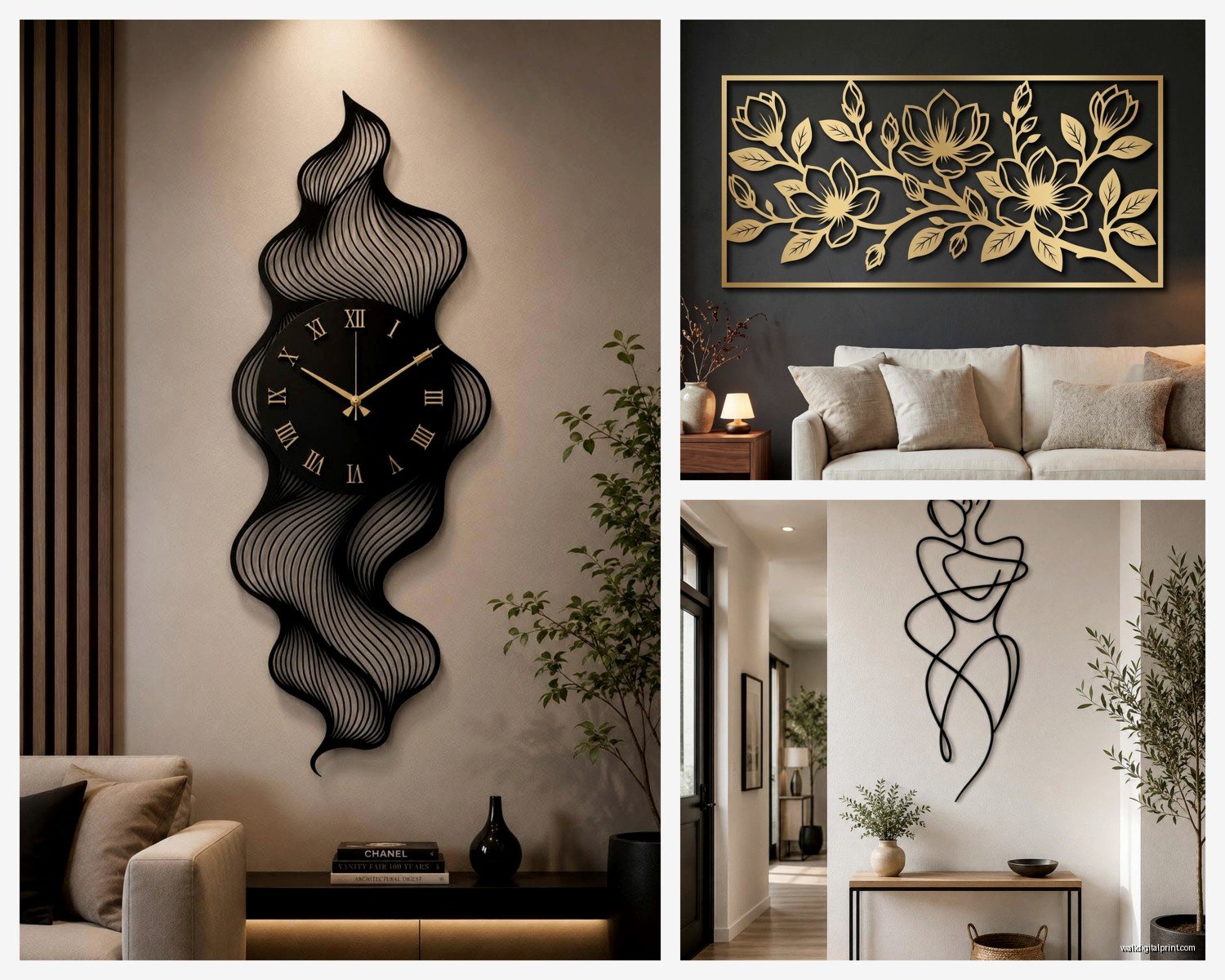
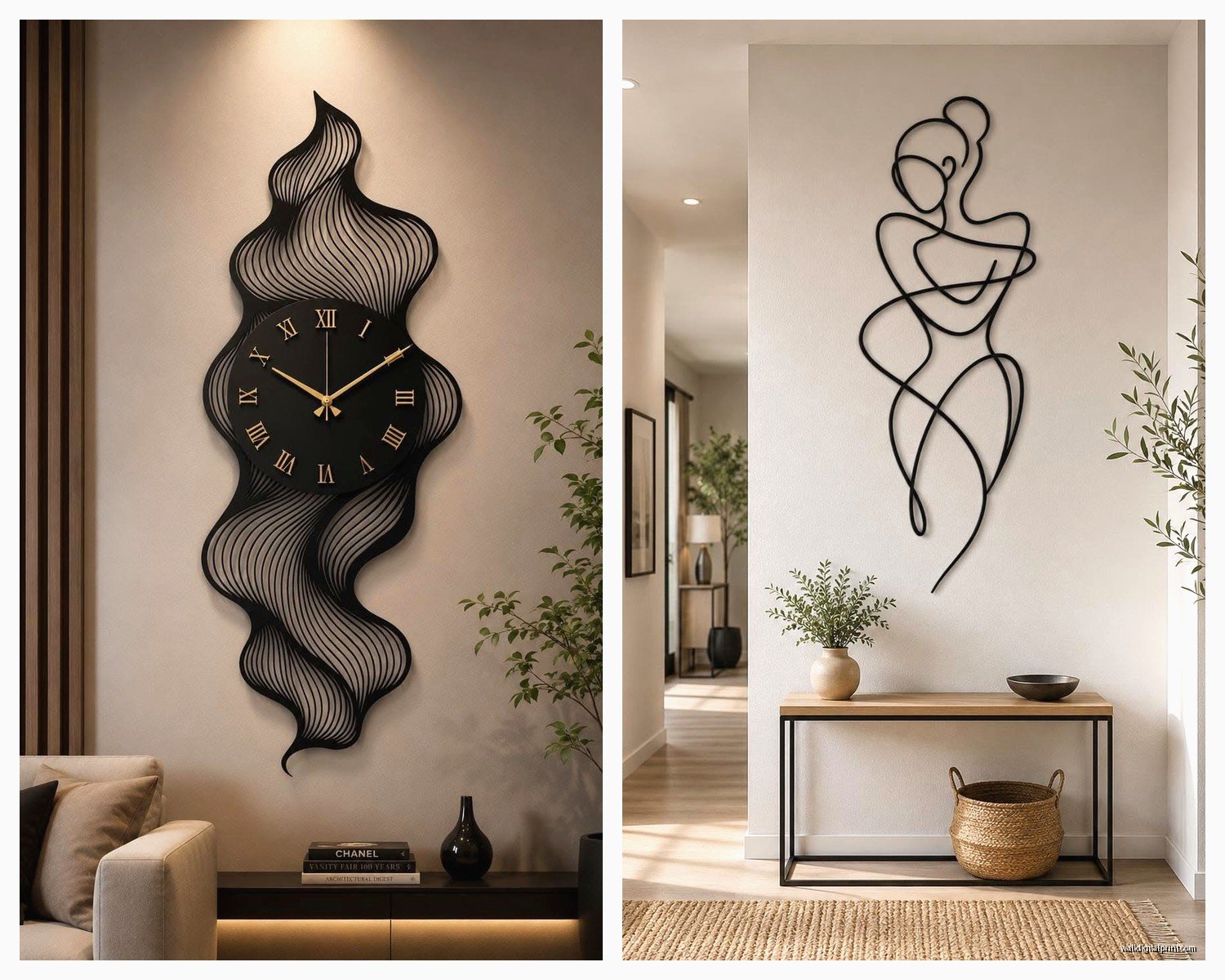
Metal Wall Art Decor for Living Room: Sculptural Main Space
Aug
So I’ve been obsessed with metal wall art lately and honestly it’s kinda transformed how I think about living rooms. Like, I was working with this client last month who had this massive blank wall and we went down the metal sculpture rabbit hole and I learned SO much.
First Things First: Why Metal Actually Works
Okay so metal wall art isn’t just those cheesy sunburst things from 2005 anymore. The sculptural pieces now are actually insane. What I love is that metal catches light differently throughout the day, which sounds pretentious but it’s true? Like my own living room has this geometric brass piece and at 4pm when the sun hits it, it completely changes the vibe of the room.
The thing about metal is it adds dimension without eating up floor space. You get that sculptural moment everyone’s always talking about in design magazines but you’re not tripping over a giant installation piece every time you walk through.
Measuring Your Wall (and Not Screwing This Up)
Okay this is gonna sound obvious but measure your wall before you fall in love with something. I cannot tell you how many times I’ve seen people buy a 24-inch piece for a wall that’s like 12 feet wide. It looks ridiculous.
Here’s what actually works:
- For walls 8-12 feet wide, you want art that’s at least 60-75% of your sofa width if it’s above the couch
- Stand back like 10 feet and imagine the piece taking up about half to two-thirds of the wall space
- If you’re going for a gallery wall situation with multiple metal pieces, map it out on the floor first with painter’s tape
I learned that last one the hard way after putting like 15 nail holes in my wall trying to “eyeball it.” My cat was NOT impressed with all the noise.
Different Types and What They Actually Look Like IRL
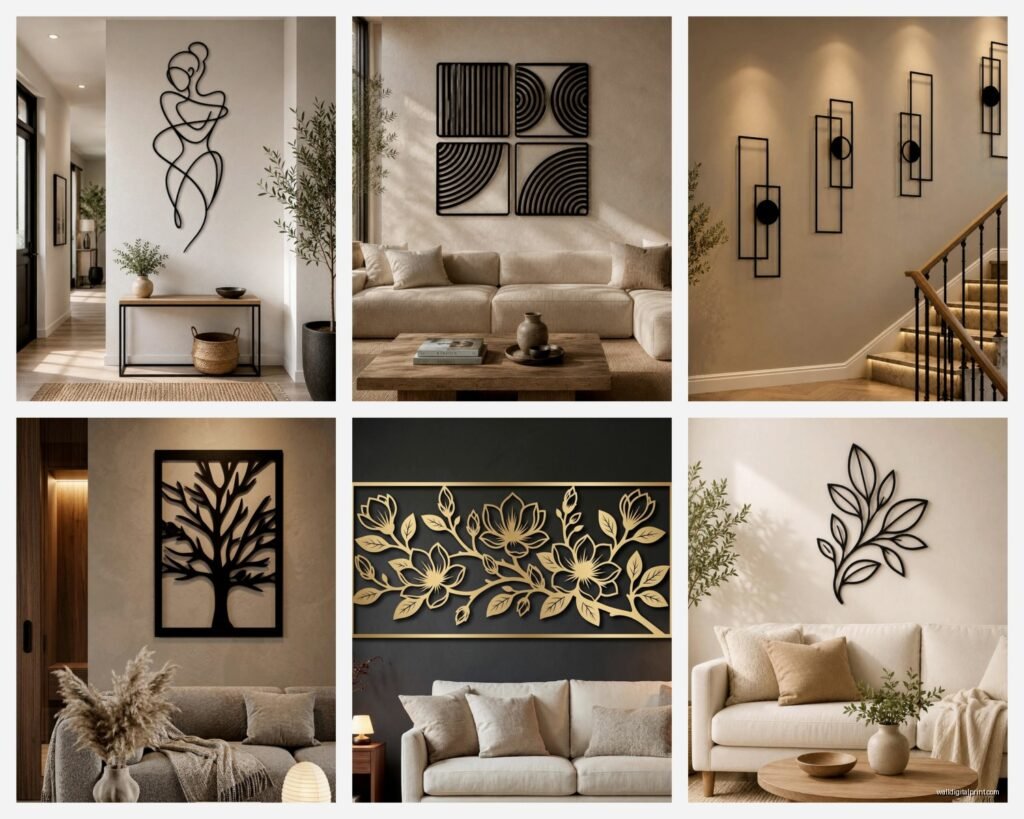
Geometric and Abstract Pieces
These are my go-to for modern and contemporary spaces. Think circles, hexagons, angular designs. I just installed this massive geometric mandala thing in a client’s living room last week and it’s copper-finished so it has this warm glow. The depth is insane because each layer is elevated at different heights.
What to look for: pieces with multiple layers or dimensional elements. Flat cutouts are fine but they don’t have that same sculptural impact.
Nature-Inspired Sculptures
Trees, leaves, mountains, ocean waves. These work really well in transitional spaces or if you’re trying to bridge modern furniture with more organic elements. I have mixed feelings about tree designs because some of them look very 2010 Pier 1 Imports, but the really sculptural ones with interesting metalwork can be gorgeous.
There’s this one brand that does these metal wave designs with oil-rubbed bronze finish and the curves are so fluid they almost look like they’re moving. Those are worth the investment.
Industrial and Steampunk-ish Stuff
Gears, clocks, mixed metals with a weathered finish. This only works in specific aesthetics though. If your living room is all minimalist Scandinavian, a giant gear wall sculpture is gonna look weird. But for lofts, industrial spaces, or eclectic rooms? Chef’s kiss.
Typography and Word Art
Okay so this is tricky. Metal word art can either look really sophisticated or really basic depending on the font and finish. I typically avoid anything that says “Live Laugh Love” in cursive script because… yeah. But I’ve seen some amazing metal typography in geometric fonts, especially in matte black or brushed steel, that looks incredible.
Finishes That Don’t Look Cheap
This matters SO much and nobody talks about it enough. The finish can make a $100 piece look like $500 or make a $500 piece look like you found it at a yard sale.
Brushed metals are your safest bet. Brushed brass, brushed nickel, brushed copper – they all have this subtle texture that photographs well and doesn’t show every fingerprint.
Matte black is having a moment and will continue to have a moment because it’s basically the little black dress of metal finishes. Works with everything, never looks dated.
Oil-rubbed bronze adds warmth and works really well in spaces with wood tones. It’s darker than regular bronze and has these subtle color variations.
Mixed metals can be stunning but you gotta be careful. If you already have mixed metal finishes in your living room (like brass lamps, chrome side tables, whatever), make sure your wall art either ties them together or is distinct enough to be its own statement.
Avoid: super shiny chrome unless you’re going full glam, anything described as “antique gold” that’s actually just spray-painted plastic, anything that looks like it’ll flake off if you breathe on it.
Placement That Actually Makes Sense
The center of your artwork should be at eye level, which is typically 57-60 inches from the floor. But here’s the thing – if it’s going above a sofa, different rules apply.
Above the sofa, leave 6-8 inches between the top of the sofa back and the bottom of the art. I’ve seen people hang things way too high and it looks like the art is floating away from the furniture. They should feel connected.
For really large sculptural pieces, sometimes you want them to extend wider than the furniture below. I did this in my own space with a piece that’s actually wider than my console table and it creates this really intentional, designed look.
Oh and another thing – if you have vaulted ceilings or a two-story living room, you can go bigger and higher than you think. I worked on this house with 20-foot ceilings last year and we installed this 6-foot metal tree sculpture and it still looked proportional because the space was so massive.
Gallery Wall Arrangements
If you’re doing multiple metal pieces instead of one large one, here’s what I’ve learned actually works:
Keep odd numbers (3, 5, 7 pieces) and try to create a shape overall – like an organic cluster or a grid. The organic cluster is more forgiving because it doesn’t have to be perfectly aligned.
Mix different sizes but keep them related in style or finish. Like all geometric pieces in different sizes, or all nature-inspired in the same metal finish.
Use paper templates first. Tape them to the wall, live with it for a day, see if you hate it. This has saved me so many times.
What to Pair It With
Metal wall art doesn’t exist in a vacuum which is something I had to learn. The stuff around it matters.
Lighting: This is huge. Metal reflects and catches light, so think about your lighting situation. I always recommend having at least one light source that can highlight the sculpture – either track lighting, picture lights, or even just a well-placed floor lamp. I was watching The Crown the other night and noticed how they light all the art in those palace scenes and honestly it’s not that different, you just need something to create dimension.
Furniture scale: Your furniture needs to hold its own against a large metal sculpture. I’ve seen massive wall art paired with these tiny delicate furniture pieces and it feels unbalanced. If you’re going big and bold on the wall, make sure your sofa and other furniture have some visual weight too.
Color palette: Metal is technically neutral but it still has undertones. Warm metals (brass, copper, gold, oil-rubbed bronze) play nicely with warm color palettes – terracotta, rust, warm grays, creams. Cool metals (silver, chrome, brushed nickel) work better with cool grays, blues, whites.
Installation Without Destroying Your Walls
Okay real talk, some of these pieces are HEAVY. Like I’m talking 30-40 pounds for large sculptural pieces. You cannot just hammer a nail in drywall and hope for the best.
For anything over 10 pounds, you need wall anchors or you need to find studs. I use a stud finder (the electronic kind, not the app lol) and mark them with painter’s tape.
For really heavy pieces, consider:
- Heavy-duty wall anchors rated for the weight
- Multiple hanging points to distribute weight
- French cleats for super heavy installations – these are amazing and way easier than you’d think
- Hiring someone if you’re not confident because a 40-pound metal sculpture falling is gonna damage your wall AND whatever’s below it
Most metal wall art comes with hanging hardware but honestly it’s often the cheapest possible option. I usually replace it with better quality picture wire or D-rings depending on the piece.
Where to Actually Buy This Stuff
I’ve bought from everywhere at this point and here’s what I’ve learned:
West Elm and CB2 have really good modern geometric pieces. They’re not cheap but the quality is solid and they photograph exactly like they look online.
Wayfair is hit or miss. Read the reviews carefully and check the dimensions because sometimes what looks huge online is actually tiny. But I’ve found some great deals there.
Etsy for custom and unique pieces. There are metalworkers on there doing incredible sculptural work. Just make sure they have good reviews and clear photos of actual finished pieces, not just renderings.
Local art fairs and craft markets – this is where I’ve found my favorite pieces honestly. You can see them in person, talk to the artist, and usually negotiate a bit.
HomeGoods/TJ Maxx for budget options. You gotta dig and the selection is random but I’ve scored some surprisingly nice metal art there for like $40.
Styling Around It
Once your metal sculpture is up, you might need to adjust other stuff in the room. It’s now a focal point so treat it like one.
I usually pull one of the metal tones into other accessories – like if you have a copper metal sculpture, maybe add some copper candle holders or a copper tray on the coffee table. Not matching exactly, just echoing.
Keep the wall itself relatively clear. Don’t put a gallery wall of photos right next to your sculptural metal piece. Let it breathe.
If your metal art is really ornate or busy, simplify the rest of the wall and nearby surfaces. If it’s minimal and geometric, you can layer in more texture and accessories around it.
Common Mistakes I See All the Time
Going too small. This is the number one issue. People are afraid of making a statement so they buy something that’s basically a large postcard on a 10-foot wall.
Hanging it too high. Seriously, measure that 57-60 inch center point.
Buying something that doesn’t match the room’s vibe at all. Like putting a super industrial gear sculpture in a French country living room. Sometimes contrast works but you gotta be intentional about it.
Not considering the three-dimensional aspect. Some sculptural pieces stick out 6-8 inches from the wall. Make sure you have clearance and that it won’t get knocked into.
Forgetting about the backside. Some cheaper pieces look terrible from the side or have visible hanging hardware that looks messy. Check the construction before you buy.
Mixing Metals vs. Matching
Okay so there’s this old rule that you shouldn’t mix metals and honestly it’s kinda outdated? I mix metals all the time and it looks fine as long as you’re intentional.
The key is to repeat each metal at least twice in the space. So if your wall sculpture is brass, have brass somewhere else – lamp, hardware, picture frame, whatever. This makes it look designed rather than random.
Or go full maximalist and mix everything. I’ve seen living rooms with brass, copper, silver, and black metal all happening at once and it works because it’s clearly intentional.
What doesn’t work is one random metal that appears nowhere else in the room. That just looks like you forgot to return it.
Anyway I could talk about this forever but that’s the main stuff I wish someone had told me when I started experimenting with metal wall art. It’s honestly one of the easiest ways to add that “designer” touch without spending a fortune or doing a whole renovation. Just measure twice, install once, and don’t be afraid to go bigger than your initial instinct tells you.