Wall Art Guide, Wall Art Tutoriels
XL Wall Art: Extra Large Oversized Statement Pieces
Aug
So I’ve been installing these massive wall pieces for clients for like three years now and honestly, the first time someone asked me to hang a 6-foot canvas I was like… are we sure about this? But now I’m completely obsessed with oversized art and I gotta tell you what actually works versus what looks good on Instagram but is a nightmare in real life.
The Size Thing Everyone Gets Wrong
Okay so here’s what nobody tells you: that piece you think is “big enough” is probably gonna look tiny once it’s on the wall. I learned this the hard way in my own living room, bought what I thought was a huge abstract piece, got it home and it looked like a postage stamp above my sofa. The general rule I follow now is that your art should take up about two-thirds to three-quarters of the furniture width below it. So if you’ve got an 8-foot sofa, you’re looking at art that’s at least 5-6 feet wide.
But also… and this is gonna sound weird but I literally measure with painter’s tape on the wall first. Like, cut pieces of tape to the exact dimensions and stick them up there. My cat thinks I’m insane when I’m standing across the room squinting at blue tape rectangles, but it works. You can see the actual scale before spending hundreds or thousands of dollars.
Where to Actually Find XL Art That Won’t Bankrupt You
The struggle is real with pricing. Custom pieces from galleries can run you $3K-$10K easy, which… fine if you have it, but most people don’t.
Here’s what I’ve found that actually works:
- Minted and Artfully Walls do oversized prints up to like 80 inches and the quality is surprisingly good for $400-$800
- Etsy has tons of digital downloads you can get printed at your local print shop in whatever size you need
- Saatchi Art for original pieces but watch the shipping costs because oof
- Society6 goes pretty big but their canvas quality is hit or miss in my experience
- Local art schools during student shows, seriously some of the best oversized abstracts I’ve sourced were like $200 from graduating seniors
Oh and another thing, Facebook Marketplace and estate sales are goldmines. I found this incredible 5×7 foot landscape painting at an estate sale for $125 last month. Needed a little frame repair but otherwise perfect.
Canvas vs. Framed vs. Other Materials
This is where it gets tricky because the material affects everything: how you hang it, what walls can support it, shipping costs, the whole deal.
Gallery-wrapped canvas is probably the easiest for oversized pieces. It’s lighter than framed art, comes ready to hang usually, and if you get a quality one the edges are finished so it looks intentional from all angles. But here’s the thing, cheap canvas prints look CHEAP when they’re that big. The texture matters more at scale. I only go with canvas if it’s at least 1.5 inches thick and has a proper giclee print.
Framed prints look more polished and expensive, but a 6-foot framed piece weighs a ton. Like, you need serious wall anchors and probably two people to hang it. I had this whole situation last year where we tried to hang a massive framed abstract in a client’s dining room and the drywall anchors we used weren’t rated for the weight and the whole thing came crashing down at like 2am. Nobody was hurt but scared the hell out of their dog.
For framed pieces over 4 feet, you gotta find studs or use those heavy-duty toggle bolts rated for at least 50 pounds each. And use multiple hanging points, not just wire centered on one hook.
Acrylic and metal prints are having a moment and I actually love them for modern spaces. They’re durable, the colors are insane, and they have this depth that’s really cool. But they’re heavy and expensive to ship. I ordered a 5-foot acrylic print once and the shipping was almost as much as the print itself.
The Hanging Process Nobody Talks About
Okay so funny story, I used to just eyeball everything and wonder why nothing looked quite right. Then I worked with this gallery installer who showed me the actual proper way and it changed everything.
First, the height thing: center of the art should be at 57-60 inches from the floor. That’s standard gallery height and it works in like 90% of situations. But if you have really high ceilings, you might go a bit higher. Or if it’s above furniture, different rules apply.
Here’s my actual process now:
- Measure the height of your art
- Divide by 2 to find the center point
- Measure from the top of the art down to where your hanging hardware sits
- Do the math: 57 inches + half the art height – hardware distance = where your hook goes
I know that sounds complicated but once you do it twice it becomes automatic.
For anything over 30 pounds, you NEED to hit studs or use proper anchors. I use these French cleat systems for really heavy pieces because they distribute weight evenly and they’re adjustable. You screw one piece into the wall studs and the other onto the back of your art, then they hook together. Super secure.
Wait I forgot to mention, if you’re hanging something massive and you’re not sure about your wall structure, hire someone. Seriously. I’ve seen too many expensive pieces damaged from falls. My insurance doesn’t cover “I thought the wall could handle it” situations.
What Actually Looks Good at That Scale
This is totally personal but I’ve noticed some patterns in what works versus what doesn’t when you go big.
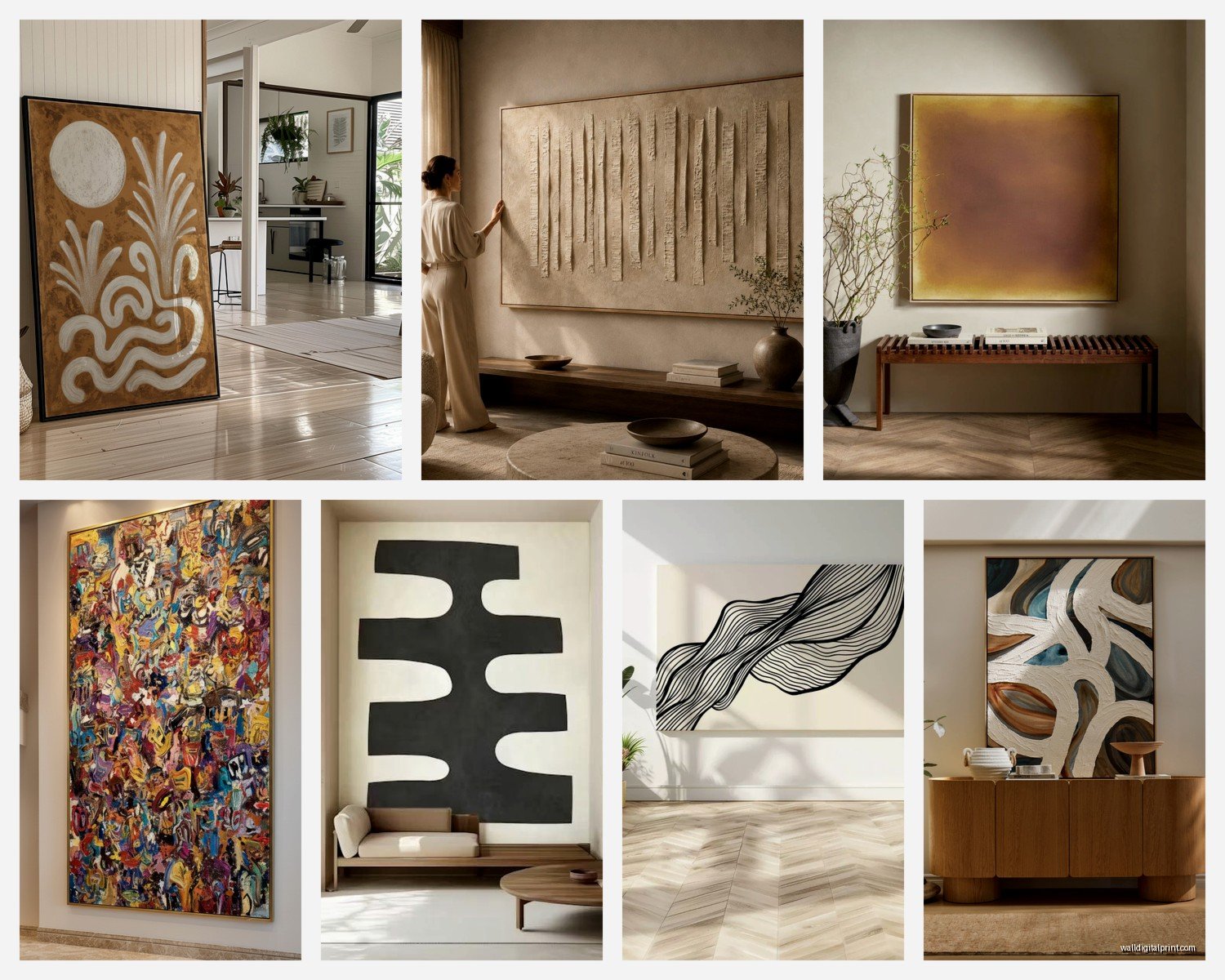
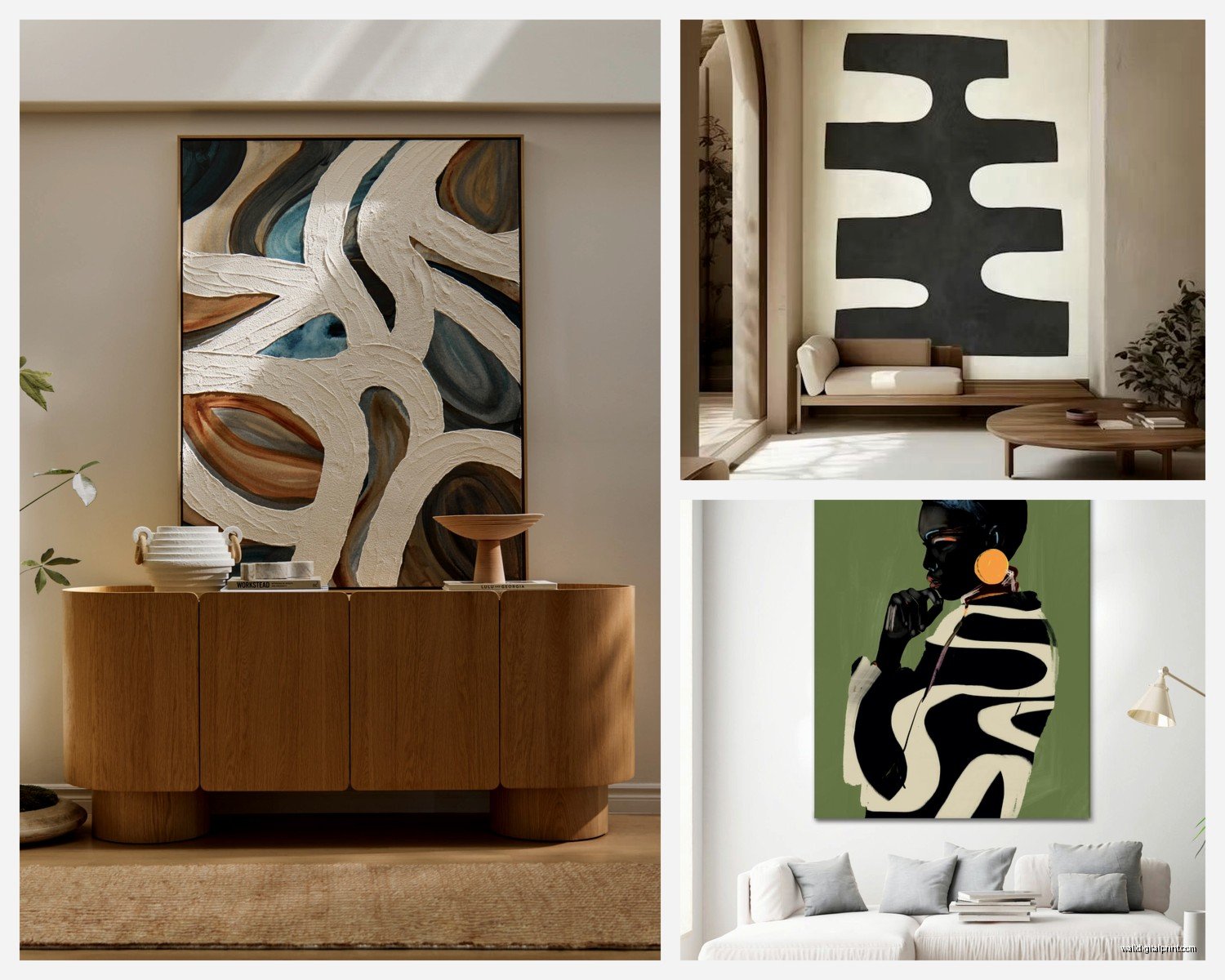
Abstract and minimal pieces scale up beautifully. A simple color field or geometric design at 6 feet looks intentional and dramatic. Too much detail at that size can be overwhelming, like your eye doesn’t know where to focus.
Photography is tricky because it needs to be high resolution enough to print that large without pixelation. You need files that are at minimum 150 DPI at the final print size. I learned this the hard way with a beach scene that looked amazing at 16×20 but turned into a blurry mess at 60×40.
Black and white photographs actually work better oversized than color sometimes because the grain and contrast read well from a distance.
Diptychs and triptychs (multiple panels) are great if you’re nervous about one massive piece. You can do three 2×4 foot panels instead of one 6×4 and it feels less overwhelming. Plus easier to transport and hang.
I did this installation last month where we did five 3×4 panels across an entire 20-foot wall and it looked incredible. More dynamic than one giant piece would’ve been in that space.
Room-Specific Considerations
Your living room can handle almost anything if the scale is right. I usually go biggest here because it’s where you want impact.
Bedrooms are interesting because you’re looking at the art while lying down, so placement is different. I often go lower or do a leaning situation where a big piece just leans against the wall behind a dresser or headboard. Less formal, easier to change out.
Dining rooms are perfect for oversized art because you’re not walking right up to it usually, you’re sitting across the room. The distance lets you appreciate the full scale.
Hallways… okay this is my unpopular opinion but I think one massive piece in a hallway is better than a gallery wall. Makes the space feel wider and more intentional.
The Leaning Method
If you’re commitment-phobic about drilling holes for something that big, leaning is totally valid. I do this all the time, especially with pieces that might rotate seasonally.
You need a piece that’s sturdy enough to stand on its own, obviously. And put those little felt pads on the bottom corners so it doesn’t scratch your floors. I also use museum putty on the back bottom edge to keep it from sliding, especially if you have kids or large dogs who might bump into it.
The look is more casual and collected, less formal gallery. Works great in bedrooms, home offices, casual living spaces.
Lighting Makes or Breaks It
Natural light can be gorgeous but also it’ll fade your art over time. UV-protective glass or acrylic helps but adds weight and cost.
I’m obsessed with picture lights for oversized pieces. They’re not cheap but the drama is unreal. You want the light to hit the art evenly without creating glare. Usually mounted about 6-8 inches above the frame.
Track lighting or adjustable spotlights work too if you have the ceiling situation for it. Just angle them at about 30 degrees to avoid glare.
Oh and another thing, the wall color behind your art matters more when the piece is huge. White walls are safe, but I’ve done some really cool installations on dark charcoal or navy walls where the contrast makes the art pop even more.
Shipping and Transport Reality Check
This is the unglamorous part nobody talks about. Getting a 7-foot canvas to your house is… an adventure.
Most online retailers charge a fortune for oversized shipping. I’m talking $200-$500 depending on size and distance. Always check shipping costs before you fall in love with a piece.
If you’re buying local or from a gallery, rent a truck or van. I tried to fit a 6-foot piece in my SUV once with the seats down and it was a disaster. Just rent the appropriate vehicle.
Professional art shipping companies exist and they’re worth it for really valuable or fragile pieces. They crate everything properly and insure it. Costs more but you’re not gonna be crying over a damaged $5K original.
DIY Options That Don’t Look DIY
If you’re crafty or on a tight budget, you can absolutely make your own oversized art. I’ve done this for clients who wanted something specific that we couldn’t find.
Large canvas from art supply store + acrylic paints + some YouTube tutorials = totally doable. Abstract is the easiest because there’s no “right” way to do it.
You can also print your own designs through places like Spoonflower on fabric, then stretch it over a frame. I did this with a custom botanical print for someone’s bedroom and it turned out gorgeous for like $300 all in.
Engineer prints from Staples or FedEx are super cheap for black and white images up to 36×48. You can get them mounted or framed locally for way less than buying finished art.
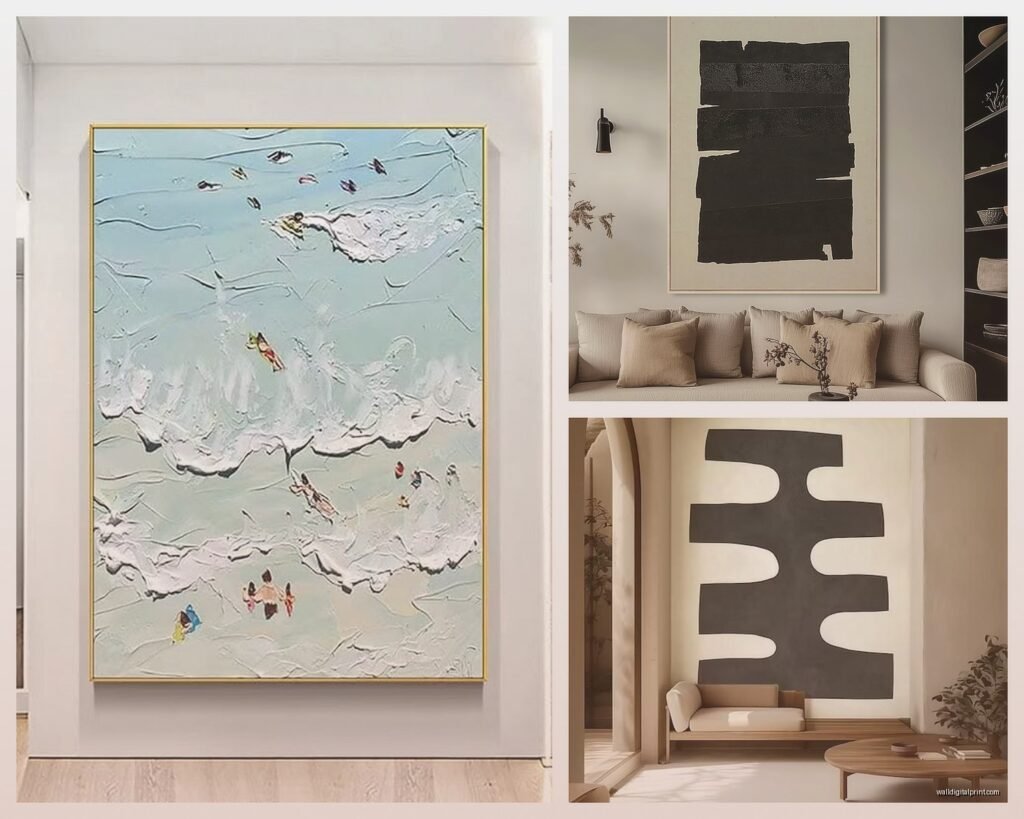
Textured pieces using joint compound or plaster on canvas create this really cool dimensional look. It’s messy but the results are legitimately gallery-worthy if you take your time.
Wait, one more thing about placement: measure your doorways and stairwells before ordering anything massive. I once had a piece that literally wouldn’t fit through the client’s front door and we had to bring it in through a window. Not my finest moment.
The whole oversized art thing is really about confidence. Once you commit to the scale and install it properly, it transforms a space in a way that nothing else really does. Just gotta get past that initial fear of going big enough.