Wall Art Guide, Wall Art Tutoriels
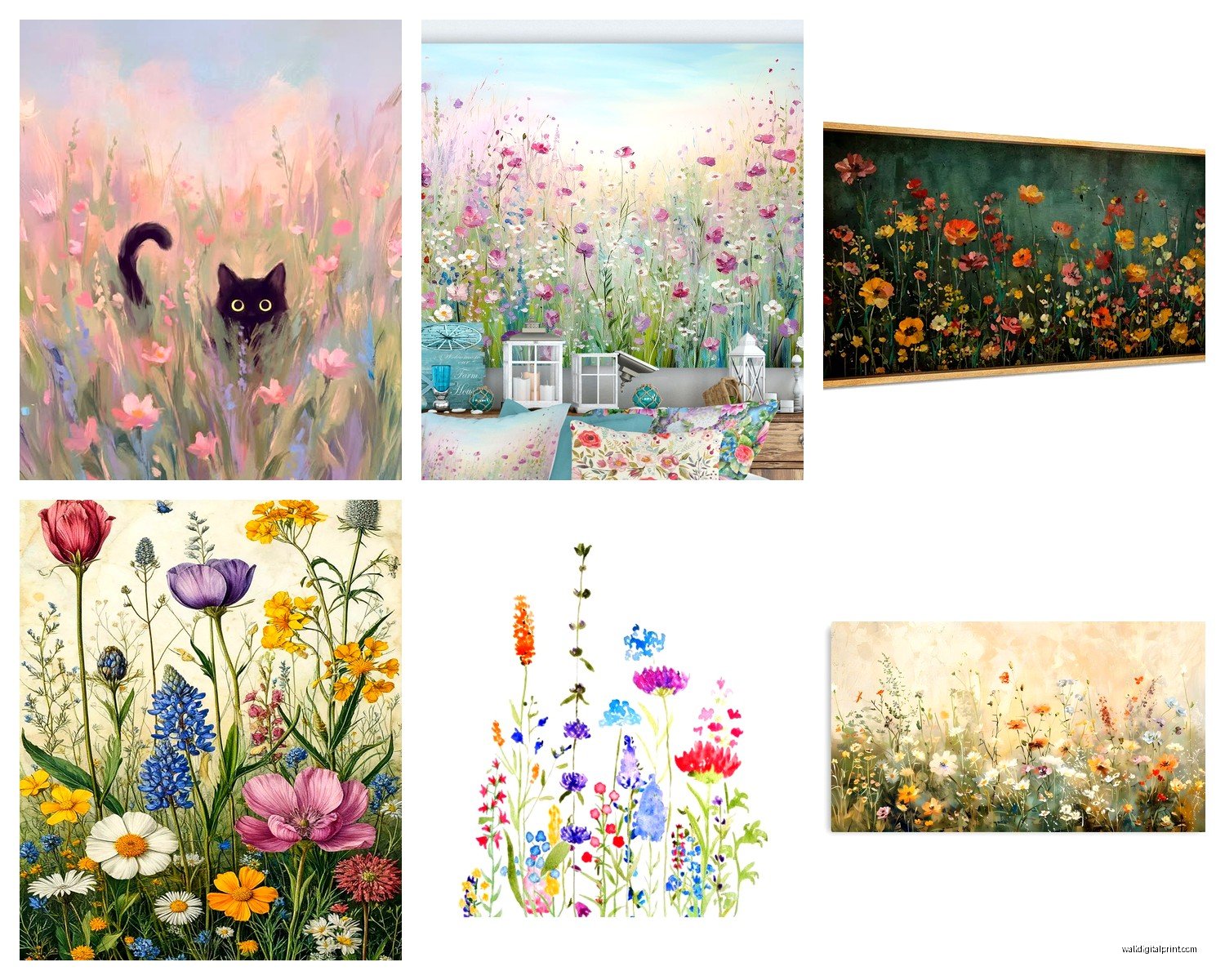
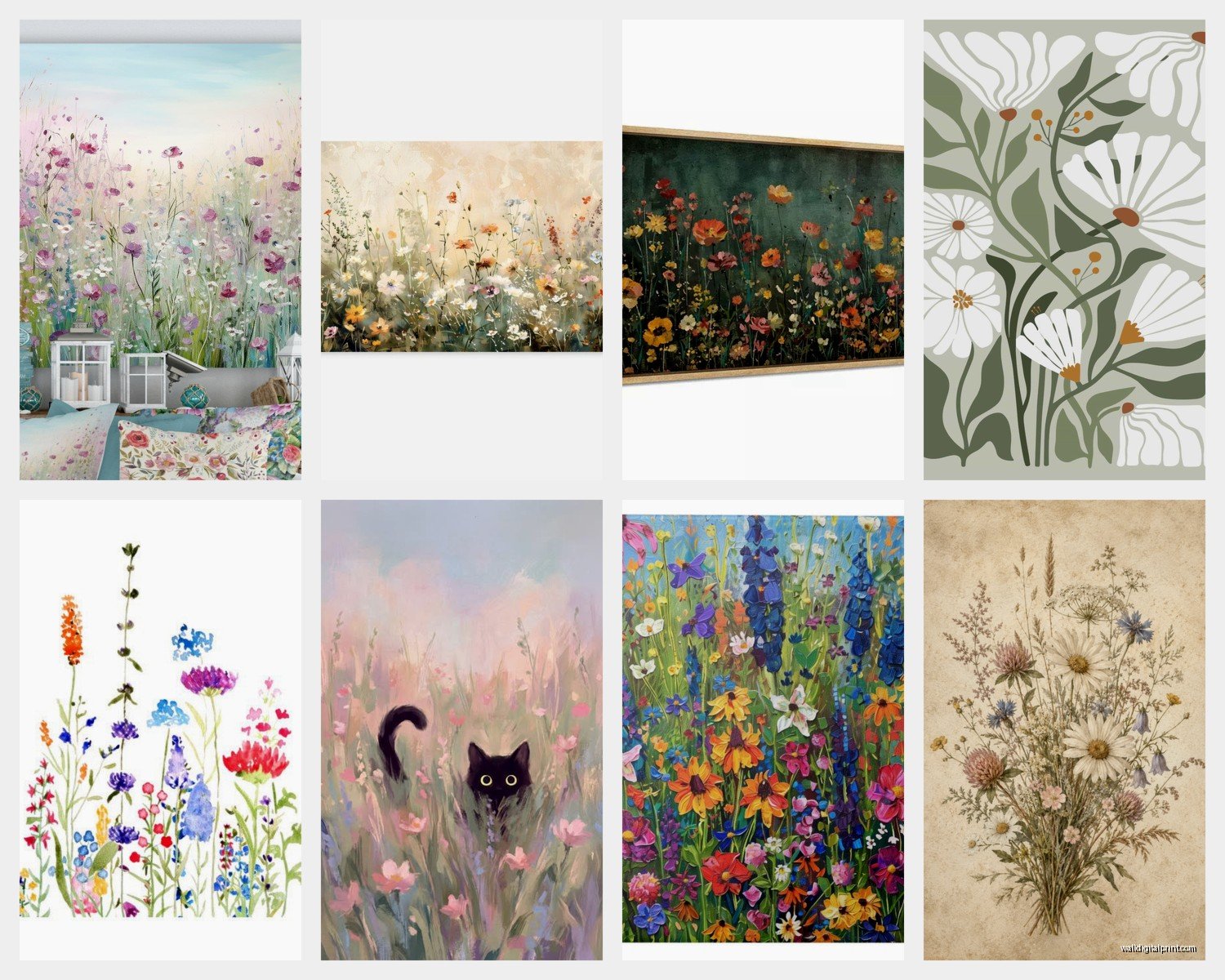
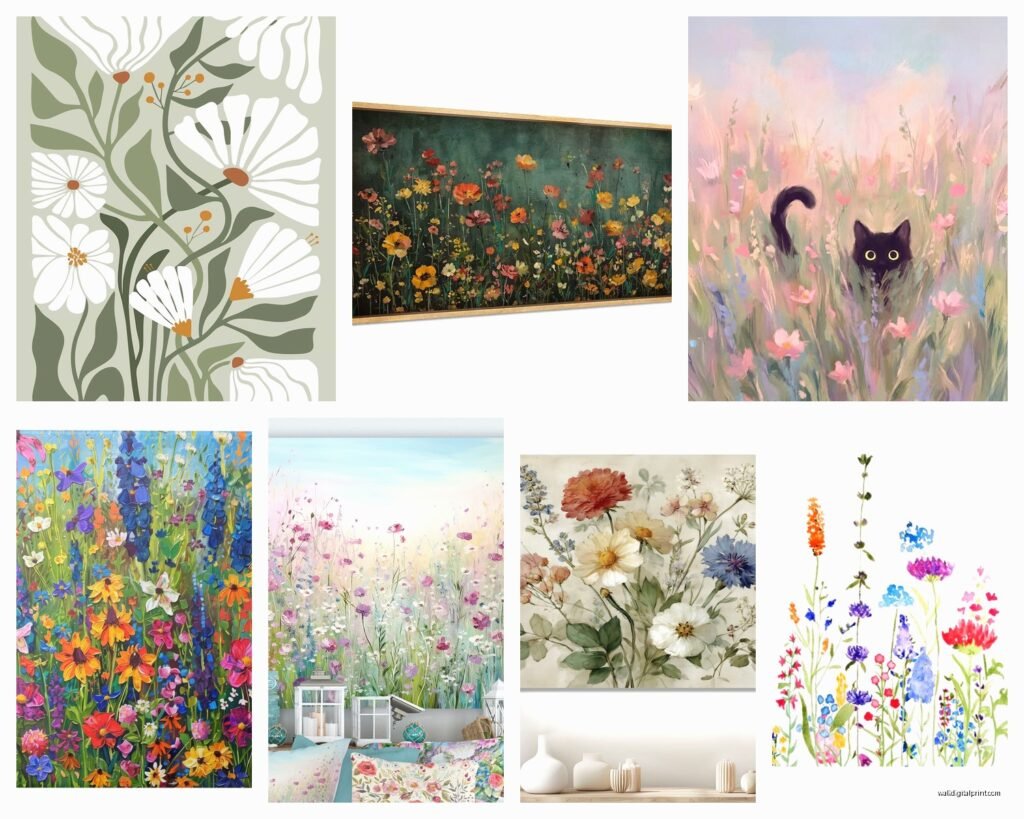
Wildflower Wall Art: Meadow Field Natural Botanical
Aug
So I’ve been absolutely obsessed with wildflower wall art lately and honestly it started because I was watching this documentary about meadows (riveting stuff at 2am, I know) and suddenly I’m buying like three different pieces for my living room. But here’s what I’ve actually learned after hanging way too many botanical prints and dealing with clients who want that “cottagecore but make it sophisticated” vibe.
Finding the Right Piece Without Losing Your Mind
Okay so first thing, you gotta decide if you want actual pressed flowers or prints. Real pressed wildflowers under glass look incredible but they’re temperamental as hell. I had this gorgeous piece with Queen Anne’s lace and poppies that I put near a south-facing window and within like three months the colors were totally washed out. Learned that lesson the hard way.
For prints, Etsy is honestly your best friend but you need to filter aggressively. Search for “wildflower meadow print” or “botanical field art” and then immediately filter by shops that have at least a few hundred sales. I’ve ordered from random sellers with five reviews and the quality is just… not it. The colors come out muddy or the paper is that weird glossy stuff that catches every light reflection.
Size Actually Matters More Than You Think
This is gonna sound weird but I always tell people to go bigger than they think they need. A tiny 8×10 wildflower print just looks lost on most walls unless you’re doing a whole gallery wall situation. I did a client’s bedroom last month and she wanted something above her dresser, and we ended up with a 24×36 meadow scene that honestly transformed the whole space. It wasn’t even expensive, maybe $80 framed from this shop that does museum-quality giclée prints.
But also like, measure your wall first because I cannot tell you how many times I’ve eyeballed it and been completely wrong. My cat knocked over my tape measure the other day so I used a scarf to measure and actually that worked fine, just saying you don’t need fancy tools.
The Framing Dilemma Nobody Warns You About
Oh and another thing, framing costs can absolutely destroy your budget if you’re not careful. Custom framing a large botanical print can cost more than the print itself. I learned to check if the print comes in standard sizes like 16×20 or 18×24 because then you can just grab a frame from Target or Amazon for like $25 instead of spending $200 at a frame shop.
For wildflower art specifically, I’m really into these options:
- Simple light wood frames that don’t compete with all the detail in the flowers
- White or cream mats that give the piece breathing room
- Black frames if your space is more modern and you want contrast
- No frame at all with canvas prints, though I think that looks cheap unless it’s a really high-quality canvas
The mat thing is important actually. A good mat makes even a mediocre print look more expensive. I usually go for at least a 2-inch mat border, sometimes 3 inches if the print is smaller.
Placement Strategies That Actually Work
So placement is where people get really stuck. They buy this beautiful wildflower piece and then it sits on the floor for six months because they can’t decide where to hang it. Been there.
Here’s what I’ve found works:
Above the bed: Classic spot for a horizontal meadow scene. Aim for the print to be about two-thirds the width of your bed. And please don’t hang it too high, the bottom of the frame should be like 8-10 inches above your headboard.
Living room focal wall: If you’ve got a blank wall that needs something, a large-scale wildflower piece can totally anchor the space. I did this in my own apartment with a vintage-style botanical print that has like forty different wildflower species labeled in Latin and everyone asks about it.
Bathroom: Wait I forgot to mention this earlier but bathrooms are actually perfect for wildflower prints if you get them properly sealed or under glass. The humidity thing isn’t as big a deal as people think unless you’re taking like hour-long steaming showers daily. Just don’t do real pressed flowers in there.
Hallways: Honestly underrated. A series of smaller wildflower prints down a hallway can be really charming without feeling too precious.
Gallery Wall Configuration
Okay so funny story, I tried to do a wildflower gallery wall in my dining room and it looked absolutely chaotic for like two weeks before I figured out the formula. Here’s what actually works:
Pick one larger anchor piece, maybe 16×20, that’s your main wildflower meadow scene. Then surround it with smaller complementary prints, could be individual flower species or close-up botanicals. Keep the frames consistent, either all the same or all in the same color family. I use those paper templates that come with frames and tape them to the wall first to get the layout right before I start making holes.
The spacing should be about 2-3 inches between frames. Closer than that looks crowded, farther looks disconnected.
Color Palettes and What Works Where
This is where I see people struggle because wildflower art comes in such a range of color intensities. You’ve got everything from super vibrant poppy fields to those muted vintage botanical illustrations.
For bedrooms I usually recommend softer, more muted wildflower prints. Think lavender, soft yellows, gentle greens. You want something calming, not a riot of hot pink and orange that’s gonna keep you wired at night.
Living spaces can handle more color intensity. Those dramatic meadow scenes with lots of blues and purples and reds, the ones that look almost painterly, those work great in living rooms or dining areas.
If your walls are already a color, you gotta think about how the print interacts with that. I had a client with sage green walls who wanted wildflower art and we had to avoid anything too yellow-green or it just blended into the wall and looked muddy. Went with a print that had more blues and purples and it popped perfectly.
Different Styles to Consider
The wildflower art world is way more diverse than you’d think, here’s what’s out there:
Vintage botanical illustrations: These are those old-school scientific drawings with the Latin names and everything. Super detailed, usually on aged paper or made to look aged. Great if you want something that feels collected and timeless.
Watercolor meadows: Softer, more artistic interpretation. These tend to be less about individual flower identification and more about capturing the feeling of a wildflower field. I’m really into these for more contemporary spaces.
Photography prints: Actual photos of wildflower meadows. Can be stunning but make sure the resolution is good enough for the size you’re printing. Nothing worse than a pixelated daisy.
Pressed flower art: Real flowers preserved and arranged under glass. Beautiful but expensive and delicate. Not recommended if you have kids or clumsy tendencies (raises hand).
Modern minimalist botanicals: Simple line drawings or silhouettes of wildflowers. These work great in really modern spaces where a busy meadow scene would feel too cluttered.
Where to Actually Buy This Stuff
I’ve ordered from probably twenty different places at this point so here’s my honest take:
Etsy: Best selection, period. You can find vintage prints, custom work, instant downloads you can print yourself. Just read the reviews carefully and check the shop policies.
Society6 and Redbubble: Good for contemporary artist designs. The quality is consistent and they have tons of size options. Prices are reasonable.
Minted: Higher end but the quality is really good. Their framing options are excellent if you don’t wanna deal with it yourself.
Antique stores and flea markets: If you want actual vintage botanical prints, this is where you find them. I got an incredible set of 1960s wildflower illustrations at an estate sale for like $15 total.
Frame it yourself with instant downloads: This is gonna sound cheap but honestly some of the best pieces I have are high-res downloads I printed at a local print shop and framed myself. Cost maybe $40 total for a piece that looks like it cost $200.
Maintenance and Long-Term Care
Nobody thinks about this until their beautiful meadow print is faded and sad-looking. Here’s what you need to know:
Keep wildflower art out of direct sunlight, especially if it’s a print or watercolor. UV rays will fade those colors faster than you think. I use UV-protective glass for pieces in sunny spots and it’s worth the extra cost.
Dust the frames regularly because dust buildup on glass is really obvious with detailed botanical art. Just a microfiber cloth, nothing fancy.
If you have real pressed flowers, they’re basically gonna fade eventually no matter what you do. It’s just the nature of organic materials. Enjoy them while they’re vibrant and accept that they’ll take on a more vintage look over time.
DIY Options If You’re Feeling Crafty
Wait I forgot to mention you can totally make your own wildflower art and it’s not as hard as it sounds. Last summer I pressed a bunch of wildflowers from this field near my parents’ house and made three pieces that are honestly some of my favorites.
You just need heavy books, parchment paper, and patience. Pick your flowers, arrange them between parchment paper, stick them in the middle of a heavy book, stack more books on top, wait like 2-3 weeks. Then you can arrange them on cardstock or watercolor paper and frame them under glass.
The key is picking flowers that press well. Pansies, daisies, and most small wildflowers work great. Roses and thick flowers don’t really work because they’re too three-dimensional.
Or if you’re not into actual flower pressing, you can photograph wildflowers and have them printed. I did this with some lupines I found on a hike and the print turned out gorgeous.
Common Mistakes to Avoid
Okay so things I’ve learned the hard way or seen clients do that just doesn’t work:
Don’t go too matchy-matchy with your decor. If you have a floral bedspread, wildflower curtains, AND wildflower wall art, it’s gonna look like a flower shop exploded in there. Pick one or two floral elements max.
Don’t hang wildflower art in your kitchen near the stove. The grease and humidity will destroy it, especially if it’s just a paper print.
Don’t buy a print just because it’s cheap. I’ve wasted money on low-quality prints that looked great online but arrived looking washed out and blurry. Spend a bit more for something that’ll actually look good on your wall.
Don’t forget to consider the ceiling height. If you have really high ceilings, that 16×20 print might look tiny. Scale up.
Anyway that’s basically everything I know about wildflower wall art after way too many hours browsing Etsy and rearranging frames on my walls. The main thing is just to pick something that makes you happy when you look at it, because you’re gonna be looking at it every day and if it doesn’t spark something for you then what’s the point, you know?