Wall Art Guide, Wall Art Tutoriels
Abstract Painting Wall Art: Original Canvas Modern Art
Sep
So I’ve been down this rabbit hole of abstract paintings lately because my living room needed something and honestly the whole process taught me way more than I expected about picking the right piece without spending a fortune or ending up with something that looks like a hotel lobby.
What Actually Makes Abstract Art Work in Real Spaces
Okay first thing – abstract paintings are weirdly personal but also super forgiving? Like you don’t need to “get it” for it to work. I had this moment last month where a client was stressed about not understanding what the painting “meant” and I’m like… it doesn’t have to mean anything beyond “those colors make me feel good when I walk past them.”
The texture thing is huge though. Original canvas art has this physical presence that prints just don’t. When light hits actual paint layers throughout the day it changes. I put one of those thick impasto pieces (that’s the goopy textured style) in my hallway and depending on whether it’s morning or evening it looks completely different. My cat keeps trying to scratch it which is annoying but also proves it’s got that tactile appeal I guess.
Size Matters Way More Than You Think
This is gonna sound obvious but I see people mess this up constantly – they go too small. Like way too small. If you’re putting something above a couch, you want it to take up roughly two-thirds to three-quarters of the couch width. I know that sounds massive but trust me. A tiny painting above a big sofa just looks… lost? Sad?
Here’s what I actually do:
- Cut out newspaper or tape together paper to the size you’re considering
- Stick it on the wall with painter’s tape
- Live with it for a day or two
- If you keep forgetting it’s there, go bigger
I did this in my own place and ended up going with a 48×36 inch piece when I originally thought 30×24 would work. The bigger one completely changed the room.
Finding Original vs Prints and What’s Actually Worth It
So original canvas paintings are obviously more expensive but here’s the thing – you can find emerging artists on Etsy, Saatchi Art, or even Instagram who sell original work for like $200-$800. Which yeah is more than a print but the resale value exists and it’s an actual investment in someone’s work.
I bought this abstract piece from an artist in Portland for $450 last year and honestly it’s my favorite thing in my apartment. The paint is thick, you can see brush strokes, there are these little imperfections that make it feel alive.
But also? Sometimes a really good giclée print on canvas is fine. If you’re renting or not sure about your style yet or just don’t have the budget, get a high-quality print. Just make sure it’s actually on canvas, not paper, and that it’s stretched on a real wood frame not that cardboard backing situation.
Where I Actually Look
Etsy is weirdly great for this. Filter by “handmade” and “ships from” your country to avoid crazy fees. Read the reviews carefully though because some shops dropship printed stuff and call it original.
Saatchi Art has a good return policy which takes the pressure off. I’ve used them for clients and the packaging is solid.
Local art fairs and open studios – okay this sounds like Pinterest advice but genuinely you can negotiate prices in person and see the actual texture before buying. I got a massive abstract piece at a studio sale for 40% off because it was the last day and the artist didn’t wanna haul it home.
Instagram is how I found like three of my favorite artists now. Search hashtags like #abstractpainting #originalart #contemporaryabstract and just… scroll. If you find someone whose style you love, DM them. Most artists will do commissions or have pieces available that aren’t on their main feed.
Color Picking Without Losing Your Mind
This is where people get paralyzed. They think it needs to “match” perfectly and then they end up with something boring or nothing at all.
My approach is pull colors that already exist in your space but don’t try to match exactly. Like if you have navy pillows, look for paintings with some blue in them but maybe it’s teal or cobalt or whatever. The variation actually makes it feel more intentional? I learned this after making the mistake of trying to match my gray couch exactly and ending up with the most boring beige painting that I returned after three days.
Oh and another thing – neutrals with one pop color are your friend if you’re nervous. A mostly white/gray/black abstract with some rust orange or deep green can work in basically any room. I have this piece that’s like 80% cream and taupe with these hits of terracotta and it’s been in three different rooms as I’ve moved and worked everywhere.
The Actual Color Rules I Follow
- Pick out three colors from the painting – one should already be in your room, one should complement what’s there, one can be totally new
- Warm paintings (reds, oranges, yellows) make spaces feel cozier and smaller
- Cool paintings (blues, greens, purples) make spaces feel calmer and bigger
- Black and white isn’t boring it’s just… you gotta have other textures in the room or it feels sterile
I had this whole thing last month where I was watching The Bear (so good btw) and kept pausing to look at the art in the background of scenes and realized most of it followed that three-color thing.
Styles That Actually Exist and What They Look Like IRL
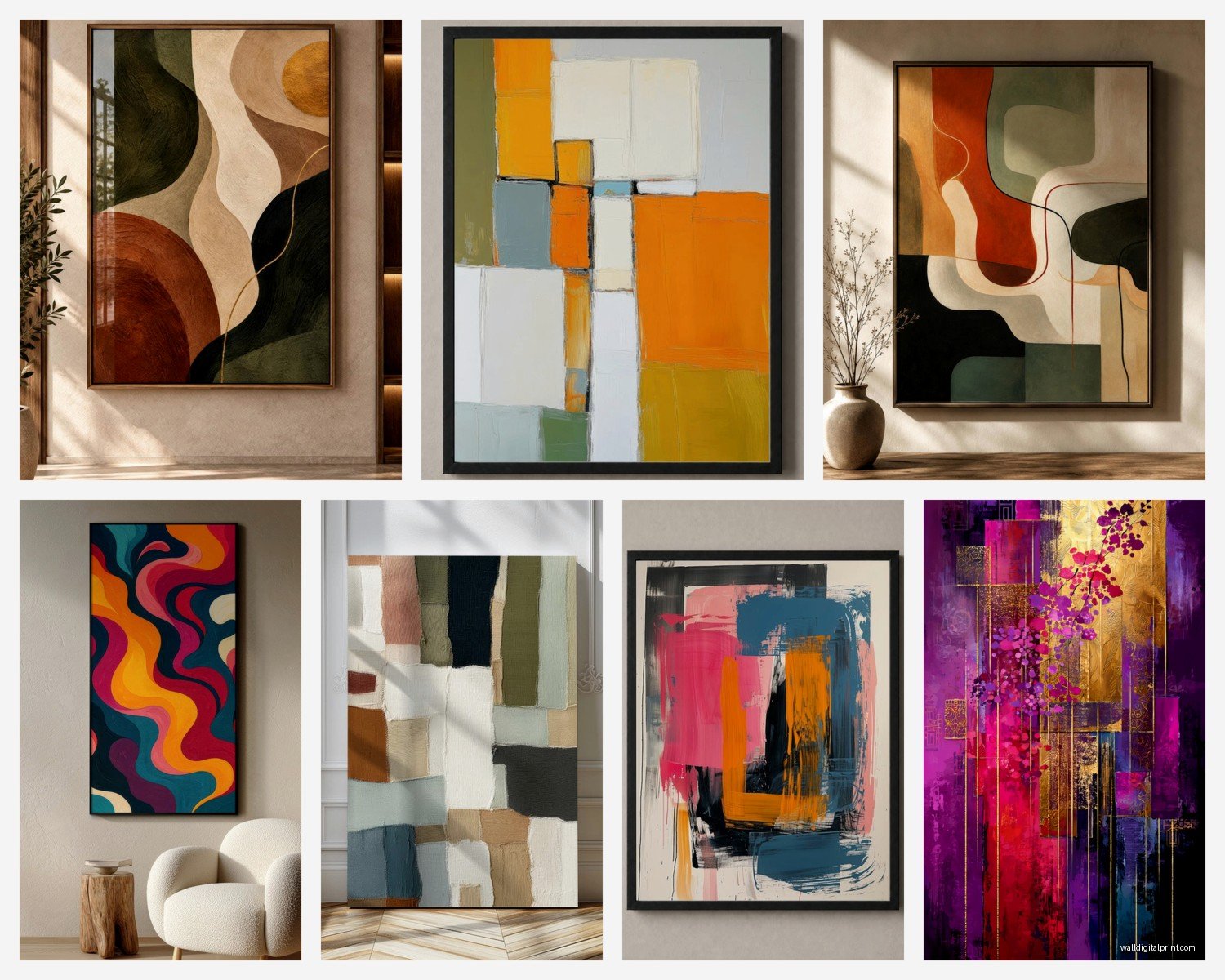
Abstract art isn’t just one thing and figuring out what style you actually like helps narrow down the search so much.
Minimalist/geometric abstract – clean lines, blocks of color, very modern. Works great in contemporary spaces but can feel cold if that’s all you have. I use these in offices or dining rooms mostly.
Abstract expressionism – the big emotional brushstroke stuff, lots of movement and energy. This is what I have in my living room because it feels alive? But it can be overwhelming in small spaces or bedrooms where you want calm.
Color field – large areas of solid or subtly varied color, very meditative. Mark Rothko is the famous example. These are gorgeous in person but really need to be big to work. I tried a small color field piece once and it just looked like… a painted rectangle.
Fluid/pour art – that trendy marbled look with resin. Super pretty, very Instagram, but make sure you actually like it beyond the trend because in five years it might feel dated. No judgment though I have one in my bathroom and love it.
Textured/impasto – thick paint application, very sculptural. These are my favorite because the texture adds so much dimension. They’re also usually more expensive because they use more paint but worth it if you can swing it.
The Money Conversation Nobody Wants to Have
Look, original art is expensive. A legit original abstract painting from an established artist can be thousands or tens of thousands. But here’s what I tell everyone – you don’t need established artists unless you’re collecting for investment.
My budget breakdown for what’s reasonable:
- Small original (16×20 to 24×30): $150-$400 from emerging artists
- Medium original (30×40 to 36×48): $400-$1200
- Large original (48×60+): $1000-$3000+
- High-quality prints on canvas: $80-$300 depending on size
I’ve spent as little as $180 and as much as $2400 on pieces. The $180 one is in my entryway and makes me smile every single day. The $2400 one is stunning but do I love it 13x more? Honestly no.
Wait I forgot to mention – payment plans exist! A lot of artists on Saatchi and even independent artists offer them. I did a 4-month payment plan for a bigger piece and it made it way more manageable.
Hanging It Without Destroying Your Walls or Your Sanity
The 57-inch rule is real – center of the artwork at 57 inches from the floor, which is average eye level. But also I break this rule constantly depending on furniture height and ceiling height.
For above a sofa, I do 6-8 inches between the top of the sofa and bottom of the frame. More than that and they feel disconnected, less and it’s too cramped.
Hardware stuff nobody tells you:
If it’s under 20 pounds, regular picture hangers are fine. Over that, use proper wall anchors or find a stud. I learned this the hard way when a canvas crashed down at 2am and nearly gave me a heart attack. My dog lost it.
D-rings are better than sawtooth hangers for anything medium-sized or larger. More stable, easier to level.
If the painting didn’t come with hanging hardware, just take it to a frame shop and they’ll add it for like $15-30. Worth it to not stress about it falling.
Lighting Makes or Breaks It
Natural light is gorgeous but be careful of direct sunlight – it’ll fade the colors over time. I have sheer curtains on my west-facing window for this reason.
Picture lights are worth considering if the painting is in a darker area. Or even just a well-placed floor lamp angled toward it. The way light hits texture throughout the day is honestly half the appeal of original canvas work.
Commission vs Buying Existing Work
This is gonna sound weird but commissioning is less scary than I thought? I’ve done it twice now and both times turned out great.
The key is finding an artist whose existing work you already love – don’t try to get them to do something completely different from their style. Share photos of your space, your color palette, and like 2-3 examples of their work that you’re drawn to. Most artists are super communicative and will send progress photos.
Budget for commissions is usually 20-30% more than their similar-sized existing pieces because custom work takes more back-and-forth. But you get exactly what you want for your space.
I commissioned a 40×50 piece for above my bed in specific colors to tie together my blue bedding and the wood tones and it’s perfect in a way that buying something existing wouldn’t have been.
Existing work is better if you’re impulsive like me or you see something you love and know it’ll haunt you if you don’t get it. I’ve definitely bought pieces within 10 minutes of seeing them because I knew they were right.
What to Avoid Because I’ve Made These Mistakes
Don’t buy art that “matches your couch” as the primary criteria – your couch might not be forever but art can be
Avoid super trendy color combos unless you genuinely love them – all that millennial pink and navy stuff from 2016 feels dated now
Skip the mass-produced “original” art from furniture stores – it’s usually assembly-line stuff where one person does the background, another does the details, etc. Not truly original
Don’t go too literal with the “meaning” – if you’re staring at it trying to figure out what it’s “supposed to be” you’re overthinking it
Frame or no frame is personal but unframed stretched canvas is more contemporary and honestly easier because you don’t have to deal with custom framing costs
Living With Abstract Art Long-Term
Here’s something I didn’t expect – abstract paintings grow on you or sometimes you fall out of love with them. I have one piece that I was meh about for the first month and now it’s my favorite. And another that I loved immediately but after a year I’m kinda over it.
That’s okay? Art doesn’t have to be forever. You can sell it, gift it, move it to a different room. I rotated a painting from my living room to my bedroom and suddenly loved it again because the context changed.
Cleaning is just dusting with a soft dry cloth. Don’t use any liquids or cleaners. If it’s really dusty, a soft brush attachment on a vacuum on low setting works but be gentle.
The actual joy of having original art is hard to describe but it’s this thing where you notice it differently all the time. The way afternoon light hits it, or how it looks different after you rearrange furniture, or when someone visits and asks about it. It’s an ongoing relationship with the piece which sounds pretentious but is kinda true.
Anyway that’s basically everything I wish someone had told me before I started collecting abstract paintings. Start small if you’re nervous, buy what you actually love not what you think you should have, and remember you can always move it or sell it if it doesn’t work out. Not that serious in the end, just paint on canvas making your space feel more like you.