Wall Art Guide, Wall Art Tutoriels
Climbing Man Wall Art: Rock Climber Mountain Sport Figure
Oct
So I’ve been obsessing over these climbing man wall art pieces lately and honestly it started because a client wanted something “adventurous but not cliche” for their home office and… yeah, went down a rabbit hole. Let me dump everything I learned because choosing the right one is actually trickier than you’d think.
Material Actually Matters More Than You’d Expect
Okay so first thing – the material completely changes the vibe. I tested like five different versions in my own place before recommending anything, and here’s what I found:
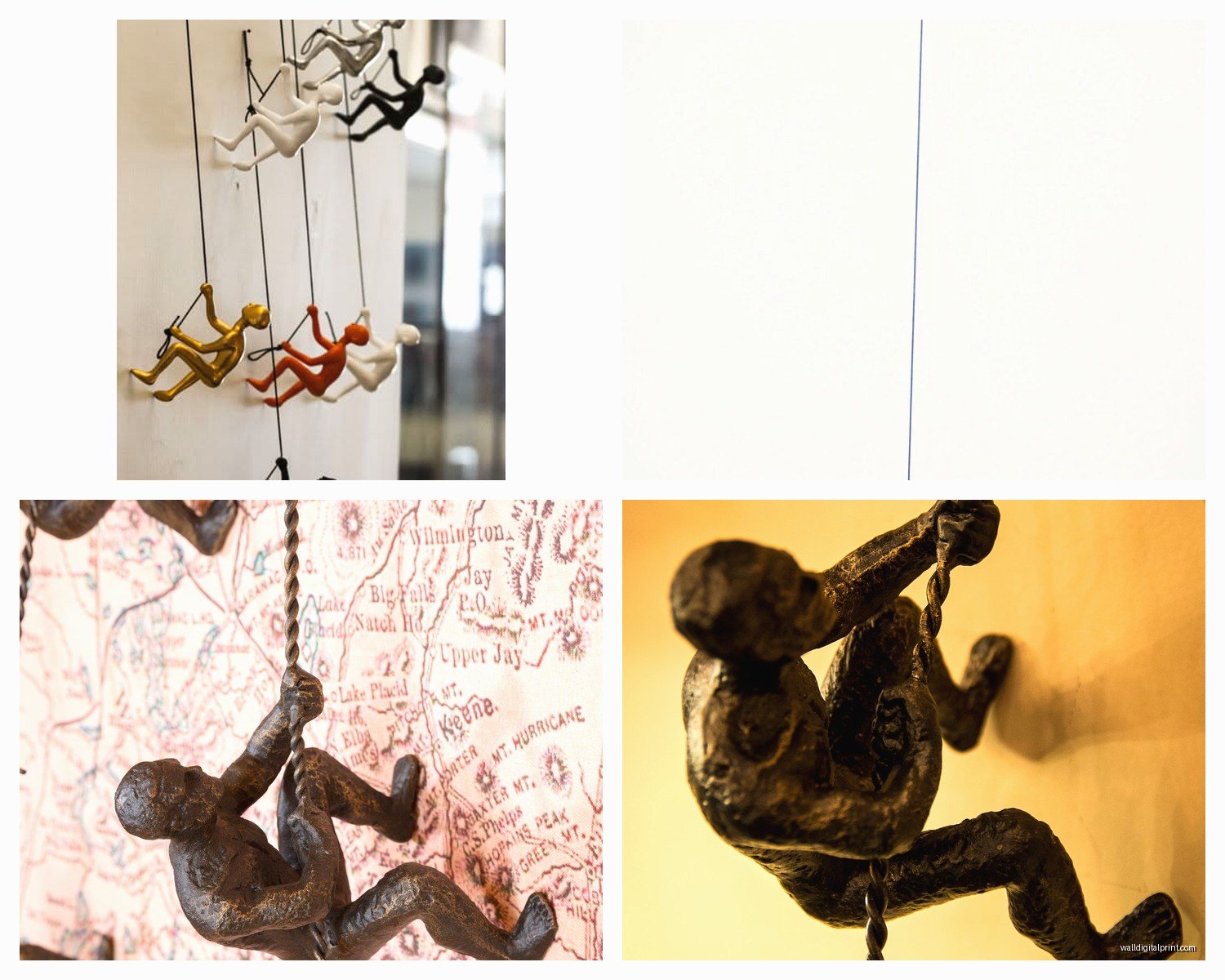
Metal sculptures are gonna be your most dramatic option. The ones I’ve worked with are usually powder-coated steel or iron, sometimes with a rust finish that looks intentional (not like actual rust, more like… industrial chic?). They cast these amazing shadows when you get the lighting right. I put one near a window in my living room and every afternoon around 3pm it creates this whole shadow climbing scene on the wall behind it. Didn’t plan that but it’s honestly the coolest accidental design moment.
The weight though – these are HEAVY. Like 8-15 pounds for a medium-sized piece. You’re gonna need proper wall anchors, not just the little nails that come in those picture hanging kits. I learned that the hard way when my cat knocked into a poorly installed one at 2am and… yeah, not fun.
Resin or polyresin figures are lighter and usually more detailed. They can capture the muscle definition and rope texture better. But they feel less “authentic” somehow? Like they’re trying too hard. I have one client who loves hers though, so it’s personal preference. These run cheaper too, usually $30-80 versus $80-200 for metal.
Size and Scale Is Where Everyone Messes Up
This is gonna sound weird but measure twice, order once actually applies here. I’ve had to return THREE pieces because they looked way different than I imagined.
Small pieces (under 12 inches) work for:
- Shelf styling mixed with books and plants
- Gallery wall additions
- Bathroom or small office spaces
- Renters who can’t do major wall installations
Medium pieces (12-24 inches) are the sweet spot for:
- Above a desk or console table
- Focal point on a narrow wall section
- Bedroom accent walls
- Man caves or home gyms obviously
Large pieces (24+ inches) need:
- High ceilings or they look cramped
- At least 3 feet of clear wall space around them
- Professional installation usually
- A room that can handle a bold statement
I made the mistake of ordering a 36-inch climber for what I thought was a big wall in my hallway and it completely dominated the space. Looked like the guy was gonna climb right into the kitchen. Moved it to the stairwell landing and THAT worked perfectly because the vertical space matched the climbing motion.
Installation Tips Nobody Tells You
Okay so funny story – I thought I was so smart installing one of these myself with YouTube tutorials and ended up with two extra holes in my wall because I didn’t account for the weight distribution.
For metal pieces, you need:
- Stud finder (borrow one if you don’t have it)
- Wall anchors rated for at least 2x the sculpture weight
- Level – seriously don’t eyeball it
- Someone to hold it while you mark placement
The tricky part is most climbing figures have an irregular shape, so finding the balance point isn’t obvious. Hold it against the wall where you want it, have someone stand back and tell you if it looks right, THEN mark your holes. I usually put a small piece of painter’s tape where the mounting points are so I can step back and visualize without holding the heavy thing.
Wall anchors – get the toggle bolt kind for drywall, not those plastic ribbed ones. The climbing figures create weird leverage because they stick out from the wall, so they pull differently than a flat picture frame.
Style Variations You’ll See
There’s like a million different poses and styles, which makes choosing hard. Here’s what I’ve noticed works in different settings:
Vertical climber reaching up: Best for narrow wall spaces, stairwells, or next to tall furniture. Creates upward movement that makes ceilings feel higher. I used one in a client’s entryway with 8-foot ceilings and it genuinely made the space feel less cramped.
Horizontal traverse position: Works above sofas, beds, or long console tables. Follows the furniture line naturally. These usually come with multiple mounting points so they’re more stable.
Rappelling/descending figure: Super cool but harder to place. I’ve only used these successfully in rooms with vaulted ceilings or above staircases going down. In a regular room they can look… upside down? Even though that’s the point.
Free solo (no rope) versus with rope: The rope adds detail and context but can look messy if it’s poorly designed. The cleaner silhouette pieces without rope read better from a distance.
Color Finishes That Actually Work
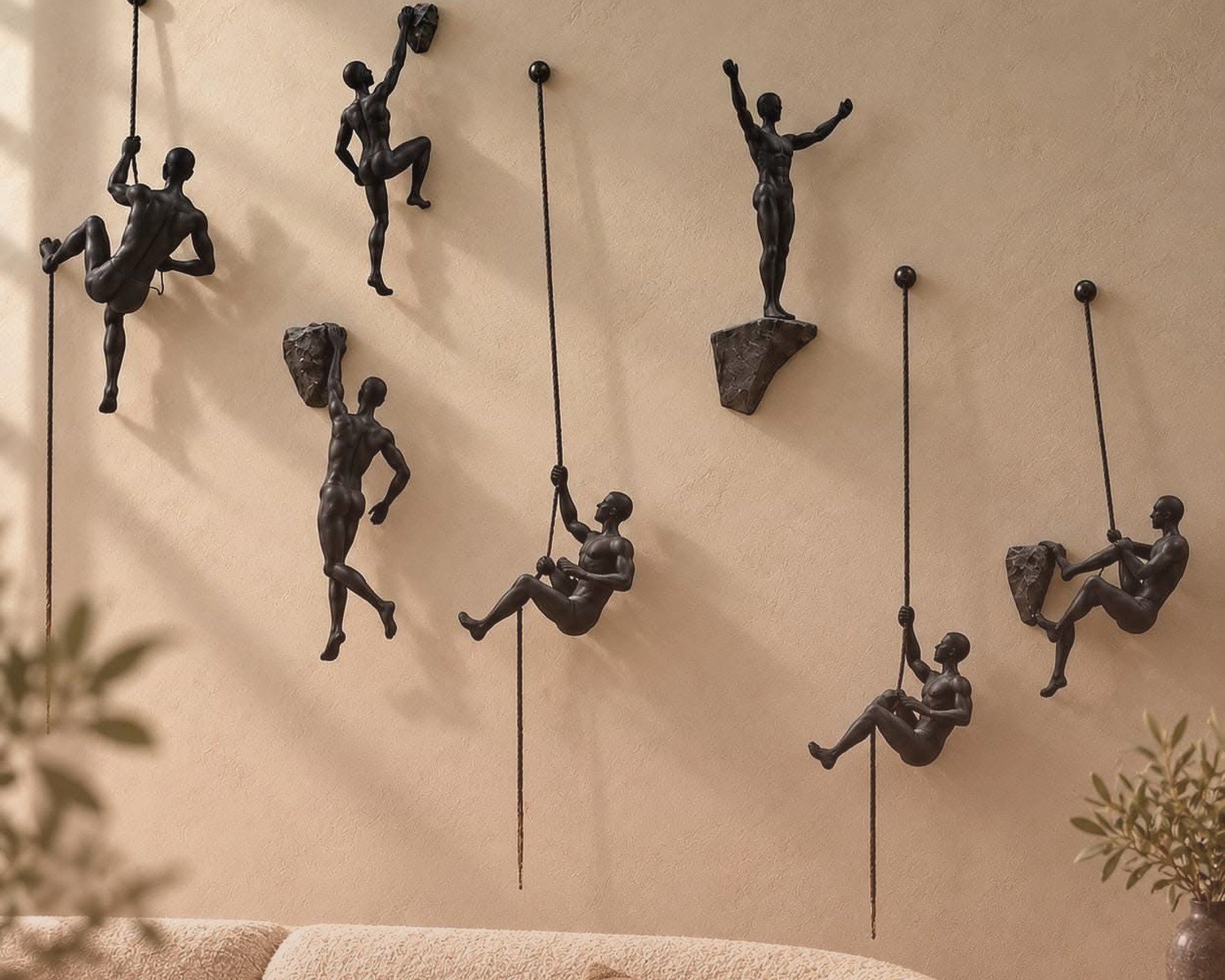
Matte black is everywhere right now and yeah, it’s popular for a reason. Works with literally any color scheme, doesn’t compete with other decor, looks expensive even when it’s not. I probably specify black metal climbers for 70% of projects.
Bronze or copper tones bring warmth and work amazing with wood furniture and earth tone palettes. There’s this one piece I put in a mountain house with all reclaimed wood and leather – the bronze climber looked like it belonged there since day one.
Rust or weathered finishes are hit or miss. In the right industrial or farmhouse setting they’re perfect. In a modern minimalist space they look out of place. My neighbor has one in her super contemporary kitchen and… it doesn’t work, but I didn’t wanna say anything.
Wait I forgot to mention – some come in bright colors like red or blue. I haven’t personally used these because they’re hard to work with design-wise, but if you’re doing a kid’s room or a really playful space, could be fun?
Where to Actually Buy These
Amazon has a ton but the quality is all over the place. I’ve ordered probably 15 different ones for various projects and returned maybe 6. Read the reviews that include photos – if the metal looks flimsy or the welds are visible and ugly, skip it.
Etsy has handmade options that are usually higher quality and more unique. Found this amazing artist who does custom poses – you can send them a photo of an actual climbing position and they’ll recreate it. Cost like $250 but for a serious climber who wants something personal, totally worth it.
Home goods stores (HomeGoods, TJ Maxx) randomly have these and they’re usually good deals but you gotta grab them when you see them. I found a gorgeous 18-inch metal climber at HomeGoods for $35 that would’ve been $120 online.
Wayfair and Overstock are solid for mid-range options with actual return policies, which matters when you’re not sure about size.
Styling It So It Doesn’t Look Cheesy
Okay this is important because these can veer into tacky territory real fast if you’re not careful.
Don’t put it with a bunch of other sports memorabilia unless you’re specifically going for a sports room vibe. Like, climbing figure plus football helmet plus baseball bat equals man cave cliche.
Do treat it like sculpture and give it space to breathe. Pair it with minimal surroundings – maybe one plant, maybe a simple shelf with a few books.
Don’t add inspirational quotes about mountains or challenges nearby. Just… don’t. Let the art speak for itself.
Do consider the wall color behind it. These pop on white or light gray walls. On dark walls you might need strategic lighting to make them visible.
Lighting is actually huge. I installed LED strip lights on the top of a bookshelf below a metal climber and the uplighting created this dramatic shadow effect. Cost like $15 for the lights and completely transformed how the piece looked.
For Actual Climbers vs Design Lovers
If you or someone in your house actually climbs, you’re gonna be more critical about the accuracy of the pose and gear. I worked with a client who rock climbs competitively and she rejected three options because “nobody would ever position their hand like that” or “that’s not how you belay.”
For actual climbers, look for:
- Anatomically correct positions
- Proper gear representation if it includes equipment
- Dynamic poses that show actual climbing movement
- Artists or sellers who are themselves climbers
If you’re just into the aesthetic and don’t climb, honestly any well-made piece that fits your space works fine. The technical accuracy matters way less than the overall vibe and quality.
Multi-Piece Sets
Oh and another thing – some come as sets of 2-4 climbers at different heights. These are cool for creating a whole climbing route on your wall but they’re HARD to install well. You need to map out the whole arrangement first, and getting the spacing right so it looks intentional takes time.
I did one of these in a teenager’s bedroom – four climbers going up the wall toward the ceiling. Took me like 2 hours to get the positioning right, kept stepping back and adjusting. But the final result was really cool, looked like they were actually ascending the wall.
The risk with sets is if you mess up one placement, the whole thing looks off. And you’ve got 4-8 holes in your wall instead of 2. Maybe practice with paper cutouts first? That’s what I do now.
Maintenance and Longevity
Metal ones are basically zero maintenance. Dust them occasionally. If they’re outdoors (yeah some people put them on exterior walls or fences) the finish might fade but that can actually look cool in a weathered way.
Resin pieces can get brittle over time, especially in really sunny spots. Had one client whose resin climber was near a south-facing window and after like a year it started showing stress cracks. Moved it to a shadier spot and it’s been fine since.
The paint or powder coating can chip if you bang into them. Touch-up paint markers work okay for small chips on black pieces – just get a matte black Sharpie paint pen.
Price Reality Check
You can find small resin ones for $25-40. Medium metal sculptures run $60-150. Large custom metal pieces can go $200-500+.
Is expensive always better? Not necessarily. I have a $45 Amazon piece that’s held up great for three years and a $180 “artisan” one that had welding issues right out of the box.
Look for:
- Solid construction with clean welds if it’s metal
- Smooth finish without rough edges
- Mounting hardware included
- Actual dimensions listed, not just “large” or “medium”
- Return policy because you might hate it in your space
My dog just knocked over my coffee so gonna wrap this up but last thing – consider what’s around the piece. I see people put these on walls with tons of other art and the climber gets lost. Give it a clean wall section, maybe pair with one complementary element like a floating shelf with minimal styling, and let it be the star.
Also the shadow thing I mentioned earlier? If you’re gonna try that, west-facing walls get the best afternoon light for dramatic shadows. Just something I noticed while binge-watching that climbing documentary on Netflix last month and noticing how the light hit mine.