Wall Art Guide, Wall Art Tutoriels
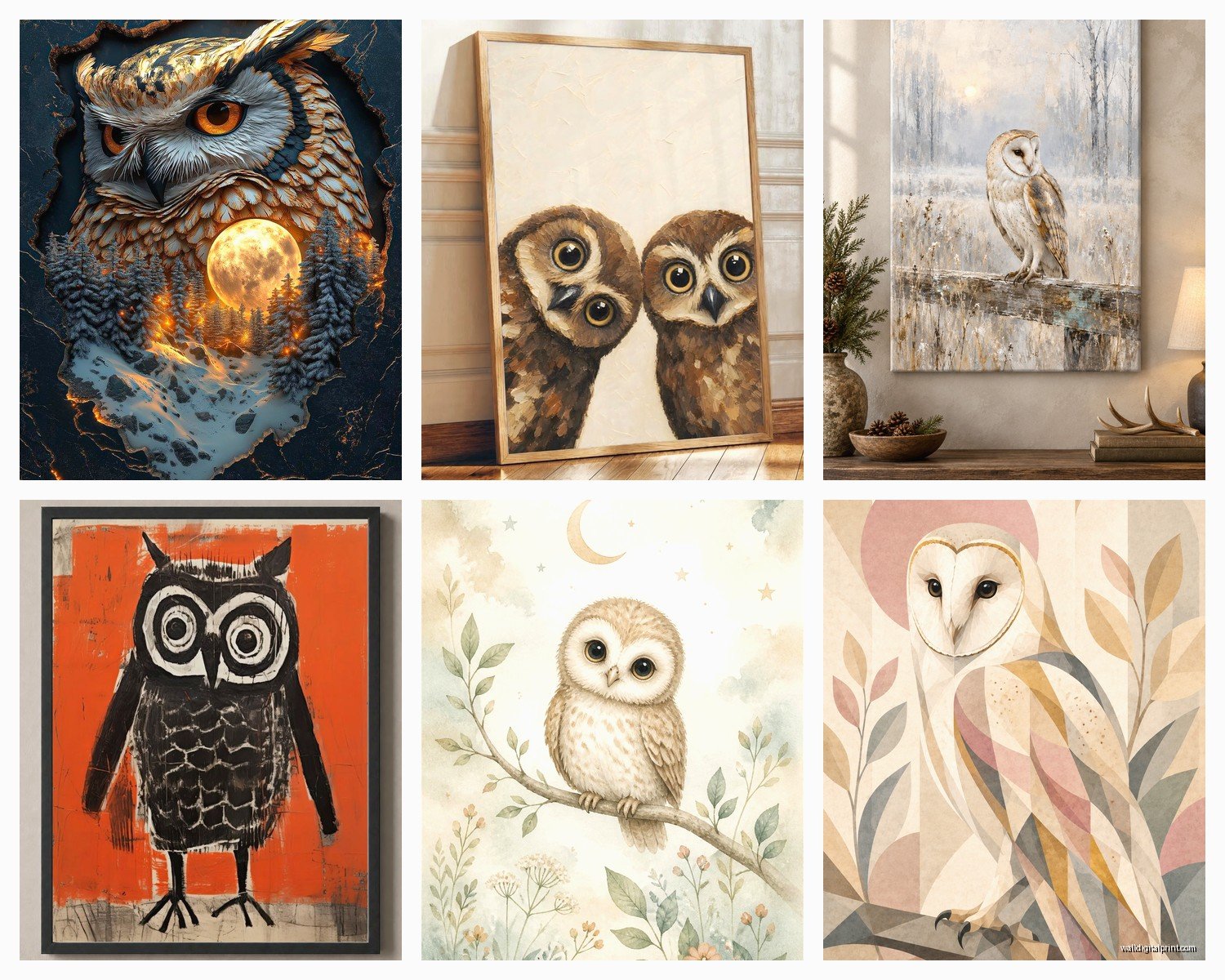
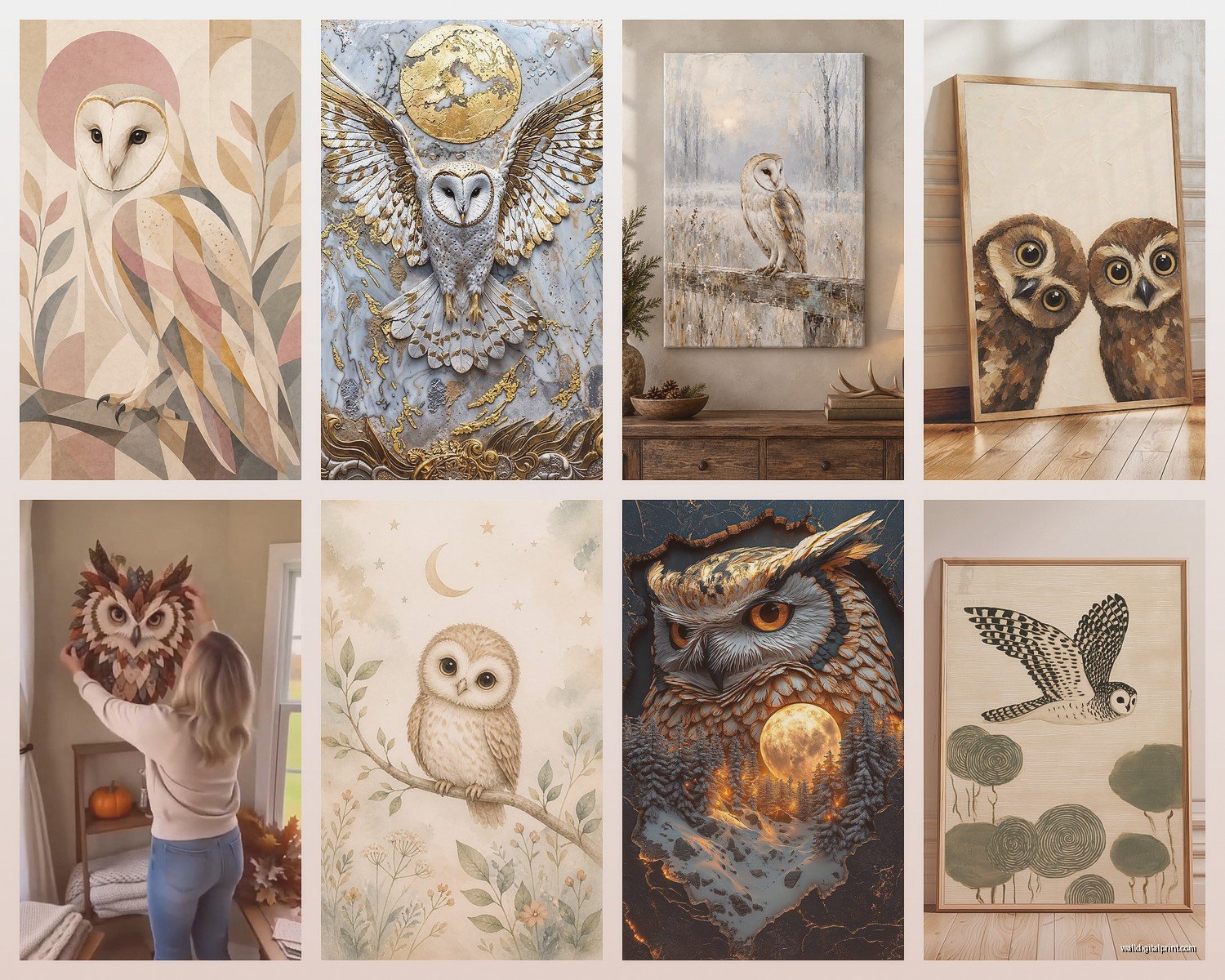
Owl Wall Art: Wise Bird Hoot Nocturnal Forest Creature
Sep
So I’ve been obsessing over owl wall art lately because three different clients asked about it in the same week and I was like, okay universe, I get it. Let me tell you what I’ve actually learned from hanging probably 30 different owl pieces in the past year alone.
Why Owl Art Actually Works in Modern Spaces
Okay so here’s the thing – owls aren’t just for that cottage core aesthetic everyone’s doing. I hung this massive metal owl sculpture in a super minimalist loft last month and it completely transformed the space. The trick is understanding what vibe you’re going for because owl art comes in like a million different styles and not all of them are gonna work for your room.
You’ve got your realistic wildlife photography owls, your geometric modern owls, vintage Audubon print owls, whimsical illustrated owls, and then there’s the whole boho macrame owl situation which… we’ll get to that. My cat knocked over my coffee while I was cataloging owl pieces last week and I’m still finding photos stuck together but anyway.
Choosing the Right Style for Your Space
If you’re working with a modern space, go for abstract or geometric owl designs. I found this incredible line art owl print that’s literally just continuous black lines on white and it looks SO expensive but was like $40 framed. The key is high contrast and clean lines.
For traditional or farmhouse vibes, you want those vintage natural history prints. Barn owls especially photograph really well in that soft, muted color palette. I source a lot of mine from this Etsy seller who does reproductions of old ornithology books and they look legit antique once you frame them properly.
Size and Placement – This Is Where People Mess Up
Oh and another thing – everyone underestimates how big their wall art should be. I cannot stress this enough. That cute little 8×10 owl print is gonna look like a postage stamp on your living room wall. You need to go bigger than you think.
Here’s my actual formula that I use:
– For above a sofa: aim for 2/3 to 3/4 the width of your furniture
– For a gallery wall: map it out on the floor first (learned this the hard way with like 47 nail holes in one wall)
– Solo statement piece: at least 24×36 inches for a standard wall
I did this whole owl gallery wall in my own hallway last year – mixed vintage prints with one large metal piece and some smaller watercolors. Took me three tries to get the spacing right but now everyone who visits asks about it.
The Height Thing Nobody Talks About
Hang your owl art so the center is at eye level, which is usually 57-60 inches from the floor. But like, whose eye level? I’m 5’4″ so I sometimes cheat a bit lower. In a dining room where people are seated, you can go lower. Above a console table, leave 6-8 inches between the furniture and the bottom of the frame.
Wait I forgot to mention – if you’re doing a large owl piece above your bed, make sure it’s anchored properly because the last thing you need is a 3-pound metal owl falling on your face at 2am. Use proper wall anchors, not just those little nails that come with frames.
Materials and Textures Worth Considering
Okay so funny story – I used to think all wall art was just prints in frames but there’s so much more out there for owl designs specifically.
Metal owl sculptures – these are having a moment. The dimensional ones with copper or bronze finishes add this organic element without being too rustic. I’ve got one in my kitchen that catches the morning light and it’s *chef’s kiss*. They work especially well in transitional spaces where you’re mixing modern and traditional.
Wood carved owls – if you’re into that handcrafted look. I found an amazing carved walnut owl at a craft fair that I bought for myself (broke my own rule about not keeping inventory). The texture adds so much warmth to a space. Just dust them regularly because they collect dust like crazy.
Canvas prints – most affordable option and you can find huge sizes. The quality varies wildly though. I always check that it’s actually canvas and not that weird plasticky material. Stretched canvas looks more expensive than rolled canvas in a frame, just FYI.
Framed prints under glass – classic for a reason. Museum glass is worth the upgrade if you’re investing in an actual art print. It cuts glare and protects better. Regular glass works fine for reproductions though, don’t let framers upsell you unnecessarily.
The Macrame Owl Situation
Look, macrame owls are very specific. They work in boho spaces, kids rooms, or if you’re really committing to a 70s revival thing. I helped a client make one last month (yes I do that sometimes when they insist) and it was actually pretty fun? But know that it’s a LOOK. Not something you can easily style around if you’re going for minimalist vibes.
Color Schemes That Actually Work
This is gonna sound weird but the color of your owl art matters more than the actual owl sometimes. I’ve seen people choose owl prints just because “I like owls” without considering if that teal and orange watercolor owl matches literally anything in their room.
For neutral spaces – black and white owl photography or prints are foolproof. That high contrast works with basically everything. Brown and cream tones for warmer spaces. I’m obsessed with sepia-toned vintage owl prints right now.
If you’ve got color in your room, pull accent colors from your existing palette. Got navy blue pillows? Look for owl art with navy elements. Burnt orange throw? Find owls with warm tones. Sounds obvious but you’d be surprised how many people don’t think about this.
Monochromatic Owl Collections
One trick I use constantly – collect multiple owl pieces in the same color family but different styles. Like all black and white owls but mixing photography with illustration with prints. Creates cohesion while keeping it interesting. Did this in a client’s office with all graphite and charcoal owl drawings and it looked so sophisticated.
Where to Actually Find Good Owl Art
Okay so you’re probably wondering where to buy this stuff. I’ve got sources.
Etsy – honestly my go-to for unique prints and reproductions. Search “vintage owl print” or “owl line art” and filter by your size needs. Read reviews though because print quality varies. I’ve gotten some gorgeous stuff and some pixelated disasters.
Society6 and Redbubble – good for modern designs from independent artists. You can get the same design on different products which is cool. Prices are reasonable and they do sales constantly.
Local art fairs and markets – this is where I find the really special pieces. Original watercolors, photographs, mixed media stuff. More expensive but you’re getting something unique. Plus you can talk to the artist about custom sizing sometimes.
Antique shops – for vintage Audubon prints or old taxidermy photos (if you’re into that). I found this incredible set of four small owl prints from the 1940s for like $60 total. Already framed and everything.
HomeGoods/TJ Maxx type places – hit or miss but sometimes you find gems. I got a massive owl canvas there for $40 that I see selling online for $150. You gotta go regularly though.
Framing Options Without Breaking the Bank
Custom framing is stupid expensive, like $200+ for a single frame. Here’s what I actually do:
Buy standard size prints (8×10, 11×14, 16×20, 18×24) so you can use ready-made frames from Target, IKEA, or Amazon. IKEA’s RIBBA frames are my secret weapon – they look way more expensive than they are.
For vintage prints or odd sizes, I use Framebridge or Simply Framed online. Upload a photo, pick your mat and frame, they do everything. Still not cheap but cheaper than custom framing locally.
If you’ve got Michaels nearby, wait for their 70% off framing sales. Happens pretty regularly. I’ve gotten custom frames for less than ready-made prices during those sales.
Oh and another thing – you don’t always need a mat. Sometimes a print looks better without one, especially for modern minimalist pieces. Saves money too.
DIY Framing Tips
I’m gonna be honest, I’ve framed hundreds of pieces at this point and it’s not that hard once you get the hang of it. You need:
– Frame with glass and backing
– Print trimmed to size (most print shops will do this for like $2)
– Acid-free tape or mounting corners
– Patience because the glass will have dust particles no matter what you do
Center your print, tape the corners to the backing board, put the glass on, secure the back. Done. My dog always tries to “help” with this process which means I’ve had to restart like 10 times because of nose prints on glass but whatever.
Styling Around Your Owl Art
So you’ve got your owl piece, now what? It shouldn’t just float on the wall by itself unless it’s a really dramatic statement piece.
For shelves or consoles under your owl art, create a vignette. I usually do books stacked horizontally, a plant, maybe a small sculptural object. Keep it simple – three to five items max. The owl art should be the focal point, not competing with a bunch of stuff below it.
If you’re doing a gallery wall with owls, mix in some other elements. I like combining owl prints with botanical prints, vintage maps, or abstract pieces. Keeps it from feeling too themey. All owls all the time can read a bit… much? Unless you’re doing a dedicated nature wall which can actually be really cool.
Lighting Considerations
This is something people forget – how light hits your owl art matters. Direct sunlight will fade prints over time. I learned this the expensive way with a client’s original watercolor that got sun damaged in like six months. Use UV-protective glass or keep valuable pieces out of direct sun.
For dramatic effect, add picture lights or use track lighting to highlight your owl piece at night. Creates this whole moody vibe. I installed battery-operated picture lights in my guest room over this barn owl print and it looks like a gallery space now.
Unexpected Places for Owl Art
Don’t just default to living room walls. I’ve put owl art in:
– Bathrooms (powder rooms especially – makes a statement in a small space)
– Kitchens (vintage owl prints look great with farmhouse vibes)
– Home offices (wisdom symbolism and all that)
– Mudrooms (why not? It’s a wall)
– Closets (walk-in closets need art too)
My favorite recent project was putting this massive great horned owl photograph in a client’s reading nook. The bird’s intense stare makes you feel like you’re actually in the forest. Super immersive.
Mixing Different Owl Species
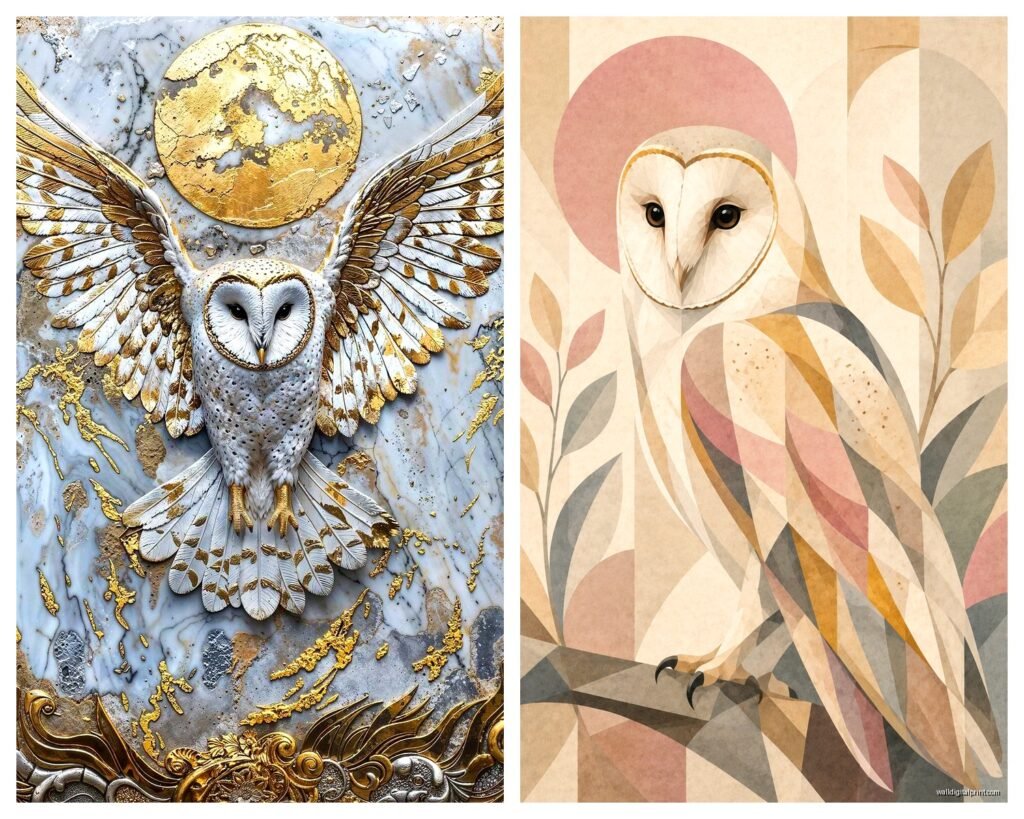
If you’re collecting multiple owl pieces, think about mixing species. Barn owls have that distinctive heart-shaped face, great horned owls are dramatic with their ear tufts, snowy owls are elegant and white, screech owls are tiny and cute. Each has a different aesthetic.
I curated a collection for a nature photographer client using all different owl species in black and white. Created this cohesive look while showing diversity. Works especially well for gallery walls or collections displayed on a shelf with ledge-style frames.
The Symbolism Thing
Okay so some people care about this, some don’t. Owls symbolize wisdom, intuition, transition, mystery – depends on the culture. If you’re into that spiritual design stuff, consider what the owl represents to you. I have clients who specifically want owl art for home offices because of the wisdom association. Others just think they’re cool birds.
Not gonna tell you what to believe but it’s worth considering if symbolism matters in your space. I personally just like how they look but my client yesterday spent 20 minutes telling me about owl medicine in Native American traditions so… people have feelings about this.
Avoiding the Kitsch Factor
Here’s where owl art can go wrong – when it tips into cutesy territory unintentionally. Those big-eyed cartoon owls work great in kids’ rooms but can look juvenile in adult spaces. Unless that’s your vibe, then own it.
Stick with realistic photography, vintage scientific illustrations, or sophisticated modern interpretations if you want it to feel grown-up. I stay away from anything that says “owl always love you” or similar puns unless it’s specifically for a nursery.
The line between whimsical and tacky is thin with owl art. When in doubt, go more realistic or abstract rather than illustrated. That’s my rule anyway.
Okay I think that covers most of what I’ve learned through trial and error with owl wall art. The main thing is just pick something you actually like looking at because you’re gonna see it every day. And measure your wall before you buy anything because returning wall art is annoying.