Wall Art Guide, Wall Art Tutoriels
Peter Rabbit Wall Art: Beatrix Potter Classic Children’s Story
Oct
So I’ve been going down this total rabbit hole with Peter Rabbit wall art lately because a client wanted to do her nursery in Beatrix Potter stuff and honestly it turned into this whole thing where I’m now kind of obsessed with finding the good versions versus the weird knockoff looking ones.
First thing you gotta know is there’s like a million different types of Peter Rabbit prints out there and they’re NOT all created equal. The original illustrations from the books are obviously public domain now which means everyone and their mom is printing them on everything, but the quality varies wildly.
The Original Illustrations vs Modern Interpretations
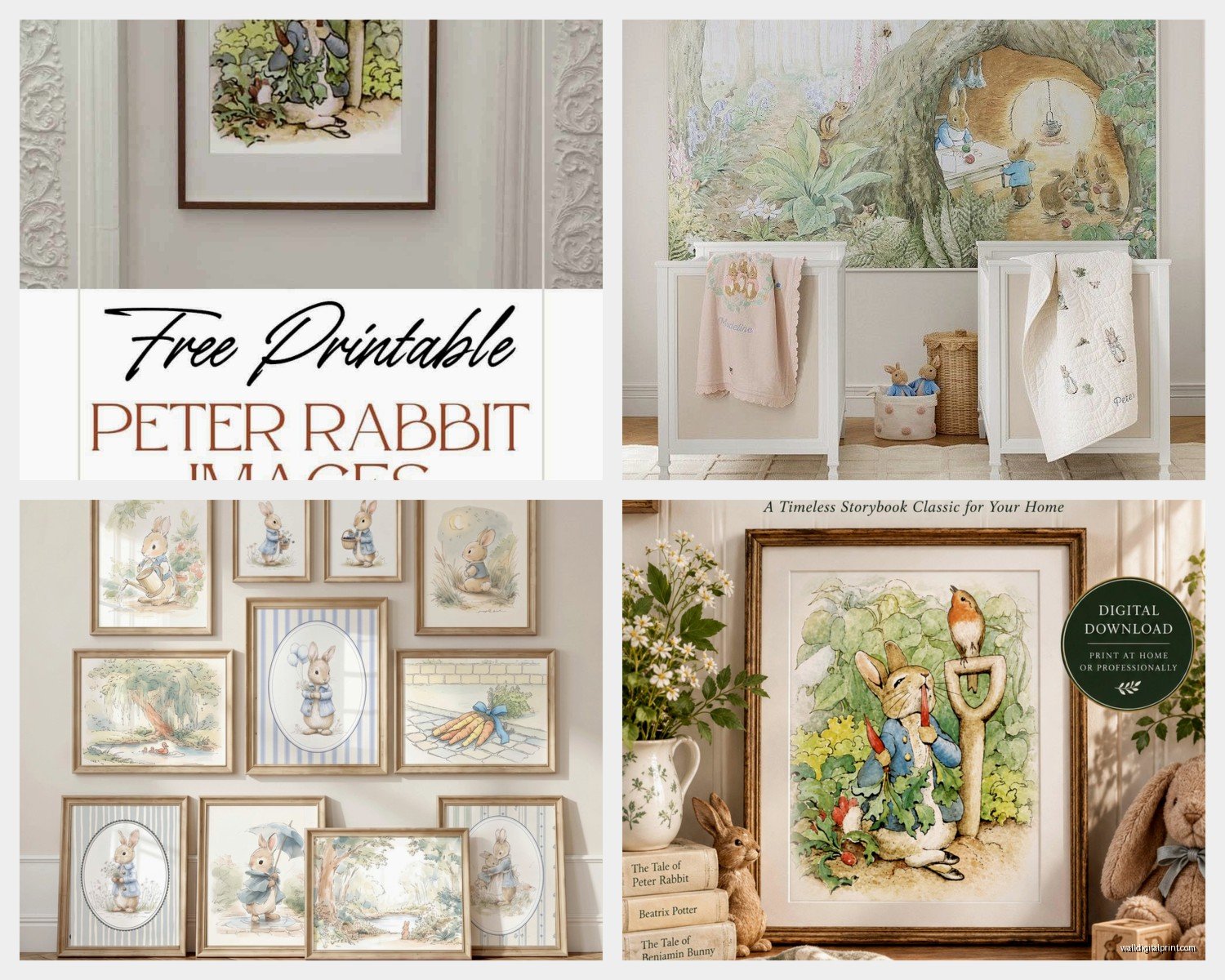
Okay so the vintage book illustrations are where it’s at if you want that authentic Beatrix Potter vibe. These are the watercolors she actually painted in like 1902 and they have this soft, muted quality that’s just… chef’s kiss for a nursery or kid’s room. You can find these as prints on Etsy pretty easily but here’s what I learned the hard way—ask about the paper quality before you buy. I ordered three prints from different sellers and one came on this weird glossy photo paper that made it look cheap and the colors were all wrong.
The ones that worked best were printed on either matte cardstock or watercolor paper. There’s this seller who does museum-quality giclée prints and yeah they’re more expensive (like $35-50 per print depending on size) but when you frame them they actually look like real art pieces not just stuff you printed at Staples.
Framing Makes or Breaks the Whole Look
Oh and another thing—don’t sleep on the framing. I initially thought I’d just grab some basic frames from Target but when I put the prints in them it looked so blah. What actually worked was using simple wood frames in either natural oak or white, nothing too ornate because the illustrations themselves are delicate and you don’t want to compete with them.
I found this hack where you can buy the frames from IKEA (the RIBBA ones work great) and then get custom mats cut at a framing shop. The mat makes SUCH a difference. Like we’re talking the difference between “cute I guess” and “wait where did you get that.” Get a mat that’s at least 2-3 inches wide around the print. It gives the illustration room to breathe.
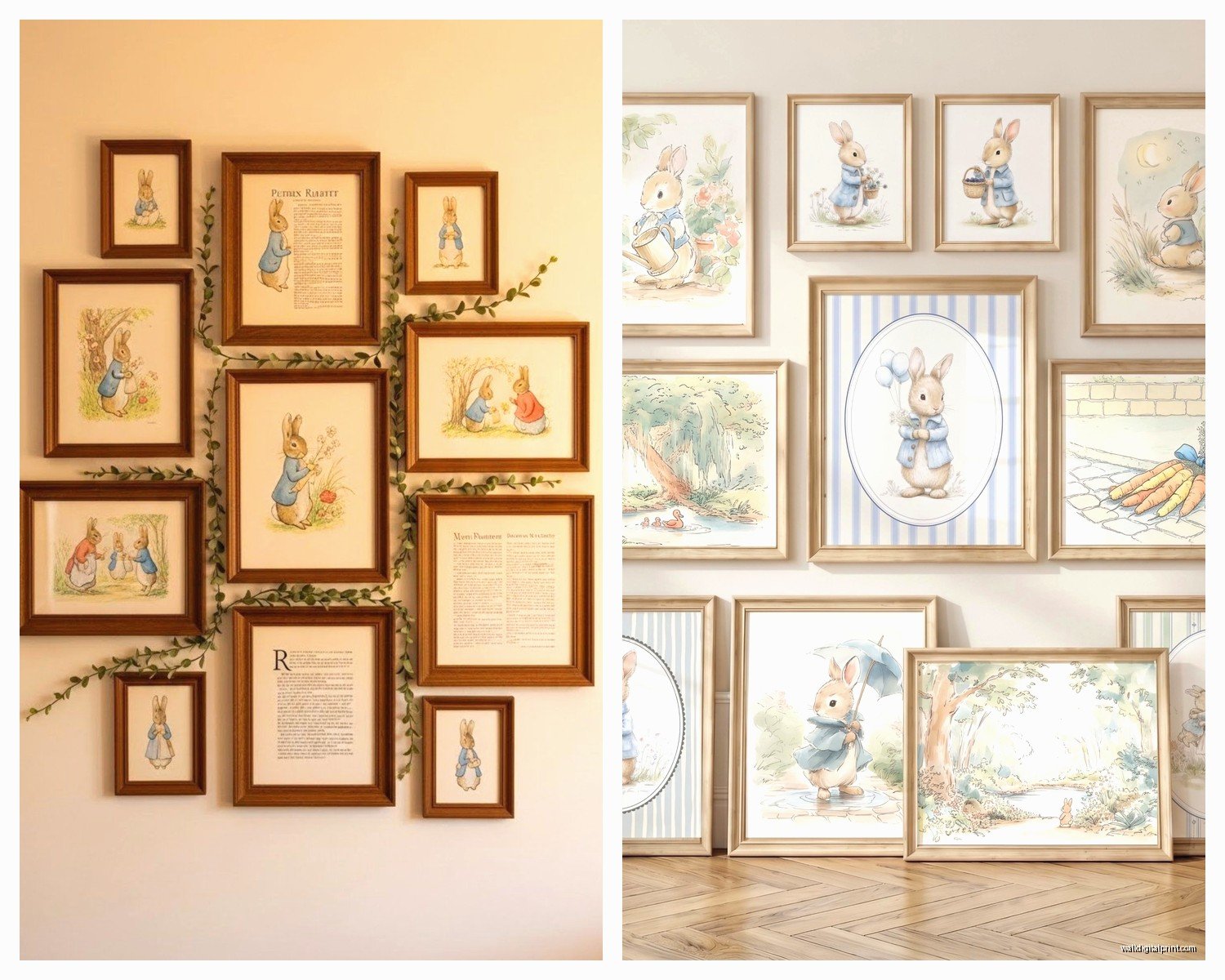
Gallery Wall Layouts That Actually Work
So if you’re gonna do multiple prints—which I highly recommend because one lone Peter Rabbit looks kinda sad—you need to think about the layout. I spent an embarrassing amount of time one Saturday (my cat kept walking across the prints I had laid out on the floor, it was a whole situation) figuring out different arrangements.
The grid layout is the easiest and honestly looks the most cohesive. Get 4, 6, or 9 prints all the same size and frame them identically. Hang them in a perfect grid with like 2-3 inches between each frame. This works especially well above a changing table or crib. Just make sure you’re using a level because even slightly crooked frames will drive you insane once you notice.
The organic gallery wall is trickier but can look amazing if you mix different sizes. Here’s what worked for me: start with your largest print in the center or slightly off-center, then build around it with smaller pieces. I use painter’s tape to map it out on the wall first because I’m not about to put 15 nail holes in the wall trying to figure it out.
Which Scenes to Choose
Okay so there are certain iconic Peter Rabbit scenes that just work better as wall art. The one with Peter in the blue jacket stealing vegetables from Mr. McGregor’s garden is probably the most recognizable. There’s also that adorable one of Peter with his mother and siblings that has this cozy cottage vibe.
Wait I forgot to mention—you can also find prints of other Beatrix Potter characters mixed in. Jemima Puddle-Duck, Benjamin Bunny, Tom Kitten… mixing these characters actually creates more visual interest than just all Peter Rabbit. I did a set of six prints for that client where we included three Peter Rabbit scenes and three other characters and it looked way more dynamic.
The hunting scene where Peter’s hiding under the watering can is dramatic enough to work as a standalone piece if you go bigger with it. I found a 16×20 print of that one and it became like the focal point of the whole room.
Where to Actually Buy This Stuff
Etsy is gonna be your main source for prints but you gotta be selective. Look for sellers who specifically mention they’re using high-resolution scans of the original illustrations. Some sellers are just grabbing low-res images off Google and the print quality shows.
I’ve had good luck with sellers who offer different paper options and show you close-up photos of the actual prints. Read the reviews too—if people are complaining about colors being off or prints arriving damaged, skip it.
Amazon has framed prints but honestly most of them look cheap in person. The frames are usually that thin plastic stuff that warps. There are a couple exceptions though. There’s this brand that does canvas prints of Peter Rabbit scenes and while I’m normally not a canvas person, these actually looked decent because they use a proper gallery wrap.
This is gonna sound weird but some of the best Peter Rabbit art I’ve found has been at HomeGoods and TJ Maxx. You just gotta go regularly because their inventory changes constantly. I found this gorgeous set of three prints already framed for like $40 total and they had proper glass and everything.
DIY Options If You’re Feeling Crafty
If you want to go the DIY route you can download high-res images of the original illustrations since they’re public domain. Project Gutenberg has the full books available for free. The trick is finding images that are high enough resolution to print well.
I tried this initially to save money and printed at FedEx on their premium paper and honestly… it worked fine? Not as nice as the giclée prints but for a fraction of the cost it was totally acceptable. An 8×10 print cost me like $5 versus $40 for a similar one on Etsy.
You can also get creative with how you display them. I saw someone on Pinterest who scanned the book pages directly and framed those with the text included which gave it this storybook quality. Or you could do a mix of illustrations with quotes from the books.
The Canvas vs Paper Debate
So canvas prints are popular for kids’ rooms because they’re lightweight and you don’t have to worry about glass breaking but here’s my take—they usually don’t do justice to the delicate watercolor quality of the original illustrations. Canvas texture can muddy the fine details.
Paper prints under glass preserve the crispness of Beatrix Potter’s linework. If you’re worried about safety with glass over a crib or changing table just use acrylic instead. It’s shatterproof and looks basically the same as glass.
That said I did see some really nice stretched canvas versions where they’d printed the illustration larger and it worked because the scale was different. Like an oversized 24×36 canvas of Peter running through the garden had enough impact that the canvas texture didn’t matter as much.
Color Schemes and Room Coordination
The original illustrations have this really soft color palette—lots of sage greens, dusty blues, warm browns, and pale yellows. This makes them super versatile because they work with basically any nursery color scheme.
If you’re doing a neutral room the prints add just enough color without being overwhelming. If you’ve already got a colorful room they still fit in because the tones are so muted. I worked on a nursery that had navy walls and the Peter Rabbit prints looked amazing against it because they popped but didn’t clash.
One thing to avoid though—don’t try to match the exact colors from the prints to your paint colors. I made this mistake once where I tried to find a green that matched Peter’s garden and it ended up looking too matchy-matchy. Better to choose complementary colors that work with the overall vibe.
Sizing Guidelines That Actually Help
Okay so this is super practical but important—size matters a lot for impact. Over a crib or changing table you want your art to take up about two-thirds to three-quarters of the furniture width. So if your crib is 28 inches wide your art arrangement should be roughly 18-20 inches wide.
For a single large print 11×14 or 16×20 works well. For multiple smaller prints 5×7 or 8×10 in a grouping of 3-6 looks balanced.
I learned this the hard way after hanging prints that were way too small above this huge dresser and it just looked lost. Had to redo the whole thing with larger prints.
Unexpected Places for Peter Rabbit Art
Don’t limit yourself to just the nursery. I’ve used Peter Rabbit prints in playrooms obviously but also in reading nooks, mudrooms (there’s something fitting about Peter’s garden adventures in a mudroom), and even in a powder room once which was actually super charming.
There’s also this trend of using vintage children’s book art in adult spaces which I’m kinda here for. Like a series of Beatrix Potter prints in a home library or study has this nostalgic literary vibe that works.
Preservation and Longevity
If you’re investing in nicer prints you want them to last. Use UV-protective glass or acrylic to prevent fading especially if the room gets direct sunlight. I had a client whose beautiful prints faded after two years because they were in a west-facing room with no UV protection.
Also hang them away from humidity sources. Bathrooms are risky unless you have really good ventilation. The paper can warp or develop mold spots which is just sad.
Oh and when you’re hanging them use proper picture hooks rated for the weight. Those little push pins aren’t gonna cut it for framed art. I like the OOK hangers that have the nail going in at an angle—they hold way better.
Budget Breakdown
Since you’re probably wondering about cost here’s roughly what I’ve seen work at different price points:
Budget option (under $50 total): DIY prints from high-res downloads, IKEA frames, done. This can look totally fine especially if you’re gonna upgrade later.
Mid-range ($100-200): Etsy prints on good paper, decent frames with mats, maybe 3-4 pieces. This is the sweet spot for quality versus cost.
Splurge ($300+): Museum-quality giclée prints, custom framing with conservation materials, larger pieces or extensive gallery wall. Worth it if this is a forever room or you really love Beatrix Potter.
I usually tell clients to invest in at least mid-range because you’re looking at these every day and cheap stuff starts to bug you after a while.
Anyway I think that covers most of what I’ve learned through way too much time researching this stuff. The main thing is don’t overthink it too much—Peter Rabbit art is supposed to be sweet and whimsical not stressful. Pick illustrations you actually like, frame them nicely, and call it done.