Wall Art Guide, Wall Art Tutoriels
Great Big Wall Art: Enormous Oversized Statement Pieces
Oct
So I’ve been installing these massive wall pieces for the past three years and honestly, the whole “go big or go home” thing with wall art is no joke. Like, people get SO nervous about oversized pieces but then you hang one and suddenly the room just…clicks.
First Thing – Figuring Out What Size Actually Counts as “Enormous”
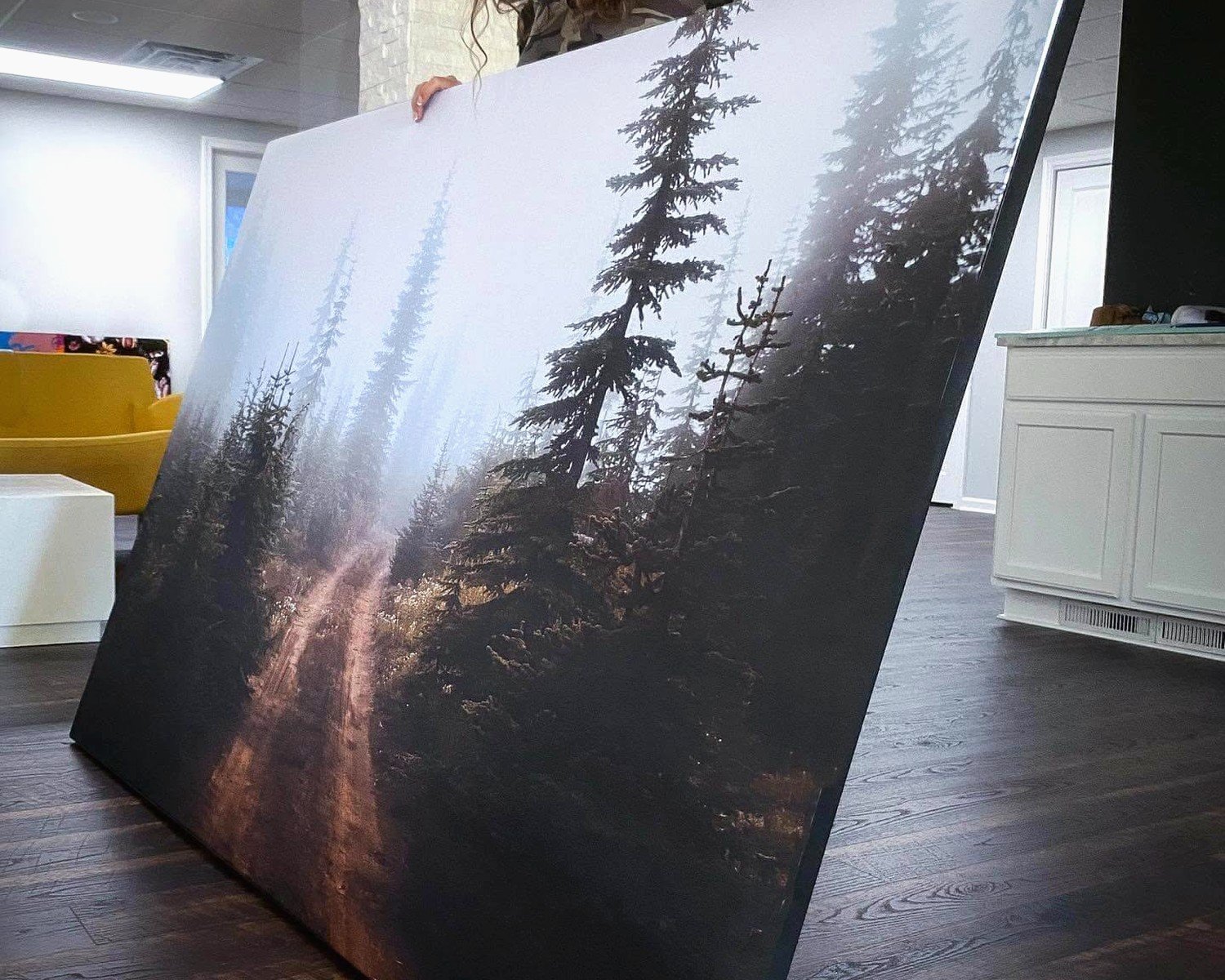
Okay so this is gonna sound weird but most people think a 24×36 poster is huge and I’m like…that’s medium at best. When I’m talking enormous statement pieces, we’re looking at minimum 40×60 inches, but honestly the sweet spot is 60×80 or larger. I had a client freak out when I suggested an 8-foot canvas for her living room and now she literally texts me photos of it every few months because she’s still obsessed.
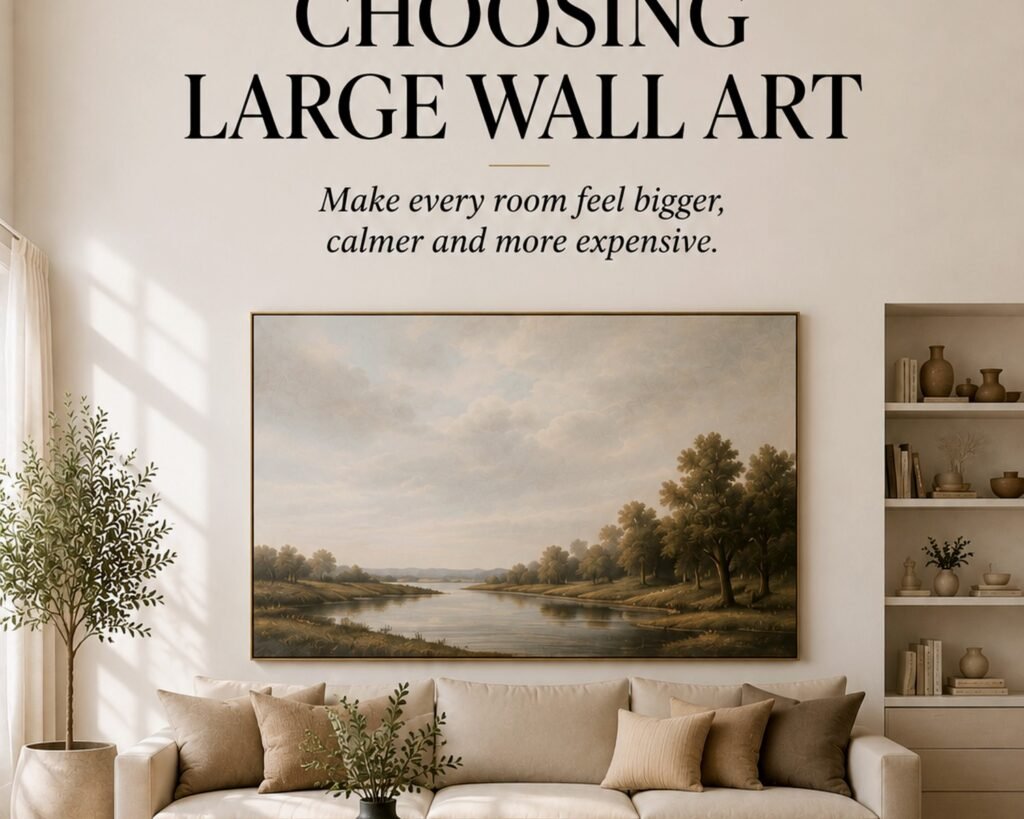
The rule I use (and I totally stole this from a gallery owner in Portland) is that your art should take up roughly 60-75% of your wall space above the furniture. So if you’ve got a 10-foot sofa, you’re looking at a piece that’s around 6-7 feet wide. People always go too small and then it looks like a postage stamp floating on the wall.
Where to Actually Find These Things Without Spending Your Rent Money
Alright so here’s where I’ve had the best luck. Etsy has these amazing oversized printable files – like you buy the digital file for $20-40 and then take it to a print shop. FedEx Office can print up to 36 inches wide on their standard printers, but for the really big stuff you need a specialty printer. I use this place called PrintRunner but there’s also Printful and honestly just google “large format printing near me” because local is usually cheaper.
Oh and another thing – Saatchi Art online has originals that are massive but also pricey. Society6 does huge prints too, though the quality can be hit or miss. I ordered an 80×60 there once and the colors were slightly off from what I saw online, but my sister ordered from them and hers was perfect so…your mileage may vary I guess.
For actual original paintings, Facebook Marketplace is lowkey incredible. Artists are selling huge canvases because they need studio space and I’ve found 5-foot pieces for like $200. You gotta scroll through a lot of questionable stuff but it’s there.
The Whole Framing Situation Which Gets Complicated Fast
Here’s the thing about framing enormous pieces – it gets expensive REAL fast. Custom framing a 60×80 canvas can run you $800-1500 easily. So I usually do one of three things:
Option one: Buy pre-stretched canvas prints that don’t need frames. The edges are printed so it looks finished. Websites like CanvasPress or Easy Canvas Prints do this and it’s way more affordable.
Option two: DIY floating frames using pine boards from Home Depot. I watched like seventeen YouTube videos one weekend (when I should’ve been doing literally anything else) and figured it out. Cost me maybe $60 in materials for a 5-foot piece. You basically build a shallow box that the canvas sits in. Looks super professional if you stain the wood right.
Option three: Skip the frame entirely and do a gallery wrap or just mount it directly. Some pieces actually look better without frames – really modern abstract stuff especially.
Michaels and Hobby Lobby have those 60% off custom framing sales constantly, but even with the discount you’re paying a lot for big pieces. I’ve used them for smaller statement pieces (like 40×50) and it’s manageable.
Installation Without Destroying Your Walls or Your Back
Okay so funny story – I once tried to hang a 7-foot canvas by myself and it fell on my dog who was just sleeping there minding his business. He was fine but I learned my lesson about getting help.
For anything over 50 pounds you NEED to hit studs. I use a stud finder (the Zircon one from Amazon for like $25 works fine) and heavy-duty picture hanging wire with D-rings rated for way more weight than I actually need. Better safe than sorry.
French cleats are honestly the best system for really heavy pieces. You screw one piece of wood to the wall (into studs) and one to the back of the frame, and they hook together. Holds a ton of weight and it’s easy to adjust level. You can buy cleat systems or make them from plywood.
Wait I forgot to mention – for drywall without studs, those heavy duty toggle bolts work but I only trust them up to about 30 pounds per bolt. And you need multiple bolts. For concrete or brick you’re drilling and using anchors which is its own whole thing that requires a hammer drill.
The leveling part is where people mess up. I use a 6-foot level for big pieces because a small level lies to you. Mark your spots with painter’s tape first, step back like fifteen feet, look at it, adjust, look again. My client canceled last Tuesday so I spent an hour comparing the placement of two different 6-foot pieces in my own living room and moved them each like four times.
What Actually Looks Good vs What You Think Will Look Good
Abstract pieces are the easiest to work with for huge sizes because there’s no “right way” to view them. Landscapes can work but you need high resolution or they look blurry up close. I learned this the hard way with a beach scene that looked amazing online but pixelated in person.
Black and white photography scales up beautifully – like those dramatic architectural shots or nature scenes. There’s this photographer on Unsplash (it’s free!) who does incredible minimalist landscapes and I’ve printed several at 60×40 for clients.
Tapestries are having a moment and they’re actually perfect for huge wall coverage. Urban Outfitters has some massive ones, and Etsy has vintage-style ones that don’t look like you’re in a college dorm. They’re lightweight too which makes installation easier.
Oh and texture matters more when things are big. A flat print feels kinda meh at 7 feet, but something with dimension – like a woven piece, or canvas with visible brushstrokes, or even a wooden art piece – that creates actual interest.
Colors and How They Change Everything
Something nobody tells you – colors look DIFFERENT at large scale. That navy blue that’s moody and sophisticated in a 16×20? At 6 feet it can feel overwhelming. I always tell people to go slightly lighter or more muted than they think they want.
Neutrals are safer for enormous pieces unless your whole vibe is maximalist. Beiges, grays, soft whites, muted blues and greens – these work in almost any space. You can always add color with smaller accent pieces around it.
That said, I did a bright coral abstract piece that was 8 feet wide in a client’s dining room and it’s absolutely stunning. But the rest of the room is white and wood tones so the art is THE moment, you know?
Specific Pieces I’ve Used That Actually Worked
The Line Abstract prints from their home section – they do massive sizes and the quality is really good. Pricey but worth it if you want something sophisticated.
Desenio has affordable large prints, mostly photography and simple graphics. I’ve ordered the 50x70cm size (which is like 20×28 inches so not huge but they go bigger) and been happy with it.
For original art, I follow like thirty artists on Instagram and just DM them. Most are happy to do commissions or have large pieces available. Found this amazing abstract artist in Chicago who shipped me a 5×6 foot canvas for $600 which is honestly a steal.
Vintage maps and botanical prints from old books – you can find high-res scans online, and printing them large looks incredible. There’s something about old illustrations at massive scale that just works. I printed a vintage mushroom illustration at 48×72 and it’s in my hallway and I love it.
The Money Talk Nobody Wants to Have
Budget-wise, here’s what I typically spend:
Digital download plus printing: $100-300 for a 60×80 piece
Ready-made canvas print: $200-500 depending on quality
Original art: $300-2000+ (huge range obviously)
Framing if needed: $0-1500
You can absolutely do this on a budget though. I’ve created stunning installations for under $200 total by using printable art, printing at a local shop, and mounting on foam core or building simple frames.
The investment makes sense when you think about it per square foot of wall coverage. That enormous piece might cost $400 but it’s solving your entire blank wall problem in one go. Versus buying six smaller pieces that cost $80 each and never quite looking right together.
Common Mistakes I See All the Time
Hanging it too high – the center of your art should be at eye level, which is usually 57-60 inches from the floor. People hang huge pieces way too high and then you’re craning your neck to see it.
Not considering the viewing distance – if you’re gonna be looking at it from 15 feet away most of the time, you can go bigger and bolder than if you’re viewing it up close.
Forgetting about doorways and traffic flow – measure twice, hang once. I’ve seen people install massive pieces that block doorways or make hallways feel cramped.
Matching it too perfectly to existing decor – your statement piece should actually make a statement, not fade into the background. It’s okay if it doesn’t match your throw pillows exactly.
Buying from the first place you look – I’m so guilty of this but seriously, shop around. Same print can vary by hundreds of dollars between sites.
Alternative Ideas That Aren’t Traditional Art
Okay so if you’re not into traditional art, there are other ways to do the oversized thing. I’ve installed:
- Massive mirrors (8-foot leaning mirrors are dramatic and functional)
- Textile wall hangings and macramé pieces
- Collections of smaller pieces arranged in a large grid pattern
- Floating shelves with curated objects spanning a whole wall
- Removable wallpaper on one accent wall (technically not art but creates the same impact)
- Large metal or wood sculptures
- Vintage doors or windows mounted as art
The grid thing is actually genius for renters or commitment-phobes – get like twelve 20×20 pieces and arrange them in a 3×4 grid. Looks like one massive installation but you can rearrange or swap pieces out.
Look, the biggest thing is just committing to the scale. Every single person I’ve worked with was nervous about going big and every single one has been thrilled with the result. Your walls can handle more than you think they can. Start measuring, figure out your budget, and just go for it. The blank wall staring at you is worse than any art mistake you could make anyway.